














































Anthropic Dictated Its Own Terms in Record IPO, Leaving Wall Street Bankers Frustrated
Anthropic's record stock market debut came with an unusually tight grip on the bankers running it, Reuters reported on November 22 — from a four-banker limit per underwriter and six-month non-competes to watermarked documents and a 2 a.m. filing deadline. Like SpaceX before it, the AI company used its market power to rewrite the usual rules of a Wall Street listing.

Anthropic Dictated Its Own Terms in Record IPO, Leaving Wall Street Bankers Frustrated
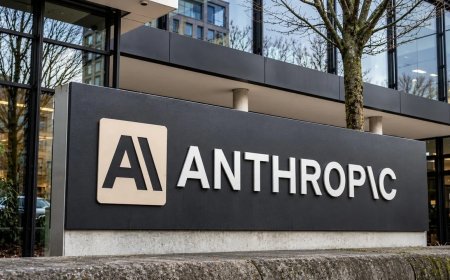
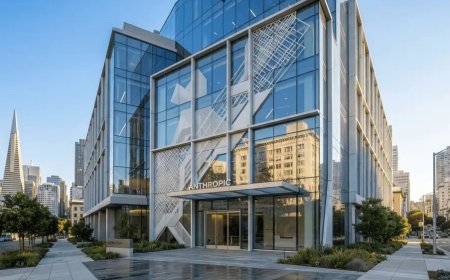
Anthropic's record-breaking stock market debut made Wall Street a fortune in fees. It also left many of the bankers who ran the deal privately frustrated, according to Reuters, which reported on November 22 that the artificial intelligence company controlled the process so tightly that advisers struggled to do their jobs.
The listing, known inside the company as "Project Lantern," passed SpaceX's June debut as the biggest of the year. Bankers on the Anthropic deal took home more than half a billion dollars in fees, Reuters reported, citing people close to the process — a payday on a par with the one SpaceX generated five months earlier. Yet the people who worked on both deals described a process riddled with complications: a compressed timetable, last-minute changes, delays in sharing financial projections, rushed document approvals, and restrictions on the bankers themselves that several of them called highly unusual.
Anthropic priced its shares at $83 and began trading on the Nasdaq on Thursday, November 19. The stock jumped 17 percent on its first day, then fell 8.5 percent on Friday as a sharp sell-off swept through AI shares. The debut itself, though, was never in doubt. Demand for the stock was so strong that the order book was oversubscribed many times over, and marketing the shares was, by the bankers' own account, the easy part.
A four-banker limit and six-month non-competes
Anthropic had 22 underwriters on the deal. It told some of them to limit the number of bankers working on the offering to four per firm, and to make sure those bankers were senior staff, several people familiar with the matter told Reuters. One of the people said the restriction most likely came from concern that information would leak, and that the banks found a way to work around it anyway.
The more striking demand came in the form of legal documents. Anthropic asked some senior officers at banks working on its IPO to sign agreements restricting core members of the transaction team from working with rival companies — including OpenAI, Cursor, DeepSeek and Hugging Face — for six months after the company went public. Bankers and lawyers told Reuters it is rare for an IPO to impose exclusivity this broad, particularly on individual bankers, though banks routinely manage conflicts and protect client confidentiality.
Anthropic needed a broad syndicate to raise the enormous amount of capital it was seeking, and some of the people who spoke to Reuters said that explained why it sought to bind individual bankers with the restrictions. One banker who declined to sign the agreement said it was a challenge to find people who could promise not to actively cover or engage with Anthropic's peers, especially as several of those companies pursue their own initial or secondary offerings.
Leaks, watermarked documents and a 2 a.m. filing
Controlling leaks was a running theme of the process. Nearly four weeks before Anthropic's filing with the US Securities and Exchange Commission, known as a Form S-1, was made public, Reuters reported on it, revealing details of the company's financials, risk factors and dealings with other technology companies.
Anthropic also shared information through a product called NetRoadshow instead of regular PDFs with most of the banks underwriting the deal. The platform logs who has seen a document and which pages they looked at, and the documents carried individual bankers' names as watermarks. Leaks continued to surface in the press, but the system complicated the bankers' work, one of the people said, in part because it would not let them save copies of the documents.
The final days were frantic. Anthropic planned to file an updated securities filing, an S-1A, with the price range and to launch the marketing on November 10. To do so, it needed to send a draft to all the banks in its syndicate for them to sign off on. The night before, a law firm on the deal sent the banks a PDF about the sale of shares in Canada — then followed up with an email telling them to disregard it because it "contains incorrect price range and share information," according to the email, which was seen by Reuters. The correct S-1A was then sent through NetRoadshow at around 2 a.m. New York time, and banks were told they had several hours to sign off before it was filed with the SEC.
A new balance of power on Wall Street
SpaceX set the template. In its June IPO, Elon Musk's team dictated terms at every stage, the people close to the process said: it told the largest US banks, including Goldman Sachs and Morgan Stanley, how to market the stock and to whom, set specific order sizes of a few billion dollars for some banks to fill, and gave instructions on what types of investors to bring. Banks signed on to underwrite the IPO without being told what they would be paid.
Both companies also negotiated to pay underwriters nothing on the additional shares sold through the greenshoe option, Jay Ritter, a University of Florida professor emeritus who researches IPOs, told Reuters. He said few companies would be able to demand a zero spread on overallotment shares, and that the big Wall Street firms would probably keep doing business as usual for all but possibly OpenAI after these two deals.
The underlying shift is one of power. Companies such as SpaceX and Anthropic — and potentially OpenAI in future — now wield enormous influence as the transformative potential of artificial intelligence creates frenzied demand for their shares, and they are using it to do things their way. That is upsetting some bankers, Reuters reported. But banks and investors appear to have little choice but to play along.
Anthropic, Goldman Sachs and Morgan Stanley, the two lead underwriters on both IPOs, declined to comment. SpaceX and OpenAI did not respond to requests for comment.
The aftermarket told a different story for the two debuts. SpaceX climbed to a post-listing peak of $201.80 on June 16 before retreating below its $135 IPO price for the first time in mid-July. Anthropic's shares, after their 17 percent first-day pop, closed down 8.5 percent on Friday as the AI trade unravelled — a reminder that even a blockbuster listing could not shake the gloom hanging over the sector.
Sources
Reuters — Like SpaceX, Anthropic ran an unusual IPO process, chafing some bankers
Related Innopark IT coverage: Anthropic shares close 17 percent higher on Nasdaq debut; Anthropic founders cashed out $1.95 billion in record IPO
What's Your Reaction?
 Like
0
 Dislike
0
 Love
0
 Funny
0
 Angry
0
 Sad
0
 Wow
0