








































Tesla Begins FSD v15 Rollout With Reality View and a Claimed 25x Leap in Safety-Critical Handling
Tesla has started rolling out Full Self-Driving v15 to a first wave of owners, headlined by a claimed 25-fold improvement in handling safety-critical situations and a new photorealistic "Reality View" that shows drivers what the car plans to do. A wider release is planned for December.

Tesla Begins FSD v15 Rollout With Reality View and a Claimed 25x Leap in Safety-Critical Handling
Tesla has started rolling out Full Self-Driving v15, the next major version of its driver-assistance software, and the company is making its boldest safety claim yet. Announced on X on Saturday, 21 November 2026, the update is going out first to a limited wave of owners, with a wider release planned for December as part of Tesla's Holiday Update.
The headline numbers come straight from Tesla. The company says v15 delivers "25x better handling of safety critical cases," a claim built around a new vision encoder that it says improves the critical intervention rate 25 times over. That is the metric that matters most on the road to unsupervised driving — how often a human has to step in when something goes wrong. But Tesla has not published the underlying rate, only the multiplier, so the claim cannot be checked against real-world data yet.
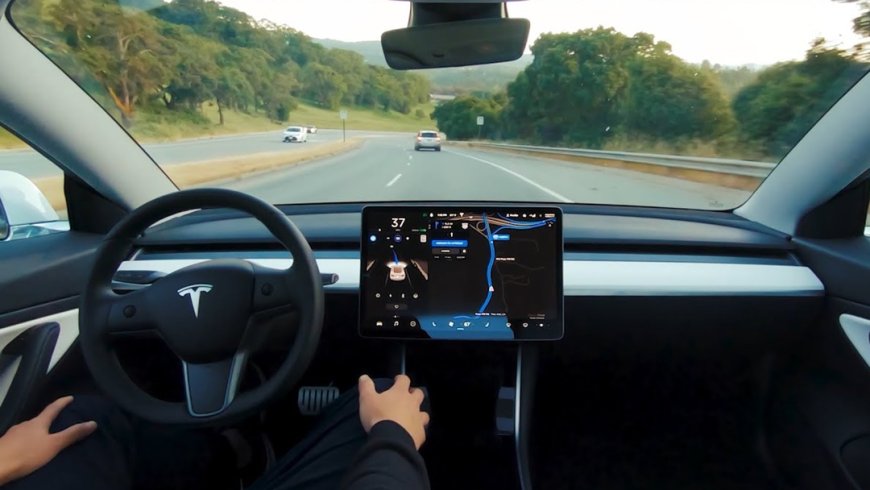
Just as eye-catching is what drivers will see on the screen. The update introduces Tesla Reality View, a live, photorealistic rendering of the road around the car that replaces the simplified driving graphics owners are used to. It is the flashiest part of the release, and the one part of v15 that can already be judged from Tesla's own demonstration video.
A new brain for the car — and for Optimus too
According to Tesla's release notes, v15 upgrades every part of the end-to-end driving network. At its centre is an upgraded vision encoder shared between Full Self-Driving, the Robotaxi fleet and the Optimus humanoid robot. Tesla says the encoder was trained on millions of internet videos, giving it broader generalisation and better data efficiency, and it credits that change with the 25-fold improvement in the critical intervention rate.
Tesla has previously told investors that its AI4 vehicle computer is powerful enough to run v15. The company has not said which vehicles or hardware versions are in the first wave, and owners on older hardware will be watching closely to see whether they are included when the wider rollout arrives.
The scale of the claim invites caution. In April, chief executive Elon Musk wrote that v15 "will far exceed human levels of safety, even in completely unsupervised and complex situations" — the kind of promise he had also attached to earlier versions. And Tesla's history with major FSD releases is uneven: v14 arrived in October 2025 with reported problems including phantom braking and excessive speeding, improved considerably over following updates, and then went backwards again in some point releases. What v15 does in real traffic, over thousands of miles, is the test that matters.
Reality View turns the display into a live rendering
Reality View — called Tesla Augmented Reality in the release notes — replaces the separate model signals the old display drew on screen with a single end-to-end visualisation that Tesla says uses less total compute. The notes describe it as a real-time generative visualisation that continuously streams a view from an arbitrary virtual camera positioned above the vehicle.
In practice, that means the centre screen shows a detailed, rendered version of the street around the car, far beyond the simple lane lines and boxy vehicle shapes of the current display. Arrows mark the turns FSD plans to take, and pins mark the parking spot it intends to use. Tesla says the view lets drivers "see and control what FSD is planning to do," and Musk has said drivers can tap any point in Reality View to direct the car there — a feature demonstrated in Tesla's video at a city intersection, though how it works in practice and where it is limited has not yet been explained.
The same end-to-end driving model that steers the car also renders the view, according to Tesla's vice president of AI, Ashok Elluswamy, so what drivers see is the system's own understanding of the road. If it works as advertised, Reality View could make supervising FSD considerably easier, because the driver can see the car's intent before it acts rather than guessing from a simplified graphic.
v15 goes after FSD's weakest spots
What stands out in the release notes is where Tesla is focusing. Almost every driving improvement targets an area where FSD is known to struggle today.
Road-sign detection is first on the list. In a test published in September, Brussels nonprofit Johanna.be found that FSD exceeded the speed limit in 55 percent of the 30 km/h zones it drove through, averaging 44 km/h, with the car's screen often showing a 50 km/h limit because it had not read the sign. The v15 notes promise improved detection of road signs, along with small animals, road debris and chains.
Potholes get a mention too. Musk said in August that pothole avoidance was "coming soon," a feature he had first promised back in 2019, and v15 now claims improved detection of potholes and road details, plus avoidance of deep standing water. Speed handling has been reworked for each driver profile, for school zones and speed limits, and for bad weather. That last point matters to regulators: the US National Highway Traffic Safety Administration is reviewing a petition alleging that Tesla's Robotaxis speed through active school zones, on top of an investigation it opened in October 2025 into FSD traffic-law violations including running red lights.
FSD will also now slow down for speed cameras, and the update adds a Bike Rack Mode that lets the system operate with a bike rack or a similar hitch accessory attached.
Smarter navigation, parking and driver monitoring
Beyond the driving itself, v15 reworks how the car plans and parks. Navigation now uses an end-to-end learned model based on route preference data from the fleet, though for now that learning covers only the start and end of trips — Tesla says later v15 releases will extend it to the entire route. Parking location selection draws on the driver's personal parking history, and the map will show multiple parking options at the destination.
Autoshift, the feature that predicts whether the car should be in Drive or Reverse, has been unified with FSD-based gear predictions. Driver monitoring has changed as well: Tesla says vision-based attention monitoring now works better when the driver is wearing a hat or sunglasses, but it is also decreasing the strictness of monitoring in higher-speed driver profiles — a change that sits awkwardly alongside reports of drivers falling asleep at the wheel, and the tighter monitoring Tesla has been asked to apply in Europe.
What happens next
The first wave is rolling out now, and the wider release is expected in December. In August, Tesla told JPMorgan that v15 is a "step-change" built on seven core technologies, with about 40 percent of them already running in its Robotaxi fleet in Austin — a fleet that shares the same vision encoder as the new release, and whose progress is closely tied to Tesla's plans to let owners add their own cars to the Robotaxi network. For background on that network, see Tesla's Cybercab invite-only ordering.
For now, FSD remains a supervised system: the driver has to stay attentive and ready to take over. Reality View is genuinely impressive to look at, and the list of fixes targets exactly the complaints owners and regulators raise most. But "improved detection" does not say by how much, and a 25x multiplier without the underlying number is hard to verify. Until owners put real miles on v15, the most honest verdict is the one the video already supports: the visuals are a leap forward, and the driving is a claim waiting for evidence.
Sources
- Electrek — Tesla launches FSD v15, targets its biggest weaknesses, from signs to potholes (21 November 2026)
- Gizmodo — Tesla Adds GTA-Like Update to FSD (21 November 2026)
- Teslarati — Tesla FSD v15 rollout begins (21 November 2026)
- AutoPilot Review — Tesla FSD v15: Reality View, New Features and v14 Updates (November 2026)
What's Your Reaction?
 Like
0
 Dislike
0
 Love
0
 Funny
0
 Angry
0
 Sad
0
 Wow
0