




























































vivo X500 Pro Review: Big Battery, Brilliant Cameras and a Price That Stings
GSMArena's full review of the vivo X500 Pro awards the compact flagship 4.5 stars: a 6.36-inch LTPO AMOLED display, Dimensity 9600 Pro power, a 6,510mAh battery and Zeiss cameras that match the Pro Max up to 3.5x zoom. The catch is the €1,399 price — and a smaller battery in some European markets.

vivo X500 Pro Review: Big Battery, Brilliant Cameras and a Price That Stings
vivo is reshuffling its X series this year, and the X500 Pro is the clearest sign of the new thinking. Instead of simply succeeding last year's X300 Pro, the Pro badge now belongs to a compact flagship — a 6.36-inch phone built to go up against the iPhone 18 Pro — while the bigger, camera-first role passes to the X500 Pro Max. GSMArena published its full review of the X500 Pro on 12 November 2026 and gave it 4.5 stars, calling it a very pleasant surprise and a proper compact flagship with remarkably few compromises. The question, as ever with vivo's top phones, is whether the price lets you enjoy it.
On paper, the X500 Pro reads like a greatest-hits list: a bright LTPO AMOLED display, MediaTek's new 2nm Dimensity 9600 Pro chipset, a huge 6,510mAh silicon-carbon battery, and a Zeiss camera system that shares its main sensor with the Pro Max. We have read the full review so you can see where it delivers — and where it asks you to pay for the privilege.
Design: familiar, but well executed
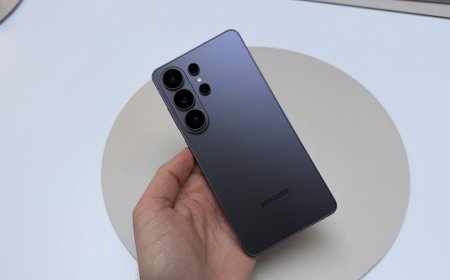
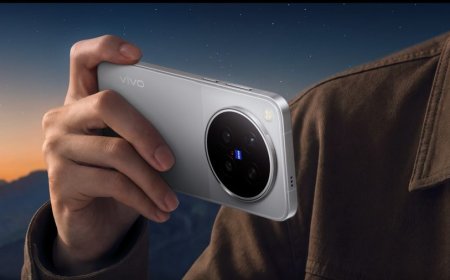
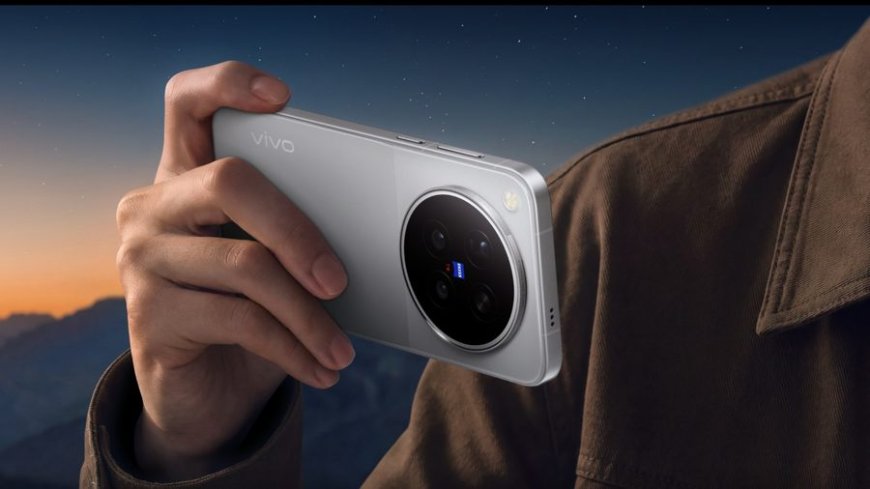
The X500 Pro looks like a phone designed in 2026: flat frame sides, flat front and back panels, generously rounded corners, and a display whose corners follow the same curve. It is an appealing design, even if it has become something of a standard template across the industry. vivo adds a few recognisable touches of its own, including a knurled ring around the camera island and a patterned surface around it, and the upper third of the back sits slightly raised, with a gentle slope down to the lower part — a trick vivo says makes the camera bump look less prominent.
At 151.8 x 71.9 x 8.1 mm, the phone is genuinely compact by modern flagship standards, though at 192 or 197 grams — depending on the back material — it is not particularly light. The black version is the thinner and lighter of the two at 7.95 mm and 192 grams, with a glass-fibre reinforced plastic back, while the white review unit measured 8.12 mm and 197 grams with a glass back. Build quality impressed the reviewers: the metal frame shows practically no flex, there is no hollow feeling to the back panel, and the phone feels solid and substantial in the hand, with small chamfers along the frame edges helping the grip. The phone carries IP68 and IP69 ratings, protecting it against dust, high-pressure water jets and immersion in up to 1.5 metres of fresh water for 30 minutes.
There are a couple of quirks worth knowing. The review unit carried prominent CE markings and a considerable amount of regulatory text printed along the left side of the frame — unsightly, and hopefully limited to review units rather than retail devices. The IR blaster is tucked inside the rear camera island rather than on the top edge. On the plus side, the display bezels are impressively thin and appear symmetrical, the ambient light and proximity sensors hide beneath the screen, and the ultrasonic under-display fingerprint reader proved fast and reliable in everyday use.
In Europe, the X500 Pro comes in Black and White, with Gray and Orange available in some other markets. A thick semi-soft TPU case and a USB Type-A to Type-C cable come in the box, but no charger — although at the time of the review, most European vivo online stores were offering a free 90W charger with the phone, and that is the charger you need for the fastest speeds.
Display: one of the best panels in a phone this size
The 6.36-inch LTPO AMOLED display is one of the X500 Pro's highlights. Its native resolution is 1216 x 2660 pixels, working out to a very sharp 459 pixels per inch, and you can drop the UI to 1080p to save battery without the image turning soft. It supports 144Hz, although that top rate is only available in a limited selection of games; regular use tops out at 120Hz, and most apps — including many popular social media apps — are limited to 90Hz. The 8T LTPO backplane lets the panel drop all the way down to 1Hz on static content to save power, and it switches correctly between 30Hz and 60Hz for matching video, even if switching at less common frame rates like 24fps and 48fps can be erratic.
Brightness is where the panel really shows off. vivo claims around 2,000 nits of whole-display brightness and a peak of up to 4,500 nits, but GSMArena's testing found those figures rather conservative: auto brightness delivered over 2,500 nits, with a peak of almost 5,400 nits in a 10% window — chart-topping figures. Minimum brightness measured below 1 nit, which is great for late-night use. Dolby Vision and HDR10+ are both supported, the video decoder reports compatibility with all four major HDR formats, and Widevine L1 certification allows Full HD streaming on services like Netflix.
High refresh rate gaming is the one mixed bag. The reviewers got the display running at 120Hz in several games, but the games themselves stayed capped at 60fps, so the extra refresh brought no smoothness benefit. vivo's Ultra Gaming menu offers frame generation and upscaling, but only for a small selection of games.
Performance: flagship power that holds up under pressure
Despite its compact body, the X500 Pro gets the same flagship MediaTek Dimensity 9600 Pro chipset as its larger Pro Max sibling — MediaTek's first chip built on a 2nm process and the first to use Arm's next-generation CPU and GPU architectures. The eight-core CPU pairs two C2-Ultra cores clocked at 4.55GHz with three C2-Pro cores at 4.35GHz and three more at 3.1GHz, while the Mali-G2 Ultra NX GPU promises gaming above 185fps in supported titles and a claimed 27% improvement in ray tracing. The chip supports LPDDR6 RAM and UFS 5.0 storage, though vivo has opted for LPDDR5X and UFS 4.1 — still high-end, even if it does not use the chipset's full capabilities. Storage options are 256GB, 512GB and 1TB, all paired with 12GB of RAM.
In testing, the X500 Pro had no shortage of burst performance, with the Dimensity 9600 Pro giving even Qualcomm's Snapdragon 8 Elite Gen 5 a run for its money. More impressive is sustained performance: in thermal-throttling tests the compact phone somehow did even a bit better than its bigger X500 Pro Max sibling, which surprised the reviewers given how much harder it is to cool a powerful chip inside a smaller body.
Cameras: the main attraction
The camera system is arguably the X500 Pro's biggest draw. It shares the Pro Max's main, ultrawide and selfie cameras: a 50MP main camera built around Sony's 1/1.28-inch LYT-910 sensor with an f/1.6 lens and optical stabilisation, a 50MP ultrawide with autofocus, and a 50MP front camera. The difference is the telephoto: a 64MP unit with a 3.5x, 85mm lens and a smaller 1/2.0-inch sensor, compared with the Pro Max's 200MP telephoto. The Pro also offers 1.5 degrees of stabilisation compensation against the Pro Max's claimed 3 degrees, and it supports the 200mm telephoto extender lens but not the 400mm one.
In daylight, the main camera's 12.5MP photos are crisp and detailed with vivid colours in the default Vivid style, excellent dynamic range and strong contrast, while 50MP shots are among the most detailed 1x photos available. Portraits show lively skin tones and sharp facial detail with restrained bokeh, and 2x photos are excellent. At the telephoto's native 3.5x, 16MP photos are excellent, with very fine detail and vibrant colour. The ultrawide's 12.6MP shots offer excellent sharpness, great dynamic range and lively colour, with saturation less excessive than on the Pro Max.
Zoom beyond 3.5x is where the gap to the Pro Max starts to show. On the Pro, 5.6x and 7x are usable to good, 10x is quite decent despite intense sharpening, but the Pro Max is meaningfully better at those longer ranges. Close-ups from the telephoto at 3.5x and 7x are good, with very good pixel-level detail at 7x. In low light, the main camera delivers properly nice 1x photos with excellent dynamic range, dependable white balance and great detail, and the 3.5x telephoto is very good — but 2x in the dark is little more than "meh", a disappointment at this level. Selfies are very good, possibly excellent, with great colour and dynamic range, though with semi-random patches of softness alternating with pixelated facial hair.
Video is very competent overall, and as good as the Pro Max — including on the telephoto. All four cameras support 4K at 30 and 60fps; the main camera reaches 4K240 and 8K30, and the telephoto reaches 4K120 and 8K30. Dolby Vision is available except at 8K30 and 4K240, and Log shooting with live-preview LUTs is available, with Pro mode adding imported LUTs, 24/25/50/100fps 4K options, audio monitoring and waveform and frame guides. Daylight footage has great contrast, wide dynamic range and vivid but reasonable colour, and at night the main camera gives likeable exposures with well-developed shadows and very good detail. Stabilisation is described as properly excellent and hard to beat, with stable fixed shots, smooth pans and expertly ironed-out walking shake.
Battery and charging: huge capacity, with a regional catch
One of the X500 Pro's most impressive features on paper is its 6,510mAh silicon-carbon battery — a lot of capacity to squeeze into a phone of this size — and in testing it delivered excellent battery endurance. But the capacity story has a catch that buyers in some markets need to know about. Most European markets get the global V2621 variant with the full 6,510mAh battery, which is the model GSMArena tested. In at least a few countries the reviewers know of — Austria, Germany and Switzerland — the phone ships as the V2622 with a substantially smaller 5,300mAh battery. vivo confirmed the regional differences to GSMArena, citing "logistics requirements", without a more specific explanation. A reduction of nearly 19% in capacity is hardly insignificant, so if you are shopping for an X500 Pro in one of the affected markets, it is worth checking which variant you are buying.
Charging is decent rather than spectacular. Using vivo's proprietary 90W FlashCharge charger, the phone went from 1% to 34% in 15 minutes, reached 63% after half an hour, and took 52 minutes for a full charge. Those percentages sit slightly behind the X300 models, but the large battery puts them in perspective: 63% in half an hour is roughly 4,000mAh of replenished capacity. The phone also supports 40W wireless charging with vivo's proprietary charger, plus reverse wireless and reverse wired charging. Note that there are no built-in magnets for Qi 2.2 (MagSafe) charging, and a regular USB PD charger will not deliver the full 90W — you need vivo's charger and its Type-A to Type-C cable for the fastest speeds. Battery health features cover the basics: a charging limit between 80% and 95%, smart charging based on your sleeping habits, the option to disable fast charging, and bypass charging.
Software: OriginOS 7 on Android 17
The X500 Pro runs OriginOS 7 on top of Android 17 in all regions, and vivo promises up to five major OS updates — a respectable commitment, even if it falls short of the longest support policies in the industry. The interface looks polished and modern, with a translucent, liquid-like visual style vivo calls Fluid Motion that clearly resembles the Liquid Glass aesthetic popularised by Apple's iOS 26 — though some elements can be difficult to read depending on what is behind them.
The software's real strength is cross-device integration. OriginOS 7 offers convenient file transfers and continuity features for iPhones, iPads and Macs, along with support for accessories like AirPods and Apple Watches, and iCloud access in certain regions. vivo Office Kit connects the phone to a Windows PC, Mac or even an iPad for file transfers, display casting, remote control and shared mouse and keyboard, and the phone's cameras can even serve as a webcam. vivo's Jovi assistant can perform system-level tasks across devices once Office Kit is configured — finding files, extracting information, putting together documents and even emailing the results — and third-party AI models can be used with fairly generous free quotas. Google's Gemini is preinstalled and Circle to Search is integrated, while the Gallery, Notes and Recorder apps add AI editing, OCR, transcription and call-assistant tools. Multitasking is among the most polished on Android, with the Origin Workbench card-style app layout, Picture-in-Picture+ and Super Dragging, and connecting the phone to an external screen gives a proper desktop-style interface with floating windows, somewhat reminiscent of Samsung DeX.
Speakers and connectivity
The stereo speakers are impressively loud and good-sounding for a relatively compact device, with clean, well-balanced audio and particularly good midrange reproduction. At -24.3 LUFS in GSMArena's standardised test, the phone earns a Very Good loudness rating — louder than the X300 Ultra and considerably louder than its physically larger X500 Pro Max sibling, with a clear advantage over compact rivals like the Samsung Galaxy S26 and Apple iPhone 18 Pro.
Connectivity is comprehensive: dual-SIM 5G with SA and NSA Sub-6 networks, eSIM, Wi-Fi 7, Bluetooth 5.4/6.0 with aptX HD and LHDC 5, NFC and an infrared port.
Verdict: excellent phone, steep price
GSMArena's verdict is that the vivo X500 Pro is a very pleasant surprise — a proper compact flagship with remarkably few compromises. The display, build, speakers, connectivity, sustained performance and OriginOS 7 multitasking all earn praise, and the cameras are arguably the biggest attraction, matching the Pro Max up to 3.5x with excellent selfies and video. The main catch is the price: at €1,399 for the 12GB/256GB model in Europe, with early promotions to €1,299 in markets like Spain, it is seriously expensive, and several excellent compact alternatives cost considerably less. In China, the same phone costs CNY 6,499, roughly €870 — a reminder of how much of that European price is down to regional pricing rather than the hardware itself.
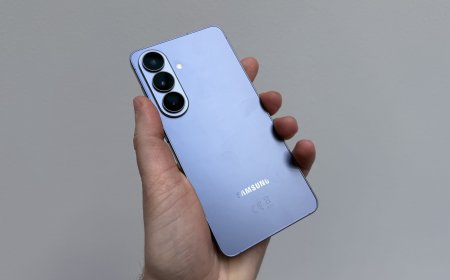
The competition is strong. The Samsung Galaxy S26 is more compact and lighter with strong software and AI, but has a weaker telephoto, a 4,300mAh battery and 25W charging — and is significantly cheaper. The Apple iPhone 18 Pro is similarly sized with a strong video system, though the vivo is lighter despite its larger battery and charges faster. The Google Pixel 11 Pro offers competitive cameras and cleaner Android with seven years of OS updates, considerably cheaper. The Xiaomi 17 is the closest Android rival in philosophy, with a Snapdragon 8 Elite Gen 5, a large silicon-carbon battery and Leica cameras, but it is a generation older and much more affordable. And vivo's own X300 stands as a smaller, cheaper alternative from the same stable.
If you want a compact phone with a huge battery, a superb display and cameras that hold their own against the best, the X500 Pro delivers — but you will pay a premium for it, and buyers in Germany, Austria and Switzerland should check the battery in their box first.
Pros and cons
Pros: Relatively compact with a premium build and excellent ergonomics; outstanding LTPO AMOLED display with exceptionally high brightness; excellent battery endurance on the 6,510mAh variant; flagship-grade performance with surprisingly good sustained performance; impressively loud and good-sounding stereo speakers; feature-rich OriginOS 7 with excellent multitasking and cross-device integration; excellent photo and video quality across all cameras, particularly at native focal lengths.
Cons: Steep price tag; smaller 5,300mAh battery in some European markets; charging speed could be faster; inconsistent high refresh rate gaming support.
vivo X500 Pro key specifications
Display: 6.36-inch LTPO AMOLED, 1216 x 2660 pixels, 144Hz, HDR10+, Dolby Vision, 2,000 nits (HBM), 4,500 nits (peak). Chipset: MediaTek Dimensity 9600 Pro (2nm). Memory: 12GB RAM with 256GB, 512GB or 1TB storage, UFS 4.1. Software: Android 17 with OriginOS 7, up to 5 major OS updates. Rear cameras: 50MP main (f/1.6, OIS), 64MP telephoto 3.5x (f/2.5, OIS), 50MP ultrawide (f/2.0, AF). Front camera: 50MP (f/2.0, AF). Video: 8K at 30fps, 4K at up to 240fps, Dolby Vision HDR. Battery: 6,510mAh (V2621) or 5,300mAh (V2622 in Germany, Austria and Switzerland); 90W wired, 40W wireless, reverse wireless and reverse wired charging. Build: 151.8 x 71.9 x 8.1 mm, 192/197 grams, IP68/IP69. Extras: ultrasonic under-display fingerprint reader, stereo speakers, 5G, eSIM, Wi-Fi 7, NFC, IR blaster. Price: €1,399 in Europe (12GB/256GB).
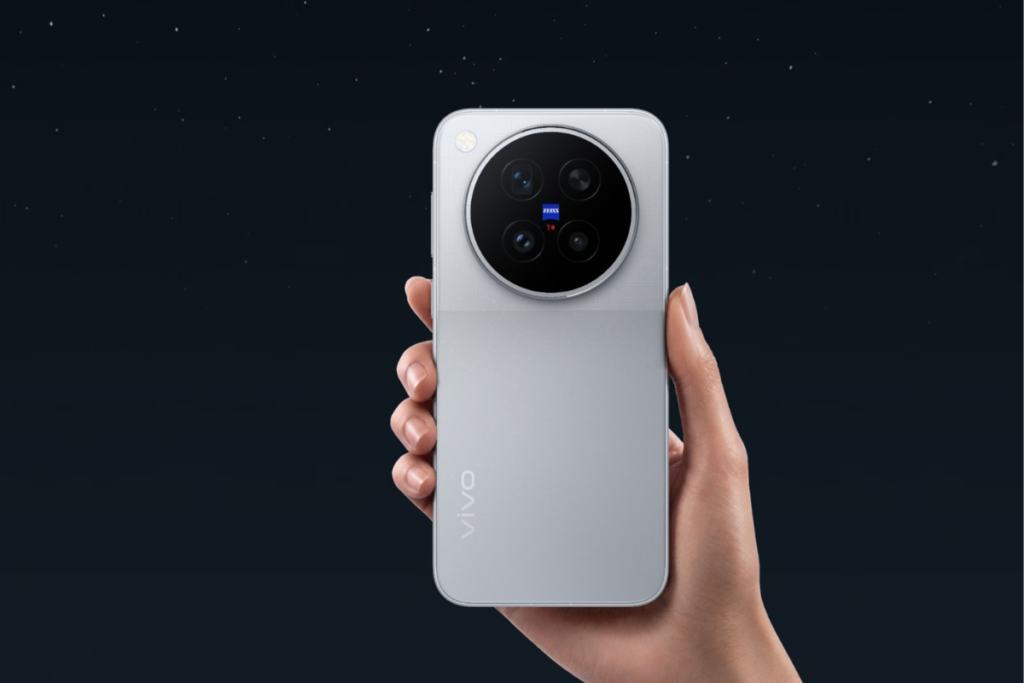
For comparison with its bigger sibling, see our vivo X500 Pro Max review.
Sources
- GSMArena — vivo X500 Pro review (12 November 2026): https://www.gsmarena.com/vivo_x500_pro-review-3012.php
- GSMArena — vivo X500 Pro review, camera section: https://www.gsmarena.com/vivo_x500_pro-review-3012p5.php
- GSMArena — vivo X500 Pro review, verdict: https://www.gsmarena.com/vivo_x500_pro-review-3012p6.php
What's Your Reaction?
 Like
0
 Dislike
0
 Love
0
 Funny
0
 Angry
0
 Sad
0
 Wow
0