



























































vivo X500 Pro Max Review: One of the Most Complete Flagships of the Year — at a Price That Stings
The vivo X500 Pro Max is hard not to love: a superb 144Hz LTPO display, outstanding 7,800mAh battery life, a feature-rich OriginOS 7 with five years of updates, and exceptional cameras led by a 50MP main sensor and a 200MP 3.5x telephoto, with video stabilisation that stands in a league of its own. Its only real weaknesses are flat-sounding speakers, charging that could be faster, and a €1,499 launch price. GSMArena rated it 4.7 out of 5 and gave it an Editors' Choice award.
vivo X500 Pro Max Review: One of the Most Complete Flagships of the Year — at a Price That Stings
The vivo X500 Pro Max is hard not to love. It is one of the most complete flagships tested this year, leaving very little room for criticism: a superb display, outstanding battery life, a feature-rich and responsive operating system with long-term software support, and exceptional camera performance across the board. Video recording is a particular highlight, with stabilisation that stands in a league of its own. Its weaknesses are small — flat-sounding speakers and charging that could be faster — but the €1,499 launch price is arguably its biggest drawback. GSMArena gave it 4.7 out of 5 and an Editors' Choice award in its full review, published on 27 October 2026. Here is the phone in detail.
Design: premium, durable, and very slippery
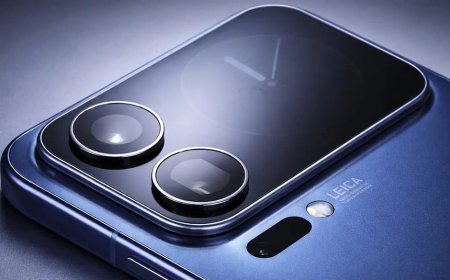
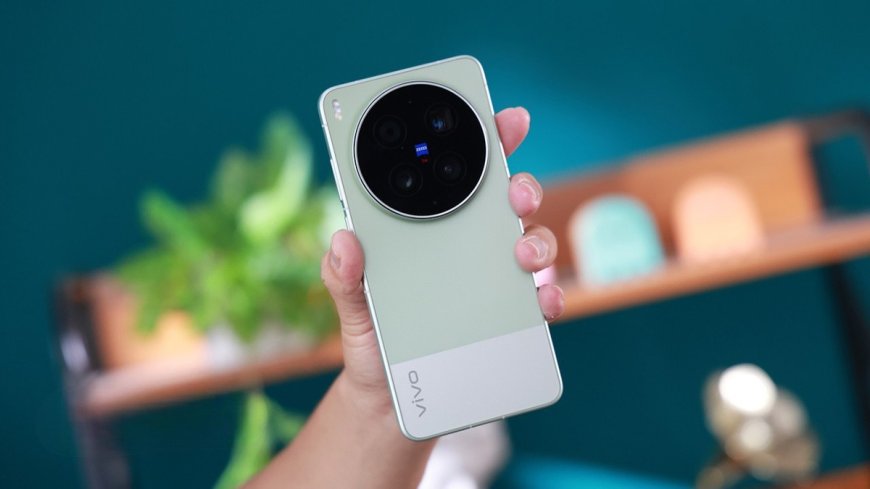
The X500 Pro Max follows the X300 series design language: a flat design with a big circular camera module. The camera ring now has knurling in classic camera styling, the area around the camera island is slightly elevated, and the back panel has a subtle 0.6mm slope from the upper half that reduces the perceived protrusion of the camera bump. The front, back and side frame are flat, with small contours around the edges for a comfortable grip, and an aerospace-grade metal frame. The back is glass or fibre-reinforced plastic depending on the colour — White, Orange and Gray come with AG glass, the Black variant is "glass fibre" — and the front is vivo's own Armor Glass. The lenses sit behind an Ultra Hard AR Coating that is scratch-resistant and reduces reflections and lens flares.
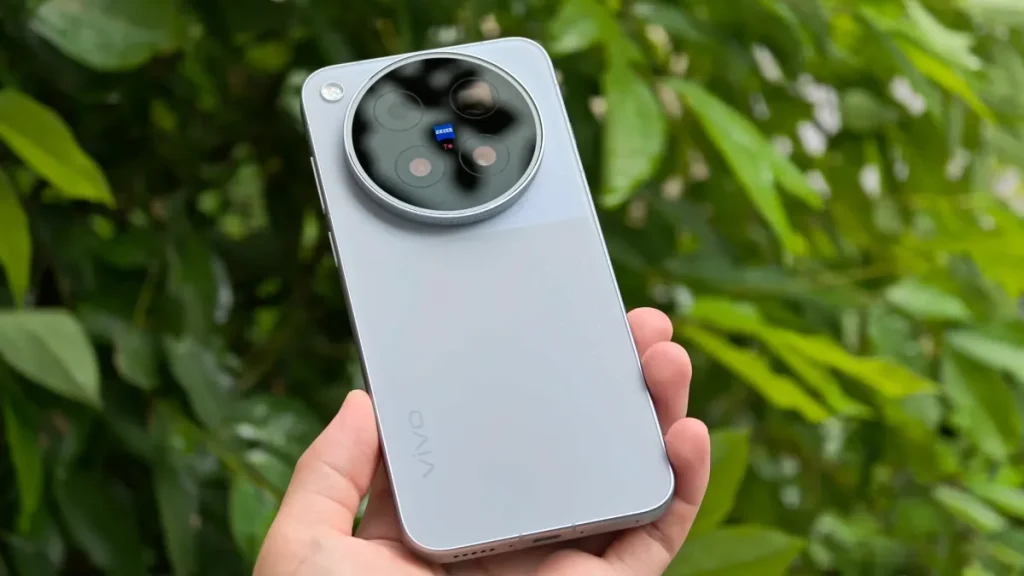
At 163.3 x 76.8 x 8.1 mm and 225 grams it is a large phone, but relatively comfortable to hold — and very slippery, like most glass flagships. It carries IP68 and IP69 ratings, and there is an extra customisable shortcut key on the side frame. The SIM tray holds up to two physical SIMs plus eSIM, with only two SIMs active at a time. The ultrasonic fingerprint reader is conveniently positioned, snappy and reliable. The standard retail box holds user manuals, a USB-A to USB-C cable and a protective silicone case, and both the global and Chinese units came with a 90W vivo FlashCharge charger, while the European version likely will not have one in the box.
Display: bright, sharp, and feature-packed
The 6.85-inch LTPO AMOLED display packs 1440 x 3168 pixels at around 507 ppi, runs at up to 144Hz — up from 120Hz on the X300 Pro — and supports HDR10+ and Dolby Vision. In GSMArena's lab tests the screen measured 2,100 nits in auto mode with a 75% white swatch and 3,500 nits with a 10% patch, with an additional brightness boost in the gallery and YouTube reaching 2,793 nits and almost 4,500 nits respectively. Minimum brightness drops to just 1 nit. The LTPO panel adjusts its refresh rate granularly, though Smart adaptation caps Chrome and some other apps at 60 or 90Hz, and the phone cannot always match video frame rate.

Battery life: exceptional, with one regional catch
The 7,800mAh single-cell battery — 6,750mAh in the European dual-cell variant, 13.5% smaller, possibly due to transportation complications — is a significant upgrade over the X300 Pro. In GSMArena's tests the global unit scored an Active Use Score of 24 hours 6 minutes, particularly strong in web browsing and video streaming, beating most competitors and sitting above the X300 Pro and X300 Ultra. The breakdown: 44 hours 49 minutes of calls, 24 hours 27 minutes of web browsing, 36 hours 49 minutes of video playback and 12 hours 2 minutes of gaming. The only competitor with better battery life is the Oppo Find X10 Pro Max, and the difference is not all that big.
Charging is handled by 90W wired FlashCharge with a proprietary charger, plus 40W wireless charging (which needs a vivo original charger) and reverse wired and wireless charging. In the review's tests it reached 29% in 15 minutes, 55% in 30 minutes and a full charge from 1% to 100% in exactly one hour — barely beating the Oppo Find X10 Pro Max and the Pixel 11 Pro XL to the finish line, though the Pixel was faster at the 15- and 30-minute checkpoints. To protect battery health you can turn off fast charging, use smart charging that learns your habits and tops up before pickup, or set a charge cap adjustable from 80% to 100% in 5% increments.
Performance: MediaTek's first 2nm chip holds its ground
Inside is the MediaTek Dimensity 9600 Pro, MediaTek's first 2nm silicon and the first to use ARM's next-generation CPU and GPU designs, with two cores at 4.55GHz, three at 4.35GHz and three at 3.1GHz, plus a Mali-G2 Ultra NX GPU marketed to support 185+ fps gaming and a 27% boost in ray-tracing performance. The chipset supports LPDDR6 and UFS 5.0, but the X500 Pro Max settles for LPDDR5X and UFS 4.1, with 12GB of RAM and 256GB, 512GB or 1TB of storage — Chinese models get 16GB of RAM. The benchmark results are strong: Geekbench 6 scored 3201 single-core and 10363 multi-core, AnTuTu v11 reached 4,047,399, and 3DMark Wild Life Extreme came in at 7632. The phone fully utilises its chip, showing a marked improvement over the Dimensity 9500 generation and holding its ground well against Qualcomm's Snapdragon 8 Elite Gen 5, especially in the graphically intensive 3DMark tests.
Under sustained stress the device throttled heavily, as expected from a flagship chip, but the system maintains relatively manageable clock speeds and avoids excessive fluctuations, suggesting smooth performance under heavy workloads. In the 60-minute CPU stress test it throttled to 53% of its maximum performance at 50°C, and in the GPU stress test stability was 48.2%, with temperatures rising from 26°C to 42°C.
Cameras: exceptional stills, unrivalled video stabilisation
The camera system keeps the same configuration as two generations of Pros, with new sensors throughout. The main camera is a 50MP Sony Lytia L910, a 1/1.28-inch LOFIC design for increased full-well capacity and improved dynamic range in a single frame, with an f/1.57 lens, 24mm focal length, multi-directional autofocus and stabilisation. Vivo is the only one of this year's important Pro Max phones with a 50MP main camera — the Find X10 Pro Max and Xiaomi 18 Pro Max are both 200MP. The telephoto is a 200MP Samsung ISOCELL HP0, a vivo-exclusive take on the HP9, at 1/1.4-inch with an 85mm lens, 3.5x optical zoom and stabilisation, with an edge over rivals and a longer focal length than their 70mm or 75mm. The ultrawide switches to the 2024 JN5 sensor, 50MP at 1/2.75-inch, and the front camera keeps the 50MP JN1 sensor with a 20mm lens.
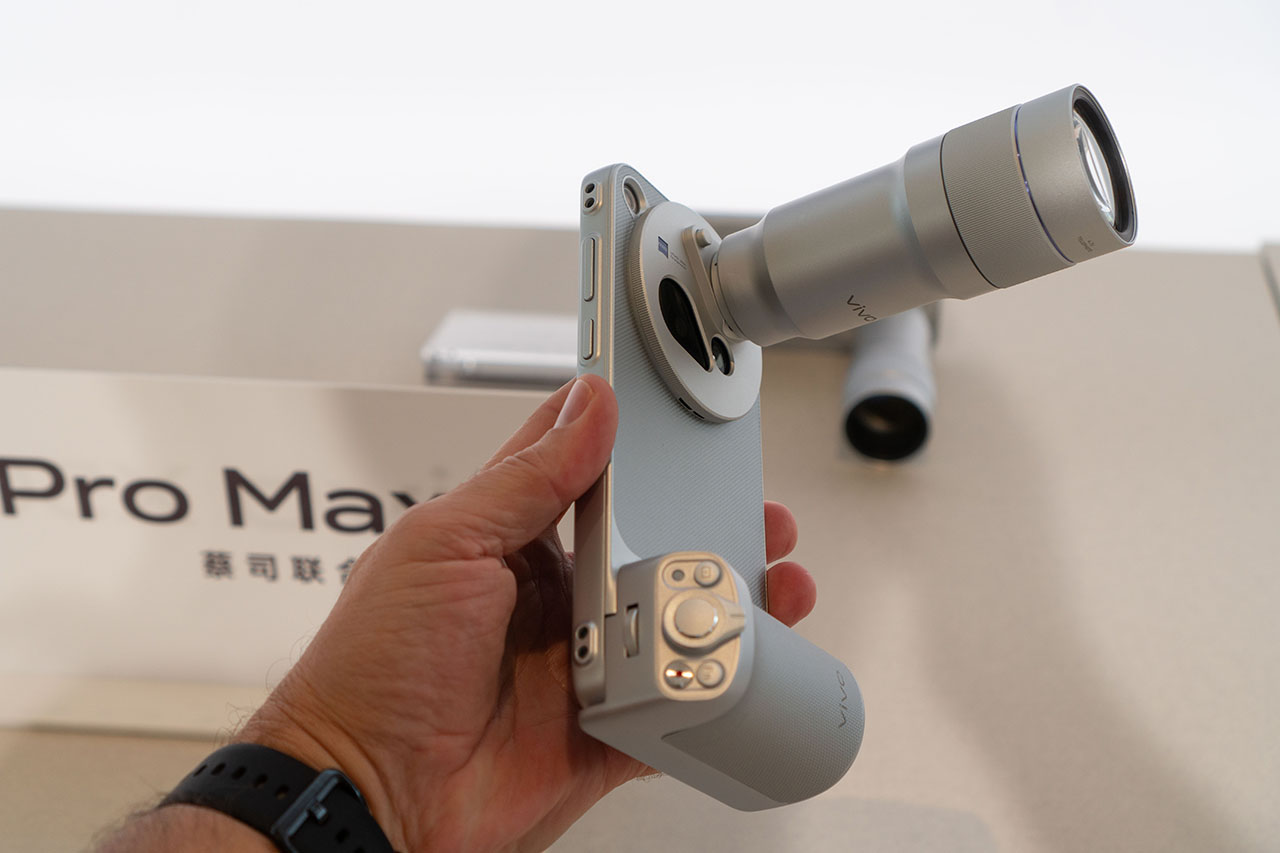
In daylight the main camera's 12.6MP default shots are nicely sharp and detailed, with excellent dynamic range and a Vivid colour style whose saturation borders on excessive but is universally likeable. The 2x zoom photos are excellent, among the best 2x shots out there, and headshots at 2x maintain excellent sharpness. The 3.5x telephoto takes wonderful photos at its native focal length, with more natural detail, better definition and less apparent sharpening than the main camera, intense colours and no white balance mishaps. Headshots at 3.5x are excellent, with properly great detail, pleasing skin tones and decent natural background blur. The 7x zoom shots look significantly crisper than 5.6x, with more precisely defined detail, and could have come from a dedicated 7x camera — they do not look upscaled or overly processed. The ultrawide offers excellent sharpness and great dynamic range, though colours can look cartoonish with lots of greenery. Close-ups work well too, with the telephoto's 14.5cm minimum focus distance, and a telephoto extender kit is available with lenses to 200mm and 400mm equivalent.
In low light the main camera is properly great, with wide dynamic range, well preserved highlights, excellent shadow development, vibrant colours, expert white balance and very good detail. The 3.5x telephoto in low light is superb, with excellent detail, dependable white balance, likeable colours and wide dynamic range, and 7x is better than 5.6x and pretty great. The 2x results in low light are a disappointment in sharpness, and the Find X10 Pro Max is substantially better at 2x. Selfies are pretty great, though unusual tendencies rob them of top marks — patches of softness on faces alternating with patches of pixelated facial hair, with detail not uniformly drawn — though skin tones are lifelike, colours great and dynamic range very good. The review's photo verdict: the X500 Pro Max stays true to tradition and offers a properly great experience when shooting stills, with excellent daytime photos across the zoom range and mostly great results in the dark.
Video is where the phone truly stands out. All four cameras support 4K at 30 and 60fps; the main camera also does 4K at 240fps and 8K at 30fps, the telephoto tops out at 4K at 120fps, and Dolby Vision is available for almost every combination. The Pro video mode lets you import your own LUTs and encode them into the finished video in-phone, adds 24, 25, 50 and 100fps for 4K, audio-level monitoring, waveform, frame guides and support for telephoto converter lenses. Video has a more restrained colour palette than photos, with excellent dynamic range and contrast on all three rear cameras. In low light the main camera is excellent, with wide dynamic range, spotlights that do not blow out, great contrast, great colours and very good detail. Stabilisation is properly excellent — clips from a fixed position are stable on the main and ultrawide, pans are smooth, and walking shake is ironed out expertly. The review calls it near-perfect.
Software, speakers and extras
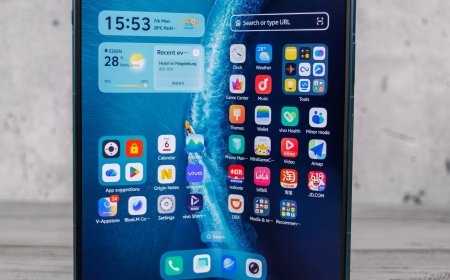
The X500 Pro Max runs OriginOS 7 on Android 17, debuting on the X500 Pro series, with five years of updates and five major OS upgrades. The UI has a Liquid Glass-like appearance — vivo calls it Fluid Motion — with liquid-like dynamic behaviour of UI elements, though in certain cases the transparent UI can get in the way, such as the context menu in Recent apps where text can be hard to read. Cross-platform compatibility with Apple is extensive: easy file transfer, continuity with iPhones, iPads and MacBooks, support for AirPods and Apple Watches, iCloud access in certain regions, spatial audio, and the phone can even be used as a webcam with MacBooks — though the Apple Watch must be set up for the first time with an iPhone. Multitasking is probably the best take on multitasking on an Android phone, with Workbench, Picture-in-Picture+ and Super Dragging for switching apps and transferring content across them.
The AI suite includes the Jovi personal assistant, now available on PC and able to execute tasks across connected devices with scheduling; Snap Note, which turns handwritten notes, slides, infographics and whiteboards into documents; AI Recorder, which transcribes meetings or lectures and can later summarise them; AI Search that understands context across the File Manager and Origin Notes; and a Smart Call Assistant that handles some calls on your behalf, talks to the other person, transcribes in real time and summarises the conversation.
Stereo speakers are the phone's weakest area: a hybrid setup with one bottom main speaker and the top earpiece, earning a "Good" loudness rating but sounding flat compared with rivals — the Xiaomi 17 Ultra and Galaxy S26 Ultra sound warmer and fuller, and only the Oppo Find X10 Pro Max has worse-sounding speakers among direct competitors. Connectivity covers 5G, eSIM, Wi-Fi 7, Bluetooth, NFC and an IR port, and the 1TB model adds satellite connectivity in China.
Verdict: superb, if you can look past the price
The vivo X500 Pro Max is hard not to love. You get a superb display, outstanding battery life, a feature-rich and responsive OS with long-term software support, and exceptional camera performance across the board, with video recording a particular highlight. Room for improvement: better speakers and at least a tad faster charging — previous vivo generations managed considerably better charging times. The €1,499 launch price, even higher in some regions, puts it in a difficult position against more established brands and is arguably the phone's biggest drawback.
But when you look past the price tag, there is very little to hold against the X500 Pro Max. It excels in almost every area that matters and goes above and beyond in some, particularly battery endurance and camera performance. The most direct competitor is the Oppo Find X10 Pro Max — the two trade blows, with vivo offering nicer speakers, a brighter display and faster charging, while Oppo has longer battery life and edges out vivo in some camera scenarios, especially at night. The vivo X300 Ultra has bigger camera guns, faster charging, better speakers and roughly the same display at a lower price, but the X500 Pro Max's battery life is hard to ignore. The Galaxy S26 Ultra and Pixel 11 Pro XL are almost half the price, and the Xiaomi 17 Ultra is a few hundred dollars cheaper — only the Xiaomi gets close on battery life and offers a comparable camera experience.
Pros and cons
Pros: Premium and durable design. Bright and feature-packed LTPO OLED display. Exceptional battery life. Fresh and feature-rich OriginOS 7 with long software support. Excellent camera performance all-around, unrivaled video stabilization. The optional teleconverter kit adds value to the camera.
Cons: Pricey at launch. Charging speed could be faster. European units ship with a 13.5% smaller battery capacity. The speakers' sound quality is unimpressive.
Sources
What's Your Reaction?
 Like
0
 Dislike
0
 Love
0
 Funny
0
 Angry
0
 Sad
0
 Wow
0