



































































Poco F9 Pro Review: Flagship Speed, a Huge Battery and a Price That's Hard to Swallow
The Poco F9 Pro is a great all-rounder: a toned-down Snapdragon 8 Elite Gen 5 that loses almost nothing to the full flagship chip, a bright and feature-packed 6.59-inch OLED, a 6,330mAh battery that lasts 19 hours of active use, 100W wired and 50W wireless charging, and a 200MP main camera that is excellent at 1x and 2x. But the launch price jumped sharply — €900 / $800 at launch, though early-bird deals and street prices are already far lower — and the camera system is oddly assembled, with a dated 8MP ultrawide and a 2.5x telephoto that the main camera's 2x crops nearly make redundant. GSMArena rated it 4.3 out of 5.
Poco F9 Pro Review: Flagship Speed, a Huge Battery and a Price That's Hard to Swallow
All in all, the Poco F9 Pro is a great all-rounder with some small drawbacks in the camera department. Sure, you can easily find better camera phones around the same price, but the Poco offers flagship-level performance, battery life, display quality and charging. The main gripes are the overly inflated launch price and the dated 8MP ultrawide camera. Perhaps a longer zoom would not have hurt either, considering how close the main 200MP camera's 2x crops get to the telephoto's quality. GSMArena gave it 4.3 out of 5 in its full review, published on 10 September 2026. Here is the phone in detail.
Design: close to an iPhone Pro, and more premium than it should be
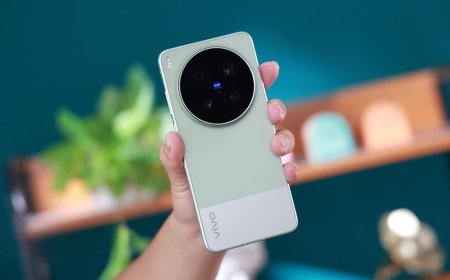
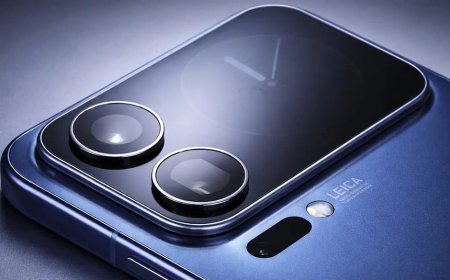
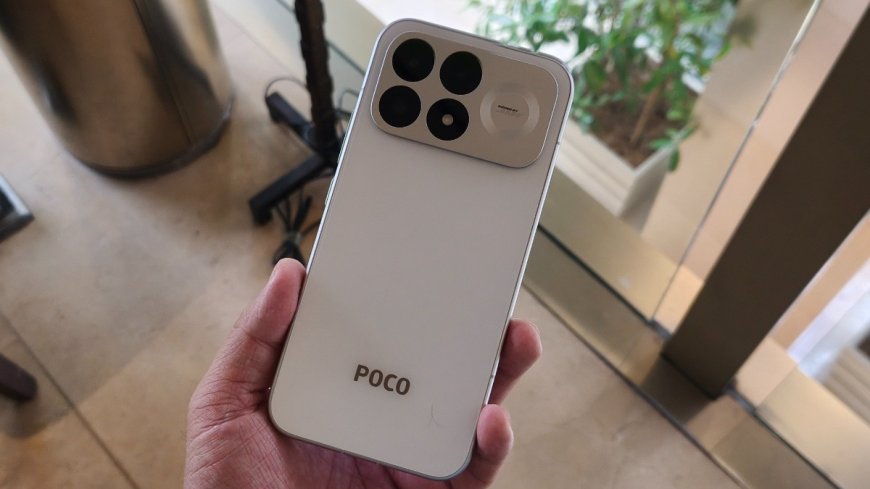
Design-wise, it is roughly the same as its predecessor, and close to the last two generations of iPhone Pro models: a big rectangular camera island with the camera sensors and LED flash on its left half. The whole body is flat — flat back, front and side frame — and the edge where the back panel meets the side frame is seamless, giving the impression of a unibody design. The front panel is Gorilla Glass 7i; the back glass was replaced with glass fiber-reinforced plastic, or fiberglass — nearly indistinguishable from proper glass. Some may see that as a downgrade, but it does not affect the in-hand feel negatively. It measures 157.5 x 75.3 x 8.6 mm and weighs 218 grams, with an aluminum frame, and is rated IP68 for water and dust, plus IP69 against high-pressure water jets and immersion up to 1.5 metres for 30 minutes.

Colours are White, Black and Aurora Green, and the review unit was White. The volume rocker and power button are conveniently positioned, the SIM tray at the bottom holds up to two physical SIMs, and eSIM is supported instead of either or both slots, with only two SIMs active at once. The under-display ultrasonic fingerprint reader offers excellent responsiveness and reliability, with no issues encountered. Overall, design and build quality are excellent — the reviewers were slightly surprised at how good it feels in hand. It is definitely on the slippery side, but it gives the impression of a far more premium product than it is. In the box: a standard retail box with user manuals, a USB-A to USB-C cable and a protective case — but no 100W Xiaomi charger, so you must buy one separately to use the fast charging fully.
Display: bright, feature-packed, but 185Hz is mostly a gimmick
The familiar 6.59-inch OLED remains: 1,156 x 2,510 pixels, 12-bit color, HDR10+, Dolby Vision, HDR Vivid, BT.2020, with an advertised peak brightness of 4,500 nits and Gorilla Glass 7i. In the lab tests it measured almost 1,300 nits on a 75% white patch — the brightness chart shows 1,270 nits — jumping to around 4,100 nits on a 10% white patch. Minimum brightness is 1 nit. For comparison in the chart: Motorola Edge 70 Pro 1,980 nits, Honor 600 Pro 1,766, Galaxy S26 1,383, Poco F9 Ultra 1,283 and Poco F8 Pro 1,094.

The headline 185Hz refresh rate is only available in certain conditions — games with uncapped or high-refresh-rate frame rates. The Default refresh rate setting maxes at 120Hz in all apps tried, including Chrome, and the system dials down to 60Hz when the screen is not in use or when watching videos on YouTube and Netflix. So the 185Hz figure is a gimmick — only available in certain games — and the display's real strength is its brightness and feature set.
Battery life: excellent, and wireless charging finally arrives
The battery is 6,330mAh, a modest increase over last year's 6,210mAh. In GSMArena's tests it scored an Active Use Score of 19 hours 6 minutes: 38 hours 52 minutes of calls, 19 hours 7 minutes of web browsing, 29 hours 33 minutes of video playback and 9 hours 22 minutes of gaming. That is a sizeable increase over the previous generation, with a notable jump in web browsing and video streaming, and excellent compared to most rivals. For comparison in the review's chart: Xiaomi 17T Pro 21:41h with a 7,000mAh battery, Motorola Edge 70 Pro 18:59h, Honor 600 Pro 17:55h, Poco F8 Pro 17:35h and Galaxy S26 15:20h. All in all, the F9 Pro's battery endurance is quite impressive, considering the battery capacity.
Charging is 100W HyperCharge proprietary, plus 50W wireless charging — new to the Pro, previously only on more premium models — though wireless only reaches full speed with one of Xiaomi's proprietary charging stands. Reverse wired is capped at 27W and reverse wireless at 22.5W. The fastest rates come via a compatible Xiaomi HyperCharge charger, and the company promises the highest 100W rate over PD PPS too. Charging test results: 41% in 15 minutes, 72% in 30 minutes, and a full charge in 43 minutes. That is competitive, especially in the last lap after 30 minutes, but notably slower than the previous generation — the F8 Pro did 47% in 15 minutes, 80% in 30 minutes and a full charge in 39 minutes — and the review says there is no logical explanation, since the batteries and protocol are the same. For comparison: Xiaomi 17T Pro 42% / 72% / 44 minutes, Honor 600 Pro 43% / 71% / 48 minutes, Motorola Edge 70 Pro 40% / 73% / 49 minutes and Galaxy S26 34% / 62% / 1 hour 4 minutes.
Performance: a toned-down flagship chip that loses almost nothing
Inside is the Qualcomm Snapdragon 8 Elite Gen 5 V Series, a 3nm toned-down version of the Snapdragon 8 Elite Gen 5: two prime Oryon V3 Phoenix L cores at 4.6GHz plus six Oryon V3 Phoenix M cores at 3.62GHz, with an Adreno 840 GPU split into two slices, still at 1.2GHz, but with 33% less dedicated memory — 12MB versus 18MB on the regular Snapdragon 8 Elite Gen 5. The V Series offers the same features, modem, connectivity and ISP. Qualcomm and Xiaomi claim performance nearly indistinguishable from the full Snapdragon 8 Elite Gen 5, at lower cost. RAM and storage come as 256GB 12GB RAM, 256GB 16GB RAM, 512GB 12GB RAM and 512GB 16GB RAM, on UFS 4.1, with no microSD mentioned.
The benchmark results back that up: Geekbench 6 scored 3,378 single-core and 10,198 multi-core, versus 3,530 / 10,500 for the Poco F9 Ultra, 3,158 / 9,766 for the Xiaomi 17T Pro, 2,995 / 10,824 for the Galaxy S26, 2,933 / 7,970 for the Honor 600 Pro and 2,630 / 8,610 for the Poco F8 Pro. AnTuTu 10 scored 2,596,938, versus 2,795,030 for the Xiaomi 17T Pro, 2,480,773 for the Poco F8 Pro and 2,441,481 for the Galaxy S26. No 3DMark scores appear in this review — only Geekbench 6 and AnTuTu 10 were run. Despite the limited benchmark tests, the device put up a great performance: the more budget, toned-down Snapdragon 8 Elite Gen 5 V Series offers only minimal performance loss compared to its high-flying counterpart, mostly in the single-core tests. The GPU is the chipset's Achilles' heel, although it should be more than enough to run the latest games on Google Play anyway. One of the best performers in its class, offering a nearly unmatched price-to-performance ratio. Sustained performance is a mixed bag: heavy throttling during the CPU stress test, with throttling beginning relatively later than most phones running this chip, but the throttling is inconsistent — clock speeds dip briefly then go back up, which the reviewers liked less; lower but consistent clock speeds would mean more predictable and smoother performance.
Cameras: a strangely assembled system — great main camera, questionable telephoto
The rear camera system is a 200MP main with an f/1.7 aperture, a 1/1.56-inch sensor, PDAF and OIS — most probably a Samsung HP5, or a SmartSens sensor with the same basic specs — a 50MP telephoto with an f/2.0 aperture, 60mm focal length, a 1/2.76-inch sensor, PDAF and OIS, with 2.5x optical zoom, and an 8MP ultrawide with an f/2.2 aperture, 112° field of view and fixed focus. The front camera is a 32MP sensor with an f/2.2 aperture and fixed focus. Video goes up to 4K60 with the main and telephoto cameras on the back, the ultrawide is capped at 1080p30, and the selfie camera maxes at 4K30 or 1080p60. The 24fps option is missing, including in Pro video mode, and there is no 8K — the F9 Ultra has 8K30 on the main camera. The default codec is h.265, switchable to h.264, and HDR10+ recording is available if enabled via a toggle in settings, for all resolution and frame rate settings on all four cameras. Pro video mode offers Log recording with a handful of live preview LUTs plus the ability to import your own, audio level monitoring, zebras for highlight clipping and a tiny histogram switchable for a tiny waveform — pretty solid. Electronic video stabilization is always on for all resolutions and frame rates.

In daylight, the main camera's 1x photos are excellent — great dynamic range, pleasing colors, a ton of detail with reasonably restrained sharpening. People shots have accurate skin tones, and Portrait mode blur is conservative and believable. 50MP mode offers no particular detail benefits — it looks like an upscale from the 12.5MP regular images — but 200MP mode files look sharper and better detailed than the 50MP ones, with potential for downscaling to lower resolution for better results, and 24MP files after extra steps are pretty excellent, though capture takes a few seconds. 2x 12.5MP photos have excellent detail with no real flaws, 2x people shots are superb in detail with great global properties, and Portrait mode is top-notch. The native 2.5x telephoto does a great job — very good detail, likeable rendering, colors somewhat more enthusiastic than the main camera's, contrast a touch higher, more expressive but not bad. Headshots at 2.5x are excellent — great skin tones, nice facial detail, Portrait mode is easy to like — and an additional 3.1x zoom level (75mm equivalent) in Portrait mode gives slightly tighter framing with no real quality penalty. 50MP photos at 2.5x show extra detail in brightly lit outdoor scenes, not so much indoors. 5x zoom shots are somewhere between decent and good depending on the light — indoor ones are softer, outdoor ones sharper but somewhat heavily processed. The ultrawide is alright in bright daylight; more demanding indoor conditions quickly turn sour in sharpness, though dynamic range and colors are quite good. For close-ups, the main camera at 2x (or up to 2.4x) or the telephoto at 2.5x or 5x; avoid 5x, as pixel-level quality is a bit meh, though it is valid if sharing at reduced resolution. The reviewers were torn between 2x and 2.5x — telephoto shots are generally slightly better, defending the 2.5x camera's existence, but the main camera does quite admirably; the telephoto's advantage is probably not that great. Selfies from the 32MP front camera are pretty great — wide dynamic range, pleasing skin tones, detail quite good, just not 32MP-good. The lack of autofocus is less of an issue — the chosen focus distance and depth of field cover short shooting distances reasonably well.
In low light, the main camera is very good: a bit of a dark vibe, nicely controlled highlights, well developed shadows, no white balance mishaps, nicely saturated nighttime colors and detail very good. 2x results are not quite as impressive as in daylight but still very good in detail — they can rival some actual high-end cameraphones at this zoom level. The low-light telephoto at 2.5x is very good, with a small but relatively consistent advantage in captured detail over the main camera's 2x; the overall look is very similar in dynamic range and colors — it is a very minor extension of reach and the sharpness advantage is not huge. 5x is usable but not particularly good-looking — pretty soft up close, with relatively pronounced jaggies. The low-light ultrawide is well exposed with good colors; fine as long as you do not go pixel-peeping — at 1:1 there is not much detail. The photo quality verdict: the Poco F9 Pro's camera system is somewhat strangely put together, its otherwise pretty great telephoto's existence questioned by an also excellent main camera. The main camera is excellent at 1x and 2x, day and night; the telephoto is respectable at 2.5x — just that 2.5x is much too close to 2x. 5x is alright, probably not super exciting enough to warrant the extra camera on its own. The F9 Ultra's 5x telephoto configuration makes a lot more sense. The ultrawide is unremarkable; selfies are pretty great.
Video quality in daylight is very good with the main camera — wide dynamic range, excellent contrast, accurate color rendition, detail very good at 1x and more like alright at 2x. The telephoto has meaningfully better detail at 2.5x than the main camera at 2x, with very good global properties. The ultrawide's 1080p clips look good from afar but have not much detail. At night, the main camera falls a little short of sharpness expectations but is still alright, with colors just right and excellent dynamic range. 2x is soft and noisy but usable. The telephoto at 2.5x is better than 2x — an advantage in sharpness and better contrast. Ultrawide footage is not the worst seen, but still pretty bad. Stabilization: walking shake on the main camera is not quite as expertly ironed out as hoped, but still not too bad; stationary, the main camera is super stable, and the ultrawide too; the telephoto may have a gentle waviness left over. Pretty solid overall. The video verdict: video capabilities are quite good — 4K60 on both the main and telephoto cameras, HDR10+ all around, and a decently capable Pro mode. Very good videos from the main and telephoto cameras in good light and at night; the ultrawide is about as good as nonexistent for video. Stabilization is generally very good.
Software, speakers and extras
The Poco F9 Pro runs HyperOS 3 on Android 16, with 4 major OS updates and 6 years of security patches promised. HyperOS 3 is basically HyperOS 2 plus a few new features; animations are refined, and responsiveness and fluidity are not an issue. Hyper Island is Xiaomi's take on Apple's Dynamic Island — contextual info and shortcuts for background activities such as timers, calls, calendar events and media playback (Spotify). System icons are slightly redesigned — flatter and simpler. HyperOS 3.0 focuses on connectivity and AI. International units use Google Gemini at the helm (China uses XiaoAI). AI features are the same as before — wallpaper generation, live subtitles, transcription, translator, writing, AI search — grouped under a dedicated Xiaomi HyperAI menu; Gemini invocation is configured there. Interconnectivity, previously mostly Xiaomi devices on the same Xiaomi Account (Wi-Fi passwords, files, notifications, calls, screen mirroring), now opens to select non-Xiaomi Android devices and Apple hardware (iPhones, iPads); pairing with Windows PCs and Macs is supported; Xiaomi says you can read notifications and answer calls directly from your iPad, Mac or iPhone — not tried by the reviewers.
The hybrid stereo speakers — one full-fledged bottom speaker and the earpiece at the top — are tuned by Bose; unlike the Poco F9 Ultra, the Pro has no dedicated subwoofer. Loudness measured -24.0 LUFS, rated "Very Good": very clean, yet warm music tracks, relatively prominent bass compared to most rivals while keeping highs and vocals clean. The reviewers definitely like the F9 Pro's tuning more than the F8 Pro's (-23.3 LUFS, "Very Good"); the only handset offering better sound tuning is the Samsung Galaxy S26. Extras include the under-display ultrasonic fingerprint reader, Wi-Fi 7, Bluetooth 6.0 with LHDC 5.0, ASHA, MIHC and Auracast, NFC and an infrared port. There is no microSD, no 3.5mm jack and no FM radio.
Verdict: a great all-rounder at the right price — not the launch price
The Poco F9 Pro starts at €900 / $800 at launch — a major price hike compared to the previous generation — but the Early Bird promotion is still active in some regions, bringing it down to €740 and $650 respectively; prices around €750 are already available at third-party retailers, and the phone can reasonably be expected to settle below €700 in the coming weeks or months. Current prices: 256GB 12GB RAM £655.99, 256GB 12GB RAM €699.90, 512GB 12GB RAM £669.00. Competition: the Honor 600 Pro and Xiaomi 17T Pro both outshine the F9 Pro in the camera department with a more versatile setup and generally better photo and video capabilities; the F9 Pro has a slightly more powerful chip; the 17T Pro is perhaps the best pick among all three, as it offers the largest battery and is the cheapest. The Motorola Edge 70 Pro is a nice alternative with an arguably better camera experience (better ultrawide camera and longer zoom), comparable battery life and charging speed, but it falls short on performance; the F9 Pro remains the safest bet for the best possible performance at the given price. The Galaxy S26 is a direct competitor — a good choice if looking for something more premium and compact, with a marginally more powerful Exynos 2600 chipset and better camera performance; despite being a true flagship, the F9 Pro is still the better choice if battery life and charging speed are priorities. Poco F8 Pro units are still on shelves — a flagship chipset from 2025, roughly the same camera experience and faster charging; missing out on the F9 Pro's improved battery life and better main sensor, you can save €200 or so.
Ultimately, the Poco F9 Pro is a great all-rounder: flagship-level performance, battery life, display quality and charging, held back mainly by its camera setup and its launch price. At the street prices it is settling toward, it is one of the best performers in its class, offering a nearly unmatched price-to-performance ratio. Buy it for the speed, the screen and the battery — just do not pay full launch price for it, and do not expect the ultrawide to impress.
Pros and cons
Pros: Excellent build and feel. Bright, feature-packed OLED display. Great battery life, fast wireless charging added. Nice-sounding stereo speakers. Excellent price/performance ratio.
Cons: Major price hike compared to the previous generation. Ultrawide camera is underwhelming; the 2.5x zoom camera feels obsolete at times. The 185Hz refresh rate is a gimmick — only available in certain games.
Sources
What's Your Reaction?
 Like
0
 Dislike
0
 Love
0
 Funny
0
 Angry
0
 Sad
0
 Wow
0