


















































iPhone 18 Pro Review: The Best Compact iPhone Yet — With a Chip That Steals the Show
The iPhone 18 Pro is an incredibly balanced compact smartphone with hardly any shortcomings, except perhaps its weight. It packs the 2nm Apple A20 Pro — a true generational performance upgrade — a bright LTPO OLED display, the best battery life ever from a regular Pro model, improved 45W charging, louder speakers and a very good triple 48MP camera system led by a variable-aperture main lens. Its price is hefty, though: $1,200 in the US and €1,450 in Europe. GSMArena rated it 4.4 out of 5.
iPhone 18 Pro Review: The Best Compact iPhone Yet — With a Chip That Steals the Show
The regular iPhone Pro remains one of the few premium compact offerings on the market as a whole. With the iPhone 18 Pro, Apple has created an incredibly balanced compact smartphone with hardly any shortcomings, except perhaps its rather substantial weight. It has a great display, long battery life, improved charging speed, awesome speakers and an overall very good camera experience. The new chipset's performance is perhaps the biggest surprise this year, delivering a true generational upgrade. It does come with a hefty price tag, though, so it is certainly not the best deal out there. But if the budget allows and you are looking for a premium compact phone, the iPhone 18 Pro is definitely one of the best you can get right now. GSMArena gave it 4.4 out of 5 in its full review, published on 25 September 2026. Here is the phone in detail.
Design: a Pro evolution, heavier than it looks
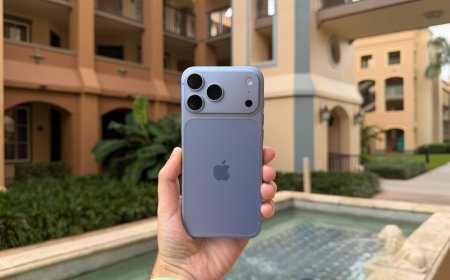
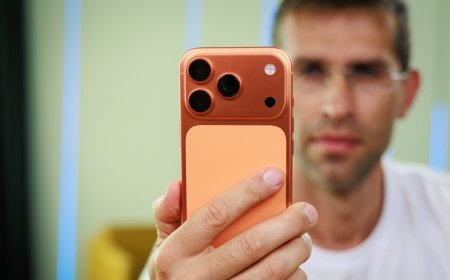
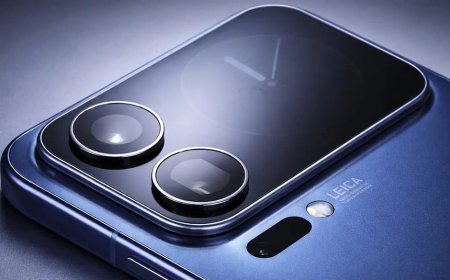
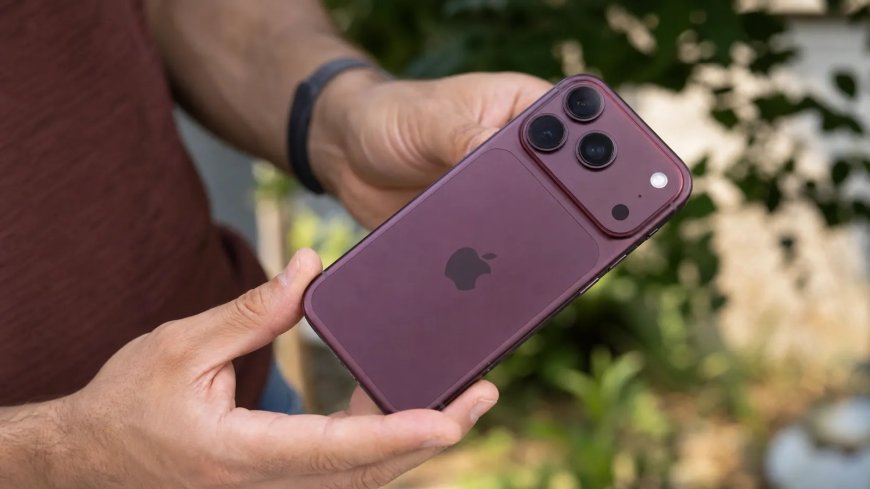
The iPhone 18 Pro is a Pro evolution of the 17 Pro: an aluminium unibody with a new back plate covering the camera deck, and a camera island that spans nearly the entire width of the phone — a plateau with rounded edges, similar to the Pixel's visor. It is anodized aluminum alloy with Ceramic Shield 2 on the front and back, a matte finish with a hint of sparkle, and it carries IP68 protection (up to 6 metres for 30 minutes) plus IP69. Colours are Cosmic Orange, Deep Blue, Silver and Sky Blue, and the review unit was Sky Blue — very fresh and very different from Apple, an icy light-blue. The side keys are slightly thinner and more elegant than on the 17 Pro. The smaller Dynamic Island is a nice change, but still a distraction and not as refined as punch-hole alternatives. In-hand feel is comfortable and solid, and the camera island does not interfere with wireless charging or MagSafe attachments.
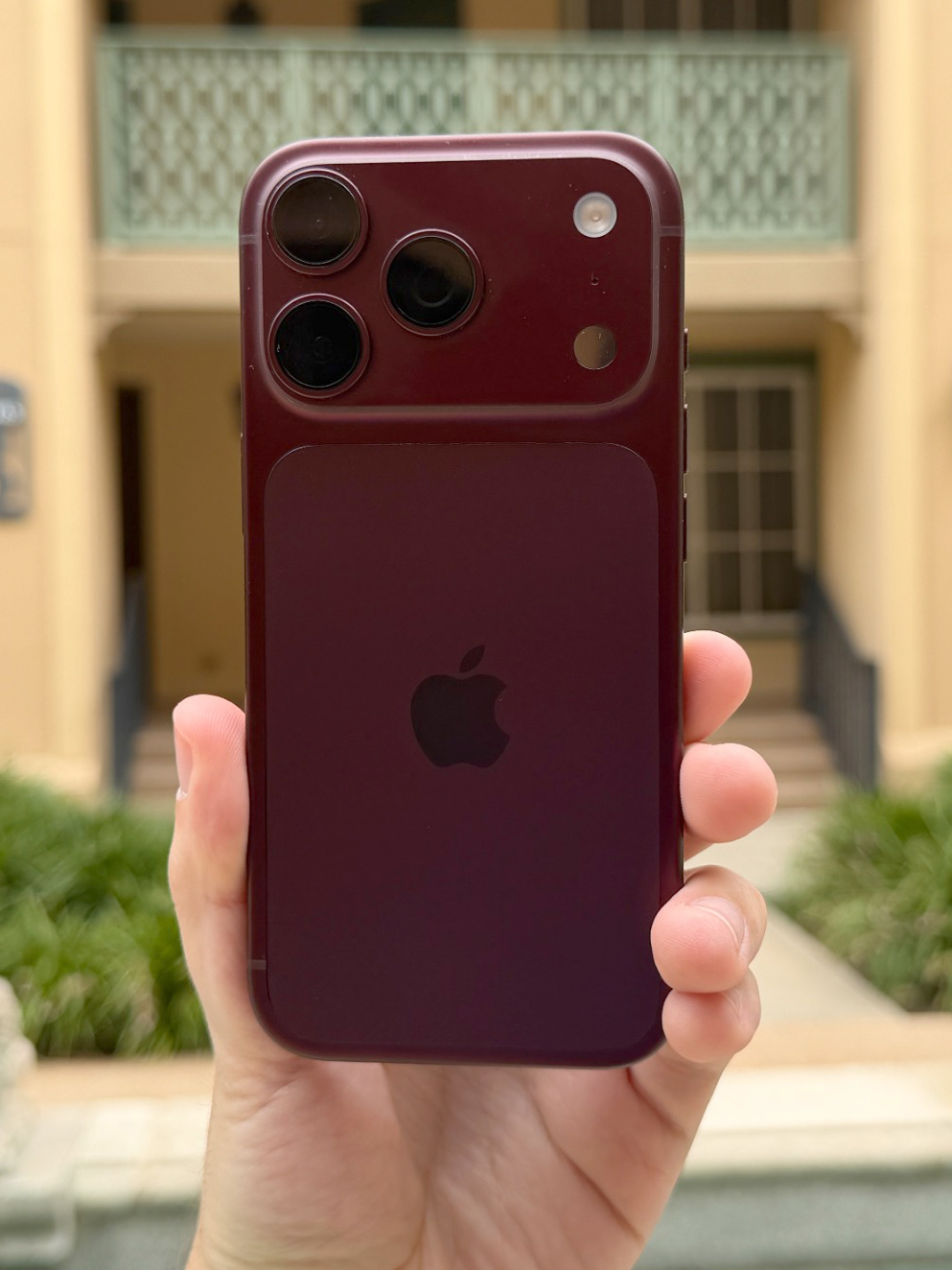
At 150.5 x 71.7 x 8.0 mm and 214 grams, the handset is noticeably heavier than it looks — the only real annoyance in daily use. Fingerprints are an absolute magnet: even after five minutes of handling, the review unit was covered in them, and the aluminium back and camera deck need constant cleaning. In the box there is a braided USB-C cable and nothing else — no charger. There is a Camera Control button, an Action Button, Face ID with the smaller Dynamic Island, and USB-C.
Display: bright, smooth, and easier on the eyes outdoors
The 6.3-inch LTPO Super Retina XDR OLED display packs 1206 x 2622 pixels at 460 ppi, runs at 1–120Hz with ProMotion — automatically dropping to 1Hz when viewing still images — and supports HDR10 and Dolby Vision. The anti-reflective coating is a really nice quality-of-life improvement, giving a much more vivid image in sunlight. Colour accuracy with True Tone off is very good for an Apple display, with a slightly warm white point and an average Delta E of 1.1.

In GSMArena's lab tests the display measured 971 nits in auto mode with a 75% white patch — just under 1,000 nits — with a peak of over 2,700 nits at a 10% patch, and minimum brightness of 1 nit with extra dimming. Widevine L1, HDR10 and Dolby Vision are supported in the Netflix app, and YouTube supports HDR10 at 4K60 in AV1 and VP9.
Battery life: the best ever from a regular Pro, and faster charging
The battery is 4,056mAh in the physical SIM version reviewed, or 4,288mAh in the eSIM-only version. In GSMArena's tests it scored an Active Use Score of 16 hours 43 minutes: 23 hours 34 minutes of calls, 14 hours 12 minutes of web browsing, 24 hours 10 minutes of video playback and 11 hours 16 minutes of gaming. The review calls it the best battery life from a regular Pro model — about a 10% improvement over the 17 Pro's 15:07h despite a smaller battery capacity, thanks to the 2nm chip. It is far ahead of Android flagships: the Galaxy S26 scored 11:36h and the Pixel 11 Pro 11:49h. The eSIM-only version is expected to do even better.
Charging peaks at 45W (EU box); the review says 45W is not that impressive in 2026, but the charging curve is good — almost linear up to 80%, hitting 80% in about 30 minutes. The 30-minute charge figure in the review's chart is 74% for the iPhone 18 Pro, versus 81% for the Pro Max. Apple's "50% in 15 minutes" claim was not met in testing — it took longer, despite charging at full throttle from the start. Wireless charging is 25W MagSafe (Qi2). Settings offer a Charge Limit from 80% to 100% in 5-point increments plus Optimized Battery Charging.
Performance: the A20 Pro is a true generational upgrade
Inside is the Apple A20 Pro, a 2nm chip with a 6-core CPU — two Super Cores at 4.93GHz and four Efficient Cores at 2.64GHz — a 7-core GPU up to 40% faster than the A19 Pro, and a 32-core Neural Engine. There is 12GB of LPDDR5X RAM on a 96-bit bus, with memory bandwidth 50% higher than the A19 Pro, and the vapor chamber has three times the surface area of the A19 Pro's. Storage comes in 256GB, 512GB, 1TB or 2TB NVMe options, though the 256GB/512GB models use TLC storage while the 1TB/2TB models use QLC, and write speeds drop to around 40% once storage is more than 60% full.
The benchmark results are remarkable: AnTuTu 11 scored 3,402,829, about 43% faster than the 17 Pro's 2,381,751; Geekbench 6 single-core scored 4,732, versus 3,846 for the 17 Pro; and 3DMark Wild Life Extreme came in at 7,942, versus 5,933 for the 17 Pro and 7,230 for the Galaxy S26. The A20 Pro is around 27% faster in multi-core and around 13% faster in GPU-heavy tests than the A19 Pro. In stability tests, APSI Bench stress scored 72% and 3DMark Wild Life Extreme Stress Test GPU stability was 48% — a small step back from the previous generation and not as good as the Pro Max, but the review notes the A20 Pro does not throttle much in the sense that it is efficient and does not require much throttling.
Cameras: triple 48MP, led by a variable-aperture main lens
The rear camera system is three 48MP cameras: a 48MP main with a variable aperture of f/1.48 to f/4.0 and a Sony IMX 905 sensor, a 48MP ultrawide with an f/2.2 aperture and a Sony IMX 972 sensor, and a 48MP 4x telephoto with an f/2.8 aperture and a Sony IMX 973 sensor. All three rear cameras shoot 24MP by default, with 12MP and 48MP options in settings, and 4K60 video on all cameras. The front camera is an 18MP sensor with an f/1.9 aperture and an octagonal-shaped sensor with auto-orientation — wide or square — that lets you switch between portrait and landscape selfies.

In daylight, 24MP default shots from the main camera have very good detail with well-defined, if somewhat digital, random textures, reasonably restrained but not lifeless colours, typically accurate white balance and excellent dynamic range. The variable aperture was added by Apple for video — stopping down to avoid ND filters and improve sharpness — and it does make a difference in stills, but only on nearby objects in scenes with depth; the review concludes it is nice to have in principle, but of limited actual practical benefit, at least in this particular implementation. The 48MP mode produces very good shots with marginally more detail in the centre of the frame and no real downside besides storage. 2x shots have great detail definition and the same global properties as 1x; 2x portraits are good, with plenty of detail, warmth, highlight detail and natural bokeh. People shots are very good, with improved skin textures — less plastic — a bit more warmth and highlight detail, natural colours and bokeh more natural than last year, almost at the level of Portrait mode. Portrait mode itself shows no real improvement over last year.
The 4x telephoto is good overall but missing the detail crispiness the reviewers would like in a good light scene, and the 48MP mode is no better than 24MP in a good light scene — 24MP is the higher-quality choice. 4x headshots appear sharper than last year's take, more likely due to Apple tweaking processing than any hardware improvement. 8x zoom is quite grainy and a bit soft, but can produce good results in bright daylight; 16x zoom is also available. The 48MP ultrawide takes good 24MP photos in bright outdoor scenes and a little less so indoors, with good colours and improved, though not eliminated, corner softness. The iPhone's close-ups use digital zoom from the ultrawide camera — decent results, but no comparison to real macro cameras. Selfies are overall good with accurate colours, though low-light selfies are quite poor and unsharp — the phone did not manage to focus on the face and Night mode did not kick in.
In low light, the main camera's shots are quite excellent — a bit of grain, but wide dynamic range and natural colours — and 2x shots are properly great, some of the best results you can expect from a main camera at 2x in low light. The telephoto can do quite well at 4x, but is also reluctant to engage Night mode; at 8x, photos are softer and noisier. Low-light ultrawide shots are softish and grainy, but with a decent amount of detail — usable. The photo quality verdict: the single hardware change is the variable-aperture main lens, with a minor effect on images — not a huge upgrade, and 17 Pro owners will not find much new here, but the Pro Max and Pro still deliver top-tier photo quality.
Video is largely the same as the 17 Pro — 4K60 with Dolby Vision HDR, Apple ProRes, ProRes RAW, Apple Log, plus Genlock, new for synchronizing cameras to a common clock source. Cinematic mode now maxes at 4K60, up from 4K30. Spatial Audio recording embeds two audio tracks. Stabilization is always on in all modes including 4K120 — you cannot turn it off. To capture 4K60 or higher you must use the high-efficiency HEVC/h.265 format, which limits your options for ProRes and Apple Log. At night, the main camera and telephoto show pretty visible internal reflections from bright lights — a long-standing Apple lens peculiarity — while the ultrawide does not suffer from this. Main camera clips are very good — wide dynamic range, accurate colour, and the iPhone's stabilization algorithms are top-tier, with the main camera and the ultrawide pretty much rock steady. The video verdict: wide-ranging capabilities, many frame-rate options, Dolby Vision across the board and manual controls; great daytime video across the zoom range and very good main and telephoto at night.
Software, speakers and extras
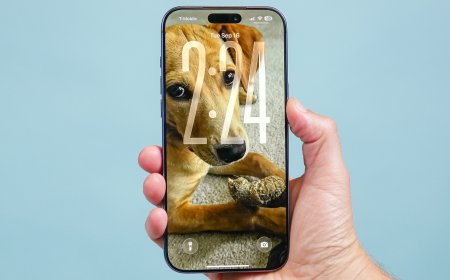
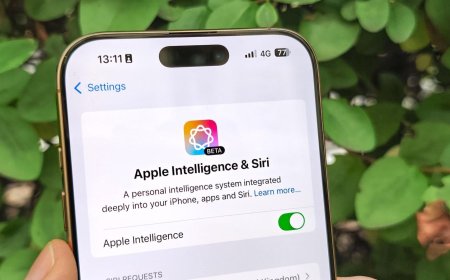
The iPhone 18 Pro runs iOS 27 (27.0.1 on the review unit), a refinement of iOS 26's Liquid Glass design, with a refined Liquid Glass look and a lot of room for customization. The new AI-powered Siri is a flagship feature, but European users may never get it — the review lists "European users are not getting Siri AI for now (if ever)" as a con. Extra-large widgets are a new feature. Apple gives no promised update count, but the iPhone 11 from 2019 runs iOS 27, so at least 7 major OS updates are expected. The review unit is Made in India.
The hybrid stereo speakers measured -26.5 LUFS — "Good" — up from -28.9 LUFS on the 17 Pro, and the review lists "Awesome speaker quality" as a pro, noting the speakers are louder and among the industry benchmarks. Connectivity covers 5G (sub-6GHz and mmWave, with satellite connectivity), Wi-Fi 7, Bluetooth 6.0, NFC, Apple U2 (UWB), USB-C and dual-band GPS. There is no microSD, no 3.5mm jack and no FM radio.
Verdict: one of the best premium compact phones you can get — if the budget allows
The starting price is $1,200 in the US and €1,450 in Europe — a bit more expensive than last year, mainly due to rising RAM prices. Worth upgrading? If you have an iPhone 16 Pro or newer, probably not; some will find even the iPhone 15 Pro still good enough. For a brand-new premium phone or a long-overdue upgrade, paying a little extra for the 18 Pro might be worth it: best battery life from a regular Pro, slightly faster charging, louder speakers, variable aperture and minor camera improvements. The iPhone 17 Pro gets you much of the way there at a considerably lower price. Android alternatives: the Galaxy S26 and Pixel 11 Pro are the biggest competitors, especially in the US; the Pixel 11 Pro can challenge the iPhone's camera prowess, the Galaxy S26 is a bit behind in camera, and the iPhone remains the best bet for video. The iPhone charges faster than both and delivers longer battery life, though both Android alternatives are much cheaper. The Xiaomi 17 challenges the iPhone's camera experience, except video, with longer battery life and faster charging. The iPhone 18 Pro Max, for the extra $100 or €150, gives longer battery life and faster charging, aside from the larger screen.
With the iPhone 18 Pro, Apple has created an incredibly balanced compact smartphone with hardly any shortcomings, except perhaps its rather substantial weight. It has a great display, long battery life, improved charging speed, awesome speakers and an overall very good camera experience. The new chipset's performance is perhaps the biggest surprise this year, delivering a true generational upgrade. It does come with a hefty price tag, though, so it is certainly not the best deal out there. But if the budget allows and you are looking for a premium compact phone, the iPhone 18 Pro is definitely one of the best you can get right now.
Pros and cons
Pros: Compact and premium design with a smaller Dynamic Island. Bright and feature-packed LTPO OLED display. Improved battery life and faster charging. Awesome speaker quality. Cutting-edge performance. Solid photo quality across the board. Great video capture quality.
Cons: Somewhat heavy. More expensive than its predecessor. Hardly any upgrades in the camera department. European users are not getting Siri AI for now (if ever).
Sources
What's Your Reaction?
 Like
0
 Dislike
0
 Love
0
 Funny
0
 Angry
0
 Sad
0
 Wow
0