























































vivo V80 Review: Excellent Cameras, Two-Day Battery, and a Chipset We've Seen Twice Before
The vivo V80 is an easy phone to like: a bright 144Hz AMOLED display, a huge 7,200mAh battery, a versatile ZEISS camera system led by a superb 50MP main sensor, and a slim, durable IP68/IP69-rated body. But it reuses the Snapdragon 7 Gen 4 for the third generation running, its performance trails its predecessor in benchmarks, and at just over €500 it is hard to recommend while the cheaper V70 offers nearly the same experience. GSMArena rated it 4.2 out of 5.
vivo V80 Review: Excellent Cameras, Two-Day Battery, and a Chipset We've Seen Twice Before
The vivo V80 arrives as the newest member of vivo's popular V series, and on first impressions it is an easy phone to like. It is slim, well built, and tough, with a bright AMOLED display, a battery that comfortably stretches across two days, and a camera system that puts photography first. Look a little closer, though, and the story gets more complicated: the chipset inside is the same one vivo has used for three generations, the performance numbers trail the cheaper phone it replaces, and the launch price leaves it in an awkward spot. GSMArena gave it 4.2 out of 5 in its full review, published on 6 November 2026. Here is the phone in detail.
Design: slim, stylish, and slippery
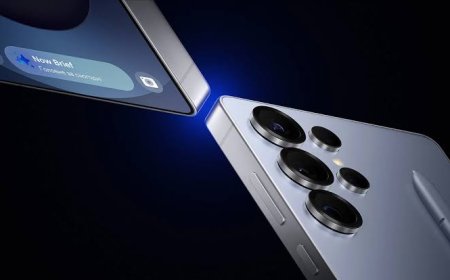
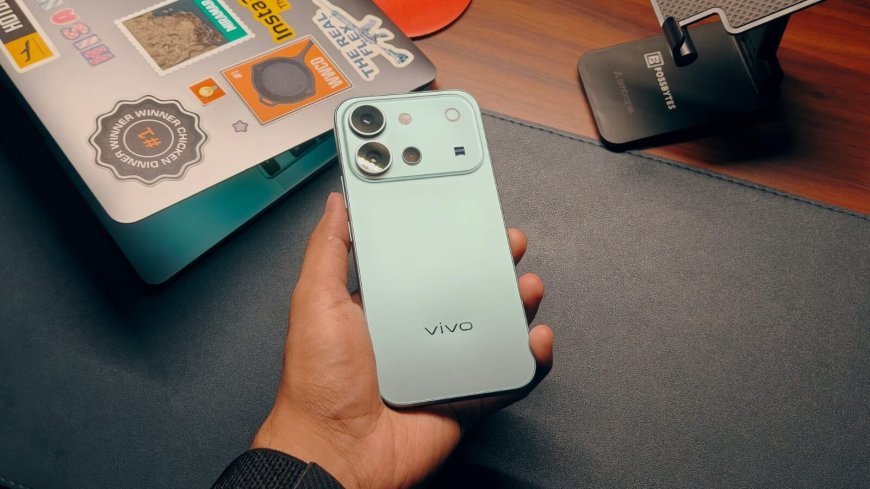
The V80 is built around an aluminum frame with a matte glass back and a squircle camera island carrying ZEISS branding, plus a white Aura Light LED and a V lettering detail. At 157.5 x 74.3 x 7.7 mm and 203 grams it feels light for its size, and the 7.7 mm profile is genuinely slim for a phone with a 7,200mAh battery inside. It comes in Stellar Black, Sunrise Anthem (orange), Horizon Blue, and a limited-edition Starwish Purple.
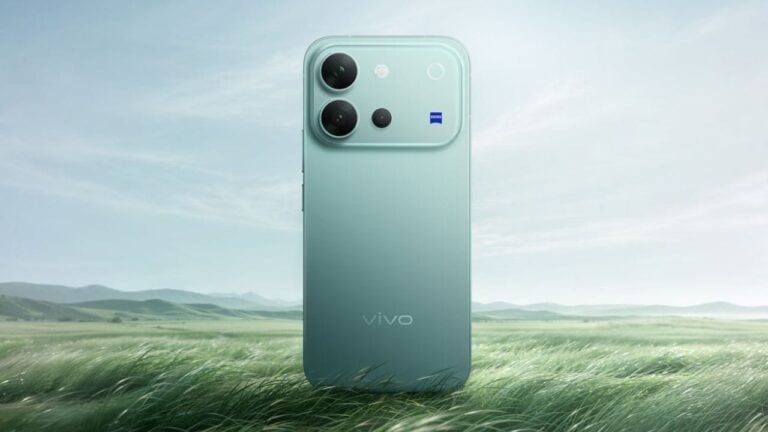
There are two catches to the design. The weight is not evenly distributed, so the phone feels top-heavy in the hand, and the matte glass back is very slippery — good-looking, but hard to grip without the clear protective case that comes in the box. The buttons sit on the right side, the USB-C port, speaker grille, microphone and SIM tray are at the bottom, and an IR blaster sits on top. The ultrasonic fingerprint reader near the bottom of the screen is fast and reliable, face unlock is quick too, and the phone carries full IP68 and IP69 dust and water protection.
The box holds the phone, a USB-C cable, a SIM ejector tool, a quick start guide and the clear case. The 90W charger is sold separately in most markets, though it is included in the box in India.
Display: bright, sharp, and mostly 144Hz
The 6.59-inch AMOLED display packs 1260 x 2750 pixels at around 460 ppi, shows a billion colours, and supports HDR10+, HLG and HDR10, with HDR working on YouTube and Netflix. It is protected by Schott Alpha glass, developed with Schott. In GSMArena's lab tests the screen measured 587 nits at maximum manual brightness and 1,856 nits in auto mode, with a peak of 2,573 nits on a 10% white patch — and up to 2,787 nits with the Gallery boost. Minimum brightness drops to just 1 nit, and visibility in bright sunlight was rated excellent. vivo advertises a 5,000-nit local peak, which is a best-case figure rather than a sustained one.
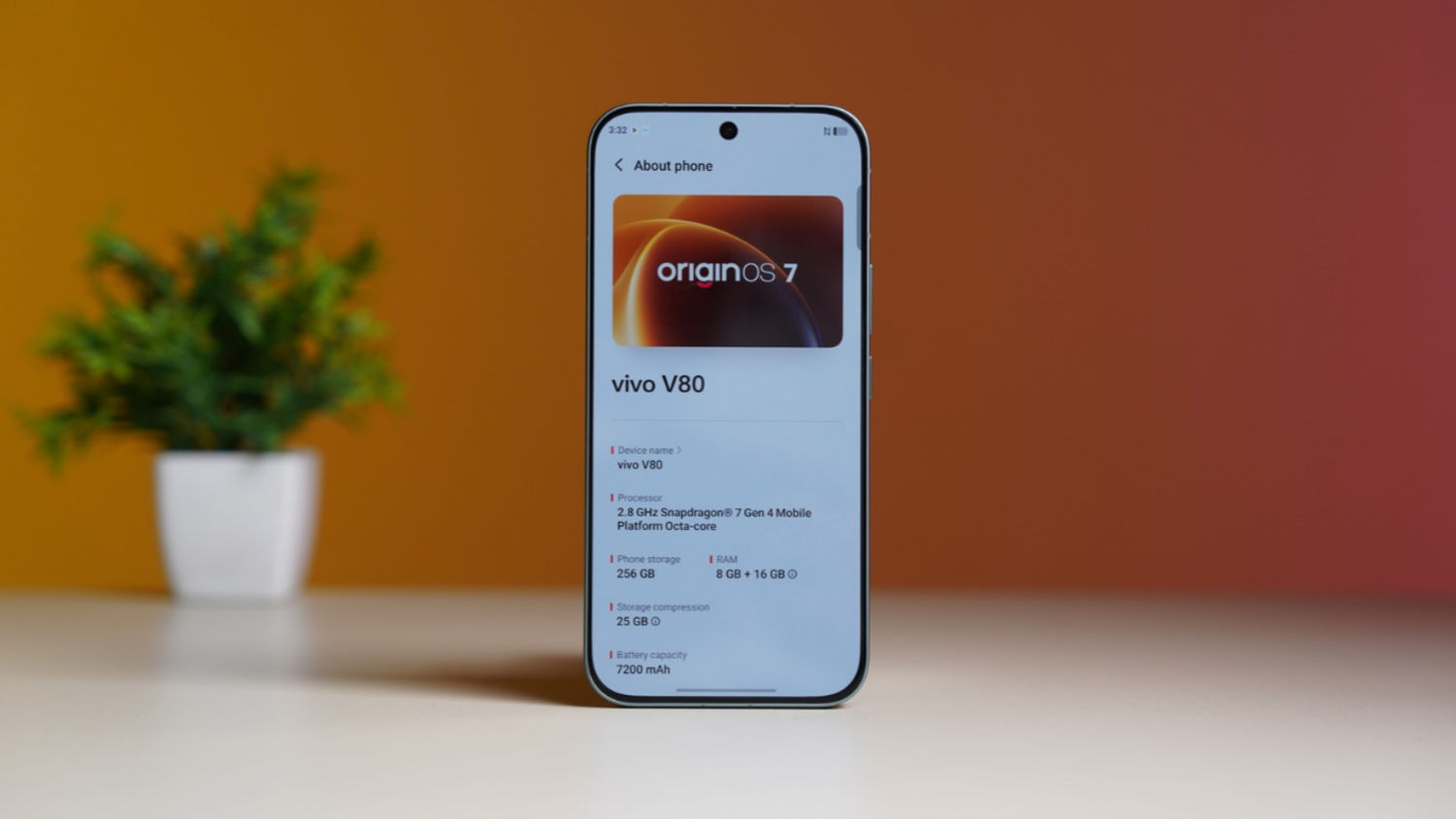
The refresh rate goes up to 144Hz, with 60, 90, 120 and 144Hz modes and Smart Adaptation as the default. One quirk: the full 144Hz only works in a handful of games — Clash of Clans, Brawl Stars, Hill Climb Racing 2 and Subway Surfers — and the per-app High mode tops out at 120Hz. The always-on display offers many styles, a screen-saver clock and scheduling.
Battery life: two days, easily
The 7,200mAh silicon-carbon battery is one of the V80's strongest features. In GSMArena's tests it scored 17 hours and 9 minutes of Active Use, with 48 hours 33 minutes of call time, 18 hours 15 minutes of web browsing and 28 hours 55 minutes of video playback. Compared with the V70, calls last about 16% longer, web browsing 27% longer and video 19% longer. The one disappointment is gaming endurance at 7 hours 18 minutes — about 22% shorter than the V70's.
Charging is handled by 90W FlashCharge: 28% in 15 minutes, 53% in 30 minutes and a full charge in 58 minutes, against vivo's promise of 50% in 30 minutes and a full charge in 53. The phone also offers bypass charging, a charge limiter and an option to turn FlashCharge off. There is 3W reverse wired charging, but no wireless charging at all.
Performance: the same chip, slower than before
Inside is the Snapdragon 7 Gen 4, a 4nm chip with an Adreno 722 GPU, paired with 8GB of RAM and 128GB, 256GB or 512GB of storage — the 128GB model uses slower UFS 3.1, the larger two use UFS 4.1, and there is no card slot. This is the third consecutive V-series generation to use the same chipset, and the benchmark results show it: Geekbench 6 single-core scored 1240, AnTuTu reached 1,028,507 and 3DMark Wild Life Extreme came in at 1828. All three are lower than the V70's figures (1325, 1,183,617 and 2091) despite the identical chip. For comparison, the Poco X8 Pro Max scored 2670 on Geekbench single-core and 2,422,000 on AnTuTu, while the Motorola Edge 70 Pro managed 1683 on Geekbench single-core.
Stability testing showed 95% CPU stability but only 70% GPU stability, and the phone gets uncomfortably hot under sustained load — the review even saw occasional app crashes caused by overheating during the 3DMark stress test. Day-to-day use is smooth enough, but for the price this is average performance at best, and it is the phone's biggest weakness.
Cameras: photography is the strongest case
The camera system is where the V80 earns its keep. The main camera is a 50MP Sony Lytia 700V sensor with an f/1.88 lens, optical image stabilisation and multi-directional autofocus. In daylight it takes excellent photos with great detail, good dynamic range and pleasant colours, and in low light it stays bright, clean and well exposed. Night mode adds a little extra sharpness, brightness and detail. Video from the main camera is excellent at 4K and 60 frames per second, and even 2x digital zoom from the main sensor stays clean and detailed.
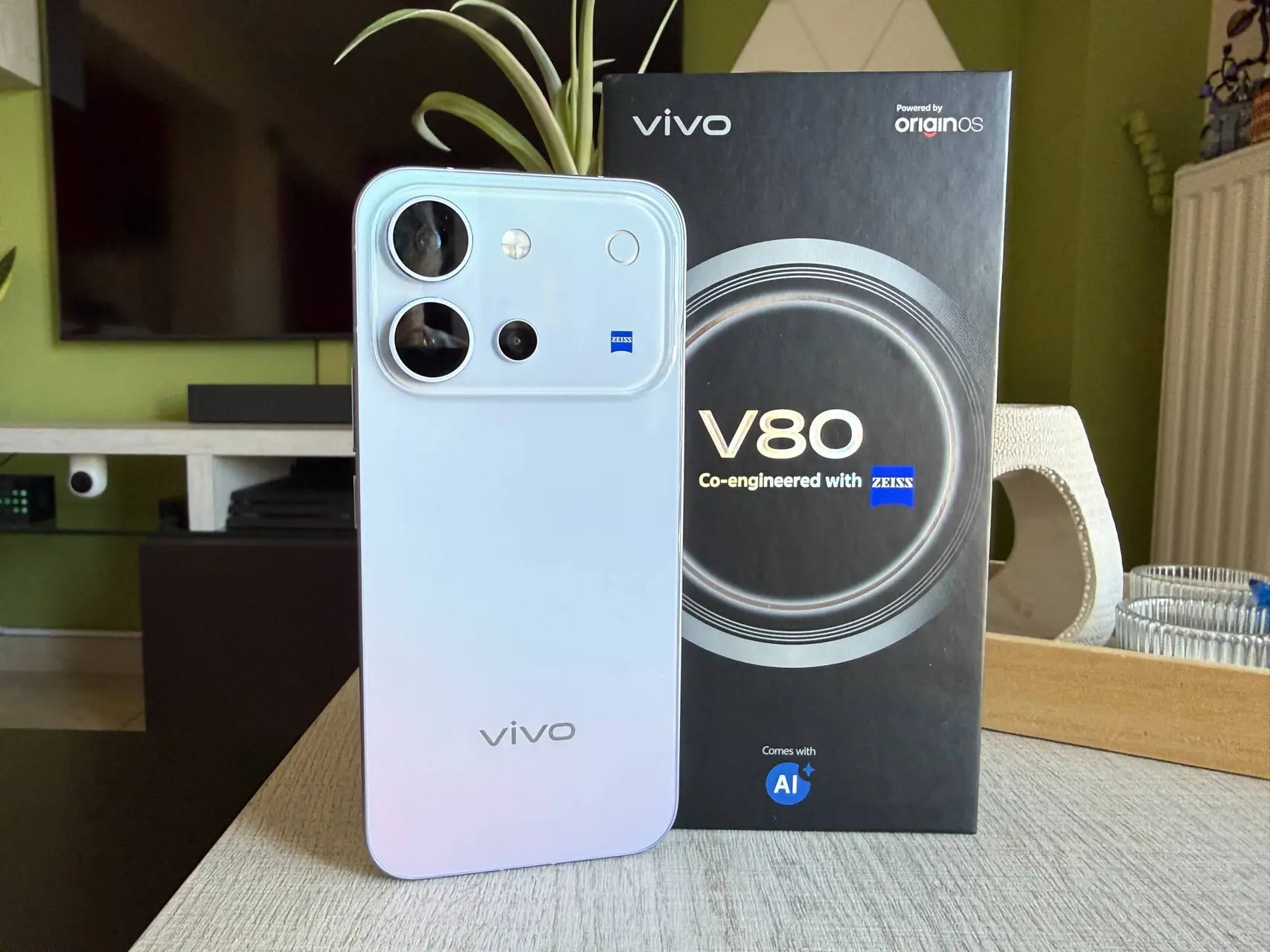
The 50MP telephoto uses a Sony IMX 882 sensor with a 3x optical zoom, an f/2.65 lens and stabilisation. In daylight it is very good, and a 2x digital converter mode gives a usable 6x zoom; portraits at 3.7x work well in daylight. In low light it is noticeably less sharp than the main camera, and low-light telephoto video loses detail and gets noisy. The portrait mode covers 23, 35, 50, 85 and 100mm focal lengths with natural bokeh, accurate edge detection and good skin tones, though the 50mm setting can occasionally look flat and hazy. ZEISS colour profiles and bokeh modes are included, along with a long list of shooting modes from Night and Astro to Supermoon and Fisheye.
The weak link is the 8MP ultrawide camera with fixed focus. It is usable only in good light, with soft corners and washed-out colours, no autofocus for close-ups, and very poor low-light results that come out dark, noisy and smeared. Its video is limited to 1080p at 30 frames per second. The 50MP selfie camera, by contrast, is very good: detailed photos with good HDR and natural colours, good low-light selfies, and very good 4K 60fps video. One small loss against the V70: the V80 drops the AI 4-Season Portrait feature.
Software, speakers and extras
The V80 runs OriginOS 7 on Android 17, with up to four major OS updates promised. It is heavily customisable, with split-screen and floating-window multitasking, vivo Office Kit with iPhone mirroring, an iCloud account inside the file manager, Apple Watch support (after first pairing with an iPhone), Gemini and Circle to Search, and an AI image editor with object erase, image expansion and text extraction. Stereo speakers earned a "Good" loudness rating with clear highs and good bass, and dual microphones handle noise cancellation.
Connectivity covers 5G, Wi-Fi 6, Bluetooth 6.0, NFC and the IR blaster, with dual Nano-SIM plus eSIM. The USB-C port has no DisplayPort output, and there is no 3.5mm headphone jack. The phone also gets 8GB of virtual RAM, and the pre-installed apps include the usual set of vivo apps alongside Facebook, Netflix, Spotify and WPS Office.
Verdict: likable, but wait for a price cut
The vivo V80 is an easily likable smartphone. It looks good, feels durable, has a bright and sharp display, lasts two days on a charge, sounds good, and takes genuinely strong photos — the main camera, the telephoto and the selfies are all solid. OriginOS 7 is a strength too. But it is a remarkably modest upgrade over its predecessors: the same chipset for a third generation, performance that trails the cheaper V70, a 144Hz screen that rarely runs at 144Hz, and a basic ultrawide camera.
At just over €500 at launch — INR 47,999 in India — it is difficult to recommend without reservations. A discounted vivo V70 or V60 offers much the same experience for less, and the V80 would become far more compelling with a price cut. Alternatives worth a look are the Motorola Edge 70 Pro, with a more powerful chipset, a more versatile camera and wireless charging; the Poco X8 Pro Max, with flagship-grade performance and class-leading battery life but no telephoto; and the Samsung Galaxy S25 FE, with powerful hardware and wireless charging but a mediocre battery and a 1080p display.
Pros and cons
Pros: Stylish design, IP68/IP69-rated. Bright, sharp AMOLED with HDR10+. Very good battery life, reasonably fast charging. Feature-rich OriginOS 7. Great main camera, solid telephoto, nice selfies. Good stereo speakers, IR blaster, ultrasonic fingerprint reader.
Cons: Unchanged chipset for a third generation, average performance for the price. 144Hz refresh rate available in just a few games. Basic ultrawide camera.
Sources
What's Your Reaction?
 Like
0
 Dislike
0
 Love
0
 Funny
0
 Angry
0
 Sad
0
 Wow
0