






























































RedMagic 12 Pro Review: Flagship Gaming Power at a Price No Mainstream Phone Can Match
The RedMagic 12 Pro is one of the very few true gaming phones you can actually buy outside China, and it is arguably the cheapest way to get Qualcomm's latest Snapdragon 8 Elite Extreme Gen 6 chip. It pairs a huge 8,400mAh battery and a 185Hz full-screen display with pressure-sensitive shoulder triggers, a built-in cooling fan and even the ability to run PC games from Steam. But the fan makes no measurable difference to sustained performance, the cameras are underwhelming, and the 3.5mm headphone jack is gone. GSMArena rated it 4.3 out of 5.
RedMagic 12 Pro Review: Flagship Gaming Power at a Price No Mainstream Phone Can Match
There are very few true gaming phones left that you can buy outside China, and the RedMagic 12 Pro is one of them. It is built around Qualcomm's newest and fastest mobile chip, the Snapdragon 8 Elite Extreme Gen 6, with a built-in cooling fan, shoulder triggers, a 185Hz display with no notch at all, and a battery bigger than most tablets. It can even run PC games from Steam. At $949 in the US and €899 in Europe for the base model, it is also arguably the cheapest way to own that chip. GSMArena gave it 4.3 out of 5 in its full review, published on 3 November 2026. Here is the phone in detail.
Design: a transparent slab with a fan inside
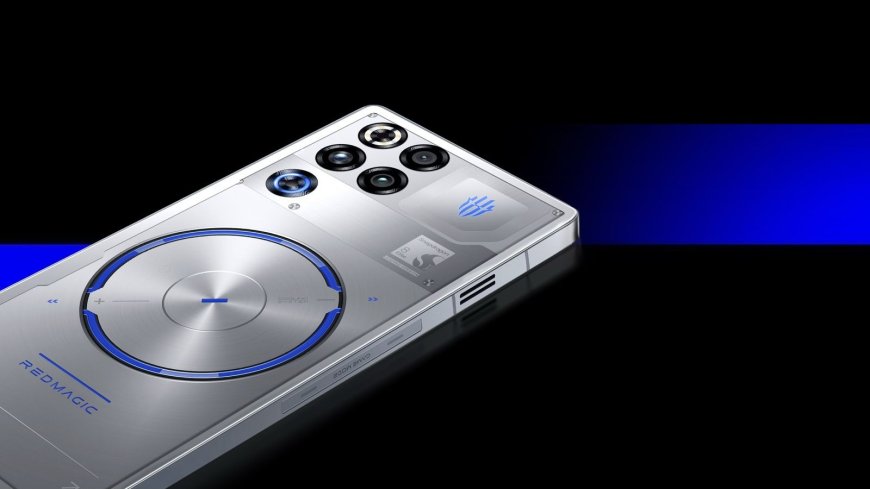
The RedMagic 12 Pro is a flat glass-and-metal slab with no protrusions anywhere: Gorilla Glass 7i on the front and back, an aluminum middle frame, and a transparent back panel that shows off the cooling system. The cooling fan sits slightly higher than on the 11S Pro, with more fins and a wider opening, and the liquid-cooling loop is now lit by an RGB LED strip, with the RedMagic logo next to the cameras illuminated as well. The rear cameras have been rearranged, with the main camera now on the left. At 163.0 x 76.0 x 8.6 mm and 223 grams it is heavy and wide — a solid slab of glass and metal. It comes in Skyfrost (blue transparent), Nightfreeze (transparent black) and Subzero (transparent silver).
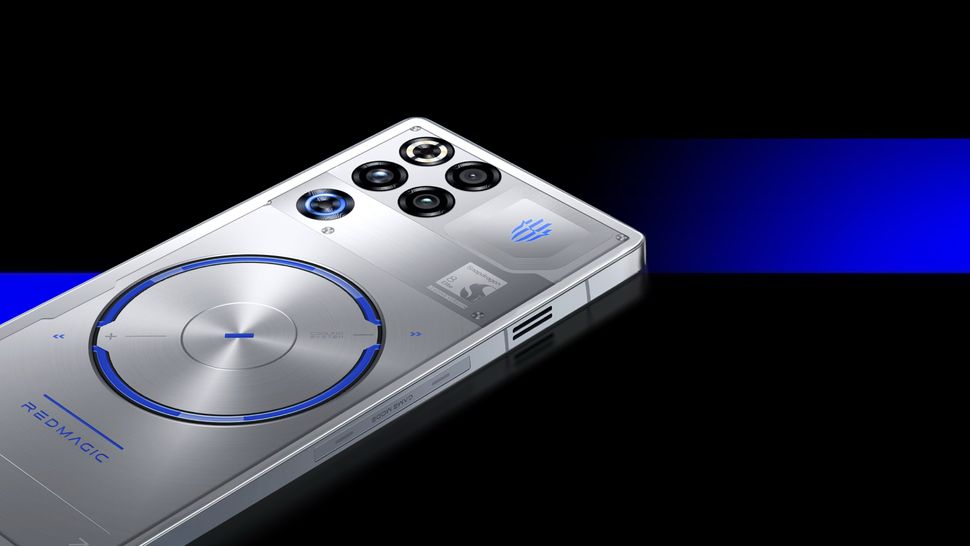
The red slider of previous generations is gone, replaced by a customizable key that opens Game Space by default. The shoulder triggers are slightly smaller than before but still pressure-sensitive, and the phone carries full IP68 and IP69 dust and water protection — the cooling fan itself is IPX8-rated. The ultrasonic fingerprint reader under the display works fine. Two things are missing that gamers will notice: there is no 3.5mm headphone jack anymore, and there is no eSIM, only two physical Nano-SIM slots.
The box holds manuals, a USB-C cable and a protective case. For the first time on a RedMagic phone, the EU box has no 80W charger in it — the US box still includes one.
Display: 185Hz, no notch, but dimmer than expected
The 6.85-inch BOE X11 AMOLED display packs 1216 x 2688 pixels at around 431 ppi, shows a billion colours, and runs at up to 185Hz. Because the 16MP selfie camera sits under the display, there is no notch or hole at all — a completely uninterrupted full screen. It supports HDR10 only, with no HDR10+ or Dolby Vision, and standard HDR only on YouTube.

In GSMArena's lab tests the screen measured 1,688 nits in auto mode and a peak of 1,523 nits on a 10% white patch — unusually, the larger patch was brighter than the small one — with a minimum brightness of 1.5 nits. The review called the brightness far from impressive for a BOE X11 panel, though it is good enough for comfortable outdoor use. The refresh rate is also more complicated than the headline number suggests: the High mode mostly caps at 144Hz, with 185Hz only in a few select games, sometimes with frame interpolation. Games that run above 60Hz without interpolation include Real Racing 3, PUBG Mobile, Brawl Stars and League of Legends: Wild Rift, while 185Hz works in Genshin Impact, Fortnite, Honkai: Star Rail and Call of Duty: Warzone Mobile, among others.
Battery life: excellent, but charging got slower
The 8,400mAh battery — up from 7,500mAh on the 11S Pro — delivers an Active Use Score of 22 hours 34 minutes in GSMArena's tests, with 70 hours 2 minutes of call time, 16 hours 15 minutes of web browsing, 34 hours 20 minutes of video playback and 14 hours 1 minute of gaming. Curiously, web browsing is no better than the 11S Pro and gaming only slightly better despite the bigger battery; call time is the one area that improved markedly.
Charging is the one step backwards: 80W wired charging reaches 58% in 30 minutes and a full charge in about 1 hour 15 minutes — slower than the 11S Pro, which managed 70% in 30 minutes, even per milliamp-hour per minute. The phone also supports 80W wireless charging with a compatible stand, bypass charging, a charge limiter and an option to disable fast charging, plus 22.5W reverse wired charging and reverse wireless charging.
Performance: the fastest chip, but the fan is mostly for show
Inside is the Snapdragon 8 Elite Extreme Gen 6, a 2nm chip with two Prime cores at 5.01GHz, three Performance cores at 4.03GHz and three more at 3.74GHz, plus an Adreno 850 GPU. It is paired with 12GB or 16GB of RAM and 256GB, 512GB or 1TB of UFS 4.1 Pro storage, with no card slot. The benchmark numbers are the best in its class: Geekbench 6 single-core scored 4072, AnTuTu reached 4,532,084 and 3DMark Wild Life Extreme came in at 8681. For comparison, the Galaxy S26 Ultra scored 3781 on Geekbench 6 single-core, the RedMagic 11 Pro 3645, the Xiaomi 17 Ultra 3628, the Oppo Find X10 Pro Max 3370 and the vivo X500 Pro Max 3201.
Sustained performance is where the story gets interesting. The CPU holds near-peak performance for about 8 minutes before throttling, with erratic fluctuations after that, and the GPU's lowest score in the 3DMark Wild Life stress test was 4,664 points — below both the RedMagic 11 Pro (6,153) and the 11S Pro (6,442). Switching the active cooling on made no measurable difference to throttling in the stress tests, though the phone did finish cooler at 50°C against 59°C and 58°C for its predecessors. The AquaCore Cooling System 3.0 — a 25,500 RPM fan, a dual-loop liquid cooling system, a vapour chamber and liquid metal sheets — looks spectacular through the transparent back, but in sustained performance terms it is mostly for show.
Cameras: underwhelming, and no telephoto
The camera system is the RedMagic 12 Pro's weakest area, and it shows in the hardware: a 50MP main camera with an f/1.88 lens and optical stabilisation, a 50MP ultrawide with fixed focus, and no telephoto at all. The 2MP macro camera of the 11S Pro is gone too, with macro mode now defaulting to a 3x zoom from the main camera. In daylight the main camera takes good photos with generally good detail, though not the finest or most natural, and foliage can look digital. Full-resolution 50MP shots are not much good, with limited dynamic range, dull colours and softness, and 2x zoom is soft and overly sharpened, though usable for close-ups. In low light the main camera's photos come out too dark and underexposed, and 2x zoom in low light is too dark with poor detail.
The 50MP ultrawide is respectable in daylight with good dynamic range and vibrant colours, and its low-light exposures are somewhat better balanced, though still hungry for more light. The 16MP selfie camera sits under the display, which compromises its quality: it captures 4MP shots that are AI-processed up to 16MP, with glare, ghosting and haze reduction, and the results are decent for a gaming phone but not genuinely good. Video is a brighter spot — up to 8K at 30fps or 4K at 120fps from the rear cameras, with HDR10 recording on the main camera up to 4K at 60fps, and 4K main-camera video is very good. Night video is quite sharp but too dark with poor dynamic range, stabilisation is a mixed bag while walking, and there is no 24fps option even in Pro video mode.
Software: Android 17, and Steam games on your phone
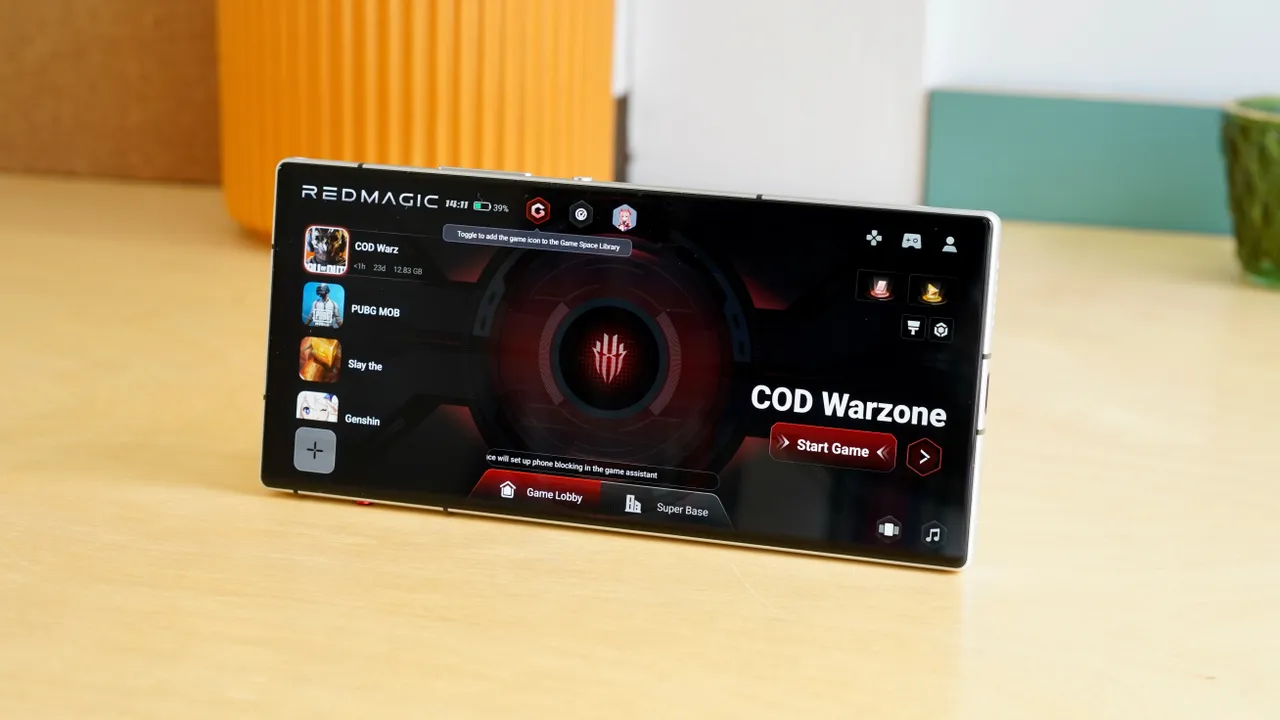
The phone runs Redmagic OS 12 on Android 17, with only two major OS updates promised — five years of security patches in the EU and UK, three years in the US and the rest of the world. Its most unusual trick is running PC games from Steam: the reviewer signed in with a Steam account in Game Space, downloaded Portal 2, and it ran at around 60 frames per second, with many more titles playable. The phone can also connect to a PC with a keyboard, mouse or joystick, and the feature was co-developed with GameSir; the GameHub app on the Play Store brings the same functionality to any powerful phone. Game Space, live game streaming and the illuminated light effects round out the gaming package.
Stereo speakers with Dolby Atmos earned a "Good" loudness rating, but the top speaker is still quieter than the bottom, the tuning does not match, and there was virtually no loudness upgrade over the 11S Pro; at maximum volume the bass can overpower vocals and highs. Connectivity covers 5G, Wi-Fi 7, Bluetooth 6.0, NFC and an IR port.
Verdict: an easy recommendation for gamers
The RedMagic 12 Pro is essentially unchanged from the previous generation in its formula, but that formula is still hard to beat. It remains one of the very few true gaming phones available globally and arguably the most affordable way to get Qualcomm's latest chipset, with two major selling points no mainstream flagship offers: dedicated gaming hardware — the fan, the triggers, the lights — and top-tier performance at a price that significantly undercuts most flagships. Steam game compatibility is a welcome bonus with plenty of processing power behind it.
The compromises are real: the cooling system offers no measurable sustained performance benefit, camera performance remains underwhelming, and losing the 3.5mm headphone jack is particularly disappointing on a gaming phone. But for gaming enthusiasts who value raw power and dedicated gaming features over camera quality and all-round refinement, it is an easy recommendation. Alternatives in China include the Honor Win2 and the OnePlus Ace 7 series, both with huge batteries, powerful chips and active cooling fans; outside China, the proper flagships with the same class of chip — the Samsung Galaxy S26 Ultra, Oppo Find X10 Pro Max, vivo X500 Pro Max and Xiaomi 17 Ultra — cost much more, beat it on cameras and sometimes battery life, but lack its gaming features.
Pros and cons
Pros: Distinctive, premium-looking flat design with IP68/IP69 protection. Large 185Hz OLED display with an under-display camera for an uninterrupted full-screen experience. Excellent battery life. Exceptional price-to-performance ratio. Plenty of dedicated gaming features, including pressure-sensitive shoulder triggers. Well-executed support for gaming on external displays with peripherals. Support for running PC games from Steam.
Cons: Low-light photos from the main camera come out too dark. Limited HDR video playback support (no HDR10+ or Dolby Vision). Speaker sound quality could be better. The active cooling system offers no measurable sustained performance benefit. 3.5mm headphone jack is now gone. Slower charging than the previous generation. No eSIM support.
Sources
What's Your Reaction?
 Like
0
 Dislike
0
 Love
0
 Funny
0
 Angry
0
 Sad
0
 Wow
0