






















































Google Pixel 11 Review: Dependable in Every Way — But Good Just Doesn't Feel Quite Good Enough
The Google Pixel 11 is a very good phone: well built, relatively compact, with a nice display, dependable battery life, a versatile camera setup and one of the best software support commitments around — seven years of updates. But very little of it feels new: the design, display, battery and wired charging are carried over from last year, and the Tensor G6 still trails rival flagship chips, particularly on the GPU side. At $899 / £879 / €999 for the base 256GB version, dependability alone is a difficult thing to sell. GSMArena rated it 4.1 out of 5.
Google Pixel 11 Review: Dependable in Every Way — But Good Just Doesn't Feel Quite Good Enough
Judged on its own, the Pixel 11 is a very good phone — well built, relatively compact, with a nice display, dependable battery life, a versatile camera setup, and one of the best software support commitments around. Android 17 is smooth and polished, and the Pixel experience is distinct enough to have its own appeal. The problem is that very little of this feels new: the design, display, battery and wired charging are carried over from last year, and the changes — a larger main sensor, 256GB base storage, the Tensor G6 and Qi2.2 — do not make it feel like a new generation. And that is perhaps the best way to describe the Pixel 11 in general: dependable. It does not really excel in many measurable areas, but there are not many serious weaknesses either. Unfortunately, dependability alone is a difficult thing to sell for $899 / £879 / €999. GSMArena gave it 4.1 out of 5 in its full review, published on 15 September 2026. Here is the phone in detail.
Design: kind of the same as the Pixel 10, in soft pastels
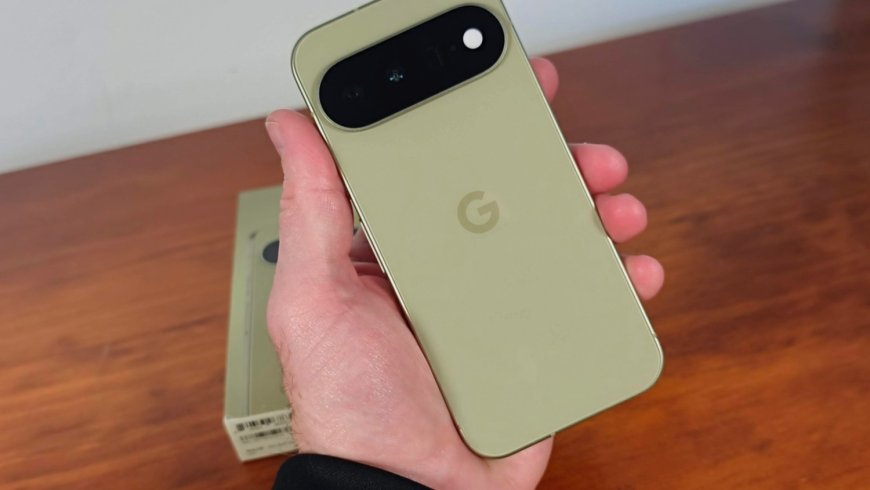
Externally, the Pixel 11 is kind of the same as the Pixel 10 — so similar that old cases cannot be reused because of small differences in the camera island, and Pixel 11 and 11 Pro cases are not interchangeable either. It has the same dimensions as last year, 152.8 x 72.0 x 8.6 mm, a few grams lighter at 197 grams, and is about as compact as things get, comfortable and snug in the hand. The middle frame is a bit slippery, while the back glass does not retain much grease or fingerprints. There is a plainer anodized aluminum frame on the vanilla model, versus shiny side rails on the Pro, but it is still a premium frame, sandwiched between two Gorilla Glass Victus 2 sheets, with zero flex, premium and sturdy, though with a bit of hollowness to the back. It carries IP68 protection, immersible up to 1.5 metres for 30 minutes.
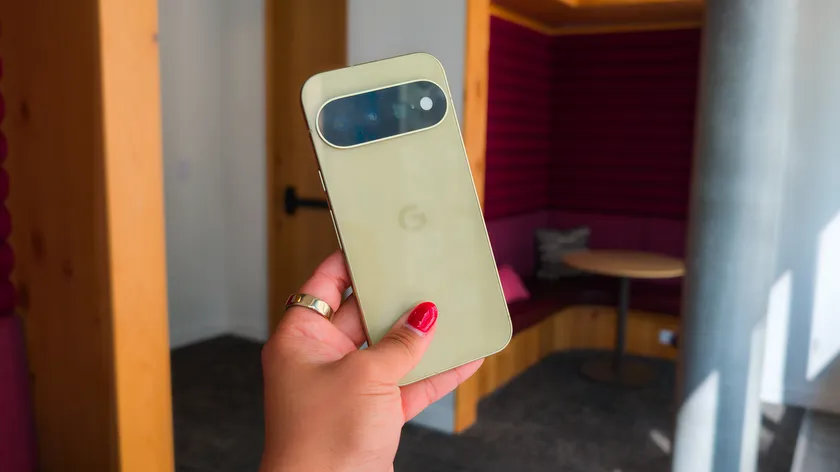
The front and back are flat, with a wide, mostly-flat middle frame except aggressively curved corners, and the display is missing quite a few pixels in every corner. The broad camera island extends almost edge to edge — recognizable and polarizing — and the phone does not wobble on a flat surface. Colours are Frost, Pistachio, Hibiscus and Obsidian — soft pastel, non-obtrusive — and the review unit was Pistachio. The power button sits above the volume rockers, the SIM tray is in the top bezel, the left side is empty, and the bottom has two symmetrical slits — one bottom-firing speaker, the other the main microphone — with the earpiece doubling as a second speaker, well hidden above the display. In the box there is a two-piece recycled cardboard box, a basic short non-E-marked USB-C to USB-C cable, and no SIM ejector tool. The under-display ultrasonic fingerprint reader is snappy and accurate, with no complaints.
Display: same panel as the Pixel 10, bright and sharp
The display is the same panel as the Pixel 10: a 6.3-inch OLED at 1080 x 2424 pixels and 120Hz max, with HDR10+ support, and Google claims 2,000 nits when the whole display is lit up and 3,000 nits peak — the same as the Pixel 10. In GSMArena's lab tests it measured around 2,100 nits in a 75% window in auto mode, with the brightness chart showing 2,134 nits, and a peak of around 2,800 nits in a 10% window, with the chart showing 2,842 nits — pretty much exactly what the Pixel 10 managed. Minimum brightness is 1.7 nits. It is far from chart-topping, but more than adequate for a solid HDR experience and perfectly usable outdoors.
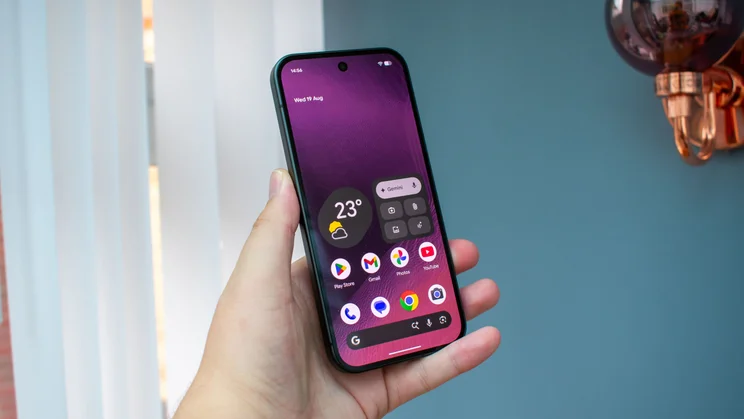
The refresh rate implementation is very basic: a single toggle only, with automatic switching that is very simple — touch it and it goes up to 120Hz, leave it alone for a few seconds and it drops to 60Hz. It is far from the most efficient implementation around, and most high-refresh-rate games tried ended up locked at 60Hz. HDR support is excellent, certified HDR10+, decoding HLG, HDR10 and HDR10+ — no Dolby Vision — and HDR can be on only a segment of the display, without requiring fullscreen. Widevine L1 DRM is the highest possible Google certification.
Battery life: better than the Pixel 10 in every test
The battery is 4,985mAh rated, marketed as 5,000mAh, versus 4,970mAh in the Pixel 10. It is not a high-capacity battery by modern standards — competitors are 6,000mAh and up — and the Pixel still uses an old-school cell, not silicon-carbon. In GSMArena's tests it scored an Active Use Score of 15 hours 40 minutes: 23 hours 40 minutes of calls, 13 hours 37 minutes of web browsing, 25 hours 18 minutes of video playback and 9 hours 19 minutes of gaming. That is better than the Pixel 10 predecessor's 12:08h in every individual test. For comparison in the review's chart: the Pixel 11 Pro scored 15:39h, the Galaxy S26 15:20h, the iPhone 17 14:59h and the Xiaomi 17 21:46h.
Charging is 30W wired PD 3.0 with PPS; Google claims 55% in 30 minutes — the Pixel 11 actually exceeded it, reaching almost 60% in 30 minutes, with the review's chart showing 59% in 30 minutes in Extreme Charging mode, and 31% in 15 minutes. A full charge takes 1 hour 20 minutes — a bit better than last year's models — and the vanilla Pixel 11 charges just as fast as the Pixel 11 Pro. The new Extreme Charging mode did not increase the max wattage in testing, but held a higher wattage for longer, reducing charging time. Wireless charging is Qi2.2, up to 25W, up from 15W last year — the bigger charging upgrade this year. The phone also supports bypass charging and reverse wired charging, with no reverse wireless. Battery health features include automatic adaptive charging to 90% with top-off before waking, a charging cap at 80%, and a battery health percentage listed in the menu.
Performance: big CPU jump, GPU barely moved
Inside is the Google Tensor G6, a 3nm chip with a 7-core CPU — one 4.1GHz ARM C1-Ultra core, four 3.4GHz ARM C1-Pro cores and two 2.65GHz ARM C1-Pro cores — plus an IMG CXTP-48-1536 GPU from Imagination, on an older Series C architecture with no hardware ray tracing. Google promises better efficiency and a 50% increase in AI computational power. There is 12GB of RAM on both tiers and 256GB or 512GB of storage on UFS 4.x — the entry 128GB UFS 3.1 variant is gone — with no microSD expansion.
The benchmark results show the split clearly: Geekbench 6 scored 2,731 single-core and 7,429 multi-core, and AnTuTu 11 scored 1,417,716, versus 1,173,841 for the Pixel 10; 3DMark Wild Life Extreme came in at 3,451, versus 7,510 for the vivo X300. CPU gains over the G5 are substantial — more than 20% multi-core and around 20% single-core — one of the biggest performance jumps seen from a Tensor chipset on the CPU side. GPU performance barely moved, with no ray tracing, and Google's silicon remains considerably slower than contemporary flagship chips from Qualcomm, MediaTek and Apple. Thermal throttling shows no real improvement since last year — 58% to 68% stability — which does not look great, but is far from uncommon for a modern flagship. The Tensor G6 is more akin to a Dimensity 8300 from 2023 or a Snapdragon 8 Gen 2 from 2022 performance-wise, so it should behave more like a midranger thermally. The phone never gets too uncomfortable to hold, even under unreasonable loads. In real-world use it feels incredibly smooth, with Android 17 consistently snappy on the 12GB/256GB review unit. Most games tried ran without major issues, though Fortnite suffered choppy frame rates at its highest settings, Delta Force would not allow above Standard graphics, and Alien: Isolation is entirely incompatible with the Tensor G6 — the Play Store would not let them download it.
Cameras: a bigger main sensor, and a useful 5x telephoto
The rear camera system is a 48MP main with an f/1.7 aperture, a 1/1.56-inch sensor, dual pixel autofocus and OIS, a 10.8MP telephoto with an f/3.1 aperture, 112mm focal length, dual pixel autofocus and OIS, with 5x optical zoom, and a 13MP ultrawide with an f/2.2 aperture, 120° field of view and autofocus. The front camera is a 10.5MP sensor with an f/2.2 aperture and autofocus. Video goes up to 4K60 with the main and telephoto cameras on the back, as well as the selfie camera, with the ultrawide maxing at 4K30, and a 24fps option on rear cameras. There are three codec options — h.265 (HEVC) default, h.264 for backward compatibility, and AV1 as a royalty-free space-efficient alternative — plus 10-bit HDR recording. There are three stabilization modes: Standard, available in all resolution and frame-rate settings; Locked, for 2x and 5x shooting only; and Active, for action scenes, only 1080p30 at 1x and 2x. Stabilization can be turned off via a global toggle in Settings.
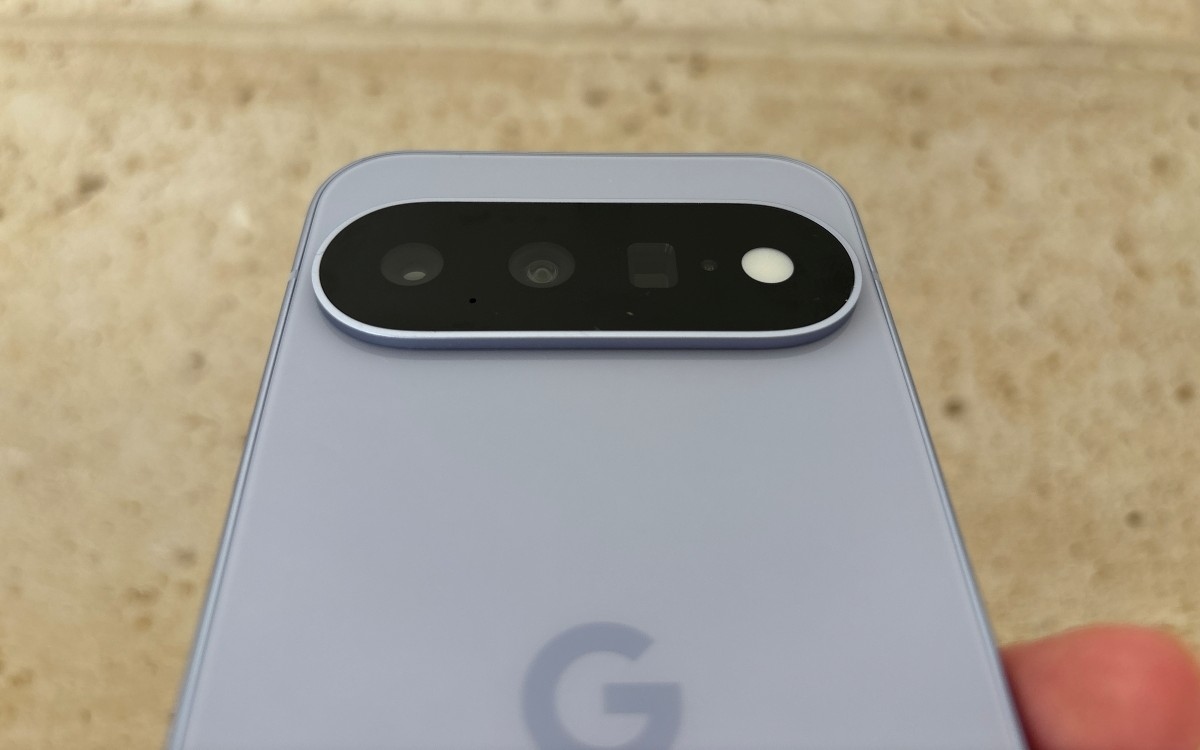
The main camera is upgraded from a 1/2.0-inch sensor to 1/1.56-inch — it saves 12MP images only, with no full-res mode. In daylight, the main camera is very solid: good detail, though not the sharpest, excellent dynamic range, very natural and pleasing colors, a bit less processed-looking than the Pros' images. People shots have lively and lifelike skin tones and very good facial detail, though Portrait mode may be a little too liberal with the blur in its default state. 2x zoom is not too great — pretty much the same as the Pros', not really sharp in absolute terms; merely okayish, not throwaway quality. 2x close-ups are pretty great. The 5x telephoto is solid without setting any standards: detail good overall and true to Pixel ways, but not as sharp or well-defined as the Pros'; it nails colors, contrast and dynamic range. Headshots are mostly good, with detail alright and colors on point, and Portrait mode enhances background separation without looking too artificial. 10x is decent, but not really sharp and not as good as the already unimpressive Pixel 11 Pro results at 10x. The ultrawide is pretty great outdoors with distant subjects, with very good sharpness and detail for the hardware — often a smidge sharper than the Pixel Pro's — but drops in dimmer indoor conditions and cannot get nearby subjects in sharp focus, being fixed-focus. Close-ups are rescued by the main camera, with a 5cm minimum focusing distance, while the telephoto's minimum focus is 70+ cm. Selfies are very Pixel-y: nice skin tones, very good detail, autofocus a benefit, and notably better in the dark than the Pros.
In low light, the main camera is somewhere between good and very good: detail alright, not as well defined as the Pros', not very artificially processed, dynamic range very good, colors on point, and a more reliably neutral white balance than the higher-end Pixels. At 2x, white balance is oddly messed up in scenes it got right at 1x. The telephoto's white balance is pretty spot-on, unlike the 11 Pro's, with detail good, about a notch below the Pro's, and dynamic range pretty great. 10x is just about usable depending on intended use. The ultrawide is relatively noisy but retains some sharpness — sharper than the 11 Pro's, particularly in darker scenes — with good dynamic range and fine colors. The photo quality verdict: not as well specced as the 11 Pro, but it does a pretty solid job; 1x photos are solid in daylight and at night; the telephoto is not the sharpest but good enough — do not push past native 5x; the ultrawide is pretty alright save its inability to focus close; and selfies are liked, perhaps even more than the pricier Pixels'.
Video quality in daylight is very good — pleasing colors, great contrast and dynamic range from all three rear cameras, with detail alright on all — not setting standards, not lacking. At night, the main and telephoto do a good job without major flaws and without making you go "wow", and the 11 Pro keeps an ever-so-minor advantage in sharpness; ultrawide clips are soft, acceptable in better-lit situations. Stabilization: walking with the main camera leaves some shake; stationary, the main and ultrawide are very stable and pan smoothly; the telephoto is somewhat jumpy with pans and has some tremors when pointed in one direction — not great, not terrible. The video verdict: it omits the cloud-based 8K of the Pros but remains capable, maxing at 4K60 on all but the ultrawide; good-quality daytime videos from all rear cameras, solid main and telephoto at night, and stabilization has kinks to iron out, but excellent on the main camera and ultrawide if you stand and shoot.
Software, speakers and extras
The Pixel 11 runs Android 17 on arrival, with an OTA to the September 1, 2026 security patch, and 7 major OS updates plus 7 years of security patches — the longest support in the Android scene, matched by Samsung. It is clean Android with Google's own touches, not AOSP, and Android 17 is visually not that different from Android 16. New and changed: easier data transfer from an old phone; iOS switchers get more — eSIMs, messages, saved passwords, app data where available; Quick Share now plays with Apple's AirDrop on iOS and iPadOS; separate Wi-Fi and Mobile Data quick toggles; a refined frosted-glass effect in notification, quick settings, volume and power menus; and freely resizable quick toggles horizontally. Limitations: rich themes are not supported yet — coming; customization is limited to a consistent color tint and hiding app labels; you cannot get rid of the app drawer; you cannot select multiple icons to move at once; the persistent search bar cannot be removed; and there is no quick uninstall from a homescreen icon. Android 17 can turn pretty much any app into a bubble — a floating window — with several bubbles at once, stackable, tucking away in a corner. Screen Reaction takes screen recording a step further — record the screen plus your face via the selfie camera, device and surroundings audio, and show screen touches. Magic Capture is built into the Pixel Camera app — it records video and captures multiple stills, picks the best shots, auto-edits with cropping, straightening and unblurring, and saves finished photos. AI runs through Gemini as the glue: Google apps talk to each other, Messages is aware of Calendar events, Contacts pull context from conversations, and you can ask Gemini to handle complex tasks like creating a Calendar event or booking a table; Gemini Intelligence proactively suggests actions, though it is about as unreliable when it comes to actually showing up on its own.
The hybrid stereo speakers — one bottom-firing speaker and one front-facing speaker above the display — measured -26.3 LUFS, rated "Good", a bit quieter than the Pixel 10's -25.7 LUFS, though overall sound quality improved a bit. Extras include the under-display ultrasonic fingerprint reader, Satellite SOS, bypass charging and reverse wired charging, Extreme Charging mode, adaptive charging to 90% and an 80% charging cap. There is no microSD, no 3.5mm jack and no FM radio. Connectivity covers 5G, eSIM — the US variant is eSIM-only, while the EU version has a single physical SIM slot — Wi-Fi 6E with the 6GHz band, not Wi-Fi 7, Bluetooth 6.0 with LE and aptX HD, NFC, and USB Type-C with USB 3.2 Gen 1 and DisplayPort Alt Mode video output.
Verdict: a polished and enjoyable phone caught in an awkward position
The Pixel 11 starts at $899 / £879 / €999 for the base 256GB version, and the 512GB model is $1,019 / €1,129. The Pixel 10 launched at $799 / €899 for base 128GB — so $100 more, with double the storage. Competition: the Galaxy S26, with the same 6.3-inch display, a smaller and considerably lighter body, a more sophisticated LTPO variable refresh rate, a flagship chipset with a substantial performance advantage and a triple camera with 3x telephoto — the Pixel counters with the longer 5x — but a notably smaller 4,300mAh battery and unremarkable 25W charging, with similarly long support and very close pricing. The Xiaomi 17, with the same size, a substantially larger 6,330mAh battery, a Snapdragon 8 Elite Gen 5 in a completely different performance league, an LTPO display, much faster 100W wired and 50W wireless charging and a versatile triple camera — the Pixel has the longer native telephoto reach and the Google software experience. The vivo X300, with a compact 6.31-inch display, Dimensity 9500, a 200MP main camera, a 50MP telephoto, autofocus ultrawide, 90W wired and 40W wireless charging and a 5,360mAh battery in Europe. The Oppo Reno16, with a Snapdragon 7 Gen 4, a 6.32-inch body, a 120Hz AMOLED, a 6,000mAh battery in the European version, 80W charging, a 50MP main plus 50MP 3.5x telephoto plus 50MP autofocus ultrawide plus 50MP autofocus selfie. And the iPhone 17, with a 6.3-inch 120Hz display, a smaller and much lighter body, an A19 dramatically more powerful, and no dedicated telephoto at all.
Ultimately, the Pixel 11 is a polished and enjoyable phone caught in an awkward position. It gets the fundamentals right and is easy to live with, but at just-below-flagship pricing we expect more than fundamentals. Google has produced another good Pixel, but this year, good just does not feel quite good enough. Pixel 10 owners in particular have almost no reason to upgrade; owners of older Pixels will see a much more meaningful improvement.
Pros and cons
Pros: Premium, sturdy build and relatively compact dimensions. Bright, sharp OLED with good HDR performance. Good battery endurance. Qi2.2 magnetic wireless charging at up to 25W. Clean and polished Android 17 experience with seven years of software support. Solid overall camera quality, including a useful 5x telephoto. Very good selfies with autofocus. 256GB of storage now standard. Fast and reliable ultrasonic fingerprint reader.
Cons: Too little has changed from the Pixel 10. Tensor G6 performance still trails rival flagship chipsets, particularly on the GPU side. Very basic 60/120Hz refresh rate implementation; high-refresh-rate gaming remains limited. Wired charging is slow by current Android flagship standards. Ultrawide camera lacks autofocus; 2x photos from the main camera are unremarkable. Telephoto camera isn't particularly sharp, especially beyond its native 5x zoom. Video stabilization could be better while moving. Price is difficult to justify against the competition.
Sources
What's Your Reaction?
 Like
0
 Dislike
0
 Love
0
 Funny
0
 Angry
0
 Sad
0
 Wow
0