






























































Oppo Find X10 Review: A Superb All-Round Flagship With Two 200MP Cameras and a Price Problem
The Oppo Find X10 ticks just about every box on the flagship checklist: a bright 144Hz LTPO OLED display, a class-leading 8,000mAh battery, a MediaTek Dimensity 9600M chip with plenty of power, and a camera system with two 200MP sensors that takes excellent photos in almost every situation. Its weaknesses are small — choppy low-light video and a 144Hz screen that rarely runs at 144Hz — but the launch price of €1,199 is the biggest obstacle. GSMArena rated it 4.5 out of 5.
Oppo Find X10 Review: A Superb All-Round Flagship With Two 200MP Cameras and a Price Problem
The Oppo Find X10 is a superb all-round flagship with hardly any meaningful weaknesses. It has a bright and sharp LTPO display, a battery that lasts longer than almost any flagship, a powerful new MediaTek chip, and a camera system built around two 200MP sensors that delivers excellent photos across all shooting scenarios. Its flaws are small and specific — low-light video that cannot hold a steady frame rate, and a 144Hz screen that only reaches 144Hz in a handful of games. The real question is the price: at €1,199 for the base model, it is expensive. GSMArena gave it 4.5 out of 5 in its full review, published on 30 October 2026. Here is the phone in detail.
Design: premium glass, sculpted back, tough build
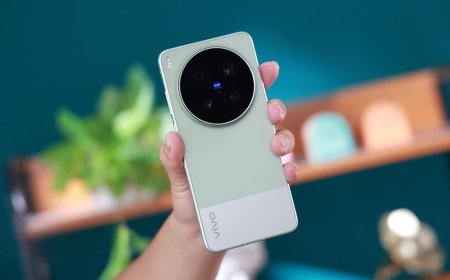
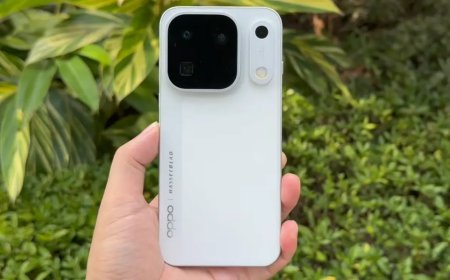
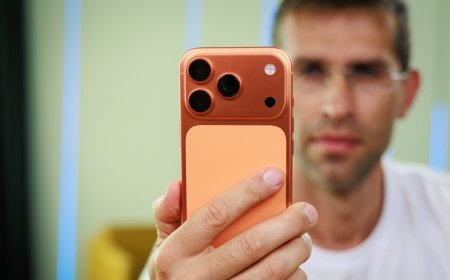
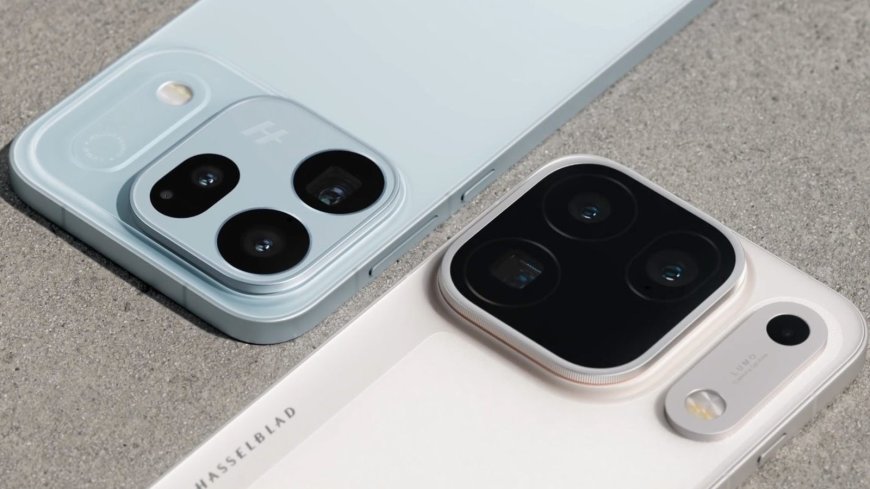
The Find X10 is built from two flat glass panels and a flat aluminum frame, with a "one-piece sculpted glass" back and a two-tier camera housing. The matte finish resists fingerprints well, though the back is slippery. It comes in Glacier Blue, Glow Coral and Mist Grey, and a colour-matched silicone case is included in the box. The phone carries IP66, IP68 and IP69 ratings — it is immersible up to 1.5 metres for 30 minutes — and five-star drop-resistance certification from SGS. The bezels are thin and uniform, with a punch-hole 50MP selfie camera in the display.

At 156.5 x 74.3 x 8.4 mm and 216 grams it is a substantial phone, but the flat sides make it easy to hold. The fingerprint reader is fast and responsive. A customisable Snap Key sits on the left side — by default it captures a screenshot saved to Mind Space, and it can be remapped to the flashlight and more — with volume and power on the right, USB-C, a dual-SIM tray, the primary speaker and two microphones at the bottom, and a bare top edge. The global box holds the phone, an 8A-rated USB-A-to-C cable, an 80W SuperVOOC charger, the colour-matched silicone case and a protective film already on the display. The optional Hasselblad Teleconverter Kit adds 11x optical zoom and up to 20x hybrid zoom, and the Find X10 is the first standard (non-Pro/Ultra) phone in the lineup to support it.
Display: exceptionally bright, with every HDR format
The 6.59-inch LTPO AMOLED display packs 1272 x 2772 pixels at around 462 ppi, shows a billion colours, and supports HDR Vivid, HDR10, HDR10+ and Dolby Vision, all recognised by Netflix and other streaming apps. It also covers the BT.2020 colour gamut — Oppo claims industry-leading 95% coverage — with 3,840Hz PWM dimming. In GSMArena's lab tests the screen measured 1,028 nits maximum automatic brightness with a 75% white patch, and surprisingly no boost at a 10% patch, peaking at 1,086 nits. In the ColorOS Photos app or another HDR-compatible app, it reached 2,314 nits at 75% and 3,443 nits at 10%, in line with Oppo's advertising. Minimum brightness drops to just 1 nit.
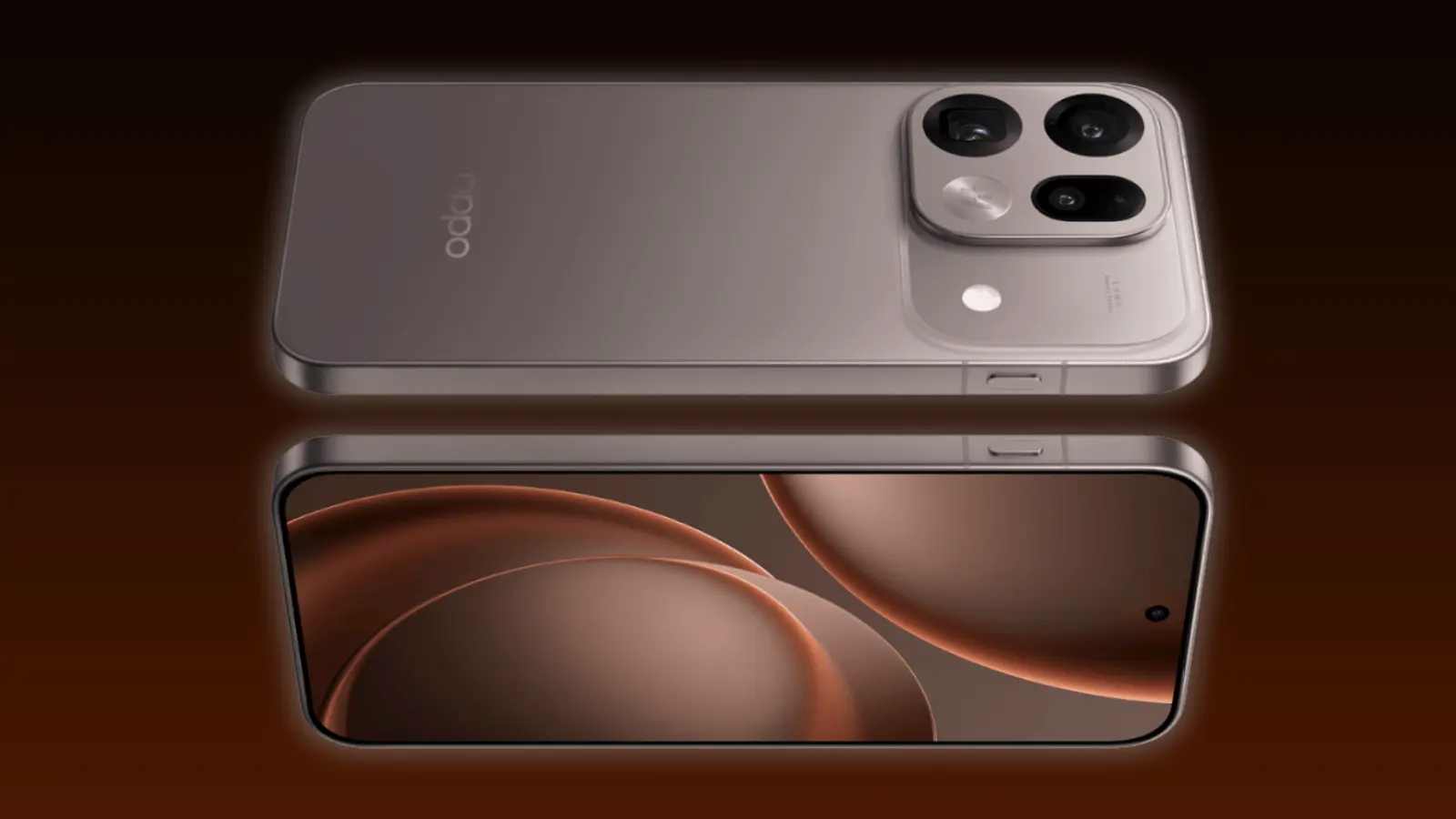
The LTPO panel dials down to 1Hz when idle and up to 120Hz in most everyday use, though Google Maps and Chrome are capped at 90Hz, and the system does not always match refresh rate and frame rate — 24fps videos play at 30Hz, 48fps at 60Hz. The 144Hz mode is reserved for certain games only — Mobile Legends: Bang Bang, Call of Duty: Mobile, Brawl Stars, Clash Royale, Real Racing 3, Standoff 2 and Clash of Clans — so 120Hz is the practical maximum in daily use.
Battery life: class-leading, and the charger is in the box
The 8,000mAh silicon-carbon battery — 7,150mAh in the EU model — is one of the best in any flagship. In GSMArena's tests it scored an Active Use Score of 25 hours 21 minutes, among the top five results ever recorded, with 43 hours 30 minutes of call time, 24 hours 54 minutes of web browsing, 35 hours 32 minutes of video playback and 13 hours 56 minutes of gaming. Endurance is commendable across the board.
Charging is the one area where the Find X10 lags the chart: the 80W adapter recharged 29% of the dead battery in 15 minutes and 51% in 30 minutes, with a full charge taking 70 minutes — at the bottom of the chart, identical to the Find X10 Pro Max with the same battery and charging power. The global model ships with the 80W SuperVOOC adapter and an 8A-rated cable, and it also supports 50W wireless charging and 10W reverse wireless charging. ColorOS 17 adds bypass charging, smart charging that learns from your habits, and an 85% charge cap to protect battery health.
Performance: plenty of power, expected throttling
Inside is the MediaTek Dimensity 9600M, a 3nm chip with one 4.21GHz core, three 3.65GHz cores and four 2.99GHz cores, plus a 12-core Mali-G1 Ultra GPU. It is the first phone tested with this chip, cooled by a vapour chamber, and paired with 12GB or 16GB of LPDDR5X RAM and 256GB, 512GB or 1TB of UFS 4.1 storage. The benchmark results are strong: Geekbench 6 scored 3124 single-core and 9509 multi-core, AnTuTu 11 reached 3,448,843, and 3DMark Wild Life Extreme came in at 6878. As expected, the chip scores the same as the Dimensity 9500 — not chart-topping against the Dimensity 9600 Pro or the Snapdragon 8 Elite Gen 5, but still impressive raw power for even the most demanding tasks.
Under sustained stress the phone maintained 62% of peak CPU performance and 50% of peak GPU performance — expected numbers for a high-performance chipset, and nothing to worry about in normal use.
Cameras: two 200MP sensors, excellent photos, one video flaw
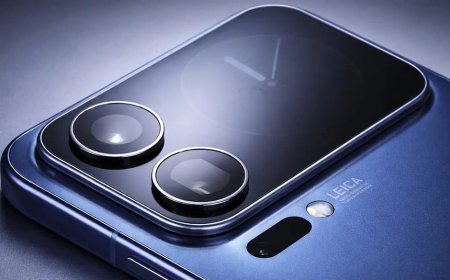
The camera system is the Find X10's headline feature. The main camera is a 200MP Samsung ISOCELL HPE sensor, 1/1.4-inch, with an f/1.6 lens, optical stabilisation and autofocus. The telephoto is another 200MP sensor, a Samsung ISOCELL HP5 at 1/1.56-inch with a 65mm lens, 2.8x optical zoom and stabilisation, focusing as close as 21cm. The ultrawide is a 50MP Samsung ISOCELL JN5 with a 15mm lens, and the front camera is a 50MP JN5 with an 18mm ultrawide field of view. Against the Find X9, the main camera jumps from 50MP to 200MP, the telephoto from 50MP to 200MP with a larger sensor, and the selfie camera from 32MP to 50MP; the ultrawide is effectively unchanged. Hasselblad references and functionality are built into the camera UI.

In daylight the main camera's 25MP high-resolution photos are very good — better than the X10 Pro Max — with excellent natural detail at 12.5MP and excellent 50MP shots, though the full 200MP mode is hard to recommend. The 2x zoom is respectable in good light, though 2x headshots lack pixel-level quality. The 2.8x telephoto is quite superb: 12.6MP files are super sharp, portraits are wonderful, and 5.6x zoom shots stand up remarkably well even at 26MP. The ultrawide is respectable even at 26MP. In low light the main camera is very good, with excellent dynamic range and nicely saturated, mostly accurate colours, though it lacks the absolute sharpness of the Pro Max; the telephoto is on par with the Pro Max in the dark, including at 5.6x. Selfies are top-class, with a wide native field of view and excellent sharpness at 0.8x, 1x and 2x. The review's photo verdict: the Find X10 does a thoroughly good job as a stills camera across all shooting scenarios, with only small missteps here or there.
Video is fully tricked out — 4K at 60fps on all four cameras, 4K at 120fps and 8K at 30fps on the main and telephoto, Dolby Vision across the board, open-gate recording, and a Pro video mode with 24fps, O-Log2 LOG with preset LUTs, waveform, focus peaking and audio-level monitoring. Daytime video is generally very good from all three rear cameras. But night video is flawed across all three rear cameras: it would not maintain a steady 30fps, hovering between 22fps and 26fps on at least two software versions, and changing bitrate or codec did not help. Stabilisation is generally very good — cameras stay planted when stationary and walking shake is handled very well, though panning can feel insecure. The only video-feature difference against the X10 Pro Max is that the Pro Max's ultrawide also shoots 4K120 and 8K30.
Software, speakers and extras
The Find X10 runs ColorOS 17 on Android 17, with five major OS updates and six years of security patches promised. The Living Flow design language brings smoother animations, translucent UI elements and new lighting effects — the influence of Apple's Liquid Glass is hard to miss, the review notes — with a highly customisable lock screen, preinstalled themes or your own, and an app drawer in All or Category layouts. The Smart Sidebar, Gemini and Circle to Search come out of the box, and the Oppo AI suite adds AI Writer, AI Search, AI Translate and AI VoiceScribe. The AI Agent combines Gemini, Perplexity and ChatGPT models, connects to AI Mind Space, gives personalised suggestions and structured summaries, organises photos and files, and builds travel itineraries. Scam-call detection identifies synthetic voices during calls and AI-generated faces during video calls. The Photos app gains Mind Pilot, a ChatGPT-powered assistant for creating, editing and organising photos with natural-language prompts, plus AI Eraser, AI Ultra Clarity, AI Unblur and Photo Agent.
Stereo speakers earned a "Good" loudness rating, with solid audio balance though the top speaker is slightly quieter, and overall sound quality rated "Very Good" — punchy bass, clear vocals and a rich, detailed high-frequency response. Connectivity covers 5G, eSIM, Wi-Fi 7, Bluetooth 6.2, NFC and an IR port, and the 1TB/16GB model adds satellite connectivity.
Verdict: superb, if you can live with the price
The Oppo Find X10 ticks just about every box on the flagship checklist. It has a premium, durable design with excellent ingress protection, an excellent and exceptionally bright LTPO OLED with comprehensive HDR support, class-leading battery life with fast charging, a powerful chipset with solid performance, excellent photo quality across all cameras with great daytime videos, an optional Hasselblad Teleconverter Kit, and a feature-rich, highly customisable ColorOS 17. Its shortcomings are small: the 144Hz refresh rate has limited practical use, low-light video could have been better, and the biggest issue is the launch price — €1,199 for the 12GB/256GB version, or €1,399 for 12GB/512GB.
The competition is strong: the Oppo Find X9 is now significantly cheaper with much of the same experience, minus the LTPO display and camera upgrades; the Xiaomi 17 is even more compact, with a more powerful Snapdragon Elite chipset and Leica cameras, and costs less; the upcoming global Xiaomi 18 Pro could be a tougher rival; and the iPhone 18 Pro offers compact size and top-notch performance for gaming and video, if you are comfortable switching to iOS.
Pros and cons
Pros: Premium design, durable build, excellent ingress protection. Excellent, exceptionally bright LTPO OLED with comprehensive HDR support. Class-leading battery life, fast charging. Powerful chipset and solid performance. Excellent photo quality across all cameras, great daytime videos. Optional Hasselblad Teleconverter Kit. Feature-rich and highly customizable ColorOS 17.
Cons: Expensive at launch. Choppy low-light videos. Limited practical use for the 144Hz refresh rate.
Sources
What's Your Reaction?
 Like
0
 Dislike
0
 Love
0
 Funny
0
 Angry
0
 Sad
0
 Wow
0