




























































Oppo Find X10 Pro Max Review: An Ultra in All But Name — With a Triple 200MP Camera System
The Oppo Find X10 Pro Max is an Ultra in all but name: the first smartphone with a triple 200MP camera system, a class-leading 8,000mAh battery that tops GSMArena's battery-life chart, a bright 144Hz LTPO display and a powerful Dimensity 9600 Pro chip, wrapped in a refined, premium design. Its only real weaknesses are a steep €1,799 price, slower-than-expected charging and flat speakers. GSMArena rated it 4.7 out of 5 and gave it an Editors' Choice award.
Oppo Find X10 Pro Max Review: An Ultra in All But Name — With a Triple 200MP Camera System
An Ultra in all but name. The Oppo Find X10 Pro Max makes a compelling case for being one of the most accomplished flagships around, even overshadowing the company's current Ultra model in several respects. It brings together an excellent display, a powerful chipset and exceptional battery life that tops the battery-life chart, and its triple 200MP camera system is equally impressive, delivering class-leading low-light video recording and ultrawide camera performance that outshines the competition in both photos and videos, day and night. Better still, Oppo has managed to package all that photographic firepower into a refined, understated design that looks every bit as premium as the hardware underneath. The biggest hurdle is undoubtedly the price. GSMArena gave it 4.7 out of 5 and an Editors' Choice award in its full review, published on 21 October 2026. Here is the phone in detail.
Design: premium build, Lumo Camera Island, and one step back
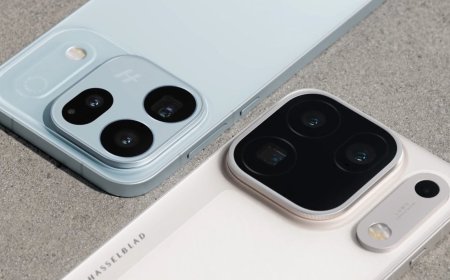
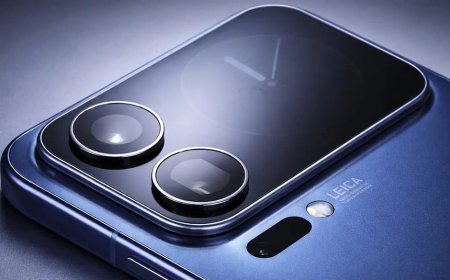
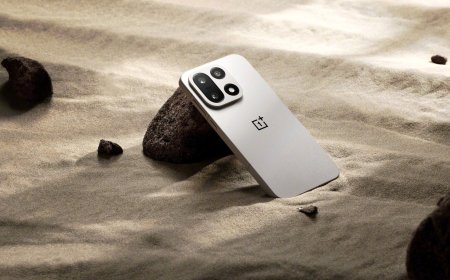
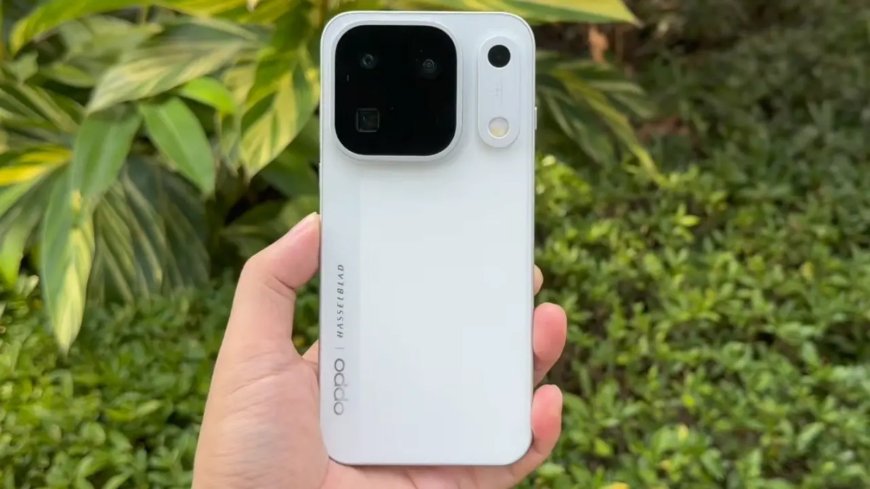
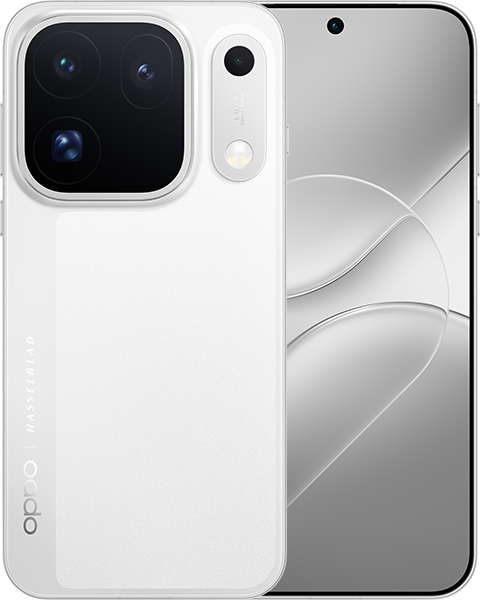
The Find X10 Pro Max is very similar to the Find X9 Pro, with an additional aluminum-made camera island called the Lumo Camera Island, which houses the True Color Camera and the LED flash. The main island carries subtle knurling and an orange accent in line with Hasselblad camera aesthetics. The flat frame is anodized aluminum with slightly contoured edges, and the matte glass back gives a build that is nothing short of premium and exudes quality, though a bit slippery. International colours are Titanium Grey and Luna White, with a third colour, Orange, available in China only. The review unit in Luna White carries a subtle stripe pattern under the glass and not-so-subtle Oppo and Hasselblad logos. Front and back glass are protected by Oppo Crystal Guard Glass, co-developed with Corning, and the phone carries IP66, IP68 and IP69 ratings.

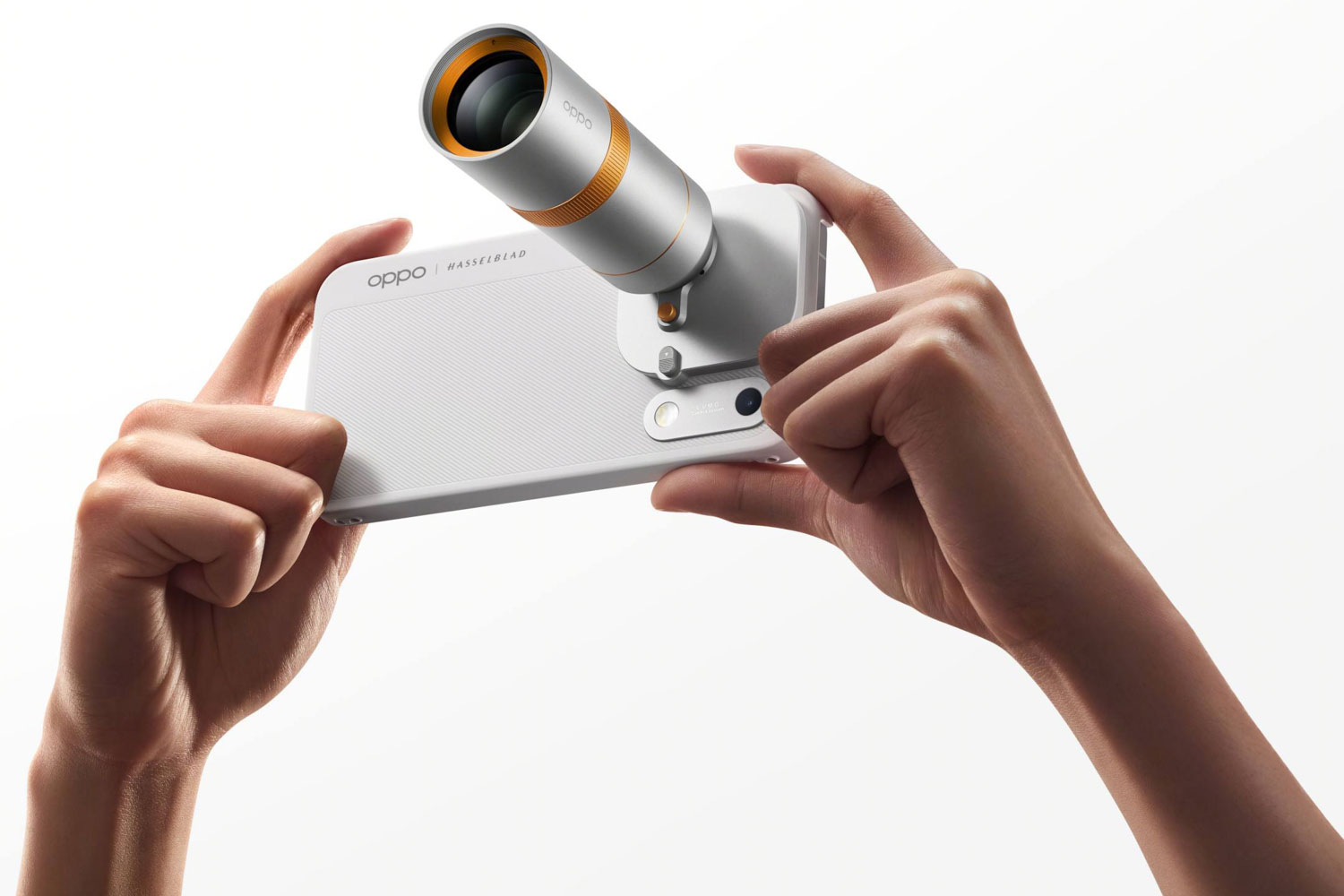
At 161.3 x 76.6 x 8.4 mm and 233 grams it is a large, heavy phone. The volume rocker and power button sit on the right, with a customisable Snap Key on the left. One backward development: the hardware camera-centric Quick Button is gone — the X9 Pro had it, as did the X9 Ultra. The bottom SIM tray holds two physical SIM slots, eSIM is supported with only two SIMs active at a time, and the ultrasonic fingerprint reader works flawlessly. The Splash Touch feature lets the screen work even when wet or with tiny droplets. The standard retail box holds user manuals, a USB-A to USB-C cable and a matching colour soft-touch silicone case; Europe ships without a charger, while the global unit has an 80W SuperVOOC charger. The Hasselblad Teleconverter Kit adds 3.28x optical zoom to the 3x telephoto, for true 10x optical zoom, and comes with a case, mounting mechanism and lanyard.
Display: bright, sharp, and nearly bezel-free
The 6.78-inch LTPO OLED display packs 1272 x 2772 pixels at around 450 ppi, runs at up to 144Hz — up from 120Hz on the X9 Pro — and supports HDR10+, Dolby Vision, HDR Vivid and BT.2020, with 3,840Hz PWM dimming. The bezels are just 1.15mm thick, one of the thinnest in the industry. In GSMArena's lab tests the screen measured 2,337 nits maximum on a 75% white patch in auto mode, with a 10% patch peak of about 3,500 nits, slightly brighter than the X9 Pro on the 75% patch. In the browser it delivered just over 1,000 nits — still enough for outdoor use — and YouTube easily boosted above 2,200 nits. Minimum brightness drops to 1 nit.
The LTPO panel adjusts its refresh rate granularly from 1Hz to 144Hz, though only 1–120Hz is usable in the majority of apps, with 144Hz unlocked for select games such as Call of Duty Mobile, PUBG Mobile, Brawl Stars and Clash Royale. Chrome caps at 90Hz unless High refresh rate mode is set in Display Settings. The display refresh rate usually matches video frame rate — 24fps video plays at 24Hz, the same for 30fps and 60fps.
Battery life: class-leading, and it tops the chart
The 8,000mAh battery — 7,150mAh in Europe, New Zealand and Australia, a step down from last year's 7,500mAh on the X9 Pro — is a decent upgrade over the 7,500mAh of last year for global models. In GSMArena's tests it scored an Active Use Score of 25 hours 24 minutes, topping the review's battery-life chart: 43 hours 46 minutes of calls, 24 hours 40 minutes of web browsing, 38 hours 8 minutes of video playback and 13 hours 33 minutes of gaming. The review calls it quite the achievement, especially for a big-screen phone with a powerful flagship chipset.
Charging is the one area where Oppo took a more conservative approach. The 80W wired SuperVOOC charging — 55W Power Delivery is also supported, plus 50W wireless AirVOOC and 10W reverse wireless — reached 29% in 15 minutes, 52% in 30 minutes and a full charge in 1 hour 10 minutes, slightly slower than the Find X9 Pro and considerably slower than some older generations. The Pixel 11 Pro XL and Galaxy S26 Ultra outperform it at the 15- and 30-minute marks. Battery health options include a Smart charging toggle that learns your habits, a charge limit adjustable in 5% increments between 80 and 100%, and turning off Smart rapid charging to charge slower.
Performance: a worthy successor that beats Snapdragon in AnTuTu
Inside is the MediaTek Dimensity 9600 Pro, the first 2nm silicon and the first to use ARM's next-generation CPU and GPU designs, with two cores at 4.55GHz, three at 4.35GHz and three at 3.1GHz, plus a Mali-G2 Ultra NX GPU marketed to support 185+ fps gaming and a 27% boost in ray-tracing performance. The chipset supports LPDDR6 and UFS 5.0 but caps at LPDDR5X and UFS 4.1, with 12GB or 16GB of RAM and 256GB, 512GB or 1TB of storage — globally one storage option, 512GB, with 12GB or 16GB of RAM, and Europe only 12GB/512GB. The benchmark results are strong: Geekbench 6 scored 3370 single-core and 10614 multi-core, AnTuTu v11 reached 4,128,150, and 3DMark Wild Life Extreme came in at 7314. The new chip proves to be a worthy successor to the Dimensity 9500, offering higher CPU and GPU performance and even outperforming the Snapdragon 8 Elite Gen 5 in the combined AnTuTu 11 scenario — though in pure CPU and non-advanced GPU-bound workloads, last year's Snapdragon 8 Elite Gen 5 still outperforms the Dimensity 9600 Pro.
Under sustained stress, performance dialled down to around 50–60% of the maximum in both thermal tests — nothing to write home about, but exactly what you would expect from a phone running a high-performance flagship chipset. In the 60-minute CPU stress test it throttled to 57% of its maximum performance at 50°C, and in the GPU stress test stability was 56.7%, with temperatures rising from 26°C to 39°C.
Cameras: the first triple 200MP system in a smartphone
The camera system is the Find X10 Pro Max's headline feature: the first smartphone with a triple 200MP camera setup. The main camera is a 200MP Samsung ISOCELL HPC, a 1/1.3-inch sensor co-developed with Oppo, the first with DeepPix technology, with 60% better full-well capacity than the previous generation and a claimed 17 stops of dynamic range, with an f/1.5 lens, 24mm focal length, stabilisation and autofocus. The telephoto is a 200MP Samsung ISOCELL HP5 at 1/1.56-inch, with a 70mm lens, 3x optical zoom and stabilisation — the same hardware as the Find X9 Pro. The ultrawide is the first 200MP ultrawide, another HP5 at 1/1.56-inch with a 13mm lens. The front camera is a 50MP sensor with an 18mm ultrawide field of view. A 24-channel 3.2MP True Color Camera with 5.5x the dynamic range of the predecessor is part of the LUMO True Image Engine, and Hasselblad brings a Hi-Res mode, Xpan panoramic mode with 65:24 aspect crops, and the orange-accent UI.
In daylight the main camera's default 26MP high-resolution shots are great overall, with excellent dynamic range, well-preserved highlights and great shadow development, though random detail such as grass, leaves and small text can look soft, and the auto white balance runs slightly warm. The 12.6MP standard mode gives finer, well-defined detail, and 50MP shots downscaled to 26MP offer better detail than out-of-camera 26MP in well-lit scenes. The 2x zoom is good, with excellent headshots, and the telephoto at 3x is excellent — detail rendition in high resolution is superior to the main camera, close to pin-sharp in many situations, with excellent dynamic range, reliable white balance and the right level of pop. Telephoto portraits are awesome, with super sharp facial detail, lovely skin tones and great bokeh. The 6x zoom is pretty solid, and the ultrawide at 0.5x is great, with excellent sharpness, top-class colours and dynamic range. Close-ups are excellent too, with the telephoto focusing down to about 9cm from the rear camera bump.
In low light the main camera takes excellent photos, with great contrast, wide dynamic range, well developed tonal extremes and likeable, colourful yet realistic saturation. The telephoto at 3x in low light is properly nice — packed with detail, reasonably natural if a bit gritty, and on par with the Find X9 Ultra — and the ultrawide in low light is excellent, with a small but consistent advantage over the X9 Ultra and almost matching the vivo X300 Ultra. Selfies are great, with an even wider 18mm field of view, excellent detail, skin tones just right and plenty wide dynamic range. The review's photo verdict: improving on the Find X9 Pro was not easy, yet the X10 Pro Max is even better for stills, with a few small victories over the reigning Ultra too, and very good images from all three rear cameras in all conditions, including digital zoom. Low light is top-class, and selfies are excellent, with wider coverage at no quality penalty. The one gripe is the main camera's default daytime 26MP output, easily improved by post-processing 50MP files.
Video is extensively equipped: 4K at 120fps and 8K at 30fps on all three rear cameras, including the ultrawide, with Dolby Vision enabled by default in all quality settings except 8K. The Pro video mode adds 24fps, Dolby Vision, Log recording with four preset live preview LUTs plus the ability to import your own, waveform, focus peaking and audio-level monitoring. New this year is open-gate recording — the full sensor area, cropped after the fact — on all three rear cameras at native focal lengths up to 60fps. Daytime video is very good, with three rear cameras well matched, vibrant colours, no odd casts, excellent dynamic range and great contrast. Night video is great across all zoom levels, with dependable white balance, pleasing colours and excellent dynamic range, and the ultrawide is slightly sharper than the X9 Ultra. Stabilisation is a mix of awesome and meh: standing still, clips from the main and ultrawide cameras are nearly flawlessly stable, almost tripod-like, but panning is a little jumpy on all three, and walking shake on the main camera is alright, not perfect.
Software, speakers and extras
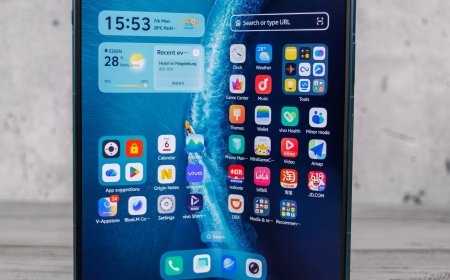
The Find X10 Pro Max runs ColorOS 17 on Android 17, with five major OS updates and six years of security patches. The Living Flow design language brings luminous effects, fluid motion and flexible feedback, with a highly configurable lock screen, clock themes, widgets and a depth effect, and incredibly fluid transitions between Always-On, Lock and Homescreen — the similarity to iOS is heavy at times. The app drawer comes in All or Category layouts, and the Oppo AI sub-menu holds the AI Agent, which combines Gemini, Perplexity and ChatGPT models, organises photos and files, builds travel itineraries and offers personalised suggestions. AI scam-call identification spots AI-generated voices during calls and AI-generated faces during video calls, and Mind Pilot in Photos is a ChatGPT-powered assistant for creating, editing and organising photos with natural-language prompts. The Snap Key defaults to capturing a screenshot saved to Mind Space and can be remapped to the flashlight and more.
Stereo speakers are the phone's weakest area: advertised as symmetrical stereo with balanced output from both speakers, they scored merely -28.8 LUFS loudness, an "Average" score, and sound quality is far from ideal compared with the Find X9 Pro and Find X9 Ultra — the main complaint is flat music tracks, almost as if the speakers have been stripped of the bass, with tracks lacking depth and warmth. Connectivity covers 5G, eSIM, Wi-Fi 7, Bluetooth, NFC and an IR port, and the 1TB model adds satellite connectivity.
Verdict: exceptional, if you can pay the premium
The Oppo Find X10 Pro Max is not merely a well-rounded flagship; it genuinely raises the bar in several important areas, particularly camera performance and battery endurance. For those willing to pay the premium, it delivers an exceptional flagship experience with remarkably few compromises. The biggest hurdle is the price: the phone is launching in Europe at €1,799 for the 512GB model, a steep asking price even compared with some of the most advanced Ultra flagships currently available, and it is certainly not the most sensible purchase from a value perspective. Then there are a couple of other shortcomings: charging is slower than expected from Oppo's high-end phones, and the speakers do not quite live up to the otherwise excellent multimedia experience.
The competition is strong. The Find X10 Pro Max blurs the lines between Pro and Ultra, and its most direct rivals are the Xiaomi 18 Pro Max, vivo X500 Pro Max and Honor Magic9 Pro Max. The vivo X300 Ultra matches its price and the X10 Pro Max beats it in battery tests and rivals it in cameras, while the vivo has nicer speakers and faster charging. The Find X9 Ultra costs around €1,500, with faster charging, two telephoto cameras, a slightly more powerful chipset and better speakers, and the two are about on par camera-wise. The Xiaomi 17 Ultra and Samsung Galaxy S26 Ultra are both Ultras on a budget that should definitely be considered — the Xiaomi a little over €1,000, the S26 Ultra a little below €1,000 — and Samsung gives a more familiar experience with longer software support, faster charging, better speakers and a more feature-rich display. Last year's Find X9 Pro gets a lot of the way at a lower price, but you miss out on the huge camera and battery life upgrades.
Pros and cons
Pros: Solid build, likable design despite the bulky camera hardware. Bright and feature-packed LTPO OLED display. Class-leading battery life. Modern-looking and feature-packed ColorOS 17. Excellent camera experience across the board, with class-leading nighttime videos and noteworthy ultrawide performance. The optional teleconverter kit can elevate the camera experience further.
Cons: Pricey at launch. Charging speed could be faster. The European, New Zealand and Australian units ship with a 10% smaller battery capacity. The speaker sound quality and loudness are not competitive. The hardware camera-centric Quick Button is now gone.
Sources
What's Your Reaction?
 Like
0
 Dislike
0
 Love
0
 Funny
0
 Angry
0
 Sad
0
 Wow
0