


























































Thinking Machines Inkling 2 Mini: A 26B Open-Weights AI Model That Runs on a Laptop
Thinking Machines Lab has released Inkling 2 Mini, a 26.4-billion-parameter open-weights AI model that fits in about 20GB and runs on a consumer laptop. The looped transformer leads open-weights models under 100B parameters on agentic coding benchmarks, and its weights are available now under an Apache 2.0 licence.

Thinking Machines Inkling 2 Mini: A 26B Open-Weights AI Model That Runs on a Laptop
Mira Murati's Thinking Machines Lab has released Inkling 2 Mini, a powerful open-weights AI model small enough to run on a laptop. Announced on November 20, 2026, the model is the lab's second Inkling release in about a week, following Inkling 2 Small, and it takes a very different approach to getting more out of a smaller model: instead of adding layers, it runs some of them more than once.
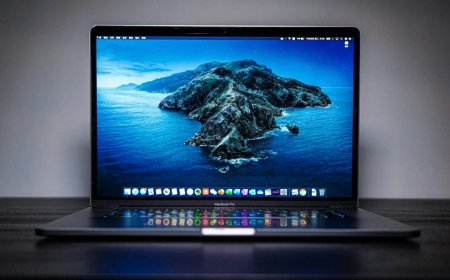
The result is a 26.4-billion-parameter model with a memory footprint of roughly 20GB, which the lab says can run on a MacBook with 32GB of unified memory or a single desktop AI computer such as Nvidia's DGX Spark. Its weights are available now on Hugging Face under an Apache 2.0 licence, with local deployment through Ollama and inference and fine-tuning on the company's Tinker platform.
Looping instead of growing
Inkling 2 Mini is built as a looped transformer. Its 24 layers are arranged in four blocks of six, and the two middle blocks run three times for every token, while the first and last blocks run once. That gives 48 layer applications per token from just 24 stored layers, without adding weights.
The idea, according to the lab, is that the middle layers carry the more abstract reasoning, so running them again lets the model think longer before it answers. That matters most on tasks that depend on reasoning quality, such as agentic coding, where the model plans and executes multi-step work on its own. Looping also means the model can reach an answer with fewer output tokens, since more of the work happens inside the model rather than in the text it writes out.
The model is a mixture-of-experts design with 26.4 billion total parameters, 3.4 billion active per token, and 5.4 billion weight activations per token once the repeated passes are counted. It accepts text and image input and supports a 1-million-token context window.
Strong results for its size
Thinking Machines says Inkling 2 Mini leads every open-weights model with fewer than 100 billion total parameters on agentic coding benchmarks such as DeepSWE v1.1, where it scored 48.2 percent, and the Vals Index v2.2, where it scored 46.5 percent. It also scored 20.1 on the Artificial Analysis Intelligence Index, putting it on the frontier for intelligence relative to active parameter count among open models.
Independent evaluator Artificial Analysis, which published its own assessment on the release day, described the model as about six times cheaper and four times faster per task than Qwen3.8-27B on its benchmark suite, based on Thinking Machines' own pricing. The lab's own tables show the model ahead of comparable open models on most of the coding, agentic search and tool-use benchmarks it measured, and close behind Qwen3.8-27B on a smaller set of others.
The lab is open about where the model falls short. It is not the strongest small model for multi-turn chat or for instructions loaded with constraints, scoring 50.0 percent on MultiChallenge and 33.4 percent on ComplexConstraints, behind Qwen3.8-27B on both. And looping does not let the model store more facts: on closed-book factual tests its scores sit in line with other models of the same size. Where it closes the knowledge gap, the lab says, is by using search and tools efficiently, leading similar-size open models on BrowseComp, DeepSearchQA and MCP Atlas.
Built to run offline on ordinary hardware
Most of the model's weights were trained and are deployed natively in 4-bit NVFP4 precision, with the final four layers in 8-bit MXFP8, so there is no conversion loss from quantisation. To make the model small, the lab pruned two-thirds of its experts midway through training, cutting 384 experts per layer down to the 128 most used, then trained the remaining model on 1 trillion tokens distilled from a larger internal Inkling model to recover the lost performance.
The payoff is a model that runs where frontier models cannot. During testing, the lab's researchers took Inkling 2 Mini on a flight and ran it offline on a MacBook Pro, where it built a playable flight simulator in a few minutes. Stanford researchers who tested it early measured its intelligence per watt on an Nvidia DGX Spark and found it well ahead of other local models in the same test.
An experiment the research community can inspect
Looping raises a question the lab is keen to put in front of researchers: when a model does more of its reasoning internally, does its written chain of thought still show what it is doing? The lab released a variable-loop research model alongside Inkling 2 Mini so others can study exactly that, and published its own early findings. Looping did let the model do more without writing out its reasoning, but its chain of thought stayed legible, getting shorter and more direct rather than harder to follow, and the lab says it found no meaningful reduction in monitorability at this scale.
That openness is part of the point. Inkling 2 Mini arrives as a small, fast, openly licensed model that developers can download, run locally and fine-tune, and it puts serious agentic coding ability within reach of a laptop for the first time. For anyone who wants a capable coding assistant without sending their work to a cloud API, that is the real news here.
Sources
- Thinking Machines Lab — Introducing Inkling 2 Mini
- Artificial Analysis — Thinking Machines has released Inkling 2 Mini, an open weights looped transformer
- CASRAI — Inkling 2 Mini: open looped model for laptops
- Dealroom — Thinking Machines releases Inkling 2 Mini, a 26B open-weights looped model that runs on a laptop
- WCCFTech — Thinking Machines Unveils Inkling 2 Mini, A Powerful 26B Parameter AI Model That Runs Locally On MacBooks
What's Your Reaction?
 Like
0
 Dislike
0
 Love
0
 Funny
0
 Angry
0
 Sad
0
 Wow
0