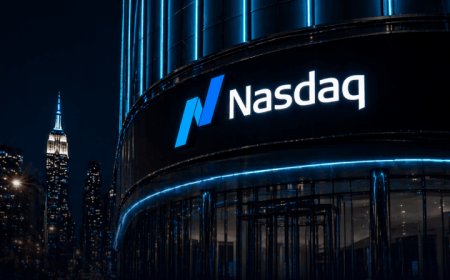











































Nasdaq Hits Fresh Record as AI Stocks Drive Wall Street Higher
Wall Street extended its record-setting run on October 6, with the Nasdaq Composite reaching another all-time high as investors continued to bet on AI-driven growth and upcoming corporate earnings. The S&P 500 also set a new record, while the Dow Jones advanced more modestly as Treasury yields eased and oil prices stabilized.

Nasdaq Sets Another Record as AI Optimism Keeps Wall Street Moving Higher
Wall Street's record-breaking run continued Tuesday as investors pushed the Nasdaq Composite to another all-time high, while the S&P 500 also closed at a fresh record. The latest gains show that, despite renewed concerns over high Treasury yields, inflation and energy prices, investors remain willing to put money into technology and artificial intelligence companies that are expected to benefit from the next phase of the AI investment boom.
The Nasdaq Composite gained 122.48 points, or 0.4%, to finish at 27,599.79 on October 6. The S&P 500 climbed 44.98 points, or 0.6%, to 7,818.93, while the Dow Jones Industrial Average added 253.38 points, or 0.5%, to 51,521.28. The Nasdaq's latest advance came after it had already reached a record on Monday, extending the technology-heavy index's momentum into a second straight session.
AI Remains the Market's Biggest Engine
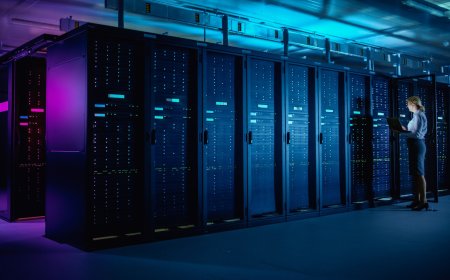
Artificial intelligence continues to sit at the center of the current stock-market story. Investors are increasingly looking beyond the initial excitement surrounding AI software and chatbots and focusing on the enormous infrastructure spending required to build the next generation of AI systems.
That means semiconductor companies, data-center operators, networking companies, power providers and other technology businesses are increasingly tied to the AI investment cycle. Nvidia remains the clearest symbol of that trade, while companies such as AMD and Marvell Technology have also benefited from expectations for stronger demand. Reuters reported that Nvidia moved closer to a $6 trillion market value, while AI-related companies helped keep technology shares near record levels.
The strength in AI-related shares is particularly notable because the broader market is not moving with equal force. Investors are rewarding companies that can demonstrate a direct connection to AI spending, while some other areas of the market remain more sensitive to interest rates, consumer demand and economic uncertainty.
S&P 500 Joins Nasdaq at Record High
The latest rally was not limited to technology stocks. The S&P 500 climbed to 7,818.93, surpassing its previous record from August. The index has now gained about 14.2% for the year, according to Associated Press data.
The Nasdaq has performed even better in 2026. After Tuesday's move, the index was up about 18.7% for the year, compared with a 7.2% gain for the Dow. That difference highlights just how important technology and growth companies have been to the market's performance this year.
The Dow's more modest performance also tells an important part of the story. The index gained 0.5% Tuesday but remains roughly 5% below its August record, according to Reuters. The market therefore remains heavily influenced by the strength of technology and AI-related companies rather than being driven uniformly across every major sector.
Treasury Yields Are Still a Major Risk
The stock rally is happening against an unusually complicated bond-market backdrop.
The benchmark 10-year U.S. Treasury yield recently climbed above 5.3%, reaching levels not seen in more than two decades. Higher Treasury yields can make stocks less attractive because investors can earn more from relatively lower-risk government debt, while higher borrowing costs can also put pressure on corporate valuations.
Tuesday brought some relief. Treasury yields eased from their recent highs, helping support equities. Reuters reported that the 10-year yield fell to around 5.28%, while the 30-year yield also edged lower. The decline helped remove some pressure from growth-oriented technology shares.
That relationship will remain important. If yields continue falling, technology stocks could receive another boost. But a renewed surge in bond yields could quickly test the high valuations supporting parts of the AI trade.
Oil Prices Give Investors Another Reason to Stay Positive
Energy prices have also been closely watched by Wall Street. Crude oil had climbed sharply during the recent period of geopolitical uncertainty, raising concerns that higher energy costs could add fresh pressure to inflation.
Those fears eased somewhat as Middle Eastern oil exports recovered and the G7 moved to release emergency reserves. Brent crude settled around $100.60 per barrel, while U.S. West Texas Intermediate crude settled near $89.44 on Tuesday, according to Reuters.
For investors, stable or falling oil prices could be important because they reduce the risk of another inflationary shock. That could give the Federal Reserve more room to avoid additional tightening if economic conditions continue to cool.
Weak Jobs Data Changes the Fed Conversation
Expectations surrounding Federal Reserve policy have also shifted. Softer U.S. employment data has reduced some of the pressure for another rate increase, with traders sharply scaling back expectations for a rate hike at the Fed's upcoming meeting.
Reuters reported that the probability assigned by traders to a rate increase this month had fallen to about 19%, from roughly 50% a week earlier.
That does not mean the inflation problem has disappeared. Long-term Treasury yields remain elevated, and inflation-sensitive indicators continue to attract attention. But for technology investors, even a pause in additional rate increases can provide a more comfortable environment for companies whose valuations depend heavily on future growth.
Earnings Season Could Be the Next Big Test
The next major challenge for Wall Street may come from corporate earnings.
Investors have pushed stock prices to record levels partly because they expect companies to deliver strong results in the third quarter. Reuters reported that analysts expect roughly 30.6% year-over-year earnings growth for the quarter, with technology and energy among the sectors attracting particular attention. Goldman Sachs has also estimated around 27% S&P 500 earnings growth, with more than half of that increase expected to come from companies benefiting from AI infrastructure spending.
That creates a high bar for companies. Strong earnings could justify current valuations and potentially push the major indexes even higher. Disappointing results, however, could expose how much optimism has already been priced into technology stocks.
Nvidia, AMD and the AI Infrastructure Trade
The semiconductor industry remains one of the clearest indicators of investor confidence in AI spending.
Nvidia continues to dominate the AI accelerator market and has become the world's most valuable publicly traded company. Its stock has been approaching a roughly $6 trillion market capitalization, reflecting the extraordinary expectations surrounding AI infrastructure.
AMD and Marvell Technology have also attracted attention. Reuters noted gains in both companies as investors continued to assess the potential for increased AI-related demand.
The broader point is that Wall Street is no longer treating AI as a narrow software trend. The investment cycle now stretches across chips, data centers, electricity generation, networking equipment and cloud infrastructure. That wider economic footprint is one reason AI remains such a powerful theme for the stock market.
A Record Market Does Not Mean Every Stock Is Rising
There is another side to the record highs that investors should not overlook.
Market indexes such as the S&P 500 and Nasdaq are weighted heavily toward their largest companies. When mega-cap technology stocks rise strongly, they can lift the entire index even when many individual stocks are struggling.
MarketWatch recently highlighted this divergence, noting that the median S&P 500 stock remained significantly below its own 252-day peak even while the headline index approached records. That suggests the market's strength is still concentrated in a relatively powerful group of large companies, particularly those benefiting from AI-related optimism.
For investors watching the next stage of the rally, market breadth could therefore be just as important as the headline Nasdaq number. A broader participation from financials, industrials, consumer companies and smaller businesses would provide stronger evidence that the rally is spreading throughout the economy.
What Comes Next for the US Stock Market?
For now, Wall Street remains firmly in record territory. The Nasdaq is leading the major indexes, the S&P 500 has joined it at a new high, and investors continue to show strong appetite for companies positioned around artificial intelligence.
But the market is entering a period where expectations will face harder tests. Corporate earnings, Treasury yields, inflation data, Federal Reserve commentary and energy prices could all influence whether the rally continues at its current pace.
The biggest question is no longer whether investors believe in AI. They clearly do. The question is whether corporate earnings can grow quickly enough to justify the enormous valuations created by that optimism. The coming earnings season should provide some of the clearest evidence yet.
Sources
- Reuters — Global Markets and Wall Street market updates
- Associated Press — U.S. stock index closing data
- The Wall Street Journal — U.S. stocks, AI momentum and Treasury yields
- Yahoo Finance — U.S. market and index updates
- Charles Schwab — Daily U.S. market update
- MarketWatch — Market breadth and S&P 500 analysis
What's Your Reaction?
 Like
0
Like
0
 Dislike
0
Dislike
0
 Love
0
Love
0
 Funny
0
Funny
0
 Angry
0
Angry
0
 Sad
0
Sad
0
 Wow
0
Wow
0