













Why the iPhone 18 Pro and Pro Max Are Suddenly Battery Kings
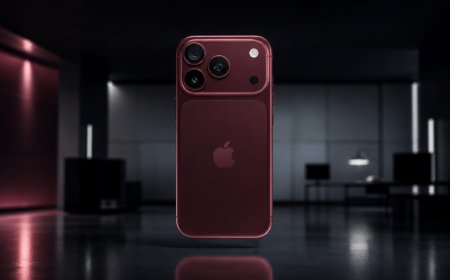
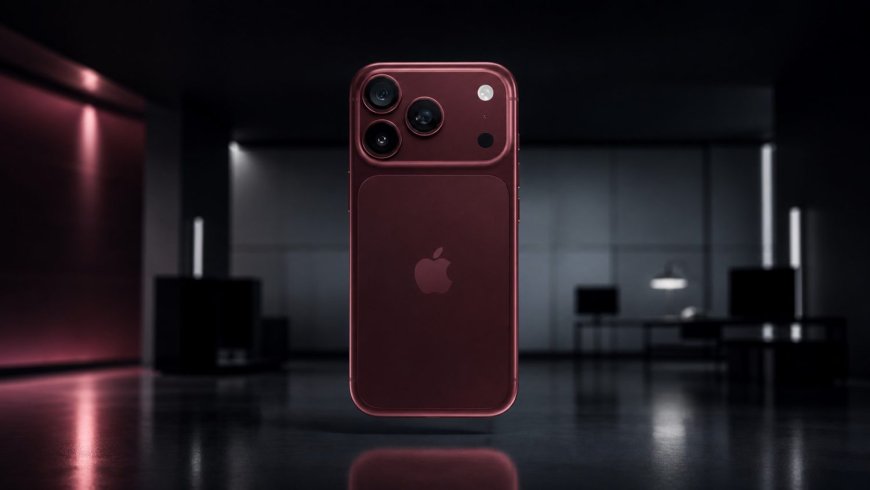
Apple has made battery life one of the biggest upgrades in the iPhone 18 Pro generation. The iPhone 18 Pro offers up to 36 hours of video playback, while the iPhone 18 Pro Max reaches up to 45 hours on eSIM-only models. The gains come from a combination of larger battery capacity, Apple's new 2nm A20 Pro chip, a more efficient modem and redesigned thermal management.

Apple Finally Made Battery Life a Headline Feature
For years, smartphone companies have competed over cameras, processors, displays and AI features. Battery life was important, of course, but it rarely received the same attention. With the iPhone 18 Pro and iPhone 18 Pro Max, Apple is changing that story. The company says the new Pro Max delivers the largest increase in battery life ever seen on an iPhone, while the two Pro models use a combination of new battery designs and more efficient silicon to squeeze significantly more time out of every charge. Apple rates the eSIM-only iPhone 18 Pro for up to 36 hours of video playback, while the Pro Max can reach 45 hours.
That makes the battery story much more interesting than simply saying “Apple added a bigger battery.” In fact, the technology behind the improvement is spread across almost the entire phone. Apple has redesigned the battery, moved to a new-generation 2nm processor, improved its cellular modem efficiency and redesigned the thermal system. Put all of those changes together, and the result is a phone that can spend more time doing demanding work without constantly looking for a charger.
The Pro Max Gets the Biggest Hardware Boost
The numbers coming from European regulatory filings help explain why the Pro Max is seeing such a noticeable jump. The iPhone 18 Pro is listed with a 4,056mAh battery, while the iPhone 18 Pro Max reaches 5,391mAh in the EU version. That represents roughly a 1.45% increase for the Pro and an 11.8% increase for the Pro Max compared with their predecessors. Apple itself doesn't usually advertise iPhone battery capacity in mAh, instead focusing on practical battery-life measurements.
The difference is important because battery capacity is only one part of the equation. A larger battery can provide more energy, but if the processor and other components consume more power, the real-world benefit can disappear. Apple appears to have attacked the problem from both directions: giving the Pro Max more battery capacity while simultaneously making the hardware underneath it more efficient.
A20 Pro Is Doing More While Using Less Power
At the heart of the new phones is Apple's A20 Pro, manufactured using a 2nm process. Apple says the chip has 50% more memory bandwidth than the previous A19 Pro, while its new CPU, GPU and Neural Engine deliver major performance increases. More importantly for battery life, Apple's latest silicon is designed to provide those performance gains without simply increasing power consumption at the same rate.
That matters because the iPhone 18 Pro isn't just a traditional smartphone anymore. It is constantly handling AI workloads, photography processing, gaming, video processing, communications and background tasks. Apple's new Neural Engine is designed for on-device AI, while the GPU is considerably faster. If those tasks can be completed more efficiently, the phone can spend less time at high power consumption — which ultimately means more battery left in the tank.
The Modem Is Quietly Helping Too
Another upgrade that doesn't get nearly as much attention is Apple's new C2 cellular modem system. Apple says C2 provides faster uploads than its previous C1X modem while consuming 15% less energy. That may sound like a relatively small improvement, but cellular connectivity can have a meaningful effect on battery life, particularly when a phone is working hard to maintain a connection in challenging network conditions.
This is one of those changes that users probably won't notice directly. Nobody is going to open the Settings app and think, “My modem is using less power today.” Instead, the benefit appears gradually as more of the phone's everyday tasks consume less energy.
Apple Also Fixed the Heat Problem
There is another piece of the battery story hiding inside Apple's performance upgrades: heat.
The iPhone 18 Pro models use a redesigned vapor-chamber cooling system with three times the surface area of the previous generation's system. Apple says the new design can enable up to a 40% improvement in sustained performance over the previous generation.
Why does that matter for battery life? When a phone gets hot, it has to manage that heat somehow, and sustained high temperatures can affect performance and efficiency. Better cooling allows the A20 Pro to maintain high performance for longer without relying as heavily on thermal throttling. In practical terms, the phone can handle demanding games, AI workloads and video processing more consistently while keeping the internal hardware under better control.
Five Minutes of Charging Can Make a Difference
Apple has also improved charging. On the iPhone 18 Pro Max, Apple says five minutes of wired charging can provide around seven hours of video playback. The iPhone 18 Pro can reach 50% charge in around 15 minutes, while wireless charging can take it to 50% in around 30 minutes.
This is important because battery life isn't only about how long the phone lasts from 100% to 0%. Fast charging changes how people use their phones. If someone realizes their phone is running low before leaving home, a short charging session can provide a substantial amount of additional runtime without requiring a long wait.
But Is It Really the Ultimate Battery King?
There is a little more nuance here.
Apple's official numbers are based on specific testing conditions, and independent testing can produce different results. TechRadar's early laboratory testing, for example, recorded 16 hours and 17 minutes for the iPhone 18 Pro and 18 hours and 27 minutes for the Pro Max, with more modest improvements over the previous generation under its particular test. That doesn't invalidate Apple's figures — it simply shows why advertised video-playback numbers shouldn't automatically be treated as the same thing as everyday screen-on time.
Real battery life will still depend on brightness, cellular signal, gaming, camera use, AI workloads, video streaming and dozens of other factors. Someone who spends hours playing demanding games will get a very different result from someone who mainly uses messaging, browsing and social media.
The Bigger Story Is Efficiency
The most interesting thing about the iPhone 18 Pro generation isn't actually the battery capacity. It's Apple's approach to efficiency.
Instead of solving battery life with one enormous battery, Apple has improved several parts of the system at the same time: the battery itself, the 2nm A20 Pro, the C2 modem, thermal management and charging. That is a more sustainable way to improve battery life because every component contributes to the final result.
And that may be why the iPhone 18 Pro Max feels like such a significant battery upgrade. The phone isn't simply carrying more energy — it is getting better at using the energy it already has.
For anyone who has ever watched an iPhone battery percentage fall while gaming, recording video or using mobile data, that may ultimately be the most important upgrade Apple has delivered this year. The camera gets the headlines, AI gets the attention, and the A20 Pro gets the performance numbers. But underneath all of it, the battery might be the feature users notice every single day.
What's Your Reaction?
 Like
0
Like
0
 Dislike
0
Dislike
0
 Love
0
Love
0
 Funny
0
Funny
0
 Angry
0
Angry
0
 Sad
0
Sad
0
 Wow
0
Wow
0