






















































Google Demonstrates Magic State Cultivation on Willow Quantum Processor
Google Quantum AI demonstrated Magic State Cultivation on its Willow processor, reporting a 40-fold reduction in errors while stressing that further scale-up work remains.
Google Demonstrates Magic State Cultivation on Willow Quantum Processor
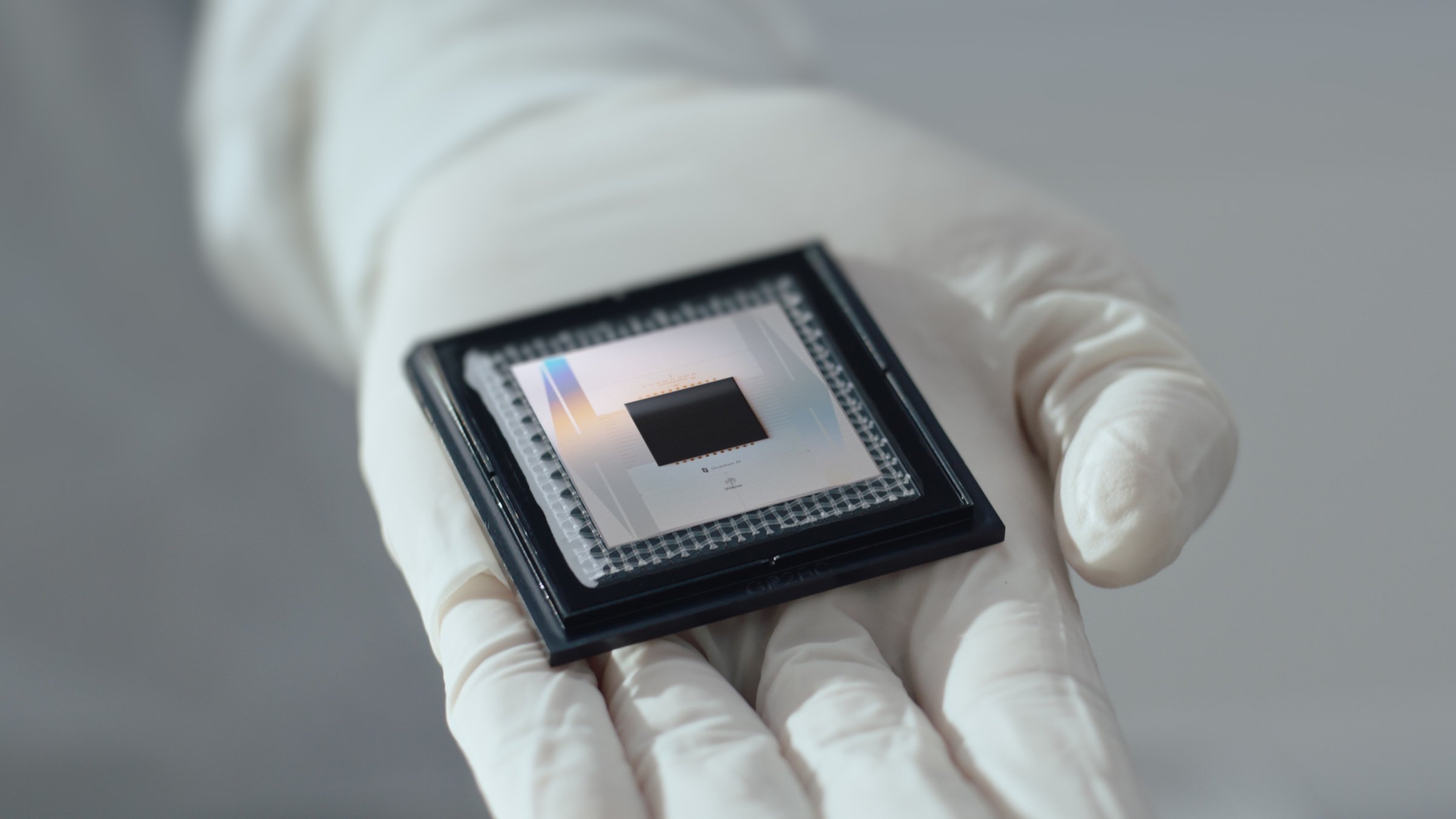
Google Quantum AI says it has demonstrated Magic State Cultivation on real quantum-computing hardware, turning a long-discussed technique for producing high-quality magic states into an experimental result. The work was carried out on the company’s Willow superconducting quantum processor and reported in a Science paper.
Why magic states matter
Fault-tolerant quantum computers need more than error-corrected memory. They also need a universal set of operations, including non-Clifford gates, to run general quantum algorithms. Magic states provide a way to support those operations, but preparing them with sufficiently low error can consume a substantial share of a machine’s resources.
That cost has made magic-state production a central challenge in efforts to build useful, error-corrected quantum computers. A state that is used in a computation also cannot simply be reused, increasing the importance of producing high-quality states efficiently.
Experiment on Google’s Willow processor
Google’s reported approach begins with a noisy injected state and uses coordinated measurements to identify and remove flawed attempts. The process is designed to cultivate a purer state while adapting it into a larger error-corrected encoding.
The company says the protocol reduced errors by about 40 times compared with uncultivated states. In the Science abstract, the researchers report a state fidelity of at least 0.9999(1), while retaining 8% of attempts. The experiment also included code-switching into a surface code and a fault-tolerant measurement protocol used to bound the magic-state fidelity.
Google’s account describes an engineering complication during early testing: electrical-equipment drift and temperature variation affected the team’s original measurement assumptions. Researchers added additional control and developed a benchmarking method that used cultivation to help measure itself.
An experimental step, not a finished quantum computer
The result does not mean that large-scale fault-tolerant quantum computing is complete. Google says the cultivation protocol still needs to be demonstrated at a larger scale, and the experiment leaves further technical challenges to solve.
Its significance is narrower and more concrete: a proposed way to reduce one of quantum computing’s most difficult resource costs has now been tested on a superconducting processor. The work also demonstrated transferring a cultivated state between a distance-3 color code and a distance-5 surface code, linking two error-correction approaches in the company’s hardware architecture.
For quantum-computing research, that makes Magic State Cultivation an engineering milestone rather than only a theoretical proposal. The next question is whether the method can retain its error reduction and fidelity as systems grow.
Sources
What's Your Reaction?
 Like
0
 Dislike
0
 Love
0
 Funny
0
 Angry
0
 Sad
0
 Wow
0