


























The War in Ukraine Is Becoming an AI War — and the Battlefield Is Moving at Machine Speed
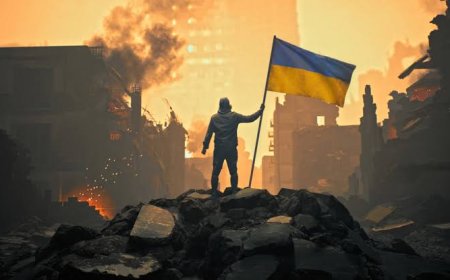
Artificial intelligence is changing the speed at which military forces in Ukraine detect, analyze and respond to battlefield activity. Systems combining drones, battlefield data and AI can dramatically shorten the time between spotting a target and responding to it. What once could take around 20 minutes in some situations can now take only a few minutes, while certain AI-assisted processes can operate in seconds. The transformation is offering a glimpse of how software and algorithms could reshape warfare far beyond Ukraine.

The Battlefield Is Moving Faster Than Ever
One of the biggest changes taking place in the war in Ukraine is not necessarily happening in the sky or on the ground. It is happening inside computers. Artificial intelligence, drones, battlefield software and huge amounts of real-time data are being connected to create a much faster system for understanding what is happening on the battlefield.
At the beginning of the full-scale war, identifying an enemy position and coordinating a response could take around 15 to 20 minutes or longer when the process depended heavily on humans manually passing information between different units. Today, Ukraine says AI-assisted systems can analyze drone imagery, identify military equipment and help shorten that process dramatically. The country's Defence Ministry says AI can accelerate several stages of the so-called “kill chain” — the sequence from finding a target to engaging it and assessing the result. citeturn0search0turn0search1
The difference is enormous. A vehicle that is visible for only a few minutes may no longer have the luxury of simply moving away before a response can be organized. The faster information travels from a sensor to a decision-maker, the smaller the window becomes for anything detected on the battlefield to change position or hide.
AI Is Becoming the Middle Layer Between Sensors and Soldiers
The technology is not simply about putting an AI model inside a drone and telling it to attack. A much larger transformation is taking place behind the scenes.
Reconnaissance drones can continuously collect video. AI systems can process that footage and identify objects. Battlefield platforms can combine information from drones, satellites and other sources into a shared digital picture. Commanders can then see information that previously might have been scattered across different teams and communication channels.
Ukraine's DELTA system is one of the most important examples. It brings battlefield information together into a common operating picture and is increasingly being integrated with AI-powered detection tools. Ukraine's Defence Ministry says the AI-enabled Vezha module can identify military equipment in real time, while the system processes more than 100,000 video streams each month. citeturn0search0turn0search5
That changes the nature of the battlefield. Instead of a long chain of people manually observing, reporting, checking coordinates and passing information to another unit, software can perform parts of those tasks almost instantly.
From 20 Minutes to Minutes — and Sometimes Seconds
The exact speed depends heavily on the situation and the technology being used, so there is no single number that describes every Ukrainian operation. Recent reporting by The New York Times, for example, described a Ukrainian unit reducing a process that once took at least 20 minutes to around three to five minutes through the integration of battlefield software and reconnaissance data. Other AI-enabled systems can accelerate individual stages of the process much further. citeturn0search3
Ukraine's Defence Ministry says its AI systems can automatically analyze imagery and identify enemy positions or equipment, saving analysts up to 90% of their time at that stage. Its DELTA-related AI technology has also been reported to detect military equipment in an average of just a few seconds. citeturn0search0turn0search5
That is where the real significance of AI begins. The technology does not necessarily need to replace soldiers to transform warfare. It only needs to make information move faster than humans can process it manually.
Ukraine Has Become a Real-World Laboratory for Military AI
The war has created an unusual environment for technological experimentation. Ukrainian engineers and military units can see what works in real combat conditions, collect enormous quantities of battlefield data and rapidly modify their systems.
One example is Avengers Labs, which provides developers with access to millions of annotated frames collected during military operations. Ukraine says the dataset contains imagery involving tanks, artillery, air-defense systems, infantry and drones, allowing AI models to be trained on real battlefield conditions rather than purely simulated environments. citeturn0search0
That data has become a valuable strategic resource. The more an AI system learns from battlefield imagery, the better developers can potentially make it at recognizing objects and patterns. This creates a feedback loop in which combat generates data, data improves software, and improved software changes how future combat is conducted.
But Faster Does Not Automatically Mean Safer
There is a darker side to this technological race. When machines help compress the time between detection and engagement, there is also less time available for humans to question what the system has identified.
AI can recognize patterns extremely quickly, but recognition is not the same thing as understanding. A system may be able to classify an object in an image without understanding the wider circumstances surrounding it. That creates difficult questions about mistakes, civilian protection and who is ultimately responsible when an AI-assisted decision goes wrong.
Ukraine's Defence Ministry says its current approach maintains a human-in-the-loop principle, meaning AI can assist with detection and assessment while the final decision to engage remains with a human. citeturn0search0
The debate is becoming increasingly important because Russia and Ukraine are both developing AI-enabled military technologies. Recent reporting has described an accelerating competition involving autonomous drones, battlefield software and machine-assisted targeting, raising broader questions about how much autonomy should eventually be given to military systems. citeturn0search7
The Future of War May Be Decided by Software
Perhaps the most important lesson from Ukraine is that the future battlefield may not be determined only by who has the most tanks, aircraft or missiles. Increasingly, it may also depend on who can see first, understand first and respond first.
That is why the war in Ukraine is attracting attention far beyond Eastern Europe. Military planners around the world are watching how drones, cloud computing, AI models, satellite imagery and battlefield-management systems are being combined in real combat. Western governments are already studying Ukraine's experience because the technology being developed there could influence how future conflicts are fought. citeturn0news21turn0search28
The frightening part is how quickly the technology is moving. A battlefield decision that once depended on a chain of human communications lasting many minutes can now be assisted by software operating in near real time. And as AI becomes better at interpreting video, coordinating information and supporting autonomous systems, that gap could become even smaller.
The war in Ukraine is therefore offering the world an uncomfortable preview of something much bigger: the next revolution in warfare may not be about making weapons faster. It may be about making the entire decision-making system faster. And once the battlefield starts operating at machine speed, the question will not simply be what AI can do — it will be how much control humans are willing to keep over what happens next.
What's Your Reaction?
 Like
0
Like
0
 Dislike
0
Dislike
0
 Love
0
Love
0
 Funny
0
Funny
0
 Angry
0
Angry
0
 Sad
0
Sad
0
 Wow
0
Wow
0