




















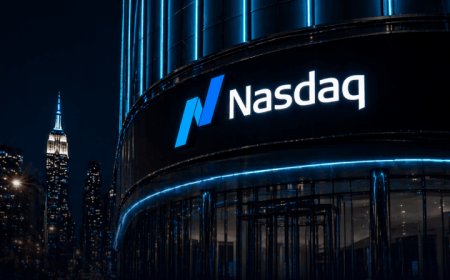




Nasdaq Jumps as Cooler Inflation Data Eases Rate-Hike Fears on Wall Street
The Nasdaq Composite rallied sharply on September 30 after softer-than-expected U.S. inflation data reduced expectations for another Federal Reserve rate hike in October. Technology stocks led the advance, while AI infrastructure demand, Treasury yields and rising oil prices remained key factors shaping investor sentiment.

Nasdaq Rallies as Cooler Inflation Data Changes the Fed Rate-Hike Picture
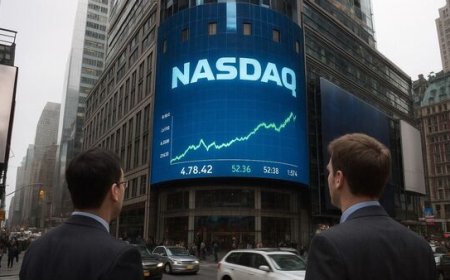
Wall Street closed September with a strong technology-led advance, as the Nasdaq Composite jumped on Wednesday after a key U.S. inflation report came in cooler than economists had expected. The move gave investors fresh reason to reassess the possibility of another Federal Reserve interest-rate increase in October, while major technology and AI-related companies helped drive the market higher.
The Nasdaq gained more than 1% during Wednesday's session, leading the major U.S. stock indexes. The S&P 500 also advanced, while the Dow Jones Industrial Average moved lower. The rally came as investors digested new inflation, economic-growth and employment data at the same time that Treasury yields and oil prices remained elevated.
Cooler PCE Inflation Becomes the Day's Biggest Market Catalyst
The most important development was the latest reading of the Personal Consumption Expenditures (PCE) price index, the inflation gauge closely watched by the Federal Reserve. The Commerce Department reported that headline PCE inflation increased 3.4% year over year in August, below the 3.7% increase economists surveyed by Reuters had expected.
That softer reading changed the immediate interest-rate conversation on Wall Street. Markets had been increasingly concerned that persistent inflation, higher energy prices and elevated Treasury yields could force the Fed to continue tightening monetary policy. Following the inflation report, the market-implied probability of another rate increase at the October meeting fell to around 39%, compared with 71% a week earlier, according to the Reuters report.
For technology companies, interest rates matter because a large portion of their valuations depends on expectations for future earnings and cash flows. When investors anticipate less aggressive monetary tightening, pressure on growth-oriented stocks can ease. That dynamic was visible in Wednesday's technology-heavy market move.
Nasdaq Leads Wall Street Higher
Technology stocks were among the biggest beneficiaries of the changing rate outlook. Shares of major companies including Apple, Amazon, Nvidia and Alphabet moved higher, helping lift both the technology and communication-services sectors. The Nasdaq's advance came after the index had slipped slightly on Tuesday amid concerns over rising long-term Treasury yields.
The previous session had highlighted the sensitivity of technology stocks to borrowing costs. On September 29, the Nasdaq Composite finished at 26,797.54, down 0.08%, while the 30-year Treasury yield reached 5.6206%, its highest level since June 2002. The 10-year yield also climbed to 5.293%, its highest level since June 2007.
Wednesday's inflation report therefore arrived at an important moment. A moderation in inflation does not guarantee that the Federal Reserve will avoid another increase, but it gave markets additional evidence that price pressures may not be accelerating as quickly as feared.
AI Spending Continues to Support Technology Stocks
Inflation was not the only factor supporting the Nasdaq. Investors are also continuing to focus heavily on the enormous investment taking place around artificial intelligence infrastructure.
Final second-quarter GDP data showed that the U.S. economy grew at an annualized 2.2% rate, with consumer spending and business investment contributing to the expansion. Reuters noted that investment related to the buildout of AI infrastructure was also an important part of the economic picture.
That matters for the technology sector because the current AI boom extends far beyond chatbot companies. Semiconductor manufacturers, networking companies, cloud providers, data-center operators and enterprise software companies are all participating in the expansion of AI infrastructure. The continued spending is providing investors with a fundamental reason to remain interested in technology stocks even as concerns about valuations and interest rates persist.
HPE and AI Infrastructure Stocks Draw Attention
Among individual technology names, Hewlett Packard Enterprise stood out during the session. HPE shares jumped after the company improved its outlook and announced a deal involving Vultr, highlighting continued demand for infrastructure designed to support AI workloads. Reuters reported that HPE gained about 5.3% during Wednesday's trading.
The broader semiconductor and AI infrastructure groups also remained closely watched. Companies such as Nvidia and AMD have become major indicators of how investors view the sustainability of AI spending. Their performance can influence the wider Nasdaq because the index has significant exposure to large technology and semiconductor businesses.
At the same time, the market is still debating whether the enormous capital expenditure planned by technology companies will ultimately generate enough revenue and profit to justify the investment. That question is likely to remain one of the major themes for technology stocks through the rest of 2026.
Oil Prices and Treasury Yields Remain a Risk
Despite Wednesday's rally, the market does not have a completely clear path ahead. Oil prices remain a major concern because higher energy costs can feed back into inflation and make it more difficult for the Federal Reserve to ease monetary policy.
The rise in crude oil and diesel prices has already contributed to renewed inflation concerns, while longer-term Treasury yields remain elevated. The 10-year Treasury yield was around 5.30% during Wednesday's trading, while the 30-year yield reached levels not seen since 2002.
That creates a difficult balance for investors. Softer inflation supports hopes for less aggressive monetary policy, but expensive energy and high bond yields can continue to put pressure on technology valuations. If oil prices rise substantially again, the inflation picture could change quickly.
September Ends With Nasdaq Still Strong for the Year
The latest rally also helped the Nasdaq finish September on a stronger note after a volatile month. The index had faced pressure earlier in the period as Treasury yields climbed and investors worried about inflation and the cost of financing large technology investments.
Yet technology stocks recovered strongly during the month. The Nasdaq had also reached an intraday record on September 22, when it climbed above its previous June high as technology shares regained momentum and falling oil prices temporarily improved market sentiment.
The recovery demonstrates how quickly sentiment can change in the current market. Investors have been moving between concerns over inflation and interest rates on one side and optimism surrounding AI-driven earnings growth on the other.
What Comes Next for the Nasdaq?
The next phase of trading will likely remain heavily dependent on economic data and Federal Reserve expectations. Inflation, employment and Treasury yields will continue to influence how investors value technology companies, while quarterly earnings and AI spending will determine whether the sector can maintain its underlying growth story.
The Nasdaq's latest rally therefore should be viewed in the broader context rather than as a single-data-point reversal. The September 30 move shows that cooler inflation can quickly improve sentiment toward technology stocks, but elevated oil prices, high Treasury yields and uncertainty around future Federal Reserve policy remain important variables.
For now, the latest market data has given technology investors some relief. The Nasdaq entered October after a strong final session of September, with cooler-than-expected inflation providing a fresh argument for a less aggressive interest-rate path while the continuing AI infrastructure boom keeps technology stocks at the center of Wall Street's attention.
What's Your Reaction?
 Like
0
Like
0
 Dislike
0
Dislike
0
 Love
0
Love
0
 Funny
0
Funny
0
 Angry
0
Angry
0
 Sad
0
Sad
0
 Wow
0
Wow
0