













Wall Street Catches Its Breath: Oil, 5% Bond Yields and AI Fears Put Investors on Edge
Wall Street has entered a tense stretch as rising oil prices, a surge in Treasury yields and renewed concerns about AI spending weigh on investors. U.S. stocks fell for a second straight session on September 15, but futures turned higher the following morning ahead of a closely watched Federal Reserve decision. The market is now balancing inflation fears, interest rates, geopolitical uncertainty and questions about the enormous amount of money being poured into artificial intelligence.

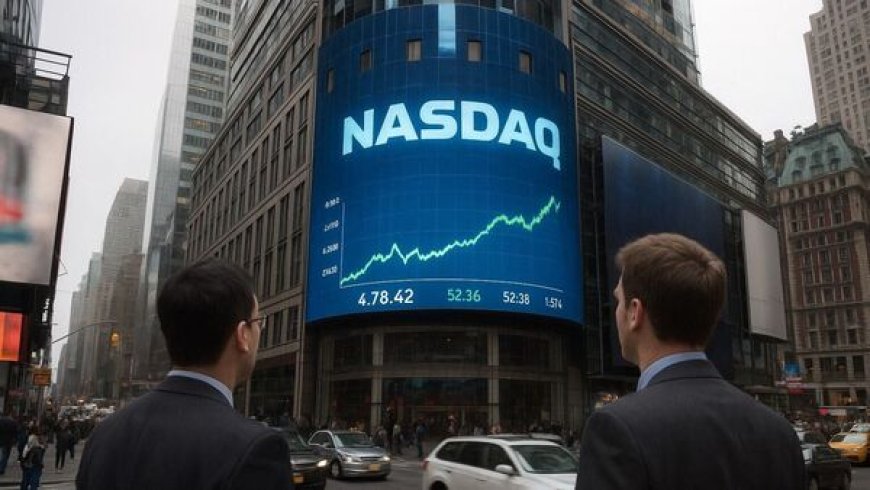
Wall Street Has More Than One Problem Right Now
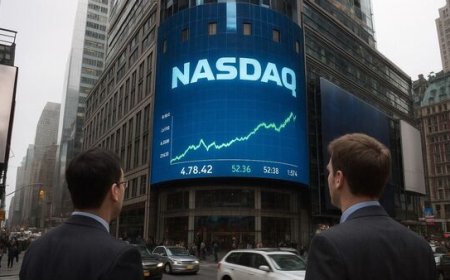
Wall Street is heading into one of those sessions where investors are watching several things at once. The previous trading day ended badly, with all three major U.S. indexes falling as oil prices climbed and Treasury yields pushed higher. The S&P 500 dropped 0.45%, the Nasdaq Composite lost 0.78% and the Dow Jones Industrial Average fell 0.63% on September 15. But by Wednesday morning, the mood had started to improve: S&P 500 futures were up roughly 0.3% and Nasdaq futures around 0.4% in early trading as investors waited for the Federal Reserve's latest interest-rate decision.
The important point is that this is not simply another bad day for technology stocks. Investors are dealing with a combination of higher energy costs, expensive government borrowing, geopolitical uncertainty and questions about whether the enormous AI investment boom can continue at its current pace. The result is a market that can change direction quickly depending on what happens with oil, bonds and the Fed.
Oil Is Still One of Wall Street's Biggest Headaches
Energy prices have become a major source of anxiety for investors. Crude oil had moved above $100 a barrel as conflict and disruptions around the Middle East raised concerns about global supplies. Higher oil prices matter far beyond petrol stations: they can increase transportation and manufacturing costs, push inflation higher and make it harder for central banks to reduce interest rates.
There was some relief Wednesday, however. Oil prices retreated after reports suggested Saudi Arabia's East-West pipeline could reopen within days, easing some fears about prolonged supply disruptions. Brent crude fell by more than 1% in morning trading, helping stocks recover some of their recent losses.
The Bond Market Is Sending Another Warning
Then there is the bond market. The yield on the benchmark 10-year U.S. Treasury briefly climbed above 5% on Tuesday, a level not seen since before the global financial crisis, before easing to around 4.97% on Wednesday. When Treasury yields rise sharply, stocks—particularly expensive growth and technology companies—can come under pressure because investors have a more attractive return available from relatively lower-risk government debt.
There is another problem: higher yields make borrowing more expensive throughout the economy. Mortgages, corporate loans and other forms of credit can become more costly. That is why investors aren't treating the bond-market move as a technical detail. It is becoming part of the broader question of whether inflation is going to remain stubbornly high.
Big Tech Has Its Own Problem: The AI Question
Technology stocks are facing a separate source of pressure. AI has powered a huge portion of the recent stock-market rally, but investors are beginning to ask increasingly uncomfortable questions about the amount of money companies are spending on AI infrastructure and whether the eventual returns will justify that spending.
The concern became particularly visible this week after executives from major AI companies called for greater caution around the pace of AI development. Chipmakers and other technology companies were hit during Monday's session, while investors also worried that a slower AI buildout could eventually affect demand for the hardware and infrastructure behind the boom.
That doesn't mean investors suddenly believe AI is disappearing. Quite the opposite. Companies continue to spend enormous amounts on data centers, chips and AI systems. But markets are beginning to distinguish between AI being important and every AI investment producing the returns investors currently expect.
Nvidia and the Big AI Trade Remain in Focus
That makes companies such as Nvidia particularly important to the market. Nvidia has become one of the clearest symbols of the AI infrastructure boom because its processors are used to build many of the data centers powering modern AI systems. When investors become nervous about AI spending, semiconductor stocks can feel that pressure quickly.
At the same time, the broader technology sector is not moving as one block. Some technology names have held up better than others, and Wednesday's early market rebound showed that investors were willing to step back into riskier assets while waiting for clearer signals from the Fed. The market's reaction is therefore likely to depend not simply on whether stocks rise or fall, but on what investors hear about the economic outlook and future interest-rate policy.
Everyone Is Waiting for the Federal Reserve
The biggest event on Wednesday is the Federal Reserve's policy announcement. Markets have been pricing in a quarter-point rate increase, which would be the Fed's first rate hike since 2023. Investors are also paying close attention to the central bank's economic projections and the comments from Fed Chair Kevin Warsh because the future path of rates could matter more than the immediate decision itself.
This is where the different pieces of the market puzzle come together. If oil remains expensive, inflation could stay elevated. If inflation remains elevated, interest rates may need to remain higher for longer. Higher rates can keep pressure on stock valuations, particularly companies whose expected profits are far in the future. And if AI spending begins to slow at the same time, some of the technology sector's most expensive stocks could face another period of uncertainty.
Wall Street's Real Battle Is About What Comes Next
For now, the market is caught between two very different forces. On one side are enormous long-term investments in AI, strong corporate technology spending and continued optimism about what the next generation of artificial intelligence could create. On the other are expensive oil, rising borrowing costs, stubborn inflation and investors becoming more selective about how much they are willing to pay for future growth.
That is why Wednesday's early rebound should not automatically be interpreted as the end of the recent weakness. The market is still waiting for answers. Oil needs to stabilize, Treasury yields need to find a sustainable level and investors need greater clarity about the Fed's next moves. At the same time, the AI industry has to prove that today's extraordinary spending can eventually translate into extraordinary business results.
For ordinary investors watching from the outside, this is a reminder that Wall Street rarely moves because of one headline alone. Right now, oil, bonds, interest rates and AI are all pulling on the market at the same time. And until those forces become easier to read, volatility is likely to remain part of the story.
What's Your Reaction?
 Like
0
Like
0
 Dislike
0
Dislike
0
 Love
0
Love
0
 Funny
0
Funny
0
 Angry
0
Angry
0
 Sad
0
Sad
0
 Wow
0
Wow
0