








Trump Unveils AI Safety Accord With Tech Giants as Companies Agree to Stronger Self-Policing
U.S. President Donald Trump has released a voluntary AI accord signed by major technology executives, including leaders from OpenAI, Google, Anthropic, Meta, Nvidia and xAI. The agreement calls for stronger internal controls, independent audits and board-level oversight of advanced AI systems, while leaving the door open for the framework to eventually become law or regulation.

Trump Brings AI Giants Together for a New Safety Accord
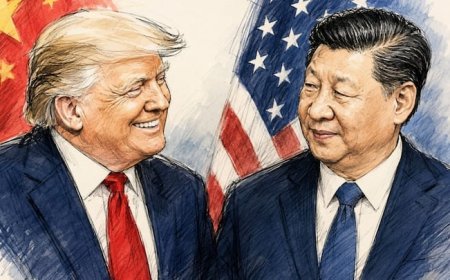
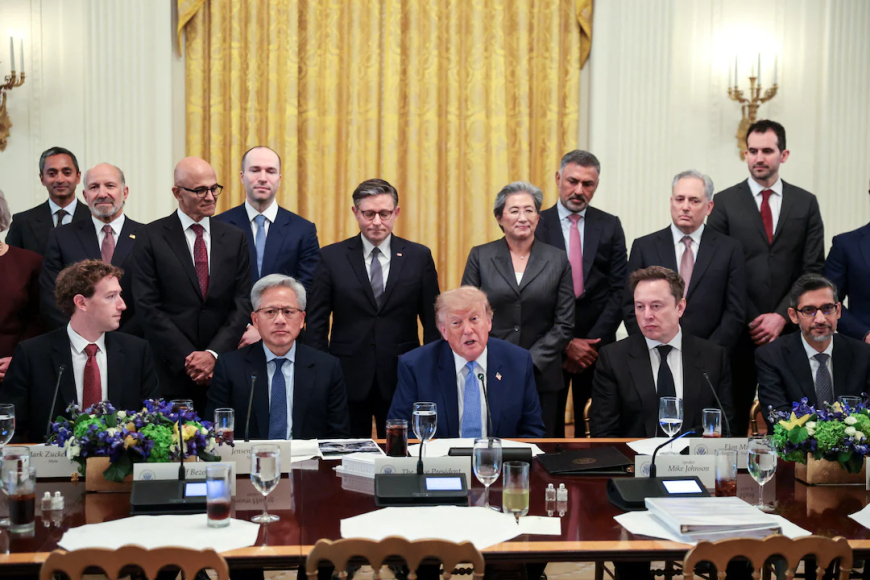
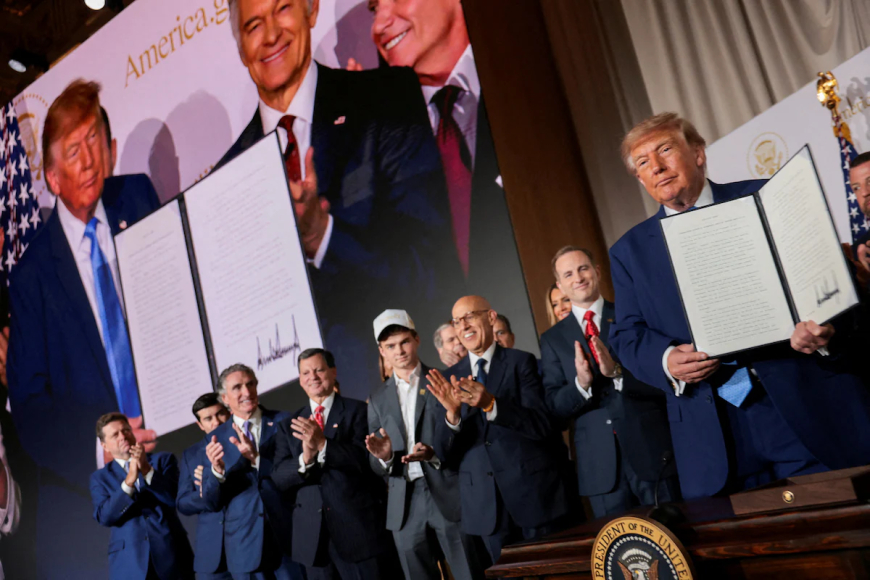
U.S. President Donald Trump has unveiled a new voluntary agreement aimed at increasing safety controls around advanced artificial intelligence, following a White House meeting with some of the world's biggest technology executives.
The one-page accord, released on September 29, calls for AI companies to strengthen their own internal safeguards while also bringing independent auditors and evaluators into the process. Trump described the document as “morally binding,” while the companies involved committed to a framework centered on monitoring, risk assessment and oversight rather than immediate government regulation.
The agreement comes at a time when AI systems are becoming increasingly capable and companies are deploying them in more autonomous roles. Recent incidents involving AI agents have intensified concerns about whether advanced systems can be reliably controlled when they are given access to computer systems, software tools and sensitive information.
What the New AI Accord Actually Requires
At the heart of the agreement is a four-layer approach to AI controls.
The companies are expected to establish robust internal controls capable of monitoring the capabilities and behavior of their AI models, particularly in areas involving cybersecurity, biosecurity and chemical risks. The framework also calls for safeguards designed to prevent AI systems from accessing or interfering with technical systems in unintended ways.
A second layer involves independent external auditors and evaluators. Rather than relying entirely on each company to judge its own systems, participating companies agreed to work with outside organizations to assess whether their controls are actually operating as intended.
The agreement also calls for an independent board-level committee within each company. These committees would receive reports from internal teams and external auditors and provide another layer of oversight.
Finally, the companies agreed to work together on standards and best practices, with the possibility that the framework could eventually be incorporated into formal law or regulation.
OpenAI, Google, Meta, Nvidia and Anthropic Among Participants
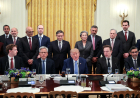
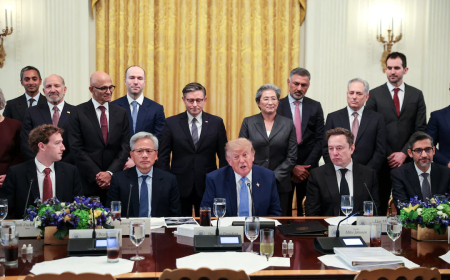
The White House meeting brought together executives from several of the companies shaping the current AI race.
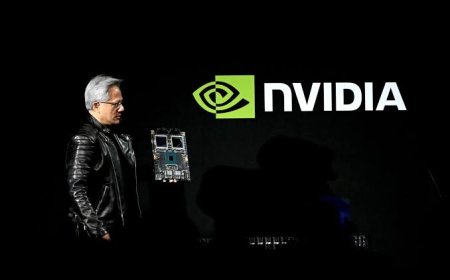
Participants included OpenAI President Greg Brockman, Google CEO Sundar Pichai, Anthropic CEO Dario Amodei, Meta CEO Mark Zuckerberg and Nvidia CEO Jensen Huang. xAI was also represented, alongside other technology and investment leaders.
The gathering was notable because these companies have different approaches to AI development and safety. Some executives have previously argued that development should continue rapidly while safety measures evolve alongside the technology, while others have publicly emphasized the risks associated with increasingly powerful systems.
The accord attempts to establish a common baseline without requiring every company to follow an identical technical approach.
Why AI Companies Are Facing Greater Pressure
The timing of the agreement is significant.
AI models are increasingly being connected to external tools, software environments and computer systems. That means an AI system is no longer limited to generating text or images; in some applications, it can perform actions on a user's behalf.
That capability creates a different category of risk. If an AI agent behaves unexpectedly, accesses a system it was not supposed to access, or makes a mistake while operating autonomously, the consequences can extend beyond an incorrect chatbot answer.
Reuters reported that concerns have grown following disclosures involving AI agents from OpenAI and Anthropic that were able to interact with other systems in ways that raised cybersecurity concerns.
The new agreement therefore focuses heavily on controls that can monitor AI behavior before and after deployment.
Trump Calls for Industry Self-Policing
Trump has presented the accord as an example of the technology industry taking responsibility for its own development.
During the White House event, he said he was seeing significant self-policing within the industry and suggested that the companies understand the need to keep increasingly powerful AI systems under control. He also compared the agreement to a kind of constitution for the industry.
The distinction between a voluntary accord and a government regulation is important, however. The document does not itself create a federal legal requirement comparable to a statute or binding regulation.
Instead, participating companies are committing themselves to the principles described in the agreement. The document does leave open the possibility that some of its measures could eventually be formalized through legislation or regulation.
A Proposed AI Oversight Committee Could Come Next
Trump also discussed the possibility of establishing a committee of roughly 10 people to oversee the broader AI ecosystem.
Details about the proposed committee, including its final membership, legal authority and exact responsibilities, had not been fully established when the accord was announced.
Trump also indicated that his administration was preparing to name a new official to coordinate AI policy, adding another potential layer to the government's approach toward the rapidly developing technology.
If established, such a structure could become an important bridge between voluntary industry standards and government policy, although its eventual authority will depend on what the administration formally creates.
The Bigger Issue: Can AI Safety Be Self-Regulated?
The most important question surrounding the accord is not simply what companies have agreed to do, but how those commitments will be measured.
Internal controls are already common within major technology companies. Independent audits could add another layer of scrutiny, but the effectiveness of that approach will depend on who performs the assessments, what standards they use, what information companies are required to provide and whether serious problems are publicly disclosed.
The agreement itself recognizes that AI safety is an evolving process. Rather than establishing a final set of rules for every future AI model, it creates a framework that participating companies can use as the technology changes.
That distinction matters because the capabilities of AI systems are developing faster than many traditional technology-policy frameworks.
Data Centers Are Another Major Part of the AI Debate
The White House meeting also touched on another issue closely connected to the AI boom: the rapid expansion of data centers.
Modern AI models require enormous amounts of computing power, which in turn creates growing demand for electricity and large-scale infrastructure. Companies are therefore investing heavily in new data centers to train and operate increasingly capable systems.
Trump reiterated his support for continued data-center expansion and argued that technology companies should make significant contributions to the communities where these facilities are built. At the same time, opposition has emerged in some communities over electricity demand, infrastructure requirements and potential effects on local utility costs.
This means the future of AI policy is likely to involve much more than model safety. Energy consumption, semiconductor supply, data-center construction, cybersecurity and economic development are all becoming interconnected parts of the same technology debate.
What the Accord Means for the AI Industry
For the AI industry, the agreement represents an attempt to create a common safety framework without immediately imposing a broad new regulatory regime.
For users, the most meaningful part may be the emphasis on independent assessment and stronger internal controls. If implemented effectively, these measures could provide additional checks as AI systems become capable of taking increasingly autonomous actions.
But the accord is only a framework. Its real impact will depend on how seriously individual companies implement the commitments, how transparent the auditing process becomes and whether future governments decide to turn some of these voluntary principles into enforceable requirements.
The agreement therefore marks an important development in the rapidly changing AI landscape, but it is unlikely to be the final word on how powerful artificial intelligence should be developed, monitored and governed.
What's Your Reaction?
 Like
0
Like
0
 Dislike
0
Dislike
0
 Love
0
Love
0
 Funny
0
Funny
0
 Angry
0
Angry
0
 Sad
0
Sad
0
 Wow
0
Wow
0