



























SoftBank Borrows $11 Billion for OpenAI Bet as AI Investment Race Gets Even Bigger
SoftBank has launched more than $11 billion in bonds to help finance another $10 billion investment in OpenAI, the company behind ChatGPT. The massive debt offering highlights just how aggressively SoftBank is betting on artificial intelligence—and how much capital is now flowing into the companies building the next generation of AI.

SoftBank Is Borrowing Billions to Double Down on OpenAI
SoftBank is putting even more money behind OpenAI—and this time, it is turning to the bond market to help pay for it. The Japanese technology giant has launched a bond offering worth $10 billion in U.S. dollar-denominated notes and €1 billion in euro-denominated notes, giving the deal a combined value of more than $11 billion. According to a term sheet seen by Reuters, the proceeds will primarily help fund SoftBank's planned $10 billion third-tranche investment in OpenAI, expected to close on October 1.
At first glance, this may look like another huge financing deal in an industry already full of billion-dollar AI announcements. But there is a bigger story underneath it. SoftBank isn't simply investing spare cash into an exciting technology company. It is borrowing money to increase its exposure to OpenAI at a time when AI has become one of the biggest investment races in the world. The move shows how strongly SoftBank founder Masayoshi Son is betting that companies at the center of the AI revolution will eventually justify the enormous amounts of capital being poured into them.
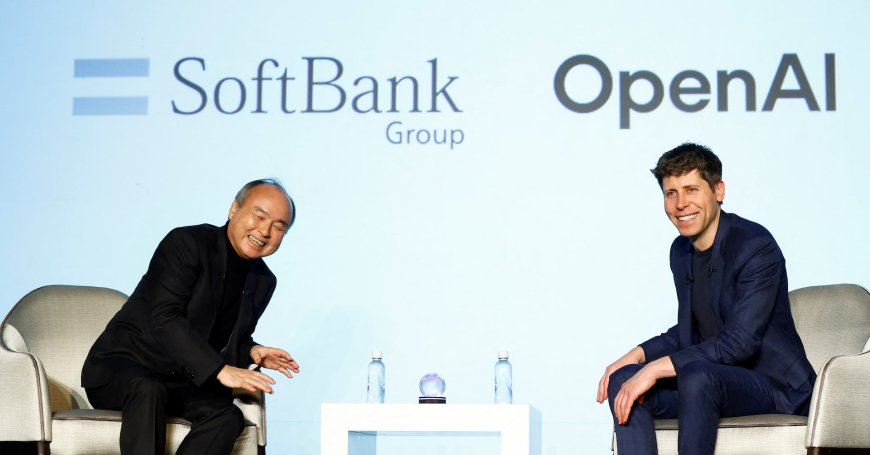
An $11 Billion Bond Sale With a Record in Sight
If the offering reaches its planned size, it would become the largest non-financial corporate bond deal ever recorded in the Asia-Pacific and Japan markets, according to LSEG data cited by Reuters. It would surpass the roughly $10.93 billion bond sale by 7-Eleven in 2021 and rank among the 20 largest corporate bond transactions globally so far this year.
The dollar bonds are being offered across three maturities—3.5 years, 5.5 years and 7.5 years—while the euro bonds come with four-year and six-year maturities. The offering is expected to be priced on September 24 and settle on September 29. Fitch Ratings has assigned the proposed notes a BB+ rating, placing them at the top end of speculative-grade debt.
The new bonds will also replace a $10 billion bridge loan SoftBank had previously arranged to finance the OpenAI investment. In other words, SoftBank is effectively moving from short-term financing toward longer-term debt while preparing to make another huge payment to OpenAI.
SoftBank's OpenAI Bet Is Getting Enormous
This is only one part of a much larger commitment. SoftBank announced in February that it planned a further $30 billion investment in OpenAI, split into three $10 billion tranches. Once the final tranche is completed, SoftBank expects its cumulative investment in OpenAI to reach approximately $64.6 billion, representing an ownership interest of around 13%.
That is an extraordinary amount of money for a single private technology company. It also explains why SoftBank is increasingly using debt and other financing arrangements to support its AI strategy. The company isn't treating OpenAI as a small venture investment anymore. It is becoming one of the central pieces of SoftBank's long-term financial strategy.
And there is a reason the stakes are so high. OpenAI is no longer simply the company that created ChatGPT. It is competing at the frontier of AI with companies such as Google and Anthropic while spending enormous amounts on computing infrastructure, data centers, chips and model development.
The Risk Is Growing Alongside the Opportunity
The financing also highlights the other side of SoftBank's strategy: borrowing billions means taking on more financial risk.
Fitch expects SoftBank's debt to rise as it funds its investment commitments, although the ratings agency said the company should retain adequate liquidity and access to capital markets. That balance is becoming increasingly important as SoftBank continues committing large amounts of money to AI-related opportunities.
The situation is particularly interesting because the AI industry itself is becoming increasingly dependent on debt and complex financing structures. Companies need extraordinary amounts of capital to build the data centers and computing infrastructure required for advanced AI. Investors, banks and technology companies are finding increasingly creative ways to finance that expansion. The Financial Times recently reported that major technology companies have provided hundreds of billions of dollars in guarantees connected to AI infrastructure and chips.
Why OpenAI Is So Important to SoftBank
For Masayoshi Son, the OpenAI investment fits into a much larger vision for an AI-driven technology economy. SoftBank has increasingly positioned itself around artificial intelligence, from semiconductor technology through Arm to AI infrastructure and software.
OpenAI is particularly important because it sits at the application layer of the AI revolution. Nvidia provides much of the computing hardware, data-center companies provide the infrastructure, and OpenAI is building AI systems that millions of people and businesses actually use. If AI becomes as fundamental to computing as the internet and smartphones became, owning a significant stake in one of its leading companies could potentially become enormously valuable.
But that future is not guaranteed. OpenAI is spending at a scale that requires continued growth, while competition is intensifying and the economics of frontier AI remain a major question for investors.
The Bigger AI Money Race
Perhaps the most important part of this story is what it says about the AI industry itself. Just a few years ago, billions of dollars sounded like an enormous amount of money for an AI startup. Today, $10 billion investments and $11 billion bond offerings are becoming part of the industry's financial vocabulary.
SoftBank's latest move is therefore about much more than one bond sale. It is another sign that the AI race is turning into a race for capital—and companies want access to as much of it as possible before the next technological breakthrough arrives.
For OpenAI, the money provides another major source of backing as it expands. For SoftBank, it represents a much larger financial bet. And for the broader technology industry, it raises an increasingly important question: how much money can the AI revolution absorb before investors finally demand to see the returns?
That question may take years to answer. But one thing is already clear: the global AI race has moved far beyond software labs and startup offices. It is now reaching deep into the world's bond markets, banks and biggest investment firms.
What's Your Reaction?
 Like
0
Like
0
 Dislike
0
Dislike
0
 Love
0
Love
0
 Funny
0
Funny
0
 Angry
0
Angry
0
 Sad
0
Sad
0
 Wow
0
Wow
0