


















Snap Wants Its AR Glasses to Become the Next Workplace Computer
Snap is taking its new SPECS augmented-reality glasses beyond entertainment and into the workplace, announcing partnerships with Salesforce, NVIDIA and Amazon Web Services. The glasses will combine AR displays, AI and enterprise software to help workers access company information, complete tasks and interact with digital systems without stepping away from their physical surroundings.

Snap Is Taking Its Glasses to Work
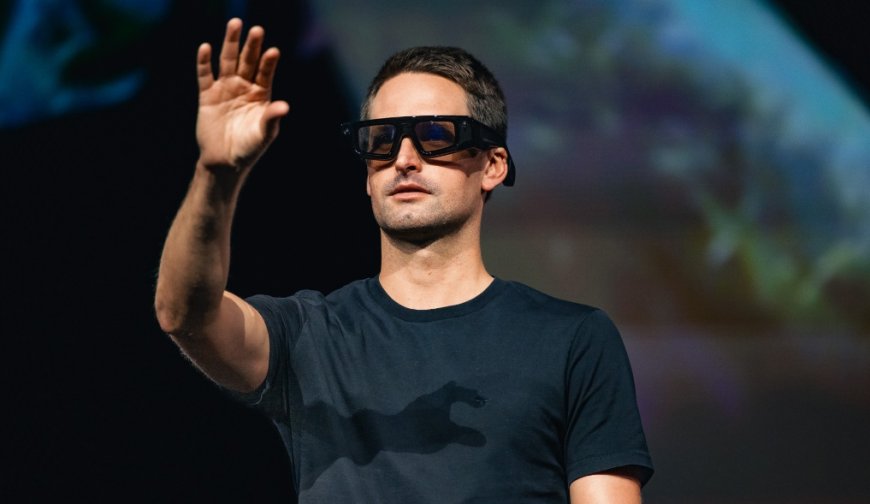
Snap wants its new SPECS augmented-reality glasses to be more than another futuristic gadget sitting on someone's face. The company is now targeting businesses, announcing partnerships with Salesforce, NVIDIA and Amazon Web Services that will bring enterprise software and AI capabilities directly into the glasses. The idea is straightforward but ambitious: instead of constantly looking down at a computer or phone, workers could see useful information in front of them and interact with digital systems while continuing to work in the real world.
That could make SPECS particularly interesting outside traditional office environments. Think about a technician working on machinery, a warehouse employee checking inventory, a retail worker looking up product information or a field-service worker trying to access a work order. These are situations where pulling out a laptop or phone can interrupt the job. Snap is betting that putting the information directly into the worker's field of view could make computing feel much more natural.
Salesforce Brings the Office Into the Glasses
One of the biggest pieces of Snap's enterprise strategy is Salesforce's Agentforce. Snap and Salesforce are working to bring Agentforce experiences to SPECS, allowing workers to interact with business information and workflows through the glasses. That could eventually mean checking customer records, managing field-service tasks, retrieving information or handling other company processes through voice and AR interfaces rather than a conventional screen.
The interesting part is that this is not simply about displaying Salesforce on a tiny screen. Salesforce describes the partnership as an effort to bring its AI agents into a new hardware category. In practical terms, that means the glasses could become a visual and voice interface between a worker and the company's existing digital systems. Instead of asking an employee to learn another complicated device, the goal is to make the computer respond to what the person is doing.
NVIDIA Wants to Give the Glasses Eyes for the Workplace
NVIDIA is playing a different but equally important role. Its AI technology can help SPECS interpret a worker's visual environment and connect what the glasses perceive with relevant enterprise information. NVIDIA's XR AI platform is designed around multimodal inputs such as video, audio, depth, pose and other sensor information, allowing AI agents to understand what is happening around a person and provide assistance in real time.
This is where AR glasses begin to look very different from ordinary smart glasses. A conventional wearable might answer a question or play music. An AI-powered AR device can potentially understand where you are, what you are looking at and what you are trying to accomplish, then bring the appropriate information into your field of view. That is the direction NVIDIA is targeting with its enterprise XR technology, and Snap is now building that idea directly into its own hardware strategy.
AWS Adds Another AI Layer
Amazon Web Services is also joining the effort, with its AI assistant being integrated into the workplace experience. Snap says employees will be able to use voice commands for tasks such as checking product availability. That may sound simple, but it demonstrates the larger concept: workers could communicate with company systems in ordinary language instead of navigating menus, applications and databases manually.
For businesses, that could be one of the strongest arguments for AR glasses. The value isn't necessarily the glasses themselves. The value comes from connecting the glasses to the software, databases and AI systems a company already uses every day.
SPECS Is a Very Different Bet From Ray-Ban Meta
Snap's strategy is also different from what consumers have seen from Ray-Ban Meta. Meta's glasses have focused heavily on AI assistance, cameras, audio and everyday consumer features, while Snap's SPECS have built-in displays that place digital objects directly into the user's view. Snap is essentially trying to create a standalone computer that happens to look like a pair of glasses.
That ambition comes with a serious price. SPECS are priced at $2,195, making them dramatically more expensive than mainstream smart glasses. Snap has therefore got to convince customers that the device isn't simply an expensive novelty. The enterprise market may provide one way to make that argument because a company can evaluate the glasses based on productivity and workflow improvements rather than whether consumers want another gadget for taking photos or listening to music.
The Workplace May Be Where AR Finally Makes Sense
There is a reason companies keep returning to factories, warehouses, hospitals, retail stores and field service when talking about AR. These environments have something smartphones and laptops don't: workers often need both hands free and their attention focused on the physical world.
Imagine a technician looking at a machine and receiving maintenance instructions in their field of view. Imagine a warehouse worker asking for the location of a product and seeing directions without stopping to check a handheld device. Or imagine a field-service employee opening a customer's work order simply by speaking to the glasses. These are the kinds of scenarios that could make AR genuinely useful rather than simply futuristic.
Snap itself says SPECS are designed around natural interactions using hands and voice, with computing hardware built directly into the glasses rather than requiring a separate computing puck or tether. The company is also introducing SPECS Intelligence, an AI service designed to work across iPhone, Mac and the glasses.
But AR Still Has a Long Way to Go
The technology is impressive, but the early experience also shows why AR glasses have not yet replaced smartphones or laptops. A hands-on test by The Verge found that SPECS could deliver genuinely interesting AR experiences, including shared virtual games, but also encountered issues with gesture controls, visibility in bright conditions and the glasses' relatively narrow field of view. The reviewer also noted that the glasses are considerably more noticeable than ordinary eyewear.
That matters because successful wearable technology has to disappear into everyday life. People don't want to constantly think about controlling a computer on their face. They want the technology to understand what they need and stay out of the way. Snap's challenge will be turning impressive demonstrations into something workers can comfortably and reliably use for hours.
Snap Is Betting That the Next Computer Won't Sit on a Desk
The bigger story here is not Salesforce, NVIDIA or AWS individually. It is the possibility that the workplace computer itself could change.
For decades, computing has meant sitting in front of a monitor, carrying a laptop or looking down at a smartphone. AR glasses offer a completely different model: information follows you into the physical world. AI supplies the intelligence, enterprise software supplies the data and the glasses become the interface connecting the two.
Snap clearly believes that future is worth betting on. SPECS are expected to begin shipping later this fall in the United States, United Kingdom and France, while Snap is already building the enterprise ecosystem around them.
Whether businesses will actually spend thousands of dollars per worker on AR glasses remains to be seen. But by partnering with Salesforce, NVIDIA and AWS, Snap is making a much bigger statement than simply launching another pair of smart glasses. It wants SPECS to become a new kind of computer — one that doesn't ask workers to leave the real world just to use the digital one.
What's Your Reaction?
 Like
0
Like
0
 Dislike
0
Dislike
0
 Love
0
Love
0
 Funny
0
Funny
0
 Angry
0
Angry
0
 Sad
0
Sad
0
 Wow
0
Wow
0