


















Meta Turns Muse Into an AI Business Assistant for Small Companies
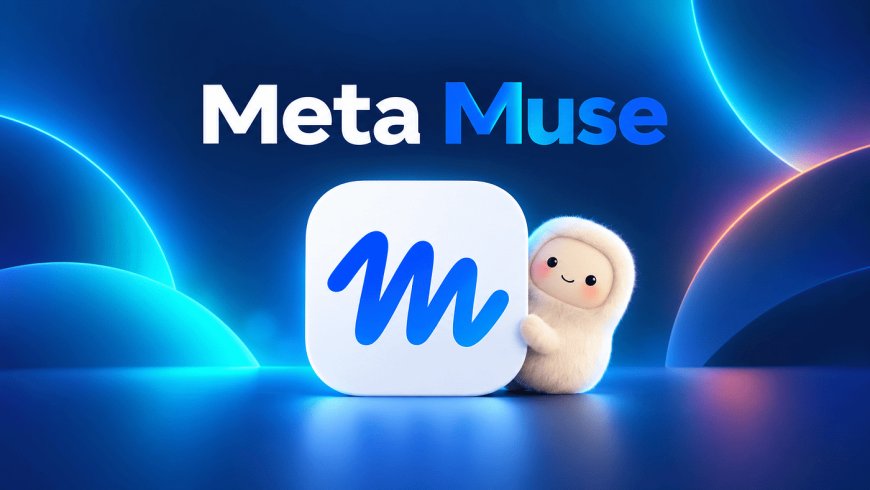
Meta is expanding its Muse AI agent beyond personal productivity with a new version designed specifically for small businesses. Muse for Small Business can connect with Facebook and Instagram business accounts and popular tools such as Shopify, QuickBooks, Canva, Slack, Stripe, Asana and Notion, allowing business owners to use one AI agent across sales, marketing, finance and daily operations.

Meta Takes Muse Into the Small-Business World
Meta is expanding its Muse AI agent from a personal assistant into a much more practical business tool, targeting the millions of small businesses that already rely on Facebook, Instagram and a growing collection of online software.
Announced on September 29, 2026, Muse for Small Business is designed to help owners work across the different services they already use instead of treating AI as another isolated chatbot. Meta says businesses can give Muse broader goals, such as running parts of the business or finding new customers, while the agent uses connected business data and applications to work toward those goals.
The move is significant because small businesses often have to manage sales, marketing, customer communication, accounting, design and operations with limited staff. Meta is attempting to position Muse as a layer connecting those separate workflows, giving an AI agent access to the context needed to work across them.
Muse Can Connect to the Tools Businesses Already Use
One of the biggest changes is the number of third-party services Muse can work with.
Meta says Muse for Small Business supports connectors including Shopify, Intuit QuickBooks, Canva, Slack, Asana, Notion, Stripe, Dropbox, Figma, Zoom, Klaviyo, Box, HighLevel, Lovable and Granola. It can also connect directly with Facebook Pages, Instagram professional accounts and Meta advertising accounts.
That means a business owner could potentially give Muse a task without manually moving information between several different applications. Sales information from an online store, financial information from accounting software and marketing information from Meta's platforms can become part of the context Muse uses when working on a task.
Meta is also supporting custom connectors for services that are not yet directly supported, opening the door for businesses and partners to connect additional software to the agent.
From Chatbot to Goal-Oriented AI Agent
The most important difference between Muse and a traditional chatbot is the way Meta wants the system to handle goals.
Instead of simply asking an AI a question and receiving an answer, a business owner can provide a broader objective. Meta gives examples such as analyzing sales and campaigns to create a growth plan, improving advertising and content, reviewing financial performance, identifying unusual expenses, and helping manage information arriving through email and other business channels.
This reflects the larger shift happening across the AI industry toward agentic AI. The idea is that AI systems should not merely generate text or answer questions but should understand a task, work through multiple steps and interact with software on the user's behalf.
For a small business, that could eventually mean spending less time switching between dashboards and more time reviewing the work an AI agent has prepared.
Meta Wants Muse to Understand the Whole Business
Meta says Muse can connect to Instagram professional account analytics, Facebook Pages and Meta ad accounts, allowing it to understand information such as what a business sells, how its brand communicates and what customers frequently ask about.
This context is important.
A generic AI chatbot might know how to write an advertisement, but it does not automatically know a particular company's products, customer questions, brand style or previous campaign performance. By connecting those sources, Muse is designed to work with information specific to the business.
The same approach can be applied to design and productivity. For example, Canva integration can bring a company's existing templates and brand context into Muse conversations, while tools such as Slack, Asana and Notion can provide additional workplace information.
Human Approval Remains in the Loop
Despite the broader capabilities, Meta is not giving Muse unlimited authority over a business.
The company says nothing publishes, sends or spends without the user's approval. That means the agent can prepare work and move through connected systems, but important external actions still require the business owner to authorize them.
That approval layer is particularly important for business use. An AI system may be able to draft a marketing campaign or identify a possible customer opportunity, but publishing an advertisement, sending a customer message or spending money can have real financial consequences.
Keeping those actions behind explicit approval gives business owners an opportunity to inspect the proposed action before it becomes public or affects their accounts.
Muse Is Free to Start, With Paid Plans Available
Meta says Muse for Small Business is free for most usage, while subscription plans are available for people who need more usage. The company has not publicly presented the small-business offering as a completely unlimited free service.
The availability and exact limits can therefore matter for businesses considering Muse as part of their daily workflow.
For a small company, the important question may not simply be whether the AI can perform a task, but how frequently it can do so, which connectors are available, what permissions are required and how much human approval is necessary.
Meta Is Building a Much Bigger Business AI Strategy
The Muse expansion comes at a broader moment for Meta's AI strategy.
Just one day before announcing Muse for Small Business, Meta introduced its Meta Enterprise Platform, a new initiative intended to bring its AI technology to businesses and developers. The platform is expected to include Muse, Meta Business Agent, Muse API and Muse Code. Meta also appointed former MongoDB CEO Chirantan “CJ” Desai to lead the enterprise effort.
That puts Muse for Small Business into a larger strategy rather than making it an isolated product experiment.
Meta has historically generated most of its revenue through advertising, so expanding AI products into business software creates another potential route for the company to turn its large investment in AI infrastructure and models into commercial products. Reuters reported that the company is pursuing the expansion partly as it looks to diversify revenue beyond advertising.
Why Small Businesses Matter to Meta's AI Strategy
Meta says hundreds of millions of businesses use its platforms, giving the company a large existing business ecosystem in which to introduce AI-powered tools. The company's advantage is that many small businesses already maintain their Facebook Pages, Instagram accounts and advertising activity inside Meta's ecosystem.
Muse can potentially build on that existing relationship.
Instead of asking a business owner to adopt an entirely new AI platform, Meta is connecting the agent to services the owner may already use. That could make AI automation easier to introduce into businesses that do not have dedicated technical teams.
At the same time, connecting an AI agent to financial, customer, advertising and operational information raises important questions around permissions, privacy, security and accuracy. The usefulness of an agent depends not only on what it can do, but also on how reliably it handles the information it receives and how carefully users review its actions.
Meta's Muse Is Part of the Larger AI Agent Race
Muse's expansion also highlights how the AI competition is changing.
The first generation of consumer AI products largely competed around conversation, writing, coding and image generation. The next stage is increasingly about AI agents that can use software and complete multi-step tasks.
Meta introduced the original Muse personal AI agent in September 2026, describing it as a system designed to work toward goals rather than simply respond to individual prompts. Muse operates through a dedicated virtual environment and can interact with applications and websites while requesting user approval for sensitive actions.
With the small-business expansion, Meta is now applying that agent model to commercial workflows.
For small companies, the potential benefit is straightforward: one AI system could eventually sit between the owner and a collection of otherwise disconnected business tools. But the technology is still developing, and the real value will depend on how accurately Muse handles business information, how well integrations work in practice and how much supervision owners need to provide.
The Next Phase of AI May Be About Getting Work Done
Meta's Muse expansion shows that the AI market is moving beyond the question of “What can an AI answer?” toward “What can an AI actually do?”
For small businesses, that distinction could be particularly important. A company with only a few employees may not have separate people for marketing, accounting, design, customer service and operations. An AI agent capable of coordinating work across those areas could become a useful layer between the owner and the software the business already depends on.
Muse for Small Business is Meta's latest attempt to build exactly that layer. With connections to commerce, payments, accounting, marketing, design and workplace applications, the company is turning Muse from a personal AI assistant into something much closer to a digital business operator—while keeping the owner responsible for approving actions that publish, communicate or spend money.
What's Your Reaction?
 Like
0
Like
0
 Dislike
0
Dislike
0
 Love
0
Love
0
 Funny
0
Funny
0
 Angry
0
Angry
0
 Sad
0
Sad
0
 Wow
0
Wow
0