








































Nasdaq Sets Another Record as AI and Tech Stocks Push Wall Street Higher Despite Rising Treasury Yields
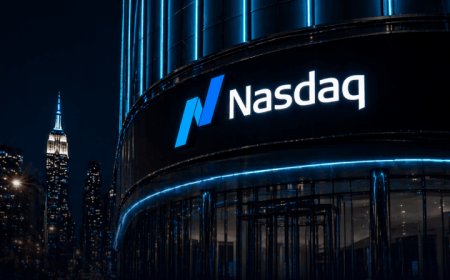
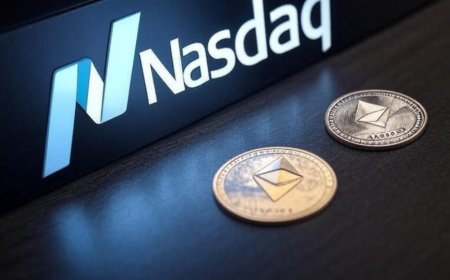
The Nasdaq Composite closed at a fresh record high on October 5 as Nvidia, Microsoft and other major technology stocks powered Wall Street higher. The rally came despite a sharp rise in U.S. Treasury yields, with the 10-year yield reaching its highest level since 2002. Investors are now turning their attention to corporate earnings and the outlook for Federal Reserve policy.
Nasdaq Keeps Breaking Records as AI Stocks Power Wall Street Higher Despite Rising Treasury Yields
Wall Street is showing an unusual combination of confidence and caution. The Nasdaq Composite climbed to another record closing high on Monday, October 5, as major technology and artificial intelligence stocks continued to attract investors. At the same time, U.S. Treasury yields moved sharply higher, creating a financial backdrop that would normally make expensive growth stocks less attractive.
The Nasdaq gained 1.05% to close at 27,477.31, setting a new record and extending a powerful run for the technology-heavy index. The S&P 500 also advanced 0.66% to 7,773.95, while the Dow Jones Industrial Average added 0.18% to finish at 51,267.90. The Nasdaq's latest advance came as investors looked beyond higher borrowing costs and increasingly focused on corporate earnings, artificial intelligence investment and the possibility of a less aggressive Federal Reserve.
Technology Stocks Are Once Again Driving the Rally
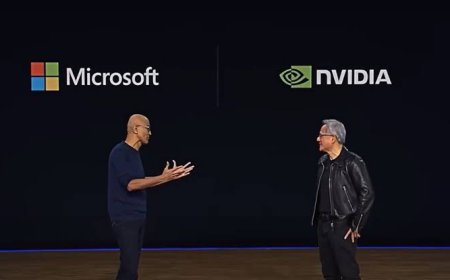
The strength of the Nasdaq was closely tied to gains among some of the market's most influential technology companies. Nvidia rose 2.1%, reaching another record close and pushing its market value to roughly $5.76 trillion. Microsoft gained 1.5%, while Meta Platforms and Tesla also advanced by around 2%. Alphabet shares moved higher as well.
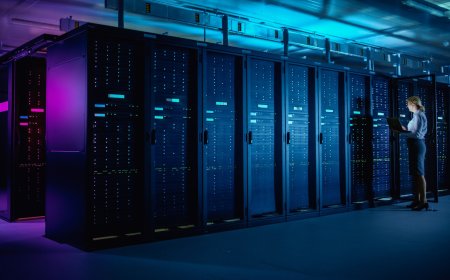
Nvidia remains particularly important to the current market narrative because its chips sit at the center of the enormous investment wave surrounding generative AI and data-center infrastructure. Investors have increasingly treated spending on AI computing as a long-term growth opportunity rather than a short-lived technology cycle, helping major semiconductor and cloud-related companies maintain strong valuations.
That enthusiasm is also spreading beyond chipmakers. Software, cloud infrastructure and other companies positioned to benefit from AI adoption are receiving renewed attention as investors anticipate another strong corporate earnings season. The result is a market where the biggest technology companies continue to exert an outsized influence on the direction of major indexes.
The Nasdaq's Record Comes Despite a Major Bond-Market Warning
The more surprising part of Monday's market action was happening in the bond market.
The yield on the benchmark 10-year U.S. Treasury note climbed to 5.31% at the close, after reaching approximately 5.35% during the session. That intraday level was the highest since April 2002, according to market data reported Monday. The 30-year Treasury yield also moved higher, reaching its strongest level in more than two decades.
Higher Treasury yields normally create pressure for technology stocks because investors use government bond yields as an important reference point when valuing future corporate earnings. When safe government bonds offer higher returns, investors can become less willing to pay very high prices for growth stocks whose biggest earnings are expected years into the future.
Yet that traditional relationship has not stopped the current technology rally.
The reason is that investors appear increasingly convinced that strong earnings growth and AI-related spending can compensate for some of the pressure created by higher interest rates. That does not eliminate the risk posed by Treasury yields, but it helps explain why stocks have continued climbing even as bond-market conditions become more demanding.
Why Investors Are Still Buying AI and Technology Stocks
The market's confidence is increasingly tied to expectations for corporate earnings. Analysts are expecting another strong quarter for U.S. companies, with S&P 500 earnings growth forecast to exceed 30% year over year, according to LSEG data cited by Reuters. AI-related companies are expected to account for a significant part of that growth.
That expectation matters because stock prices ultimately need earnings to justify their valuations. The longer companies can demonstrate that AI investment is translating into higher revenue, stronger margins and greater demand for computing infrastructure, the easier it becomes for investors to defend high technology-stock valuations.
The market is therefore watching the next earnings season closely. If major technology companies deliver strong results and raise their expectations for AI-related spending or revenue, the current rally could receive another boost. If results fall short of already-high expectations, however, some of the same stocks could become vulnerable to sharp reversals.
Federal Reserve Expectations Have Shifted
Another important factor behind Monday's gains was the changing outlook for Federal Reserve policy.
A weaker-than-expected U.S. jobs report released last week reduced expectations for another rate increase at the Fed's October meeting. By Monday, market pricing showed roughly a 24% probability of a 25-basis-point rate increase, down substantially from about 70% a week earlier. The remaining probability favored keeping the federal funds target range unchanged at 3.75% to 4.00%.
That shift gave equity investors some breathing room. Even though Treasury yields were rising, expectations for the Federal Reserve's short-term policy rate became less aggressive. For growth-oriented technology companies, the prospect of fewer near-term rate increases can improve sentiment because it reduces the immediate pressure on financing conditions and valuation models.
Still, the situation is far from straightforward. Higher long-term Treasury yields can remain a problem even if the Fed does not raise its policy rate. The market is therefore facing two different signals at the same time: easier expectations for short-term monetary policy and tighter conditions in longer-term government bond markets.
Economic Data Adds Another Layer of Uncertainty
Monday's economic data did little to provide a simple answer.
The Institute for Supply Management said U.S. services activity expanded for the 27th consecutive month in September, although the pace was slightly weaker than economists had expected. More concerning for inflation watchers, the prices-paid component increased to 74.0 from 72.6, pointing to renewed pressure on the costs businesses face.
At the same time, the S&P Global services measure showed stronger expansion than the previous month. Taken together, the reports suggest that the U.S. economy remains resilient even as some areas of activity show signs of cooling.
That resilience can be interpreted in two very different ways by investors. Strong economic activity supports corporate earnings and can justify higher stock prices. But if strong demand keeps inflation elevated, the Federal Reserve could have less room to ease monetary policy, potentially keeping borrowing costs high for longer.
Oil Prices Are Adding to the Inflation Debate
Energy markets are also influencing the picture. Brent crude remained around the $100-per-barrel level on Monday despite falling during the session, while U.S. West Texas Intermediate crude traded near $89 per barrel.
Higher energy prices can feed into transportation, manufacturing and consumer costs, making the inflation outlook more complicated. That is particularly important for Treasury markets because investors demand higher yields when they believe inflation and government borrowing risks may remain elevated.
The recent rise in Treasury yields therefore cannot be viewed only as a bond-market technical move. It reflects broader concerns about inflation, economic strength, government borrowing and the future path of interest rates.
Big Corporate Deals Are Also Supporting Investor Confidence
Technology and AI were not the only reasons investors were buying stocks.
PTC shares jumped roughly 33% after Schneider Electric announced plans to acquire the engineering software company in a deal worth around $23.7 billion. The transaction helped lift other software-related stocks and added to the broader sense that strategic corporate activity remains strong.
Another major transaction involved C.H. Robinson Worldwide's agreement to acquire RXO in a deal valued at approximately $5.8 billion. RXO shares surged while C.H. Robinson fell sharply as investors assessed the terms of the transaction.
These deals matter because they show that corporate executives are still willing to commit substantial capital to software, technology and infrastructure businesses despite elevated financing costs.
The Real Test for Nasdaq May Come With Earnings
For now, the Nasdaq's momentum remains impressive. The index is up more than 18% so far this year, according to Monday's closing data, significantly outperforming the Dow's roughly 6.7% gain. The S&P 500 is also up about 13.6% for the year.
But record highs also raise the stakes.
Investors are no longer simply asking whether technology companies can grow. They are asking whether those companies can grow fast enough to justify the prices already built into their shares. That distinction becomes increasingly important as valuations rise and Treasury yields move higher.
The coming earnings season could provide the next major test. Strong results from AI leaders, semiconductor companies, cloud providers and software businesses could reinforce the argument that the technology boom is supported by genuine earnings growth. Disappointing results or weaker guidance, on the other hand, could make high valuations harder to defend.
For now, however, Wall Street is choosing optimism. The Nasdaq is reaching fresh records, major AI stocks remain in demand and investors appear willing to tolerate unusually high Treasury yields as long as corporate earnings and the technology investment cycle continue to deliver.
Sources
- Reuters — Nasdaq record high, technology stocks and U.S. market developments
- Associated Press — U.S. stock indexes and Treasury-market developments
- Yahoo Finance / MT Newswires — Nasdaq, Treasury yields and market data
- MarketWatch — Nasdaq record close and Treasury-yield developments
What's Your Reaction?
 Like
0
Like
0
 Dislike
0
Dislike
0
 Love
0
Love
0
 Funny
0
Funny
0
 Angry
0
Angry
0
 Sad
0
Sad
0
 Wow
0
Wow
0