


















Microsoft’s Local AI Gamble Comes to a Head as Nvidia Powers the Next Windows PC
Microsoft is preparing for its October 7 Windows and Surface event with a major focus on local AI, on-device agents and a new generation of AI-powered PCs. With Nvidia’s RTX Spark platform providing the computing muscle, Microsoft is betting that powerful AI will increasingly run on users’ own computers rather than entirely in the cloud. The real question is whether this partnership can turn the promise of local AI into something people actually use.
Microsoft Is Putting Local AI at the Center of Its Next PC Era
Microsoft has spent the past few years telling the world that the future of Windows will be shaped by artificial intelligence. On October 7, the company gets another chance to prove that the idea can become more than a collection of AI features attached to existing PCs.
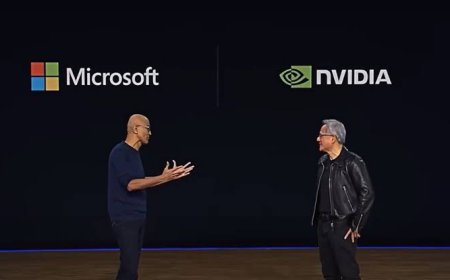
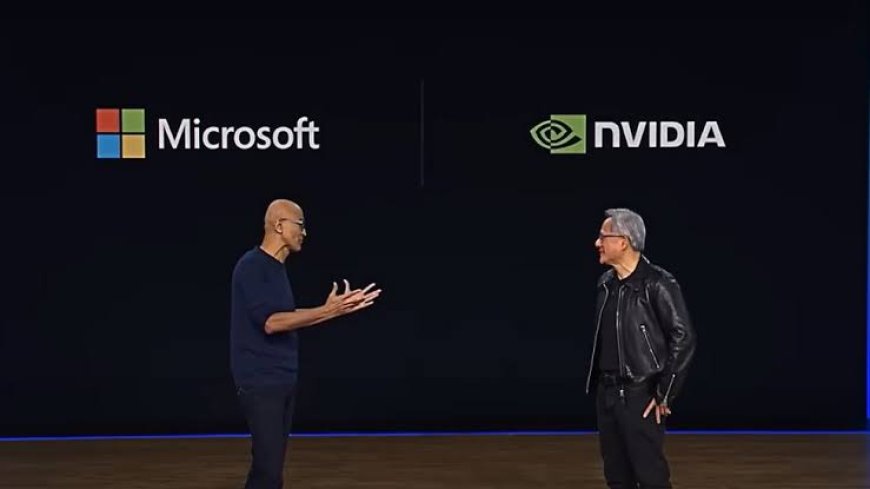
The upcoming Windows and Surface event in San Francisco is expected to put Microsoft's next stage of AI computing in the spotlight, with Nvidia CEO Jensen Huang joining Microsoft CEO Satya Nadella and Surface and Windows chief Pavan Davuluri. Microsoft has not revealed every detail of the event, but its own event messaging points toward Windows, Surface and Nvidia technology, while recent developments make local AI one of the clearest themes to watch.
And that is where Nvidia becomes important.
Microsoft is no longer betting only on cloud-based AI running inside enormous data centers. The company is increasingly working toward a world where AI models and autonomous agents can run directly on a user's computer. Nvidia's RTX Spark platform has been designed specifically for that direction, giving Windows PCs dramatically more local AI processing power than traditional consumer machines.
The partnership is therefore bigger than a new Surface device or another Windows feature. Microsoft is effectively testing a different idea of what a personal computer should be: not simply a machine that opens applications, but a computer capable of understanding requests, working across software and performing tasks locally.
RTX Spark Is Nvidia’s Answer to the Local AI Problem
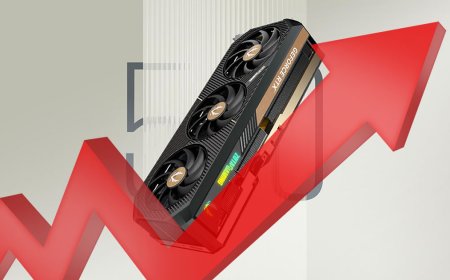
Nvidia introduced RTX Spark earlier this year as a new class of Windows computer designed around personal AI. The platform combines a Blackwell-based GPU with a 20-core Grace CPU and up to 128GB of unified memory, with Nvidia claiming up to 1 petaflop of AI performance. That is an extraordinary amount of computing capability for a device intended to sit on a desk or inside a laptop rather than in a conventional data center.
The reason for putting so much hardware into a personal computer is simple: today's AI agents can demand substantially more memory and compute than traditional assistants.
A chatbot answering a short question does not necessarily need a powerful local machine. An agent that can inspect files, reason through a complicated task, interact with multiple applications, generate content and continue working through several steps is a different proposition.
That is the workload Microsoft and Nvidia increasingly want to bring onto Windows PCs.
Nvidia says RTX Spark can run large language models with up to 120 billion parameters locally, while its unified memory architecture is designed to give developers enough room for demanding AI workloads. The company is also building an ecosystem around the hardware, including CUDA, TensorRT, RTX technologies and tools designed specifically for local inference.
Microsoft Wants AI Agents to Work Where You Work
The most interesting part of Microsoft's local-AI strategy may not be the hardware itself. It is what the company wants that hardware to enable.
Microsoft and Nvidia have been working on a Windows environment in which AI agents can operate directly on the user's computer while remaining subject to security and policy controls. Nvidia's OpenShell runtime and Microsoft's Windows security primitives are intended to provide a safer framework for agents that need access to applications, files and other parts of a PC.
That matters because an AI assistant becomes considerably more useful when it can actually do things.
Imagine asking a computer to organize information from several local documents, prepare a presentation, modify files, analyze data or perform a sequence of actions across applications. Those tasks require more than a text-generation model sitting inside a browser tab.
They require an agent with access to the operating system—and that immediately creates a much bigger security problem.
Microsoft's approach is therefore not simply about making local AI faster. It is also about creating boundaries around what an AI agent can see and what it is allowed to do.
The Cloud Is Not Disappearing
Despite the excitement around local AI, Microsoft is not abandoning cloud computing. That would make little business or technical sense.
Large cloud data centers will continue to handle workloads that are too demanding for personal computers. Frontier models can contain enormous numbers of parameters and require specialized infrastructure that ordinary users will never have at home.
The more realistic future is a hybrid model.
A PC could handle smaller or privacy-sensitive tasks locally, while sending more complicated requests to cloud models when necessary. Nvidia's software strategy is already moving in that direction. At IFA 2026, the company highlighted tools designed to make local models easier to run and introduced NVIDIA PAIR, which can distribute AI inference across compatible PCs on a local network. Nvidia also said new RTX Spark Windows PCs would arrive in October.
That approach could ultimately be more important than simply putting a powerful GPU into a laptop.
Microsoft Has Already Learned That “AI PC” Is Not Enough
There is a reason October 7 matters.
Microsoft has already discovered that putting an AI label on a computer does not automatically create a new computing platform.
The first wave of Copilot+ PCs introduced Microsoft's vision of AI PCs, particularly around NPUs and on-device AI. But the ecosystem did not immediately produce the kind of killer applications that would make consumers feel they were missing something without an AI PC. IDC has pointed out that early Copilot+ deployments had relatively limited headline features and that developers did not initially build around NPUs at the scale Microsoft hoped.
That history makes the RTX Spark strategy particularly interesting.
Instead of relying exclusively on relatively modest NPU workloads, Microsoft and Nvidia are approaching local AI with much more powerful GPU hardware and a broader software stack.
The question is whether developers will finally have enough reason to build for it.
Nvidia Could Be Microsoft’s Most Important Local-AI Partner
Nvidia brings something Microsoft cannot easily create on its own: a mature accelerated-computing ecosystem.
CUDA has become deeply embedded in AI development, while Nvidia's TensorRT, RTX and other software technologies give developers a path from model development to local deployment. The company is also working with tools such as llama.cpp, vLLM, ComfyUI and local AI applications to improve inference performance on consumer hardware.
At IFA, Nvidia said optimization work could deliver up to 1.9 times faster local inference in supported workloads. It also highlighted easier installation and configuration for several local AI applications.
Those improvements are important because local AI has traditionally faced a frustrating problem: having the hardware is one thing, but getting models installed, configured and running efficiently is another.
If Nvidia and Microsoft can make that process nearly invisible to ordinary users, the appeal of local AI could change significantly.
Privacy Could Become the Killer Feature
There is another reason local AI could gain traction: privacy.
Sending every document, conversation, image or personal request to a remote server is not ideal for every situation. Businesses in particular have strong reasons to control where sensitive information is processed.
Microsoft's broader AI strategy is increasingly emphasizing control and governance. In a recent announcement about sovereign AI, Microsoft said its Foundry and Foundry Local platforms support different models and deployment approaches, while Nvidia provides accelerated infrastructure and AI software across cloud, data-center and edge environments.
Local processing does not automatically make an AI system perfectly private or secure. Poorly designed agents can still create risks. But keeping sensitive workloads on the user's own hardware can remove some of the reasons data needs to leave the device in the first place.
That could be particularly valuable for developers, professionals and businesses.
Microsoft Is Also Changing What “Windows AI” Means
Microsoft's AI strategy is evolving beyond simple Copilot buttons.
The company is increasingly describing Copilot as a broader platform for work, with coding, agent capabilities and Microsoft 365 functionality being brought together. Recent reporting indicates that Microsoft is attempting to reposition Copilot as an “OS for work,” rather than merely an assistant attached to Office applications.
That shift fits naturally with the local-AI push.
If AI becomes a layer that sits across Windows rather than inside a single application, the computer needs to understand more of what the user is doing. Local processing can make some of those interactions faster and potentially more private.
Microsoft's own Windows AI documentation also shows the company continuing to develop on-device models. Its current documentation says Microsoft's Phi Silica is being replaced by Aion Instruct, with the new model beginning rollout to Windows Insider devices in October 2026 and retail devices in November.
The pieces are starting to look less like isolated AI features and more like a larger Windows architecture.
October 7 Is the Test
That is why the October 7 event is more important than another hardware launch.
Microsoft has already explained the vision. Nvidia has already shown the hardware. Developers have already demonstrated that increasingly capable AI models can run locally.
Now Microsoft needs to show what all of this actually feels like when it comes together.
The strongest demonstration would not be another benchmark or an impressive specification sheet. It would be a computer performing useful work that previously required multiple applications, cloud services and manual steps.
If Microsoft can show that convincingly, the RTX Spark-powered Windows PC could represent a genuine shift in personal computing.
If it cannot, local AI risks becoming another technology category that sounds revolutionary in presentations but remains difficult to justify for ordinary users.
The Bigger Bet Is About the Future of the PC
Microsoft and Nvidia are ultimately betting that the PC is not becoming less important in the age of AI—it is becoming more capable.
The smartphone made computing portable. Cloud computing moved much of the heavy processing away from the device. The next stage could bring a portion of that intelligence back to the machine sitting in front of the user.
That does not mean the cloud disappears. It means the distinction between local and cloud AI becomes less important to the person using the computer.
The PC simply chooses where the work should happen.
October 7 will give Microsoft an opportunity to show whether that vision is finally ready to become practical. Nvidia has supplied the computing muscle. Microsoft controls Windows, the operating system and one of the world's largest software ecosystems.
What remains is the hardest part: convincing people that local AI is not just powerful technology, but technology they genuinely want to use every day.
Sources
- NVIDIA — NVIDIA and Microsoft Reinvent Windows PCs for the Age of Personal AI
- NVIDIA — Sparks Fly: NVIDIA Accelerates Local AI at IFA 2026
- Microsoft Devices Blog — More Choice and Possibility With Windows PCs at IFA
- Microsoft Cloud Blog — Sovereign AI: Accelerate Innovation With Control and Choice
- NVIDIA Developer Blog — Build Personal AI Agents on Windows PCs
- IDC — NVIDIA and Microsoft Are Betting the Future of the PC Is Agents and Local Inference
- Microsoft Learn — Windows AI APIs
What's Your Reaction?
 Like
0
Like
0
 Dislike
0
Dislike
0
 Love
0
Love
0
 Funny
0
Funny
0
 Angry
0
Angry
0
 Sad
0
Sad
0
 Wow
0
Wow
0