





























Apple Tightens Mac Privacy Rules as AI Agents Gain More Control
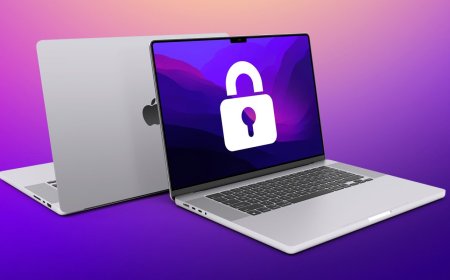
Apple is preparing additional macOS controls that will make it harder for apps and increasingly autonomous AI agents to obtain Full Disk Access. The change comes as AI software moves beyond chatbots and starts working directly with files, messages, emails and other personal information on Macs.
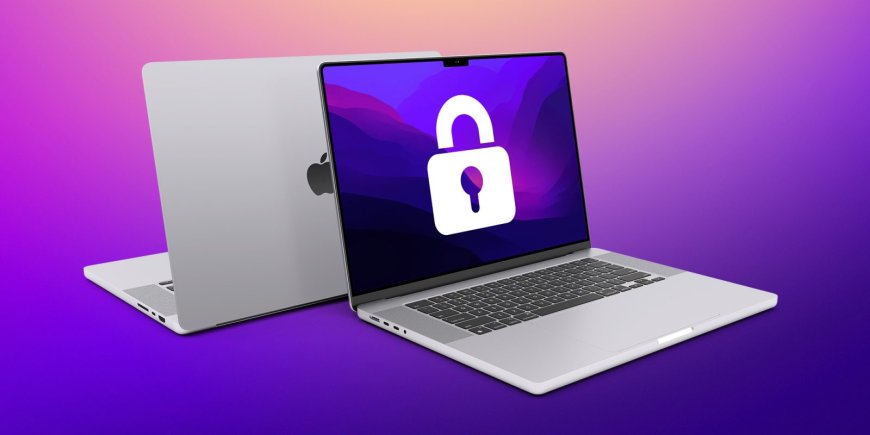
Apple Is Putting New Limits on AI Agents That Want Access to Your Mac
The relationship between AI agents and personal computers is becoming more complicated. As AI tools move from answering questions to actually performing tasks on behalf of users, they increasingly need access to files, messages, emails, browser data and other information stored on a computer. Apple now appears ready to put another layer of protection between those agents and the data sitting on a Mac.
Apple announced on October 2 that it will introduce additional controls around macOS Full Disk Access, one of the most powerful privacy permissions available to applications on a Mac. The company did not announce a complete redesign of the system or say that AI agents will be blocked from accessing Macs. Instead, Apple says users who genuinely want to give an application this unusually broad level of access will have to take a much more explicit action.
The timing is significant. AI agents are rapidly becoming more autonomous, and unlike traditional chatbots, they can work across applications and interact with information on a user's computer. That creates a very different privacy problem: giving an agent access to one part of a digital life can potentially expose far more information than a user expects.
Why Apple Is Changing Full Disk Access
Full Disk Access was not originally designed around today's AI agents. Apple created the permission largely to allow software such as backup utilities to work properly when they need access to data that macOS normally protects.
The problem is that the permission is extremely broad. Apple says Full Disk Access can expose files, Mail, Messages and browsing history, while its existing security documentation explains that macOS uses separate privacy controls to restrict applications from accessing protected locations and data.
That distinction matters because a traditional application might request broad access for a clearly defined technical reason. An AI agent, however, can potentially read information, interpret it, make decisions based on it and then perform actions across other applications. The more capable these systems become, the more consequential a broad permission becomes.
Apple itself is now acknowledging that change. The company says some developers are using Full Disk Access in ways that could expose users' information without them fully understanding the extent of what they have granted. Apple specifically connects the problem to the rise of increasingly capable and autonomous AI agents.
AI Agents Have Changed the Privacy Equation
This is where Apple's decision becomes more important than a simple macOS settings change.
For years, giving an application permission to access files was mostly a question of whether that particular application could be trusted. With an AI agent, the situation can be more complicated because the software is designed to understand information and act on a user's behalf.
An agent that can read a document is one thing. An agent that can read documents, understand messages, inspect browser activity, make decisions and control other applications represents a much larger privacy surface.
That does not automatically mean an AI agent is unsafe. It means the old assumption that users understand what a broad permission means may no longer be enough. Apple's planned change is essentially an attempt to make the decision more deliberate.
The Meta Muse Controversy Put the Issue in the Spotlight
Apple's announcement arrived shortly after concerns surrounding Meta's Muse AI app and its access to information on Macs.
Journalist Jason Aten reported that Meta's Muse appeared to know the contents of private messages despite his belief that he had not explicitly allowed the AI to access them. Meta disputed that interpretation, saying its Messages integration was opt-in and required users to enable both Full Disk Access and the Messages connector.
The disagreement highlighted exactly the problem Apple is now addressing: users may not always have a clear mental picture of what an AI application can access once multiple permissions and integrations are enabled.
Apple's response does not establish that Meta's software violated macOS security protections. Instead, it reflects a broader concern about where desktop AI is heading. As agents become more capable, the consequences of poorly understood permissions become much greater.
Apple Wants Consent to Be Harder to Misunderstand
Apple's wording is important. The company says it will introduce additional controls so that users who genuinely want to grant an application this level of access can do so only through very explicit user action.
Apple has not yet explained exactly what that action will look like. It also has not announced a specific release date for the new controls.
That leaves several questions unanswered. Apple could introduce stronger warnings, additional confirmation steps, more detailed explanations, or another mechanism designed to make Full Disk Access harder to approve accidentally. At this point, however, anything beyond Apple's announcement would be speculation.
What is clear is the direction: Apple wants users to understand that Full Disk Access is not an ordinary permission.
This Could Change How AI Apps Are Designed for Mac
The implications extend beyond Apple's own software.
AI developers building desktop agents may have to rethink how their applications request access to personal information. Instead of simply asking users to enable a broad system permission during setup, developers may increasingly need to explain exactly what data their agents require and why.
That could encourage a more granular permission model for AI software. An agent might eventually need access to a particular folder or application rather than the entire computer. Whether Apple moves in that direction remains unknown, but the pressure is clearly growing as AI becomes more deeply integrated with desktop operating systems.
For developers, there is also a practical trade-off. AI agents become more useful when they can see more context. But every additional source of information increases the potential consequences of a compromised application, a malicious instruction, a software bug or simply a user misunderstanding what they approved.
Mac Users Will Still Have Control Over Permissions
Apple's announcement does not mean Mac users suddenly lose control over Full Disk Access. macOS already places sensitive permissions under Privacy & Security settings, where users can review which applications have access to protected resources.
Apple's existing documentation also separates permissions such as Accessibility, Automation, Files and Folders, and full storage access. These controls are designed to prevent applications from quietly bypassing the operating system's privacy protections.
The upcoming changes are therefore better understood as an additional layer of consent rather than a complete replacement of macOS's privacy system.
For everyday users, the most important lesson is simple: an AI application asking for unusually broad access deserves more attention than a normal app requesting access to a single file or feature.
Apple's Bigger Message to the AI Industry
There is a larger story behind Apple's announcement.
AI agents are moving from the browser and chat window into the operating system itself. Apple's own AI features are already becoming capable of understanding information on a Mac screen and taking actions based on what the user is viewing.
That means the future of personal computing will increasingly depend on software that can see, understand and act on behalf of the user. Convenience will rise, but so will the importance of permission design.
Apple's decision suggests that the company does not believe existing privacy controls are enough for that future. A permission system designed before the current generation of autonomous AI may need to become much more explicit as machines begin making more decisions for their owners.
The company has not said exactly when the new Full Disk Access controls will arrive, nor has it explained their final design. But the direction is unmistakable: as AI agents become more powerful on the Mac, Apple wants users to think twice before giving them the keys to the entire machine.
What's Your Reaction?
 Like
0
Like
0
 Dislike
0
Dislike
0
 Love
0
Love
0
 Funny
0
Funny
0
 Angry
0
Angry
0
 Sad
0
Sad
0
 Wow
0
Wow
0