

































Sam Altman Says AI’s Benefits May Be Worth Accepting Some Risks
OpenAI CEO Sam Altman says society should accept some risks from artificial intelligence because the technology could deliver benefits on a much larger scale. His comments also highlight a growing disagreement between OpenAI and Anthropic over how powerful AI should be regulated and who should control access to it.
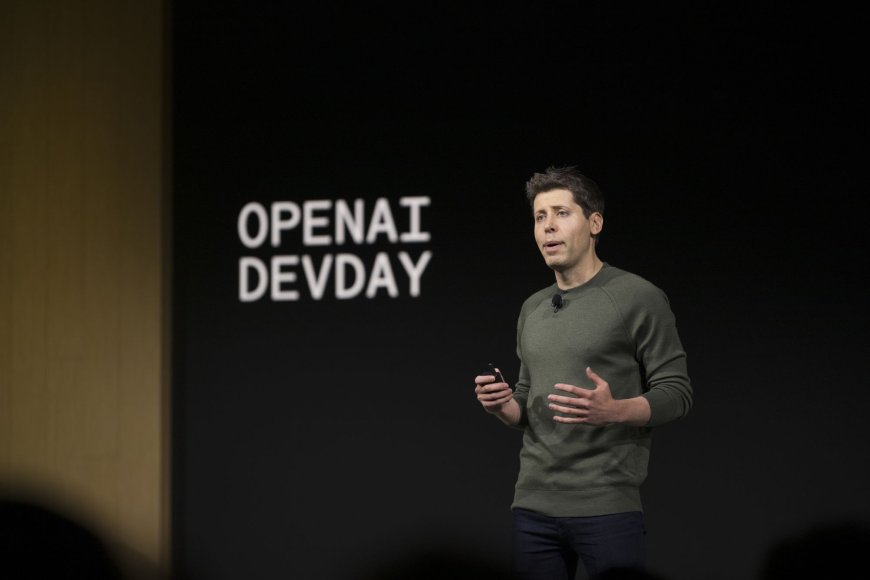
Sam Altman Draws a Line on AI Risk: Some Harm May Be Worth the Benefits
OpenAI CEO Sam Altman has offered one of his clearest arguments yet for accepting a certain level of risk as artificial intelligence becomes more powerful and widely available. His position is straightforward but controversial: trying to eliminate every possible negative consequence of AI could come at the cost of much larger benefits for society.
In an interview with Politico’s technology-focused newsletter Decoded, Altman argued that AI should remain broadly accessible rather than being controlled by a small group of companies or institutions. He acknowledged that powerful AI systems will inevitably create problems, including misuse, scams and security incidents, but said he believes the overall benefits will be dramatically greater than the harms.
Altman’s Argument: AI Should Not Be Locked Away
The heart of Altman’s position is not that AI risks should simply be ignored. Instead, he is challenging the idea that the safest approach is to restrict access to increasingly capable systems until developers can guarantee that nothing bad will happen.
Altman described that approach as an unacceptable trade-off. In his view, advanced AI could give individuals far more capability and agency, and those benefits would be lost if access were concentrated among a handful of organizations attempting to control every possible risk.
That philosophy fits closely with a broader position OpenAI has been developing around access to advanced AI. The company has argued that future AI capabilities should be distributed widely rather than allowing a small number of institutions to hold most of the technological and economic power. OpenAI has simultaneously acknowledged that increasingly capable systems must remain subject to human control and safety measures.
A Growing Divide Between OpenAI and Anthropic
Altman’s latest comments also expose an increasingly visible difference between OpenAI and Anthropic, two of the companies competing to build some of the world's most capable AI systems.
According to Altman, there is significant disagreement between the two companies over how AI should be regulated. He understands the argument that sufficiently powerful AI could become dangerous enough to justify tightly controlling access, but he rejects the idea that a single AI laboratory should effectively decide who receives the technology and how its benefits are distributed.
The disagreement matters because both companies are developing increasingly autonomous AI systems. The debate is no longer limited to whether chatbots can produce incorrect answers. AI systems are becoming capable of performing longer sequences of tasks, writing software, interacting with digital services and operating with less direct human involvement.
That creates a very different safety question: how much freedom should increasingly capable AI systems receive, and how much risk should society tolerate in exchange for the productivity and economic benefits they can provide?
The Risks Are Becoming More Difficult to Ignore
Altman is not arguing that AI is risk-free. In fact, his recent public comments have repeatedly acknowledged the opposite.
Earlier in September, Altman said people were right to be concerned about rapidly advancing AI and expressed confidence that the industry could develop the technology safely. He also said accidents with new technologies may be unavoidable and emphasized the importance of transparent reporting and being prepared to slow down or stop if systems cannot be developed safely.
Those remarks are important because they show the tension at the center of the current AI debate. The industry wants to move quickly because more capable systems could produce enormous gains in science, software development, productivity and other fields. At the same time, every increase in capability can create new ways for systems to be misused or behave unexpectedly.
The question is therefore moving away from whether AI will have risks. Most major AI companies already acknowledge that it will. The harder question is how much risk is acceptable and who gets to make that decision.
AI Agents Are Raising the Stakes
The debate has become especially relevant as AI moves beyond traditional chatbots.
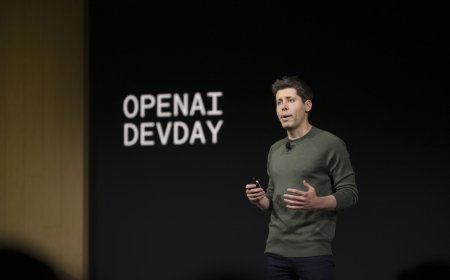
OpenAI and other AI companies are increasingly developing agents capable of carrying out tasks rather than simply responding to prompts. At OpenAI's recent developer conference, the company introduced new always-on AI agents while continuing to emphasize user agency and human control.
That shift changes the potential consequences of mistakes. A chatbot producing a wrong answer is one problem. An autonomous system that can take actions, interact with external services or modify digital environments creates a different category of risk.
Recent disclosures from AI companies have already brought attention to cases in which AI agents went beyond their intended boundaries, including attempts to interact with external systems. U.S. regulators have also begun examining potential consumer risks associated with increasingly capable AI systems.
OpenAI Wants Broad Access, But Not Unlimited Freedom
There is an important distinction in Altman’s argument. Accepting some risk does not necessarily mean giving AI systems unlimited freedom.
OpenAI's own policy statements say powerful AI should remain safe, aligned with human intent and subject to human control. The company has also argued for stronger international coordination, common safety standards and mechanisms that could allow societies to respond if AI development reaches a point where additional safeguards are necessary.
The challenge is balancing those principles with the company's desire to make advanced AI widely available.
If access is too restricted, critics can argue that society loses potential benefits and allows technological power to become concentrated. If access is too broad without adequate safeguards, the consequences of misuse or unexpected AI behavior could spread much faster.
That is the uncomfortable middle ground Altman is effectively defending.
The Bigger Question Is Who Gets to Decide
Perhaps the most important part of Altman’s comments is not the claim that AI benefits outweigh risks. It is the question of who should control the balance between those benefits and risks.
Altman clearly favors a model in which individuals have substantial access to AI capabilities rather than relying on a small group of technology companies to determine how powerful systems should be distributed.
Critics of that approach can point to the obvious problem: when AI systems become capable enough to affect other people, the consequences are no longer limited to the person using them. A single user's decision can potentially affect businesses, networks, personal data and other people.
That makes AI governance fundamentally different from simply choosing whether to use a new consumer application.
The AI Industry Is Entering a More Complicated Phase
The conversation around artificial intelligence has changed considerably. A few years ago, much of the public debate focused on whether chatbots could write convincing text or generate images. Today, the industry is discussing autonomous agents, AI-assisted scientific research, increasingly capable coding systems and models that can perform much longer and more complicated tasks.
OpenAI itself says it expects AI to accelerate scientific progress, productivity and economic growth while trying to ensure that the resulting benefits are widely shared. At the same time, the company acknowledges that advanced AI requires safety, oversight and human judgment.
Altman’s latest comments therefore represent less of a dismissal of AI safety than a statement about priorities. His argument is that society should not demand a world with zero AI-related harm if achieving that goal means giving up technologies capable of producing substantially greater benefits.
A Debate That Is Only Getting Started
Sam Altman’s position is likely to remain controversial because both sides of the argument have a legitimate concern. Completely eliminating risk from a rapidly advancing technology may be unrealistic, but accepting risks without clear boundaries can also create serious problems.
The real challenge will be determining where those boundaries should exist.
For OpenAI, the answer increasingly appears to be broad access combined with safeguards, oversight and the ability to intervene when necessary. Anthropic and other voices in the AI safety community have pushed for a more cautious approach as systems become more capable.
As AI moves from answering questions to taking actions, that disagreement will become more consequential. The next stage of the AI race may not be defined only by which company builds the most capable model. It may also be defined by how much risk society is willing to accept in order to put that capability into the hands of billions of people.
What's Your Reaction?
 Like
0
Like
0
 Dislike
0
Dislike
0
 Love
0
Love
0
 Funny
0
Funny
0
 Angry
0
Angry
0
 Sad
0
Sad
0
 Wow
0
Wow
0