













































Huawei Trial Goes to the Jury After Prosecutors and Defence Clash in Closing Arguments
The jury in Huawei's racketeering trial in Brooklyn began deliberating on Wednesday afternoon after more than two months of testimony, and left for the day without a verdict. Jurors are expected to return on Thursday to continue weighing 12 criminal counts against the Chinese telecoms giant.
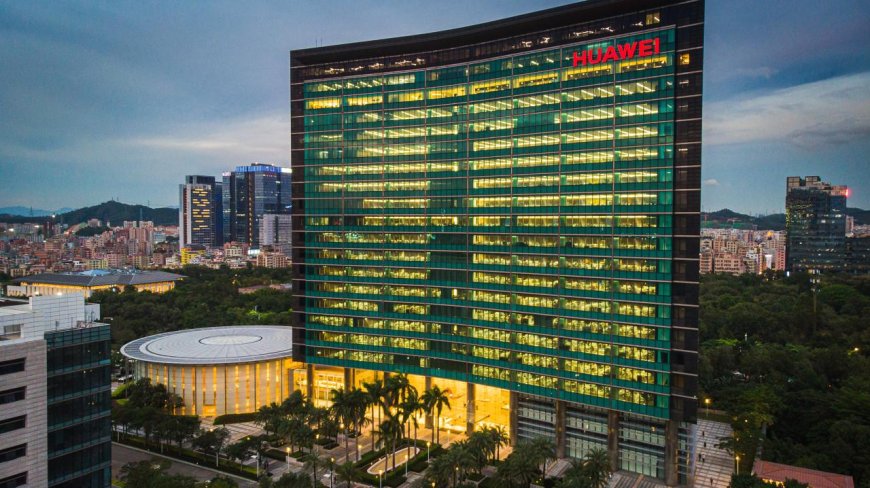
Huawei Trial Goes to the Jury After Prosecutors and Defence Clash in Closing Arguments
After more than two months of testimony, the fate of Huawei Technologies is now in the hands of a jury in Brooklyn. Jurors began deliberating on Wednesday afternoon, November 18, and left for the day without a verdict. They are expected to return on Thursday to continue their work on the 12 criminal counts still facing the Chinese telecoms giant.
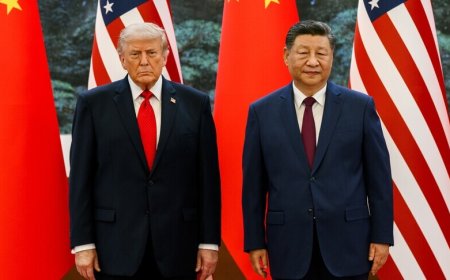
The case, which the US government first announced in early 2019, is one of the most consequential corporate criminal trials in years. Prosecutors say Huawei spent two decades operating as a criminal enterprise. Huawei denies every charge. Whatever the jury decides, the verdict will land in the middle of rising US-China tension over artificial intelligence and a fragile trade truce between the two countries.
Two very different closings
The final arguments could hardly have been further apart. On Monday, Assistant US Attorney Meredith Arfa spent about five hours telling jurors that Huawei had grown by breaking the law again and again.
"For 20 years, Huawei committed a pattern of crimes targeted at American companies, the American financial system and the American government," Arfa said. "It is time to finally hold Huawei accountable."
She told the jury that Huawei had encouraged a workforce of more than 200,000 people in 170 countries to lie, cheat and steal for a competitive advantage, and that the company had supplied Iran with equipment used to spy on its citizens.
On Tuesday, defence lawyer Brian Heberlig offered the opposite story: a prosecution that had settled on guilt first and built its case backwards.
"They began with guilt and worked backwards," Heberlig told jurors. "When the evidence didn't fit its theory, it moved the goal posts."
He said Huawei had not stolen its way to success. "Huawei didn't steal its way to success. It earned it, plain and simple."
The government presented its rebuttal on Wednesday, Judge Ann M. Donnelly instructed the jury, and deliberations began that afternoon. Court reporter Samuel Rubenfeld reported that jurors left for the day without reaching a verdict and were expected to return on Thursday.
What prosecutors alleged
Huawei and three of its subsidiaries face 12 remaining counts, including racketeering conspiracy, conspiracy to steal trade secrets, bank fraud, wire fraud and obstruction of justice. Two sanctions-related counts were dropped in September.
Prosecutors accuse Huawei of scheming to defraud HSBC and other banks about its business in Iran, and of conspiring to steal trade secrets from five US technology companies. The company was also indicted as a criminal enterprise under the racketeering law.
At the centre of the bank fraud allegations is Skycom, a company prosecutors say Huawei secretly controlled while it supplied sensitive technology to Iran's government. Prosecutors say Huawei repeatedly lied about owning Skycom, and they pointed to admissions by Huawei chief financial officer Meng Wanzhou, who signed a deferred prosecution agreement in 2021 acknowledging that Skycom's operations violated US sanctions and that she had misled HSBC about the company's compliance.
How Huawei answered
Heberlig argued that the banks knew Huawei operated in Iran, accepted the risk, and competed for its business. On the trade secrets allegations, he said the government had taken a handful of isolated incidents and tried to turn them into a 20-year conspiracy.
"The government cherry-picked a handful of incidents ... and tried to convert them into a 20-year conspiracy," he said.
He pointed to the two incidents prosecutors leaned on most heavily. In the case of T-Mobile's phone-testing robot, known as Tappy, he said the employee involved had been disciplined. In the dispute over Cisco router technology, he said Huawei had recalled the disputed routers and offered replacements.
He also argued that prosecutors had blamed Huawei for using competitors' intellectual property that was already public. "You can't steal a secret that isn't secret," he told the jury.
The two sides also disagreed over Meng Wanzhou's 2021 agreement. Heberlig said it did not establish her criminal intent, while prosecutors treated it as evidence of the deception at the heart of the case.
A case eight years in the making
The Huawei case burst into the headlines in 2018, when Meng Wanzhou, the company's chief financial officer and the daughter of its founder, was detained in Canada on a US warrant over her role in the alleged bank fraud. She spent three years under house arrest before entering the 2021 agreement with prosecutors, after which the charges against her were dismissed. The case against the company dragged on.
Jury selection began on September 8, and the trial itself started later that month. Prosecutors called more than 60 witnesses; the defence called about 15.
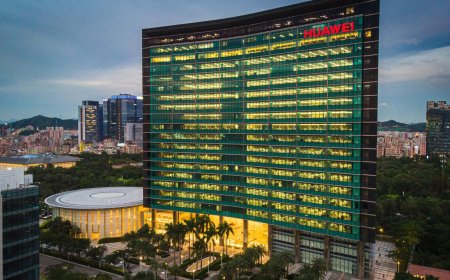
Huawei is the world's largest supplier of gear for wireless telecom networks, but it is not allowed to sell equipment to US carriers over fears it poses a security risk, and it has been blacklisted by other Western allies, including Canada and Britain. Cut off from much of its old business, the company has expanded into chipmaking as the boom in artificial intelligence fuels demand for microprocessors.
Chinese officials have said the US has engaged in "economic bullying" and improperly used national security as a pretext for "oppressing Chinese companies."
What happens next
The jury must reach a separate verdict on each of the 12 counts. A verdict could come quickly, or deliberations could stretch on for days. There is no way to predict which way it will go.
The stakes reach beyond the courtroom. The verdict will be read as a measure of how far US courts are willing to go in policing the conduct of a foreign technology champion, and it arrives as Washington and Beijing spar over the chips and systems that power artificial intelligence. For now, the lawyers have had their say. It is the jury's turn.
Related: Jensen Huang Misled Nvidia Leaders Over Alice Huang Affair, Reuters Reports
Sources
- Reuters, "Huawei says US put 'sinister spin' on business activities, failed to prove charges at trial", November 17, 2026 (via The Business Times)
- Associated Press, "In closings, Chinese tech giant Huawei is cast by prosecutors as a villain as its lawyer disagrees", November 17, 2026 (via La Nacion)
- NeoTeo, "Huawei Brooklyn trial: Jury began deliberating", November 19, 2026, reporting court reporter Samuel Rubenfeld's courtroom updates
What's Your Reaction?
 Like
0
 Dislike
0
 Love
0
 Funny
0
 Angry
0
 Sad
0
 Wow
0