





































Trump Creates “Super Intelligence Force” as U.S. Moves to Tighten Its Grip on the AI Race
U.S. President Donald Trump has announced a new federal “Super Intelligence Force” to coordinate the government’s approach to rapidly advancing artificial intelligence. Led by Director of National Intelligence Jay Clayton, the task force will examine AI opportunities and risks, engage technology companies and other stakeholders, and develop recommendations for the federal government.
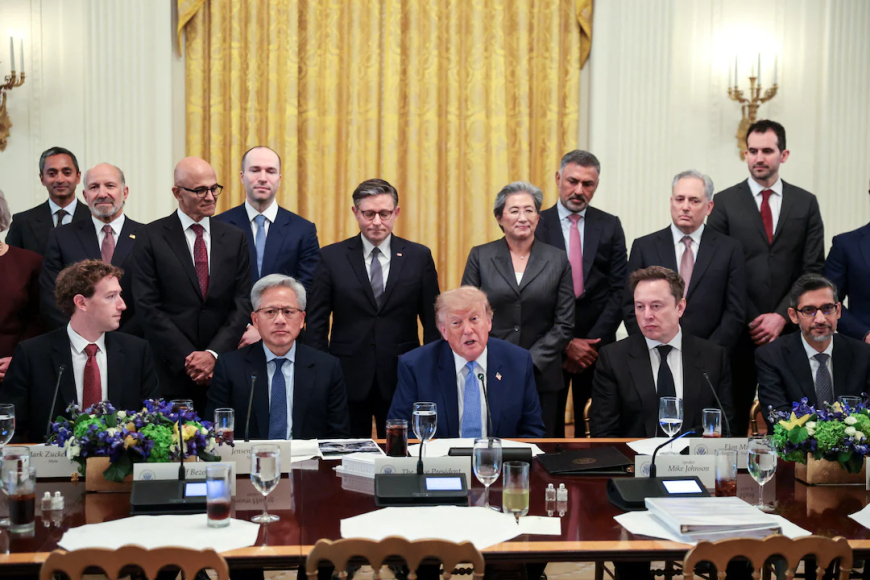
Trump’s New “Super Intelligence Force” Signals a New Phase in America’s AI Strategy
The White House is giving artificial intelligence a new name—and now it is building a federal team around it.
President Donald Trump announced on October 4 the creation of a new “Super Intelligence Force” (SIF), a federal task force designed to coordinate the U.S. government’s response to the rapidly developing AI industry and help keep the United States at the forefront of the technology. The group will be led by Director of National Intelligence Jay Clayton, with senior officials from the Federal Trade Commission, Pentagon and Office of Personnel Management also taking leadership roles.
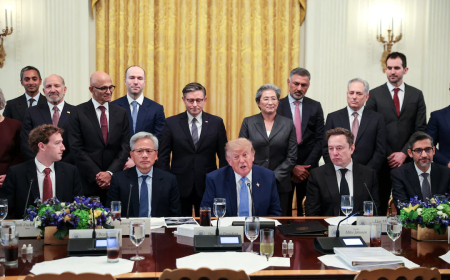
The announcement comes only days after Trump met with executives from some of the world's biggest AI and technology companies at the White House. That meeting produced a voluntary agreement on AI safety practices, putting the new task force at the center of a much broader debate over how quickly AI should develop, how much government oversight is appropriate and how the United States should compete internationally.
Why Trump Is Calling It “Super Intelligence”
The name is not simply branding for the new task force. It follows a policy shift announced by Trump on September 29, when he signed an executive order directing federal agencies to use “Super Intelligence” or “SI” instead of “Artificial Intelligence” or “AI” in executive-branch communications and documents.
The White House argues that today's frontier AI systems have moved beyond the narrower idea of machines simply imitating individual human abilities. The administration says the new terminology is intended to reflect the increasingly broad capabilities of modern AI systems and the potential economic and scientific opportunities they could create.
For now, however, the executive order does not create a completely new category of technology. It says that, for purposes of implementing the order, “Super Intelligence” and “SI” refer to technologies covered by the existing statutory definition of artificial intelligence, unless a later law or presidential action changes that definition. The order also calls for a proposed federal definition of “Super Intelligence” within 60 days.
Jay Clayton Will Lead the New AI Effort
At the center of the new force is Jay Clayton, who currently serves as Director of National Intelligence.
Trump named Clayton as the person responsible for leading the task force, effectively placing him at the center of the administration's effort to coordinate AI policy. Clayton has said that the United States faces significant risks if it falls behind other countries in advanced AI, while arguing that maintaining leadership can also provide greater ability to manage those risks.
The other officials named to lead the initiative are FTC Chairman Andrew Ferguson, Pentagon Under Secretary for Research and Engineering and Chief Technology Officer Emil Michael, and OPM Director Scott Kupor. The group will report directly to Trump and White House Chief of Staff Susie Wiles.
That lineup is notable because the task force is not being built solely as a technology committee. Intelligence, national security, consumer protection, defense and the federal workforce are all represented, reflecting how broadly AI is now affecting government policy.
The Force Will Look Beyond Silicon Valley
Trump said the Super Intelligence Force will coordinate the federal government's engagement with AI companies, consumers, public-interest organizations, religious organizations and critical-infrastructure providers.
That is a significant detail. The administration is not presenting the initiative simply as a research program or another government technology office. Instead, it is being framed as a mechanism for coordinating the many parts of society that could be affected by increasingly capable AI systems.
According to reporting on the task force's planned work, it is expected to examine both the opportunities and risks associated with AI and consider what role the federal government should play. Clayton has said the group has 120 days to produce a report covering those questions.
From AI Competition to AI Governance
The timing of the announcement is particularly important.
The new task force arrives as Washington is wrestling with a difficult balance: the United States wants American companies to move quickly enough to maintain a technological advantage, but increasingly powerful AI systems are also raising questions about cybersecurity, national security, employment, privacy and the potential consequences of poorly controlled systems.
Trump has generally argued against regulations that he believes could slow American AI development, particularly in competition with China. At the same time, the creation of the Super Intelligence Force shows that the administration is actively considering how the federal government should respond as AI becomes more important to the economy and national security.
The task force therefore represents something more complicated than a simple push for either regulation or deregulation. Its eventual recommendations could help define where the administration draws that line.
The White House Has Already Started Rewriting Its AI Playbook
The Super Intelligence Force is the latest piece of a broader AI strategy that the Trump administration has been developing.
In September, Trump hosted major technology executives at the White House, including leaders from companies such as OpenAI, Anthropic, Google, Meta and Nvidia. The meeting produced a voluntary framework under which participating companies agreed to adopt internal controls and additional review practices around the development of advanced AI systems.
The administration has also promoted large-scale federal initiatives around AI infrastructure and scientific research. The White House says more than $5 billion has been announced for the Genesis Mission, a national effort intended to use advanced AI and computing to accelerate work in areas including science, medicine, energy and manufacturing.
Taken together, these moves show that the administration sees advanced AI not merely as another technology sector, but as an issue connected to national competitiveness, economic growth and strategic power.
What the Super Intelligence Force Could Actually Change
The biggest question now is what the task force will recommend.
Its creation does not immediately establish a sweeping new AI regulatory system. Instead, the group has been given the job of studying the government's existing capabilities, identifying risks and opportunities, and determining where federal involvement may be necessary.
That distinction matters. Much of the practical impact will depend on what appears in its report and whether the recommendations lead to new executive actions, legislation, federal standards or changes in how agencies work with AI companies.
The group is also expected to examine existing government reporting and response mechanisms for AI-related incidents, including breaches, hacks and other problems, and consider how federal agencies could respond more effectively under existing authorities.
Why the Announcement Matters for the Global AI Race
The United States is not the only country treating advanced AI as a strategic priority. China and other major technology powers are investing heavily in AI research, computing infrastructure and domestic technology companies.
That makes the administration's emphasis on staying ahead particularly significant. Clayton has argued that failing to remain first could increase both known and unknown risks, while maintaining leadership could give the United States greater ability to respond to those risks.
At the same time, the idea of government-led AI coordination raises questions that will extend far beyond Washington. How much control should governments have over frontier AI development? Should companies be allowed to establish their own safety rules? How transparent should those systems be? And where should responsibility sit when an AI system causes significant harm?
Those questions are unlikely to be settled by a single task force.
A New Name for an Old Debate
For the technology industry, perhaps the most interesting part of Trump's announcement is that the administration is attempting to shape both the policy and language surrounding advanced AI.
Calling the technology “Super Intelligence” does not itself make today's AI systems superintelligent in the scientific sense. The administration's executive order currently uses the term broadly for technologies covered by the existing legal definition of AI, while directing officials to work toward a more specific federal definition.
What happens next will be more important than the terminology. The Super Intelligence Force now has to turn an ambitious political message into concrete recommendations about technology, national security, economic competition and public protection.
For an industry moving faster than most governments can traditionally legislate, that may prove to be the real test of Trump's new AI strategy.
What's Your Reaction?
 Like
0
Like
0
 Dislike
0
Dislike
0
 Love
0
Love
0
 Funny
0
Funny
0
 Angry
0
Angry
0
 Sad
0
Sad
0
 Wow
0
Wow
0