

















Google Gemini 4 Argon Takes No. 1 on Arena’s Text Leaderboard as Claude Opus 5.5 Holds Its Ground
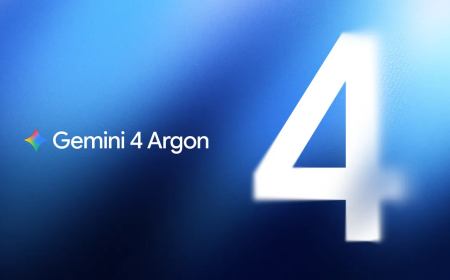
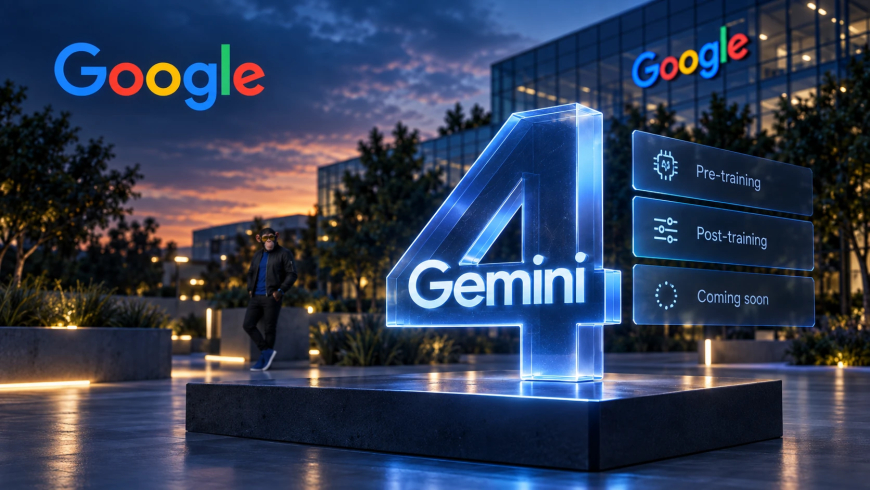
Google’s new Gemini 4 Argon AI model has climbed to the top of Arena AI’s text leaderboard, intensifying competition with Anthropic’s Claude Opus 5.5 and OpenAI’s GPT-6 Astra. The result is based on human preference votes and remains preliminary. Although Argon has posted strong results across several benchmarks, Claude continues to perform well in agent-based tasks, highlighting how AI leadership depends on the type of work being measured.

Google Gemini 4 Argon Reaches the Top of Arena’s Text Leaderboard
Google’s latest artificial intelligence model is making headlines after Gemini 4 Argon secured the No. 1 position on Arena AI’s text leaderboard, placing it ahead of competing models in a ranking based on human preferences. The result marks a significant development in the increasingly competitive AI industry, where Google, Anthropic and OpenAI are racing to build models capable of handling increasingly complex tasks.
The ranking, reported on September 30, 2026, puts Gemini 4 Argon (High) at the top of Arena’s text category. However, the result should be understood in context: the leaderboard marked the new model’s position as preliminary, based on 4,942 votes. It reflects how users preferred its responses in the evaluations conducted so far, rather than proving that it is the best AI model for every possible task.
The distinction matters because modern AI models are evaluated in several different ways. Some benchmarks measure knowledge and reasoning, while others focus on software development, long-document analysis, tool use or the ability to complete complicated tasks independently. A model can perform exceptionally well in one category without leading every other category.
WHAT IS GEMINI 4 ARGON?
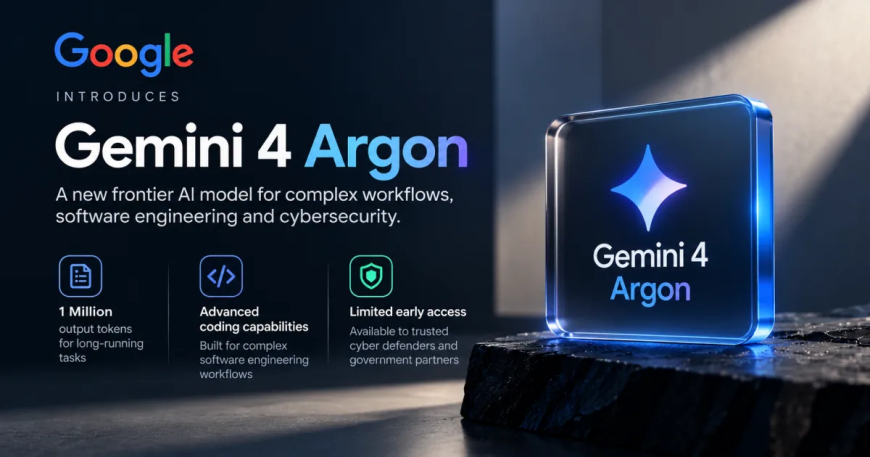
Gemini 4 Argon is Google’s newly unveiled frontier AI model and part of the company’s Gemini 4 series. Google introduced it on September 30, positioning it as a system designed for demanding reasoning and professional workloads.
Unlike a typical consumer-facing chatbot launch, Argon’s initial rollout is restricted. Google is making the model available to selected cybersecurity teams through its Fairwind Program, which is intended to provide advanced AI capabilities to trusted cyber defenders. The company has indicated plans to broaden access to paid API customers and Google AI Ultra subscribers, although a general release date has not been announced.
This restricted launch is important. While the Arena ranking offers an early indication of how people respond to the model, most users cannot yet independently test it across their own workflows. Wider availability will provide a clearer picture of its practical strengths, weaknesses and reliability.
WHY ARENA AI’S RANKING MATTERS
Arena AI, formerly widely known as LMArena, evaluates AI systems using real human preferences. In its typical text comparison process, users assess responses from competing models without necessarily knowing which model produced each answer. Their preferences contribute to the leaderboard rankings.
This approach provides a different perspective from traditional academic or technical benchmarks. A model might achieve impressive scores on a mathematical test but produce answers that users find less helpful, less clear or less relevant in ordinary conversations. Human preference evaluations can capture some of those differences.
Gemini 4 Argon’s reported first-place position in the text category therefore suggests that its responses performed well in the comparisons represented by the available votes. Nevertheless, a preliminary result can change as more evaluations arrive, and rankings may differ across categories and model settings.
It is also important to distinguish the text leaderboard from Arena’s agent rankings. The latter assess models on more complex tasks involving tools and multi-step execution. In the leaderboard data available on October 1, Claude Fable 5.1 and Claude Opus 5.5 remained ahead of Gemini 4 Argon in the overall agent category. Argon’s text ranking does not mean it has displaced Claude across all AI workloads.
GEMINI 4 ARGON VS CLAUDE OPUS 5.5: WHAT THE BENCHMARKS SHOW
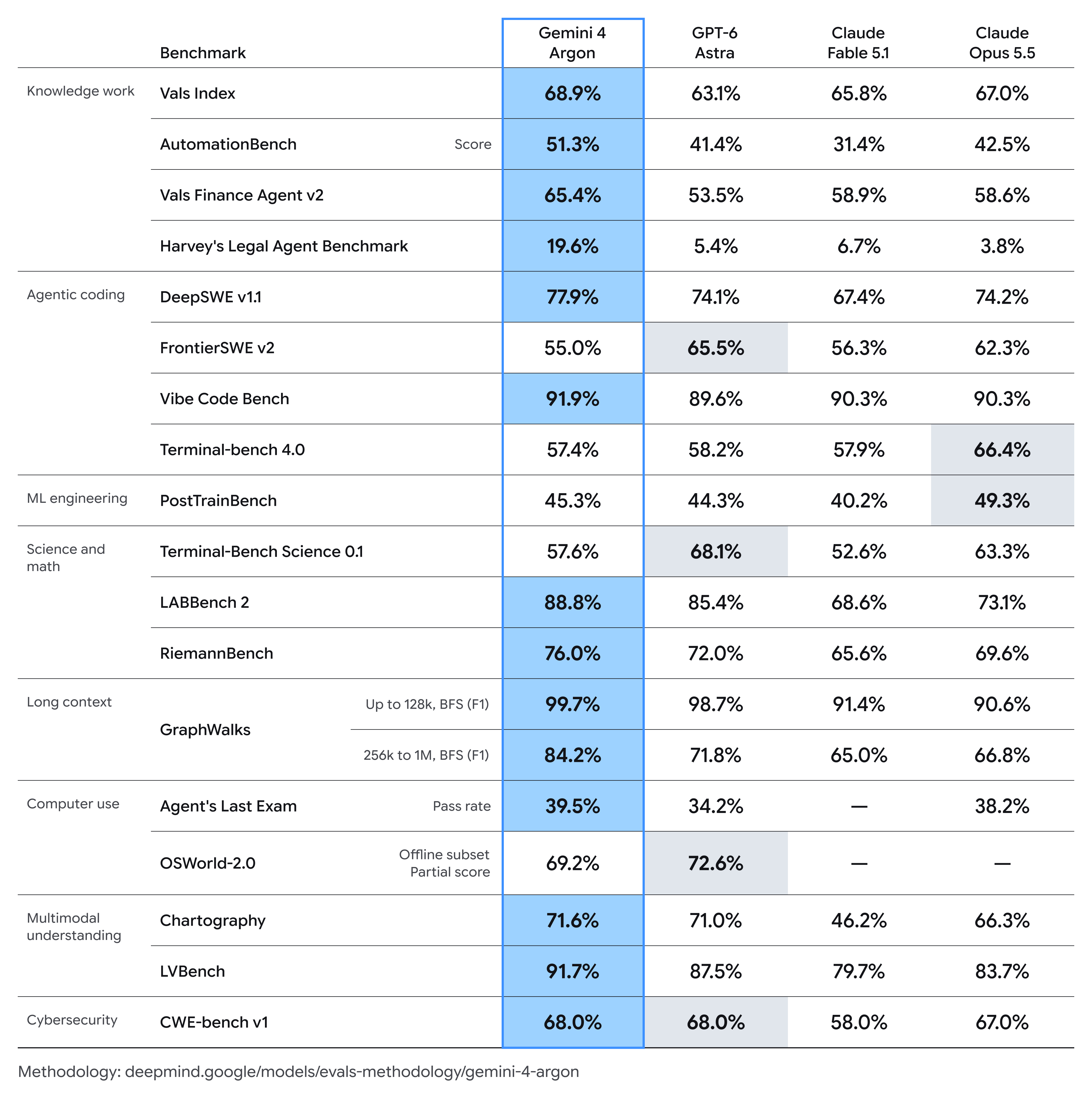
The comparison between Gemini 4 Argon and Claude Opus 5.5 is more complicated than a single leaderboard position. Google’s published benchmark comparisons show Argon leading in several areas, particularly knowledge-intensive work, long-context processing and selected software-engineering evaluations. Anthropic’s model remains competitive in other areas, including terminal-based coding and machine-learning engineering.
One notable result comes from DeepSWE v1.1, a benchmark for software-engineering tasks. Google’s comparison reports a score of 77.9% for Gemini 4 Argon, compared with 74.2% for Claude Opus 5.5 and 74.1% for OpenAI’s GPT-6 Astra. This gives Argon a measurable lead on that particular evaluation, although benchmark results alone cannot guarantee the same advantage in every real-world development project.
The picture changes on other coding tests. On Terminal-Bench 4.0, which evaluates tasks involving command-line tools and terminal-based workflows, Google’s figures put Claude Opus 5.5 at 66.4%, ahead of Argon’s 57.4%. Argon also trails Opus on the reported FrontierSWE v2 and PostTrainBench evaluations.
These differences illustrate why developers should avoid choosing a model based only on its overall reputation. A model that excels at generating or modifying code may not be equally strong at navigating a terminal, managing a complex development environment or completing a long sequence of tool-dependent operations.
A MAJOR FOCUS ON LONG-CONTEXT REASONING
One of Gemini 4 Argon’s reported capabilities is support for up to one million output tokens. This is an unusually large output allowance, potentially useful for applications that require extensive reports, detailed analysis or long-form generation.
Long-context processing and long output generation are related but different capabilities. Context capacity concerns how much information a model can take into account, while output capacity concerns how much it can generate in a response. Neither figure, by itself, establishes that a model can reason perfectly across every detail in an enormous document.
For businesses, researchers and developers, the practical value will depend on whether Argon can maintain accuracy and consistency throughout lengthy tasks. It could be useful for synthesizing large collections of documents, producing extensive technical reports or handling multi-stage research. Those applications still require verification, particularly when factual accuracy is important.
GOOGLE’S BENCHMARK RESULTS SHOW BOTH STRENGTHS AND LIMITATIONS
Google’s own published comparisons report that Gemini 4 Argon outperforms Claude Opus 5.5 and GPT-6 Astra on numerous evaluations. These include selected legal and financial tasks, business-process automation, long-video understanding and long-context reasoning.
However, company-published benchmarks should be interpreted as results under the stated testing conditions, not as universal measurements of model quality. Differences in prompts, evaluation methods, model settings and task selection can influence results. Independent testing and broader user access are necessary to understand how well the model performs beyond the evaluations chosen by its developer.
The coding results are a particularly useful example. Argon leads on DeepSWE v1.1 but trails Opus on Terminal-Bench 4.0. Both findings can be true at the same time because the benchmarks measure different kinds of work. The same principle applies to writing, research, mathematics and everyday assistance.
PRICING AND AVAILABILITY: WHEN CAN USERS TRY IT?
Google has outlined introductory API pricing of $2 per million input tokens and $10 per million output tokens for Gemini 4 Argon, with regular pricing expected to rise to $4 per million input tokens and $20 per million output tokens. Cached input tokens are eligible for a substantial discount under the announced pricing structure.
These figures provide a starting point for businesses evaluating the model, but token prices do not tell the whole story. The actual cost of a project also depends on how many tokens a task consumes, how often the model needs to retry, whether tools or other services are involved and how much human review is required.
Availability remains a major limitation. As of October 1, 2026, Argon’s rollout is restricted to selected cybersecurity partners, with broader access planned but no confirmed public release date. Consequently, its pricing and headline benchmark results may be more immediately relevant to organizations evaluating future AI infrastructure than to ordinary users looking for a chatbot today.
WHAT THIS MEANS FOR THE AI INDUSTRY
Gemini 4 Argon’s performance adds another development to the competition between Google DeepMind, Anthropic and OpenAI. The companies are no longer competing solely on conversational quality. Their models are increasingly expected to perform professional research, assist with software engineering, analyze large volumes of information and execute multi-step workflows.
For Google, a strong showing on Arena’s text leaderboard offers an encouraging early signal for its latest model. It also demonstrates why human preference rankings have become an important part of how new AI systems are evaluated. Users want models that do more than achieve high scores in controlled tests; they want useful, clear and reliable answers.
For Anthropic, the results do not erase Claude Opus 5.5’s performance in agent-based tasks and selected coding evaluations. For OpenAI, the comparison underscores the importance of evaluating models across several categories rather than treating a single benchmark as the final measure of progress.
FINAL TAKEAWAY
Google Gemini 4 Argon has reached the top of Arena AI’s preliminary text leaderboard, giving Google a notable result in its competition with Anthropic and OpenAI. Its published benchmark performance also points to strengths in long-context work, knowledge-intensive tasks and selected software-engineering evaluations.
However, taking the top position in Arena’s text category is not the same as winning every AI benchmark or outperforming Claude Opus 5.5 in every practical task. Claude remains competitive in agent-based workflows and some coding evaluations, while Argon’s restricted availability limits independent testing.
The next important milestone will be broader access. Once more developers and users can test Gemini 4 Argon against their own workloads, the industry will have a better understanding of whether its early leaderboard success translates into a consistent advantage in everyday AI use.
What's Your Reaction?
 Like
0
Like
0
 Dislike
0
Dislike
0
 Love
0
Love
0
 Funny
0
Funny
0
 Angry
0
Angry
0
 Sad
0
Sad
0
 Wow
0
Wow
0