



















Microsoft Pushes AI Deeper Into Windows PCs as Local Computing Takes on Apple
Microsoft is pushing Windows into a new phase of AI computing, combining local AI models, cloud intelligence, autonomous agents and stronger security controls. At its latest Windows and Surface event, the company introduced the Surface Laptop Ultra with NVIDIA RTX Spark technology and Microsoft Execution Containers, while expanding Copilot’s ability to understand local PC context and perform actions directly on the device.
Microsoft Wants the PC to Become an AI Agent’s Home
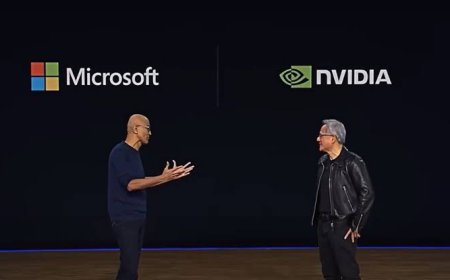
The personal computer is entering another major transition, and Microsoft is betting that the next one will happen much closer to the user. At its latest Windows and Surface event in San Francisco, the company outlined a broader strategy for turning Windows PCs into machines that can run AI locally, understand what is happening on the computer, take actions with permission and still connect to the cloud when more powerful processing is needed.
The shift is bigger than simply adding another Copilot button to a laptop. Microsoft is now describing Windows as a platform for hybrid intelligence, where AI work can move between the PC and Microsoft's cloud depending on the task. The company says this approach can improve privacy, reduce dependence on cloud computing for suitable workloads and give AI agents more direct access to the computing resources of a Windows machine—while adding controls intended to stop those agents from doing things they should not.
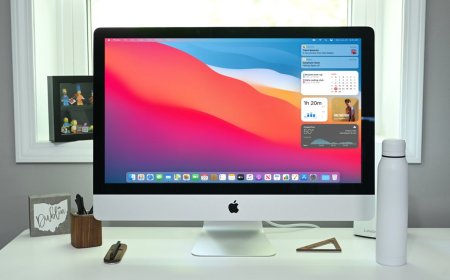
That puts Microsoft in a more direct technology race with Apple. Apple has increasingly emphasized AI capabilities that run on its devices alongside cloud processing, while Microsoft is trying to make Windows the broader platform for AI agents, developers and professional workloads. The difference is that Microsoft is also leaning heavily on its enormous Windows ecosystem and partnerships with chipmakers such as NVIDIA.
Surface Laptop Ultra Is Microsoft's New AI Flagship
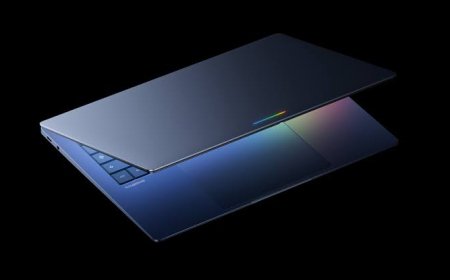
One of the most eye-catching products from the event is the Surface Laptop Ultra, a high-performance Windows machine built around NVIDIA's new RTX Spark platform. Unlike conventional thin laptops that rely mainly on cloud services for demanding AI workloads, the new system is designed to bring considerably more AI computing power directly to the PC.
Microsoft and NVIDIA are positioning RTX Spark around local AI, creative applications and development. The platform combines NVIDIA graphics and CPU technology with unified memory, allowing Windows machines to handle AI models that would previously have been more naturally associated with dedicated workstations or cloud infrastructure. Microsoft is also introducing a broader range of Windows hardware around this idea, from conventional Copilot+ PCs to much more powerful systems aimed at developers and professional creators.
The pricing, however, shows just how expensive this new class of local AI computing can become. The Surface Laptop Ultra starts at $2,599 and reaches $5,899 for a configuration with a 20-core processor, 128GB of memory and 1TB of storage. Microsoft has opened preorders, with availability scheduled to begin October 16.
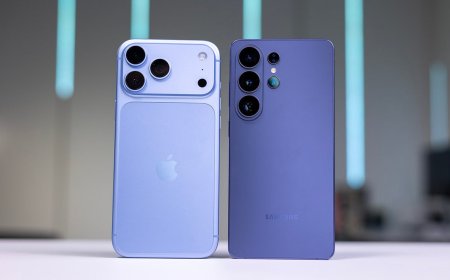
That creates an immediate tension in Microsoft's AI-PC strategy. The company wants local AI to become more practical and widespread, but the most capable hardware currently remains expensive. Microsoft's entry-level Surface Laptop Ultra is already above Apple's $1,999 base MacBook Pro, although the two machines are not directly equivalent in hardware configuration or intended workload.
Copilot Is Becoming More Than a Chatbot
Perhaps the more important development is happening inside Windows itself.
Microsoft says Copilot will gain access, with user permission, to relevant local context on a PC. That means the assistant can understand files and recent activity, rather than treating the computer as little more than a screen through which the user talks to an online chatbot.
Microsoft is also giving Copilot the ability to perform local actions. The company describes scenarios such as organizing files, checking device diagnostics, troubleshooting problems, coding and carrying out multi-step workflows directly on the PC. The system can also use models running locally on the machine while sending more demanding tasks to the cloud.
That hybrid approach is important because not every AI request needs a giant cloud model. A relatively simple task involving local files, device information or routine computer operations can potentially be handled closer to the user. More complex requests can still be routed to Microsoft's cloud infrastructure.
In practical terms, Microsoft is trying to make Copilot feel less like an application you open and more like an intelligent layer sitting across Windows.
Microsoft Builds a Security Wall Around AI Agents
Giving AI agents more control over a computer creates an obvious problem: what happens when an AI is capable of doing something it should not?
Microsoft's answer is a new technology called Microsoft Execution Containers, or MXC. The system is designed to restrict what AI agents can access when they operate on Windows, creating a controlled environment in which agents can execute tasks without receiving unrestricted access to a user's data and system.
Microsoft says MXC is now generally available for Windows and can work with its broader management and security infrastructure. The company also says organizations will be able to establish rules governing what agents can access and how their activity is managed. OpenAI, Anthropic and NVIDIA are among the companies Microsoft says will use the technology.
This may ultimately be one of the most important pieces of Microsoft's strategy. An AI assistant that can read files, write code, operate applications and perform tasks is considerably more useful than a chatbot—but it is also considerably more dangerous if it has unrestricted access.
Microsoft is therefore attempting to solve both sides of the equation at the same time: give agents more capability while giving users and IT administrators more control.
AI Models Are Moving From the Cloud to the Desktop
Microsoft is also expanding the number of AI models that can run directly on powerful Windows computers.
The company highlighted NVIDIA's open-source Nemotron models and said a version of China's DeepSeek V4 can run locally on machines with at least 60GB of memory. Microsoft also says the model can outperform OpenAI's GPT-5 on certain coding and reasoning tasks, although such claims should be understood as workload-specific rather than evidence that one model is universally better than another.
The broader change is more significant than any single benchmark.
For years, the typical AI experience has depended heavily on remote data centers. A user sends a request, cloud servers process it and the result comes back. Local AI reverses part of that relationship. The PC itself increasingly becomes capable of processing models, handling private information and performing tasks without sending every piece of data to a remote server.
That could matter for privacy, latency and operating costs. It could also make AI useful in situations where an internet connection is limited or where organizations do not want sensitive information continuously leaving their devices.
Microsoft and NVIDIA Are Changing What a Windows PC Means
The partnership with NVIDIA is also strategically important.
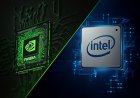
Windows PCs have traditionally depended on processors and graphics hardware from Intel and AMD, while NVIDIA has been strongest in discrete graphics and AI accelerators. RTX Spark gives NVIDIA a much more prominent role in the next generation of AI-focused Windows computers.
Microsoft, meanwhile, gets another route to expand Windows beyond traditional productivity software. If AI agents become a normal part of computing, the operating system that controls the desktop becomes increasingly important.
This is why Microsoft's latest announcements are not simply about launching another Surface laptop. The company is attempting to define how AI agents will interact with Windows hardware, software, files, applications and enterprise systems.
Apple Is Facing a Different Kind of PC Competition
Apple remains a major part of the story because the high-end PC market is increasingly being shaped by AI.
Mac computers have benefited from Apple's tight integration of its processors, operating system and AI capabilities. Microsoft cannot duplicate that exact model because Windows runs across hardware from many manufacturers. Instead, it is taking the opposite approach: build a common software and security layer, then let hardware companies offer different levels of AI performance.
Microsoft's approach could ultimately reach a much broader range of devices. The company says new AI-focused Windows hardware is coming from manufacturers including ASUS, Dell, HP, Lenovo and MSI, alongside Microsoft Surface.
That creates an important distinction. Apple controls the entire Mac hardware and software experience, while Microsoft is trying to create an AI platform that can spread across an enormous hardware ecosystem.
The Biggest Problem May Be the Price
There is a clear irony in Microsoft's local-AI push.
The company is arguing that moving AI workloads from expensive cloud data centers onto personal computers can make computing more efficient. But the machines capable of running the most demanding models locally are becoming extremely expensive.
The memory shortage and rising costs associated with AI hardware have pushed prices higher across the industry. NVIDIA's DGX Spark, another local AI-focused system, has also seen a substantial price increase, according to Reuters. Analysts quoted by Reuters have warned that local AI could remain concentrated among customers and businesses that can afford the required hardware.
For mainstream consumers, this means the local-AI revolution may arrive in stages. Everyday Copilot features can run on relatively accessible AI PCs, while larger models and more advanced autonomous agents may initially remain the territory of developers, professionals and businesses with powerful machines.
Windows Is Moving Toward a Hybrid AI Future
Microsoft's latest strategy ultimately comes down to one idea: the future PC will not choose between local AI and cloud AI—it will use both.
Simple or privacy-sensitive workloads can stay on the machine. More demanding tasks can be sent to Microsoft's cloud. Copilot can use local context and perform actions with permission. AI agents can operate inside controlled environments rather than receiving unrestricted access to the computer.
It is a more ambitious vision than the first wave of Copilot+ PCs, which largely introduced hardware designed to accelerate specific on-device AI features. Microsoft is now trying to build an operating environment where AI becomes part of the way Windows itself works.
Whether consumers will pay premium prices for that experience remains an open question. But Microsoft's direction is clear. The PC is no longer being treated simply as a place where AI applications run. Microsoft wants Windows itself to become the environment where AI agents live, reason, create and act—with the company hoping that this can give its PC ecosystem a stronger answer to Apple's growing AI ambitions.
Sources
- Microsoft Windows Experience Blog — Building Windows for hybrid intelligence
- Reuters — Microsoft brings more AI to PCs as it challenges Apple
- Microsoft Windows & Surface announcements
- The Verge — Microsoft Windows and Surface event coverage
- Channel NewsAsia / Reuters — Microsoft AI PC and Surface Laptop Ultra coverage
What's Your Reaction?
 Like
0
Like
0
 Dislike
0
Dislike
0
 Love
0
Love
0
 Funny
0
Funny
0
 Angry
0
Angry
0
 Sad
0
Sad
0
 Wow
0
Wow
0