





















iPhone 18 Pro Max vs Galaxy S26 Ultra: Which 2026 Flagship Should You Buy?
Apple’s iPhone 18 Pro Max and Samsung’s Galaxy S26 Ultra represent two very different approaches to the premium smartphone. Both start at $1,299 in the US, but their strengths are not the same. From the A20 Pro and Snapdragon 8 Elite Gen 5 for Galaxy to variable-aperture and 200MP cameras, large 120Hz displays, battery life, AI features, S Pen and Privacy Display, here is a detailed comparison of the two flagship smartphones.
iPhone 18 Pro Max vs Galaxy S26 Ultra: Apple and Samsung Fight for the Flagship Crown
The smartphone battle between Apple and Samsung has become less about simply asking which phone has the better specifications and more about deciding which philosophy makes more sense for the person holding the device. That is especially true in 2026, with the iPhone 18 Pro Max and Samsung Galaxy S26 Ultra arriving with different ideas about what a premium smartphone should offer.
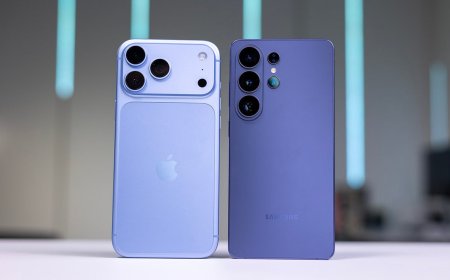
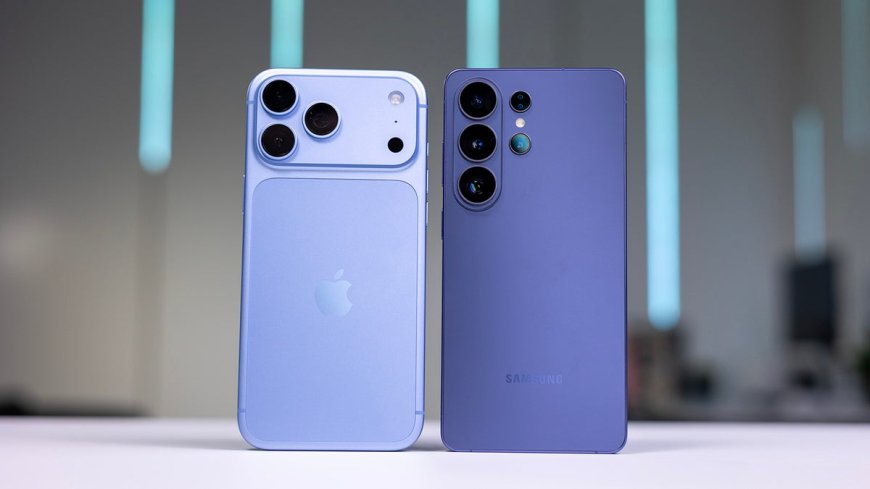
Apple's latest Pro Max combines the new A20 Pro chip, a 6.9-inch 120Hz OLED display, a variable-aperture 48MP main camera and a larger battery with the company's tightly integrated iOS and Apple Intelligence ecosystem. Samsung's answer is the Galaxy S26 Ultra, which brings a 6.9-inch QHD+ AMOLED display, Snapdragon 8 Elite Gen 5 for Galaxy, a 200MP main camera, multiple telephoto cameras, S Pen support and Privacy Display.
Interestingly, the two phones begin at almost exactly the same price in the United States: $1,299 for 256GB. That makes the comparison much more interesting because buyers are not simply choosing between an expensive phone and a cheaper alternative. They are choosing between two competing flagship experiences.
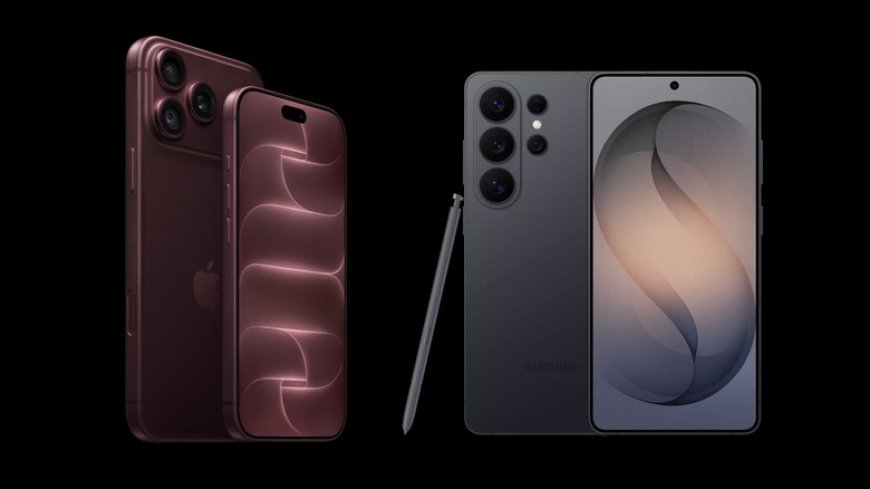
Design: Apple Goes Big, Samsung Goes Slimmer
At first glance, both phones occupy roughly the same physical territory. Each has a 6.9-inch display and a premium build, but the design priorities are noticeably different.
The iPhone 18 Pro Max measures 163.4 × 78.0 × 8.75mm and weighs 249 grams. Apple uses an aluminum unibody design with Ceramic Shield 2 on the front and Ceramic Shield on the back. The Galaxy S26 Ultra measures 163.6 × 78.1 × 7.9mm and weighs just 214 grams, making Samsung's flagship considerably lighter and thinner.
That difference is not insignificant. The iPhone's larger battery contributes to its heavier body, while Samsung has managed to keep the S26 Ultra relatively light despite maintaining a 5,000mAh battery and a large camera system.
Both phones carry an IP68 rating, so neither is intended to be treated as a rugged phone, but both offer substantial protection against everyday dust and water exposure.
Display: Two Excellent Screens With Different Priorities
The display contest is extremely close, but Samsung takes a more aggressive approach to resolution.
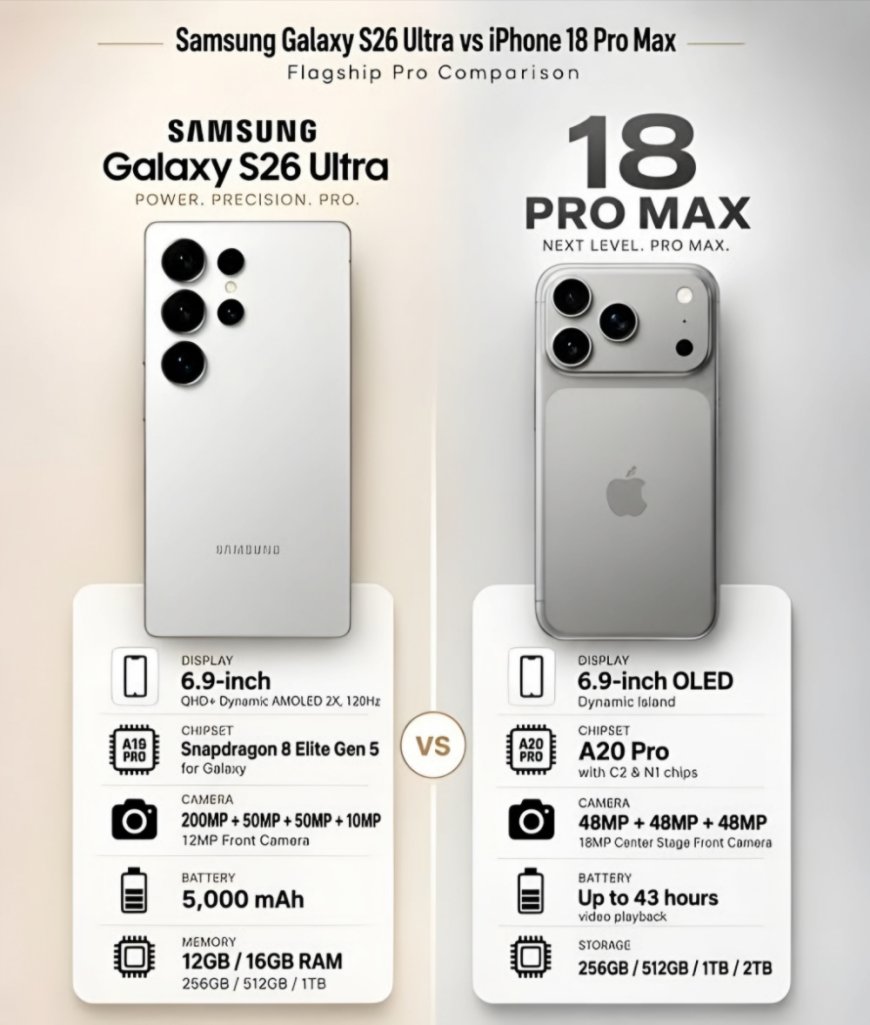
The iPhone 18 Pro Max has a 6.9-inch Super Retina XDR OLED with a 2868 × 1320 resolution and adaptive ProMotion refresh rates up to 120Hz. Apple lists up to 3,000 nits of outdoor peak brightness.
Samsung's Galaxy S26 Ultra also uses a 6.9-inch panel, but its Dynamic AMOLED 2X display reaches 3120 × 1440 resolution and supports a 1–120Hz adaptive refresh rate. Samsung also introduces Privacy Display, a feature designed to make information on the screen harder for people beside the user to see.
For ordinary viewing, both displays are excellent. Samsung has the advantage in pixel density and resolution, while Apple's display offers extremely strong brightness and the familiar smoothness of ProMotion.
The more interesting difference is Samsung's Privacy Display. It is not simply another specification on a datasheet; it is a feature designed around how people actually use their phones in public places.
Performance: A20 Pro vs Snapdragon 8 Elite Gen 5
This is one of the areas where the two manufacturers are taking very different approaches.
The iPhone 18 Pro Max runs on Apple's A20 Pro, featuring a six-core CPU, seven-core GPU with Neural Accelerators and a dual 16-core Neural Engine. Apple has continued its strategy of tightly integrating its processor, operating system and applications.
Samsung uses the Snapdragon 8 Elite Gen 5 for Galaxy, Qualcomm's flagship platform customized for Galaxy devices. The S26 Ultra is available with up to 16GB of RAM and 1TB of storage, while the iPhone offers up to 2TB of storage.
Raw benchmark numbers are interesting, but they do not tell the entire story. Apple's advantage traditionally comes from tight hardware-software integration, while Samsung's flagship combines powerful Android performance with extensive multitasking, AI features and greater system flexibility.
For everyday applications, social media, photography, video editing and demanding games, both phones sit firmly in the flagship class. The difference becomes more meaningful when buyers consider the software and ecosystem surrounding the processor.
Camera: 200MP Versatility vs Variable Aperture
This may be the most fascinating part of the comparison.
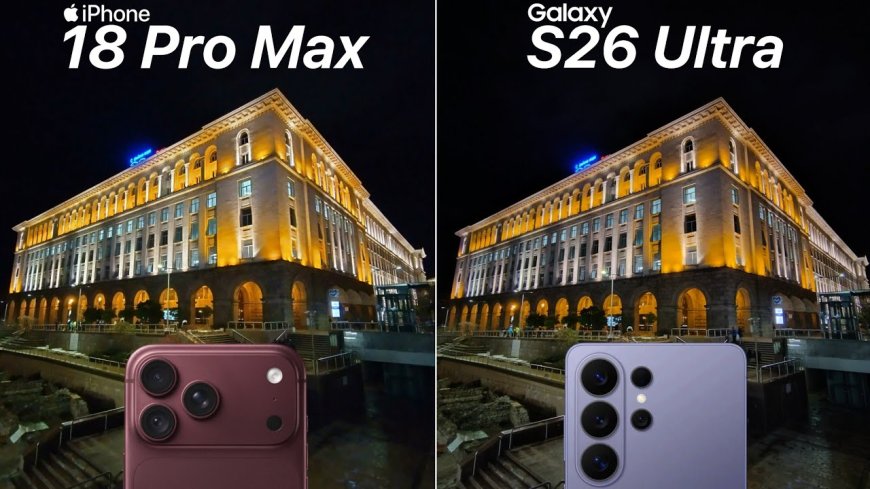
The iPhone 18 Pro Max introduces a 48MP main camera with a mechanical variable aperture that can move through several aperture settings, including f/1.48, f/1.8, f/2.8 and f/4.0. The idea is unusual for a smartphone: rather than relying entirely on computational photography, the camera can physically adjust how much light enters the lens.
That gives photographers greater control over depth of field and the amount of the scene that remains in focus. It also represents a significant shift for Apple's camera strategy.
Samsung takes a different route. The Galaxy S26 Ultra has a 200MP main camera, a 50MP ultrawide camera, a 10MP 3x telephoto camera and a 50MP 5x telephoto camera. Samsung's system can provide optical or optical-quality zoom at several focal lengths, with up to 100x digital zoom.
This is where the Galaxy has a clear hardware advantage for people who frequently photograph distant subjects. Concerts, buildings, wildlife and travel photography can all benefit from having dedicated telephoto cameras at different focal lengths.
The iPhone, meanwhile, has a more unusual proposition. Its variable-aperture main camera gives users greater control over the look of photographs, while Apple's image processing and video capabilities remain major parts of the overall camera experience.
So the question is not simply 48MP versus 200MP. The more useful question is whether you value Apple's approach to image control and consistency or Samsung's broader native zoom flexibility.
Battery: Apple's Bigger Capacity Changes the Equation
For years, Samsung's Ultra phones have carried 5,000mAh batteries, and the Galaxy S26 Ultra continues that tradition.
Apple has gone considerably further with the iPhone 18 Pro Max. Depending on the model, reported battery capacity is around 5,391mAh to 5,567mAh, with eSIM-only variants offering the larger capacity.
The numbers alone do not determine battery life because iOS and Android manage hardware differently. Nevertheless, the iPhone's larger physical battery gives Apple more capacity to work with.
Both phones also improve charging compared with many previous generations. The iPhone 18 Pro Max supports 60W wired charging and 25W wireless charging, while the Galaxy S26 Ultra also reaches 60W wired charging, with wireless charging depending on the charging standard and configuration.
In real-world use, both are designed to provide all-day flagship endurance. Heavy gaming, mobile data, high brightness and camera use can obviously change that equation.
AI: Apple Intelligence vs Galaxy AI
Artificial intelligence has become another major battlefield.
Apple's iPhone 18 Pro Max uses the A20 Pro's neural-processing hardware to power the latest generation of Apple Intelligence, including a substantially upgraded Siri and AI features integrated throughout Apple's software ecosystem.
Samsung's Galaxy S26 Ultra approaches AI from a different direction. Galaxy AI is deeply integrated into the phone's camera, productivity and communication features, while Samsung is also pushing more agentic-style interactions that allow the phone to assist with multi-step tasks.
The difference is partly philosophical. Apple emphasizes privacy, on-device processing where possible and deep integration across Apple's ecosystem. Samsung puts greater emphasis on customization, Android flexibility and a broader range of AI-assisted functions.
Neither approach automatically wins for everyone. The better choice depends heavily on which ecosystem the user already lives in.
The S Pen Gives Samsung a Feature Apple Cannot Match
There is one Galaxy S26 Ultra feature that does not have a direct equivalent on the iPhone: the built-in S Pen.
For people who take handwritten notes, annotate documents, sketch, edit certain content or simply enjoy having a stylus available without carrying an accessory, the S Pen remains a significant advantage.
Apple's iPhone 18 Pro Max instead focuses on its camera controls, Apple Intelligence, MagSafe ecosystem and integration with devices such as the Mac, Apple Watch and AirPods.
This is a classic example of why specification comparisons can be misleading. A feature can be extremely valuable to one person and completely irrelevant to another.
Price: Both Start at $1,299 in the US
Pricing makes the competition even tighter.
The iPhone 18 Pro Max starts at $1,299 in the United States for 256GB, while the Galaxy S26 Ultra also starts at $1,299 for 256GB in the US market.
However, regional pricing can be very different. Taxes, storage configurations, carrier promotions, launch offers and currency conversion all affect the final retail price in markets such as India, China and Bangladesh.
For Bangladeshi buyers in particular, the official or unofficial market price can differ significantly from the US starting price. Buyers should therefore check the local configuration, warranty and seller before treating an international price as the actual Bangladesh price.
iPhone 18 Pro Max vs Galaxy S26 Ultra: Which One Wins?
There is no single winner across every category.
The iPhone 18 Pro Max makes the stronger case for buyers who want Apple's ecosystem, top-tier processor performance, a larger battery, variable-aperture photography, strong video capabilities, MagSafe and long-term integration with other Apple products.
The Galaxy S26 Ultra is arguably the more feature-packed traditional flagship. Its 200MP camera, dual telephoto setup, QHD+ display, S Pen, Privacy Display, Android customization and Galaxy AI features give it a remarkably broad feature set.
For photography, the choice depends on the type of photography. Samsung has the advantage for native zoom flexibility, while Apple's variable-aperture system gives the iPhone a distinctive advantage in camera control.
For productivity, Samsung's S Pen and multitasking capabilities are difficult to ignore. For users already invested in Apple's ecosystem, however, the iPhone can be much more convenient because the phone works as part of a larger collection of Apple devices.
The Verdict: Two Flagships, Two Different Ideas
The iPhone 18 Pro Max and Galaxy S26 Ultra are close enough in price and overall quality that choosing between them should not come down to a simple specification checklist.
Samsung builds the more feature-dense and flexible Android flagship, particularly for users who care about zoom photography, stylus functionality, multitasking and customization. Apple builds the more tightly integrated flagship experience, with the A20 Pro, variable-aperture camera, large battery and deep connections to the wider Apple ecosystem.
If you want the most versatile camera hardware and the freedom of Android, the Galaxy S26 Ultra is an exceptionally strong choice. If you want Apple's ecosystem, high-end performance and a camera system that introduces genuinely different photographic control, the iPhone 18 Pro Max has a compelling argument.
In other words, 2026's flagship battle is not really about one phone destroying the other. It is about two companies arriving at the top of the smartphone market from completely different directions—and both have made strong cases for their approach.
Sources
- Apple — iPhone 18 Pro Max Technical Specifications
- Samsung Newsroom — Galaxy S26 Series Official Announcement and Specifications
- Samsung US — Galaxy S26 Ultra Features and Camera Specifications
- Tom's Guide — iPhone 18 Pro Max vs Galaxy S26 Ultra Testing and Comparison
- TechRadar — iPhone 18 Pro Max vs Galaxy S26 Ultra Comparison
- Engadget — iPhone 18 Pro Max vs Galaxy S26 Ultra Comparison
What's Your Reaction?
 Like
0
Like
0
 Dislike
0
Dislike
0
 Love
0
Love
0
 Funny
0
Funny
0
 Angry
0
Angry
0
 Sad
0
Sad
0
 Wow
0
Wow
0