















































Global PC Shipments Plunge 20% as Memory Shortages Push Up Prices
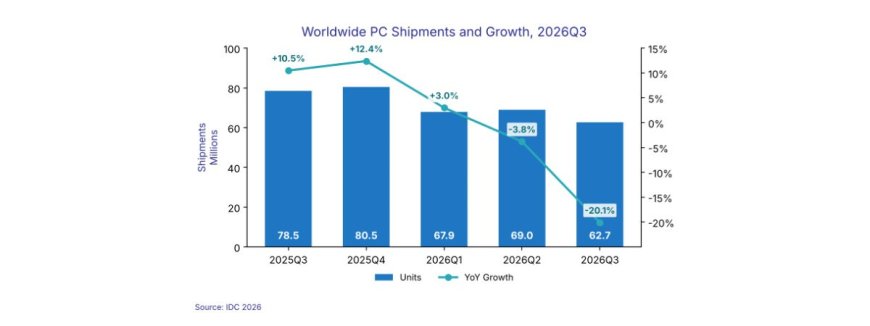
Global PC shipments fell 20.1% year over year to 62.7 million units in the third quarter of 2026, according to preliminary data from IDC. Higher computer prices, memory supply constraints and heavy inventory purchases earlier in the year contributed to the sharp decline. Lenovo retained its market lead, while HP and Dell recorded steeper shipment losses than the overall market.

Global PC Shipments Plunge 20% as Memory Shortages Push Up Prices
Worldwide computer shipments suffered a sharp setback in the third quarter of 2026, falling 20.1% compared with the same period last year as rising hardware costs, supply constraints and earlier inventory purchases weighed on the market. Preliminary figures published by research firm International Data Corporation (IDC) on October 8 put global shipments at 62.7 million units, down from 78.5 million in the third quarter of 2025.
The downturn is particularly notable because July through September is normally an important period for computer manufacturers. Back-to-school purchases, business equipment upgrades and preparations for the holiday shopping season typically help lift shipments. This year, however, the market moved in the opposite direction.
IDC also reported that shipments declined 9.1% from the second quarter of 2026, when the industry shipped approximately 68.2 million PCs. The latest result represents the second consecutive quarter of year-over-year contraction, following a smaller 3.8% decline in Q2.
The figures cover traditional personal computers, including desktops, notebooks and workstations. They measure shipments to distribution channels or end users rather than directly counting every computer purchased by consumers.
Why Did Global Computer Shipments Fall So Sharply?
Earlier purchases left retailers with excess inventory
One of the main reasons behind the third-quarter decline was a shift in purchasing activity earlier in 2026. Manufacturers, distributors and retailers increased their orders during the first half of the year as they anticipated further price increases and potential shortages of memory and other components.
That strategy helped businesses secure equipment before costs rose further, but it also pulled some demand forward. Retailers entered the third quarter with larger inventories and had less reason to place new orders while working through existing stock.
As a result, fewer computers moved from manufacturers into distribution channels, even though that does not automatically mean consumer purchases fell by exactly the same percentage.
IDC research director Jitesh Ubrani said the earlier inventory build-up had disrupted the industry's normal seasonal pattern. He also warned that high prices were making retailers more cautious about holding additional stock.
The distinction matters when interpreting market statistics. Shipment figures can decline because distributors already have enough products in their warehouses, because customers are buying fewer computers, or because both conditions are occurring together.
Memory shortages and AI infrastructure demand add pressure
Rising component costs are another major challenge for the PC industry. Memory chips and storage components are essential to modern computers, and constraints in their supply can increase manufacturing expenses while limiting the number of configurations manufacturers can produce.
The rapid expansion of AI infrastructure has added pressure to parts of the semiconductor supply chain. Data centers require substantial computing resources and memory, while PC manufacturers must compete for components and manage higher procurement costs.
The result is a difficult balance for computer makers. They need to maintain competitive prices to attract buyers, but more expensive components make it harder to offer affordable configurations without putting pressure on margins.
These factors are particularly important in the entry-level market, where buyers tend to be more sensitive to price changes. Students, households and small businesses may postpone upgrades or choose less expensive systems when the cost of a suitable computer increases.
Lenovo Remains the World's Largest PC Vendor
Despite the market contraction, Lenovo retained its leading position in the global PC industry during the third quarter. However, its shipments declined substantially, and several major manufacturers experienced even sharper annual drops.
According to IDC's preliminary Q3 2026 data, the leading vendors shipped the following numbers of computers:
| PC manufacturer | Q3 2026 shipments | Market share | Year-over-year change |
|---|---|---|---|
| Lenovo | 14.9 million | 23.8% | -22.6% |
| HP Inc. | 10.3 million | 16.5% | -30.9% |
| Dell Technologies | 7.6 million | 12.1% | -25.0% |
| Apple | 5.9 million | 9.5% | -11.3% |
| ASUS | 5.5 million | 8.7% | -8.6% |
| Other vendors | 18.4 million | 29.4% | -14.0% |
| Total | 62.7 million | 100% | -20.1% |
Source: IDC Quarterly Personal Computing Device Tracker, October 8, 2026. Figures are preliminary and rounded.
Lenovo shipped approximately 14.9 million PCs, giving it 23.8% of the worldwide market. Although that was enough to maintain first place, its shipments fell 22.6% from a year earlier.
HP experienced the steepest decline among the five leading vendors, with shipments dropping 30.9% to 10.3 million units. Its market share fell from 19.1% to 16.5%.
Dell recorded a 25% decline, shipping 7.6 million PCs and capturing 12.1% of the market. Lenovo, HP and Dell all declined faster than the overall industry, collectively losing 4.2 percentage points of market share, according to IDC.
The figures show that market leadership did not protect manufacturers from the wider slowdown. Inventory management, pricing and access to components have become important challenges even for established brands with extensive distribution networks.
Apple and ASUS Record Smaller Declines
Apple and ASUS performed comparatively better than their larger competitors in shipment terms, although both companies also experienced year-over-year declines.
Apple shipped approximately 5.9 million PCs in the quarter, down 11.3% from 6.7 million a year earlier. Its market share increased from 8.5% to 9.5%, making it the fourth-largest vendor in IDC's ranking.
ASUS shipped 5.5 million units, an 8.6% decline from the previous year's 6 million. Its market share rose from 7.6% to 8.7%.
Neither company achieved shipment growth. Instead, their smaller declines meant they accounted for a larger share of a contracting market. That distinction is important: an increase in market share does not necessarily indicate that a company sold more computers.
The performance gap also highlights how unevenly the downturn is affecting manufacturers. Product positioning, distribution, customer demand and inventory levels can all influence how individual vendors perform during a broad industry slowdown.
Will Computer Prices Fall After the Shipment Decline?
A sharp drop in shipments might appear to be good news for people hoping to buy a laptop or desktop at a lower price. Retailers with excess inventory may introduce promotions to clear older stock, particularly when they need room for newer products or want to reduce the cost of holding inventory.
However, lower shipments do not automatically translate into cheaper computers.
IDC expects PC prices to remain elevated compared with the same period in 2025. Higher memory and component costs continue to put pressure on manufacturers, limiting their ability to reduce prices across entire product ranges.
Some short-term discounts remain possible, especially on selected configurations or models that retailers have in stock. But promotional pricing should not be confused with a broad recovery in affordability.
For buyers, the practical impact will depend on the type of computer they need, the availability of specific configurations and local retail conditions. Businesses planning large equipment purchases may also need to consider whether their existing inventory can support their requirements before committing to new orders.
The latest global figures do not establish exactly how computer prices will change in Bangladesh or any other individual country. Local currency movements, import costs, taxes and retailer margins can produce different results from the worldwide trend.
What the Decline Means for the PC Industry
The third-quarter contraction raises questions about how manufacturers will manage production, pricing and inventory during the final months of 2026.
If retailers continue to reduce their existing stock, computer makers may become more cautious about placing new component orders and increasing production. That could put additional pressure on shipment volumes even if some consumers continue purchasing computers through retail channels.
Manufacturers must also navigate the competing demands of consumer PCs and AI infrastructure. Strong investment in data centers can support semiconductor demand, but it may also intensify competition for certain components used in conventional computers.
For businesses, persistent supply constraints can complicate hardware refresh plans and make budgets less predictable. For consumers, higher prices may encourage them to keep existing devices for longer, repair older systems or delay upgrades until their preferred configurations become more affordable.
The latest data does not prove that the PC market will continue declining at the same rate. Future performance will depend on component availability, pricing, economic conditions and how quickly distributors work through their existing inventories.
PC Market Outlook: What Happens Next?
The final quarter of 2026 will be important in determining whether the shipment decline stabilizes or becomes more severe. Ordinarily, the holiday shopping season can support demand, but higher prices and weaker purchasing conditions may limit that seasonal benefit.
IDC has warned that deteriorating economic conditions could put further pressure on the market. Even if inventory levels improve, the industry will still have to contend with component costs and the possibility that customers postpone purchases.
The key question is whether manufacturers can balance supply with actual demand without allowing prices to rise so far that more buyers leave the market. Retail promotions may provide temporary relief, but a sustained recovery would require healthier demand and more manageable supply conditions.
For now, the third-quarter figures deliver a clear message: the global PC industry is facing a significant correction after buyers and distribution channels brought purchases forward earlier in the year. Lenovo remains the market leader, but even the largest manufacturers are dealing with fewer shipments and a more challenging pricing environment.
Sources
-
International Data Corporation (IDC) — PC Market Woes Continue: Shipments Fall 20.1% in Q3 2026 as Pull-In Hangover and Supply Constraints Bite
-
GSMArena — Computer Market Shipments Fell 20% Between July and September
-
Omdia — Global PC Shipments Fall 21.2% in Q3 2026 as Pull-Forward Demand Subsides
What's Your Reaction?
 Like
0
Like
0
 Dislike
0
Dislike
0
 Love
0
Love
0
 Funny
0
Funny
0
 Angry
0
Angry
0
 Sad
0
Sad
0
 Wow
0
Wow
0