


























Trump’s Nvidia Stock Trades Revealed Ahead of Jensen Huang’s National Science Medal
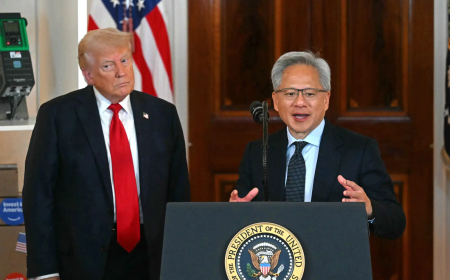
President Donald Trump disclosed Nvidia stock purchases worth as much as $1.6 million and sales of up to $1 million in August, according to a financial disclosure released on October 8, 2026. The disclosure came as Trump prepared to award Nvidia CEO Jensen Huang the National Medal of Science, raising renewed questions about financial transparency while the administration considers policies affecting the AI chip industry.
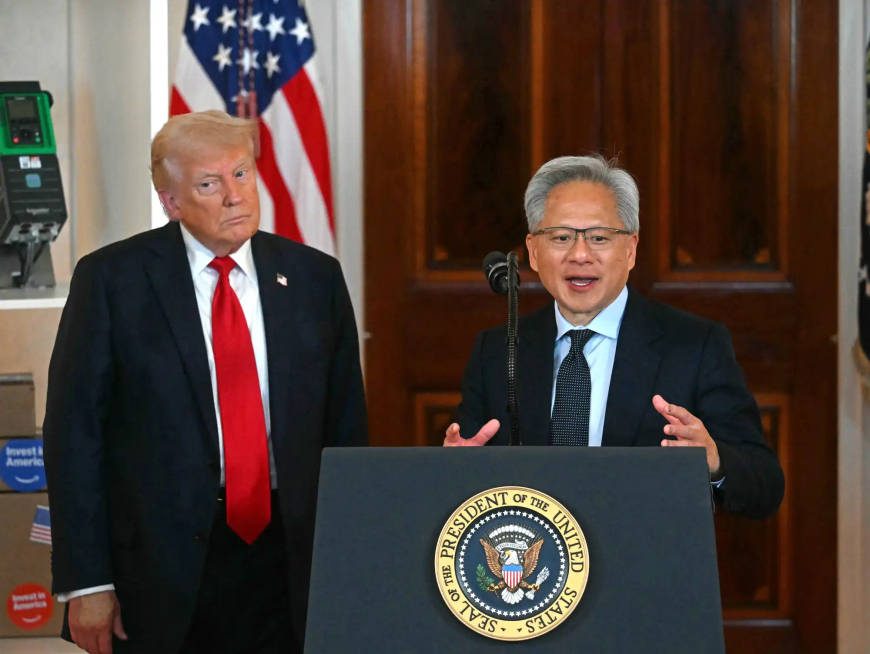
Trump Discloses Nvidia Stock Trades as Jensen Huang Prepares to Receive Top Science Honor
President Donald Trump disclosed Nvidia stock purchases worth as much as $1.6 million and sales of up to $1 million in August, according to a financial disclosure made public on October 8, 2026. The disclosure arrived as Trump prepared to present Nvidia CEO Jensen Huang with the National Medal of Science, putting the president’s reported investment activity and the administration’s technology policies in the same spotlight.
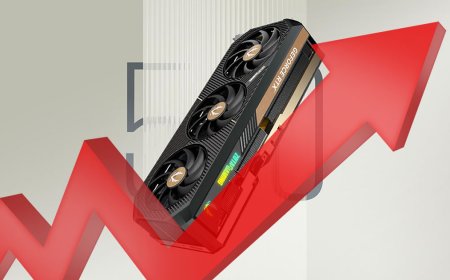
The transactions involve Nvidia, one of the world’s most influential companies in the artificial intelligence industry. Its graphics processing units are widely used to train and run advanced AI models, while its broader hardware and software ecosystem has become central to the expansion of AI data centers.
The disclosure does not, by itself, establish that Trump personally selected the trades or that any improper activity occurred. The White House has said independent financial managers oversee the president’s investment portfolio. Nevertheless, the timing is notable because federal decisions on advanced-chip exports and other technology policies can affect Nvidia’s business prospects.
Trump’s Nvidia Transactions Come Under Scrutiny
According to Reuters, the newly released financial filing recorded Nvidia purchases of up to $1.6 million and sales of up to $1 million during August. The figures represent reported transaction-value ranges rather than an exact accounting of the president’s net investment in the company.
The Nvidia transactions were among hundreds of trades listed in the disclosure. The filing was signed by Trump on September 17 and released publicly on October 8, according to Reuters.
Such disclosures are intended to provide transparency into the financial activities of senior government officials. They can reveal investments that overlap with industries affected by government decisions, although the reported transaction ranges do not necessarily show an investor’s precise holdings at a particular moment.
White House Says Independent Managers Handle the Portfolio
White House spokesperson Davis Ingle told Reuters that third-party financial institutions independently manage Trump’s portfolio and follow recognised market indexes, including the Schwab 1000. The administration said investment decisions are made by the independent managers.
That explanation is central to understanding the disclosure. The reported trades do not establish that Trump personally directed the purchases or sales, and the available reporting does not establish wrongdoing.
At the same time, independent management does not make transparency irrelevant. Nvidia operates in a sector where government decisions can influence market access, competition and the commercial prospects of individual chipmakers. Public financial disclosures allow observers to examine potential overlaps without automatically treating them as evidence of misconduct.
Why Nvidia Matters to US Technology Policy
Nvidia has become a major supplier of the specialised processors used in modern AI systems. Its hardware supports the development of large language models, image-generation systems, scientific computing and the infrastructure powering AI services.
That position makes US policy particularly important to the company. Rules governing exports of advanced chips can affect which products Nvidia is allowed to sell in particular markets, while decisions concerning technology competition can influence its long-term commercial opportunities.
The United States has also been balancing national-security concerns with the interests of American semiconductor companies seeking access to international customers. China remains an important part of this wider debate because of restrictions and competing strategic priorities surrounding advanced computing technology.
The latest disclosure does not show that the reported transactions were connected to any specific policy decision. It does, however, arrive as Nvidia remains closely tied to questions about AI infrastructure, international trade and the future of advanced semiconductors.
Jensen Huang to Receive the National Medal of Science
The disclosure coincided with Trump’s planned presentation of the National Medal of Science to Jensen Huang. The award is the United States’ highest national honour for scientific achievement and recognises major contributions to science and engineering.
Huang has led Nvidia through its transformation from a graphics-chip company into a central supplier of AI computing infrastructure. Its processors and software platforms are used by technology companies, research organisations and businesses building increasingly complex AI systems.
The recognition reflects the growing influence of computing hardware on scientific research and technological development. Modern AI depends not only on algorithms and software but also on the processors, networking equipment and data centres needed to run large-scale systems.
Trump was also scheduled to honour other technology leaders at the October 8 event. Reuters reported that SpaceX CEO Elon Musk and Google co-founder Sergey Brin were among those set to receive the National Medal of Science, while other executives were due to receive the National Medal of Technology and Innovation.
What the Disclosure Means for Nvidia Investors
For investors following Nvidia, the filing is primarily a story about political transparency and the relationship between government policy and the technology sector. It is not evidence, on its own, of a change in Nvidia’s financial performance or a signal that its stock is about to rise or fall.
The company’s business outlook continues to depend on factors such as demand for AI accelerators, spending on data centres, competition from other chipmakers, supply capacity and regulatory decisions. Export policy is one important variable, but the disclosure does not establish how any particular government decision might affect Nvidia’s future earnings.
Investors should also distinguish between the value of transactions reported in a disclosure and the size of an individual’s current holdings. Purchase and sale ranges do not provide a complete picture of portfolio exposure, and the filing alone cannot explain the investment rationale behind each transaction.
Transparency Remains Central to the Debate
The episode highlights a broader challenge for governments as AI companies become increasingly important to economic policy and national security. Officials make decisions that can affect technology markets, while financial disclosures offer the public a way to examine whether their personal financial interests overlap with those decisions.
In this case, the reported Nvidia transactions and the planned award to Huang occurred close together, but timing alone does not prove a connection between them. The White House has attributed investment decisions to independent managers, and Reuters’ reporting did not establish that the trades were linked to the award or to a specific policy action.
The more consequential questions concern how financial interests are managed, what information disclosures make available, and how governments maintain public confidence while shaping a rapidly changing technology industry. Nvidia’s central role in AI ensures that those questions will remain relevant as the United States continues to set rules for advanced chips and AI infrastructure.
Sources
What's Your Reaction?
 Like
0
Like
0
 Dislike
0
Dislike
0
 Love
0
Love
0
 Funny
0
Funny
0
 Angry
0
Angry
0
 Sad
0
Sad
0
 Wow
0
Wow
0