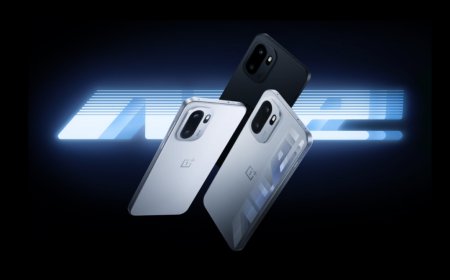










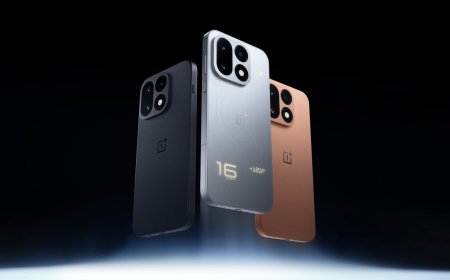
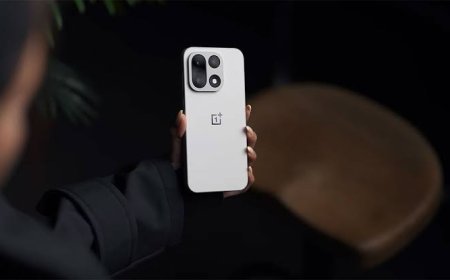
















OnePlus 16 Display Specs Confirmed With 185Hz Gaming Refresh Rate
OnePlus has confirmed key display specifications for the upcoming OnePlus 16, including a BOE X4 LTPO OLED panel, 1.5K resolution, a 165Hz refresh rate for everyday use and up to 185Hz in supported games. The flagship will also offer hardware-level brightness as low as 1 nit and enhanced eye-care features, positioning its display as a major attraction for mobile gaming and smooth everyday scrolling.
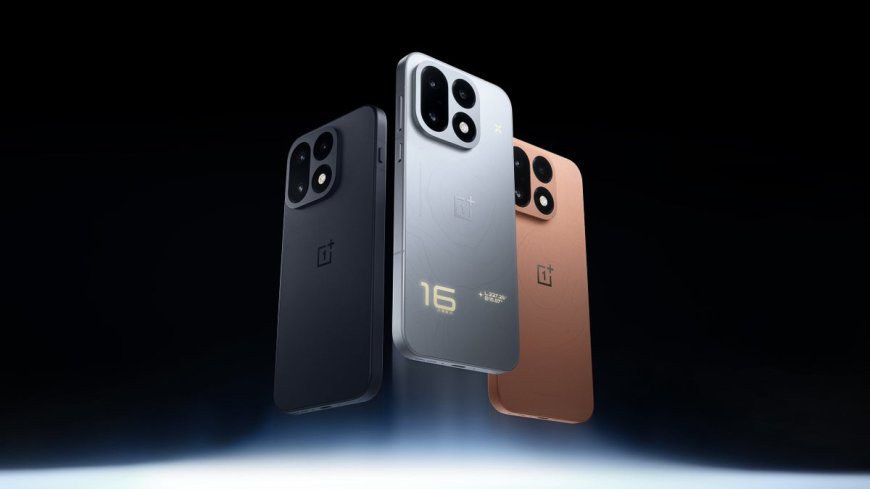
OnePlus 16 Display Specs Confirmed With 185Hz Gaming Support
OnePlus is preparing to introduce its next flagship smartphone, and the display is emerging as one of the OnePlus 16's biggest selling points. The company has confirmed a BOE X4 display with a system-wide refresh rate of 165Hz, while compatible games will be able to take advantage of a higher refresh rate of up to 185Hz.
The combination could make the OnePlus 16 particularly appealing to mobile gamers who value smooth animations, responsive controls and fast-paced gameplay. However, there is an important distinction between the phone's standard refresh rate and its higher gaming capability: 185Hz support does not mean every app or game will automatically run at that rate.
With the Chinese launch scheduled for October 12, 2026, attention is now turning to the display's practical advantages, supported games and the phone's eventual availability outside China.
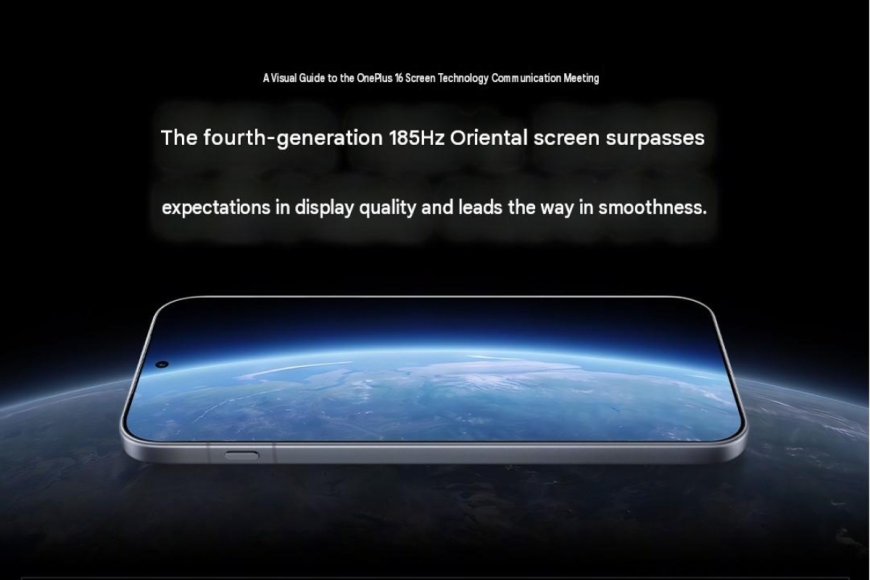
OnePlus 16 Display Specifications: What Is Confirmed?
The OnePlus 16 will use a BOE-developed X4 display panel, according to recent company teasers reported by technology publications. The most notable feature is its support for a 165Hz refresh rate across the system, alongside a gaming mode capable of reaching 185Hz in compatible titles.
These figures put the display at the centre of OnePlus's performance-focused approach. A higher refresh rate allows the screen to update more frequently, potentially making motion appear smoother when the hardware and software can maintain the required frame rate.
The key details confirmed or reported so far are:
- Display panel: BOE X4
- System-wide refresh rate: Up to 165Hz
- Maximum gaming refresh rate: Up to 185Hz in supported games
- Gaming support: Dedicated technologies designed to improve high-frame-rate gameplay
- Launch market: China, with the launch scheduled for October 12, 2026
The exact display size, resolution, peak brightness, HDR capabilities and protective glass specifications should not be treated as confirmed solely on the basis of these refresh-rate announcements.
What Does a 185Hz Display Mean for Mobile Gaming?
Refresh rate and frame rate are closely related, but they are not the same thing. Refresh rate describes how often a display can update its image, while frame rate measures how many frames a game or application actually renders each second.
At 185Hz, a display can theoretically refresh approximately 185 times per second. That corresponds to a refresh interval of around 5.4 milliseconds, compared with approximately 6.1 milliseconds at 165Hz and 8.3 milliseconds at 120Hz.
The difference may help make fast-moving objects look smoother and give players more visual updates during competitive gameplay. However, the benefit depends on whether a game supports the higher frame rate and whether the phone can sustain it under real-world conditions.
A 185Hz panel alone does not guarantee better reaction times, higher competitive performance or a consistently smoother experience. Processor performance, thermal management, touch response, game optimisation and network conditions all contribute to the final result.
For casual users, the improvement may be less noticeable than it is for people who regularly play fast-paced mobile games. Scrolling through social media and navigating menus can already feel smooth at lower refresh rates, so the additional headroom is most valuable when applications can use it effectively.
BOE X4 Panel and OnePlus Gaming Technology
The BOE X4 panel is another important part of the announcement. OnePlus is pairing the display with dedicated gaming technologies intended to support its higher refresh-rate experience.
The company has previously highlighted its Wind Chaser Gaming Core and an E-Sports Triple Chipset system. These technologies are designed to support different aspects of gameplay, including performance optimisation, connectivity and display-related processing.
That matters because pushing a smartphone towards 185 frames per second involves more than upgrading the screen. The processor must render frames quickly enough, the software must support the required output, and the device must manage heat and power consumption without excessive performance fluctuations.
OnePlus has also discussed working with game developers to enable native 185fps support in selected titles. This means availability will depend partly on individual games rather than the display alone.
The full list of compatible games and the conditions required to activate the highest refresh rate should be checked once OnePlus publishes the final software and compatibility details.
OnePlus 16 vs OnePlus 15: What Has Changed?
The OnePlus 15 already introduced a 165Hz display, making the next model's system-wide support and higher gaming ceiling the more interesting developments.
| Feature | OnePlus 15 | OnePlus 16 |
|---|---|---|
| Display refresh rate | 165Hz | 165Hz system-wide |
| Maximum gaming refresh rate | 165Hz | Up to 185Hz in supported games |
| Display generation | Previous-generation panel | BOE X4 |
| High-frame-rate gaming | Dependent on supported software and games | Expanded support is planned for compatible titles |
The main difference is not simply the number on the specification sheet. OnePlus is attempting to make high refresh rates more useful across the system while offering an additional performance ceiling for compatible games.
For people who already own the OnePlus 15, the display upgrade alone may not justify replacing the phone. Its practical value will depend on the games they play, the responsiveness of the new device and the extent of the improvements in other hardware components.
For buyers considering a new flagship, the OnePlus 16 could be worth watching, particularly if its higher refresh rate is accompanied by effective cooling, reliable sustained performance and good battery management.
Battery Life and Heat Remain Important Questions
A higher refresh rate can increase power consumption, although the actual impact depends on the display technology, refresh-rate management, workload and software optimisation.
The OnePlus 16 will therefore need to balance its high-refresh-rate capabilities with everyday battery life. A system that automatically reduces the refresh rate when full speed is unnecessary can help avoid wasting power during less demanding tasks.
Recent reports have also highlighted a 9,000mAh battery and fast charging capabilities for the upcoming phone. Those details should be distinguished from the display announcement and verified against the final specifications and launch information.
Thermal performance will be equally important. Sustaining a high frame rate during a long gaming session can generate considerable heat, potentially causing the processor to reduce performance. Independent testing will be needed to establish whether the phone can maintain its advertised gaming capabilities over extended periods.
OnePlus 16 Launch Date, Price and Availability
OnePlus has scheduled the OnePlus 16's Chinese launch for October 12, 2026. The company has been revealing selected specifications ahead of the event, with gaming performance and display technology receiving particular attention.
However, the Chinese launch date does not establish when the phone will become available in India, Bangladesh, the United States or other international markets. A confirmed international release schedule and market-specific pricing should not be assumed without an official announcement.
Buyers in Bangladesh should also wait for reliable information about local availability, network compatibility, warranty coverage and the final retail price before making purchasing decisions. Pricing in China, if announced, may differ significantly from the cost of importing the phone or purchasing it through local retailers.
The same caution applies to the US market. International availability remains a separate question from the specifications confirmed for the Chinese model.
Is the OnePlus 16 Worth Waiting For?
The OnePlus 16's display looks promising on paper, particularly for users who want a flagship phone built around high-frame-rate gaming. Its combination of 165Hz system-wide support and 185Hz gaming capability could make it a notable option in the performance-focused smartphone category.
Still, refresh rate should not be the only factor in a buying decision. Display resolution, colour accuracy, outdoor visibility, battery life, camera quality, software support and sustained performance are also important when evaluating a premium smartphone.
The launch event should provide more clarity about the complete hardware package, while independent reviews will help establish how well the display performs outside promotional demonstrations.
For now, the clearest takeaway is that OnePlus is pushing beyond the conventional 120Hz flagship experience. Whether that translates into a meaningful everyday improvement will depend on software support, game compatibility and how effectively the finished phone balances speed with power efficiency.
Sources
- Android Authority — OnePlus 16 display and battery specifications
- Gadgets 360 — OnePlus 16 launch date and 185fps gaming mode
- Notebookcheck — OnePlus 16 flagship display specifications
- Beebom Gadgets — OnePlus 16 system-wide 165Hz refresh rate announcement
What's Your Reaction?
 Like
0
Like
0
 Dislike
0
Dislike
0
 Love
0
Love
0
 Funny
0
Funny
0
 Angry
0
Angry
0
 Sad
0
Sad
0
 Wow
0
Wow
0