
































































Claude Ship: Anthropic Hands AI Agents the Keys to Pull Request Reviews and Approvals
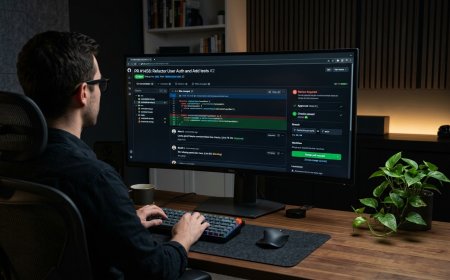
Anthropic has launched Claude Ship in beta, a set of AI agents that review GitHub pull requests, fix failing checks and merge conflicts, and approve routine changes under policies each team writes itself. Code Review is already generally available, while the new PR Steward and Claude Approvals agents are in beta for Claude Team and Enterprise customers.
Claude Ship: Anthropic Hands AI Agents the Keys to Pull Request Reviews and Approvals
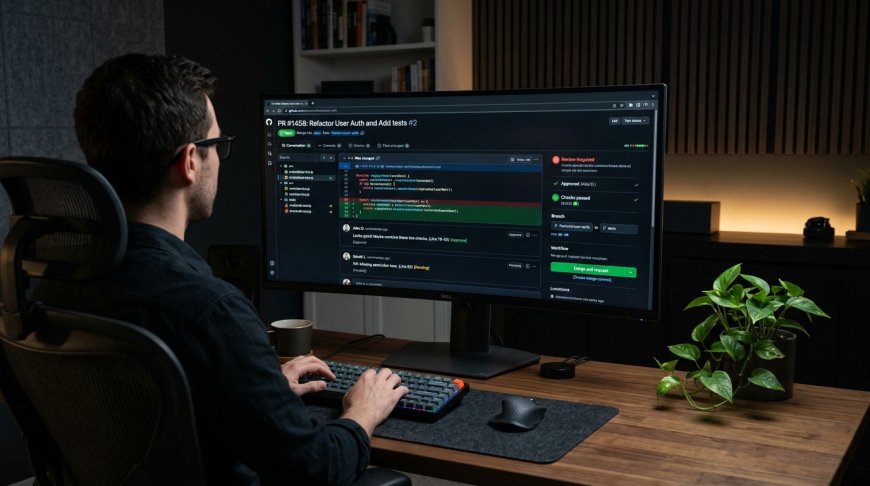
Anthropic has launched Claude Ship, a set of AI agents that take a GitHub pull request from review through fixes to an approval decision. Announced on Monday, November 23, 2026, and available the same day in beta, it is Anthropic's answer to a bottleneck its own engineers know well: AI can now write most of the code, but the work that starts after a pull request opens — the reviews, the failing checks, the wait for someone to approve it — has not kept pace.
Claude Ship does not replace the developer. It works the queue after the code is written, under rules the team itself sets, and it leaves the merge decision governed by the repository's existing branch protection and permissions. The question it raises is not whether AI can read code, but how much authority a team is willing to hand to a reviewer that never gets tired.
Three agents, one pipeline
Claude Ship is not a single agent. It is three components that hand a pull request along in sequence, and the split matters because only one of them is genuinely new in spirit.
Code Review is the established piece. Already generally available, it reads a proposed change against the surrounding codebase through several lenses, verifies its findings and posts them as inline comments ranked by severity. Teams can set the depth of review at the repository level, choosing between Quick, Standard and Deep reviews depending on how much scrutiny — and how many tokens — a change deserves.
PR Steward, new and in beta, does the unglamorous work that follows a review. It jumps in on failing continuous integration checks, resolves merge conflicts, and acts on feedback from Code Review, other review tools or human reviewers, pushing fix commits to the branch. After every push it comments explaining what it changed and how to roll it back. One limit is deliberate: PR Steward never approves or merges a change.
Claude Approvals, also new and in beta, is the one that will be argued about. It applies an approval policy the team writes in natural language and stores as a file in the repository — Anthropic describes it as a smarter CODEOWNERS file. The decision can weigh signals including Code Review findings or the team's own classifiers written in plain language. Routine changes the policy covers can be approved on their own; anything riskier is sent to a human.
Two ways in: the /ship command and repo-wide rollout
For individual developers, the way in is a new /ship command in Claude Code. When a change is ready, running /ship pushes the branch, opens the pull request, reviews the change and keeps working on feedback and failing checks to get it ready to merge. What can actually merge still depends on the developer's permissions and the repository's branch rules. The command is rolling out in Claude Code and the desktop app starting November 23.
For admins and engineering leaders, Claude Ship can be switched on for an entire repository, after which it works across the team's pull requests automatically, under settings and an approval policy the team controls. Anthropic's own rollout advice is worth following: start with one repository, pick a review level and schedule, set a monthly spend limit, and run the approval policy in observe-only mode until the team trusts it. In observe-only mode the agent reports what it would approve without affecting actual approvals — a sensible first step when, as Anthropic itself notes, AI may miss bugs, security vulnerabilities or other issues.
Availability, pricing and the fine print
Claude Ship is available on Claude Team and Enterprise plans, for repositories on GitHub. No other git hosting is supported yet. Usage is billed on tokens, so switching it on can add to an organisation's costs, depending on the number and size of pull requests covered, the review level, how often reviews run and how much corrective work PR Steward does. Administrators can set spending limits for Code Review and PR Steward. Claude Approvals itself has no base charge, though the natural-language classifiers it runs incur token charges.
Eligible Claude Enterprise organisations can claim at least $10,000 in Claude Ship credits, to be used within 30 days of claiming, with claims open until January 15, 2027. Terms apply.
There are also deployment restrictions. Claude Ship is not available to organisations using Anthropic's Zero Data Retention configuration, the HIPAA configuration, or customer-managed encryption keys.
Anthropic's own numbers — and the scepticism
Anthropic's first data point comes from its own Claude Code team, where Claude already writes most of the code. The company said merged pull requests more than doubled between June and September, while the share of pull requests subsequently reverted fell by more than 40 percent. Those are Anthropic's own figures, and the company did not say how much of the improvement was attributable to its AI code review tool rather than to other changes in how the team works.
Analysts who spoke to InfoWorld were measured about the launch. Nitish Tyagi, senior principal analyst at Gartner, called Claude Ship "not a breakthrough innovation as much as an evolution of existing AI-assisted code review capabilities", and warned that AI models are inherently non-deterministic, which makes them unsuitable as the sole quality gate. Deepika Giri, vice president of Asia/Pacific artificial intelligence platforms and advisory at IDC, recommended restricting automated approvals to low-risk changes, keeping security scans and CI checks independent of the agent, and keeping a designated human owner for every merge. Lian Jye Su, chief analyst at Omdia, noted that the integration with Claude Code could make Claude Ship particularly attractive to enterprises already using Anthropic's coding tools, though GitHub and GitLab hold an advantage in how closely their AI tools integrate with their own platforms.
The concern underneath is practical rather than philosophical. A model that generated the code and a model that reviews it can share the same blind spots, letting certain defects pass undetected. Using a different model for review does not necessarily fix that. Linters and static application security testing can still evaluate code independently of the AI reviewer's judgement, and teams will need to decide who is accountable when a change that passed automated review later causes a problem in production.
Why it matters
Claude Ship is part of a wider shift in how software gets built. Anthropic has spent the year pushing Claude deeper into developers' working lives — earlier this month it put Claude inside Google Meet calls to take notes and track action items, as reported on Innopark IT. Now the same logic reaches the pull request: if an agent writes the code, why should a human still do all the waiting around it?
The answer Anthropic gives is a policy file, not a promise. Teams decide what is routine and what is not, and the agent only approves what the policy allows. Whether that is enough will be settled the way these things always are — one repository at a time, in observe-only mode, watching what the agent would have approved and asking whether the team would have agreed.
Sources
What's Your Reaction?
 Like
0
 Dislike
0
 Love
0
 Funny
0
 Angry
0
 Sad
0
 Wow
0