

































US Freezes Green Card Applications at Microsoft and Major IT Firms
The Trump administration has suspended green card labor-certification applications involving Microsoft, Adobe and several major IT outsourcing companies, citing alleged abuse of the employment-based immigration system. Officials have also announced investigations into nine universities over potential misuse of exchange-visitor visas, raising questions about the future of skilled-worker immigration, international research and technology hiring in the United States.
US Freezes Green Card Applications at Microsoft and Major IT Firms
The Trump administration has suspended a key route to employment-based green cards for workers sponsored by Microsoft, Adobe and several major information technology outsourcing companies, escalating its campaign against what officials describe as abuse of the US immigration system.
The announcement, made on October 8, 2026, also included investigations into nine universities over alleged misuse of exchange-visitor visas. Together, the actions put technology employers, international professionals and research institutions under increased scrutiny as Washington seeks to prioritize American workers in hiring.
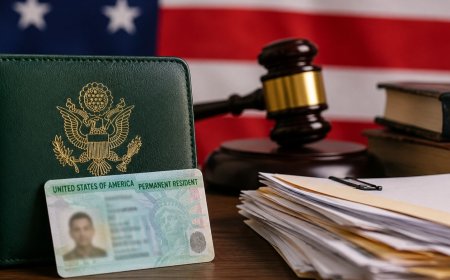
The restrictions target the Permanent Labor Certification program, commonly known as PERM. The US Department of Labor said it would stop accepting new applications and processing pending applications involving the named companies. The move does not amount to a blanket cancellation of every employee's immigration status, and the distinction is important for workers trying to understand what changes immediately.
Which Technology Companies Are Affected?
Microsoft and Adobe are among the software companies named in the suspension. The list also includes major IT services and outsourcing firms: Cognizant, Infosys, Tata Consultancy Services (TCS), Wipro, HCL Technologies and Capgemini.
These companies employ large numbers of technology professionals and operate across international markets. Their US businesses depend on a mix of locally recruited employees, international hires and workers transferred or sponsored through different immigration routes.
The suspension is significant because PERM is an important step for many employer-sponsored employment-based green card applications. It generally requires an employer to demonstrate that there are not enough qualified, available US workers for the position and that hiring the foreign worker will not adversely affect the wages and working conditions of similarly employed US workers.
The decision specifically concerns the companies identified by the administration. It should not be interpreted as a suspension of the entire US green card system or a ban on every technology company hiring foreign professionals.
Why the Trump Administration Is Targeting Microsoft
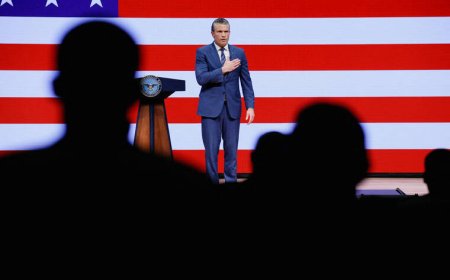
Vice President JD Vance accused Microsoft of benefiting from foreign-worker programs while reducing its American workforce. He cited layoffs of US employees alongside the company's use of H-1B visas and green cards, arguing that the immigration system should not allow employers to replace American workers with lower-paid foreign labor.
Labor Secretary Keith Sonderling said the administration was extending its scrutiny to large IT outsourcing companies. Officials argued that some employers had used the labor-certification process in ways that undermined its purpose.
These are the administration's allegations, rather than proof that every application submitted by the named companies involved fraud. The suspension nevertheless represents a concrete change in how those employers can pursue PERM certifications while the restrictions remain in place.
Microsoft disputed the suggestion that its visa filings primarily represented new overseas recruitment. In a public response reported by Al Jazeera, the company said approximately 80% of its H-1B filings were intended to extend or change the status of existing employees. It also said other filings involved people already legally present in the United States.
That distinction matters because H-1B filings can involve existing workers as well as new hires. The number of visa petitions alone does not establish whether a company has replaced a particular American employee with a foreign worker.
What the PERM Suspension Means for Foreign Tech Workers
For many skilled professionals, employment-based permanent residency is a long process rather than a single application. PERM is generally an employer-led labor-certification stage, after which an eligible case may proceed through the relevant immigration petition and green card process.
With new filings and pending applications involving the named companies suspended, some workers could face delays or lose access to that particular employer-sponsored route for as long as the restrictions remain effective.
The impact will vary depending on each person's immigration status, the stage of their case and whether another lawful immigration pathway is available. Workers who already hold H-1B status should not automatically assume that this PERM action cancels their existing temporary work authorization. H-1B and PERM are different parts of the US immigration system.
For technology professionals planning a career in the United States, the announcement adds uncertainty to an already complicated decision: whether to accept an employer-sponsored position, how long they may need to remain on temporary status and what could happen if their employer can no longer advance a permanent-residency application.
The suspension does not, by itself, establish that every affected worker must leave the country. Individual consequences depend on the person's circumstances and the immigration rules that apply to them.
Universities Face Separate Visa Investigations
The administration also announced investigations into nine universities over alleged misuse of the J-1 exchange-visitor visa program. The institutions named include Harvard University, Yale University, Stanford University, Brown University, the University of Pittsburgh, the University of California, Davis, the California Institute of Technology, Arizona State University and the Massachusetts Institute of Technology.
J-1 visas allow eligible foreign nationals to participate in approved exchange programs, including academic research, teaching and other educational activities. Universities use these programs to bring international scholars and researchers into the United States.
Officials said investigators would examine whether the program had been misused, including whether foreign workers were being brought in under arrangements that undercut US wages. They also raised questions about foreign influence, financial relationships and the protection of federally funded research.
The allegations remain subject to investigation. Being named in a probe does not, on its own, establish that a university has broken the law.
The inquiries could nevertheless create additional compliance pressure for universities that rely on international researchers. Institutions may need to respond to requests for records and demonstrate that their visa practices comply with applicable requirements.
Why the Decision Matters to the Global IT Industry
The United States is an important market for multinational IT services companies, many of which employ teams across North America, India, Europe and other regions. Their business models often combine local client-facing staff with distributed engineering, consulting, software development and support teams.
Changes to employment-based immigration can affect how companies recruit and retain specialists. If a major employer cannot advance certain green card applications, some employees may face longer periods on temporary status, while companies could have more difficulty persuading international professionals to accept or remain in US-based roles.
The wider effect will depend on how long the suspension lasts, whether affected companies can challenge or resolve the restrictions, and how the administration applies its enforcement policy.
There is also a distinction between immigration enforcement and the underlying economics of technology employment. US companies compete for people with experience in cloud infrastructure, cybersecurity, enterprise software, artificial intelligence and other specialized fields. The administration argues that tighter enforcement will protect domestic workers; critics of broad restrictions warn that limiting access to international talent can make it harder for US employers to recruit specialized skills.
Those competing considerations are likely to remain central to the debate as the restrictions develop.
What Happens Next?
The immediate question is how the Labor Department will implement the suspension and what steps the named employers can take to address the allegations or challenge the decision. The university investigations will also need to establish whether specific visa practices violated applicable rules.
For affected workers, the most important details are their current immigration status, the stage of any pending case and whether the suspension applies to their specific employer-sponsored application. Company-wide announcements cannot substitute for advice based on an individual case.
The decision is a further sign that the administration is scrutinizing employment-based immigration across both the technology sector and higher education. Its lasting impact will depend not only on the initial suspensions and investigations, but also on their duration, legal challenges and any subsequent changes to federal policy.
Sources
- Reuters — Trump administration freezes green cards for Microsoft, IT firms, probes universities
- Associated Press — Trump administration suspends Microsoft from green card program
- Al Jazeera — US suspends Microsoft and Adobe from visa programme amid fraud claims
- Reuters explainer — The skilled foreign tech workers’ green card program under attack
What's Your Reaction?
 Like
0
Like
0
 Dislike
0
Dislike
0
 Love
0
Love
0
 Funny
0
Funny
0
 Angry
0
Angry
0
 Sad
0
Sad
0
 Wow
0
Wow
0