












Tesla Renames Full Self-Driving to Assisted Driving in Europe
Tesla has renamed its Full Self-Driving (FSD) software to Tesla Assisted Driving on its European websites as the electric vehicle maker seeks broader regulatory approval across the European Union. The change follows concerns from European authorities that the previous name could mislead drivers into believing the system offers fully autonomous driving. Despite the rebranding, drivers must remain attentive and responsible for their vehicles, while an EU-wide decision on wider approval has been postponed until at least December 2026.
Tesla Renames Full Self-Driving to Assisted Driving in Europe
Tesla has changed the name of its Full Self-Driving software to Tesla Assisted Driving across several European websites, responding to regulatory concerns about what the technology's original branding suggests. The move comes as the electric vehicle manufacturer works to secure broader approval for its advanced driver-assistance system across the European Union.
The updated name is appearing on Tesla's websites in countries including Germany, Spain, the Netherlands and Slovakia. In the United States, however, Tesla continues to use the name Full Self-Driving (Supervised), highlighting a difference in how the company markets the technology across regions.
The change is more than a branding adjustment. European regulators have questioned whether the words "Full Self-Driving" could give customers an inaccurate impression of a system that still requires a human driver to monitor the road and remain ready to intervene.
Why Tesla Changed the Full Self-Driving Name
Tesla's original branding has attracted scrutiny because the system does not make its vehicles fully autonomous. Although the software can perform various driving tasks, the person behind the wheel remains responsible for the vehicle's operation.
Germany's transport ministry said Tesla had offered to adopt the new name following discussions with the company. German officials had expressed concerns that the previous wording did not accurately describe the system's capabilities.
Similar questions have emerged elsewhere in Europe. Swedish consumer protection authorities previously asked the Swedish Transport Agency to examine whether Tesla's marketing could leave customers with an incorrect understanding of its autonomous-driving capabilities.
Italian government correspondence also raised concerns that the Full Self-Driving name and associated promotional material could lead users to believe the vehicles offered unsupervised driving functions associated with higher levels of automation, particularly SAE Level 3.
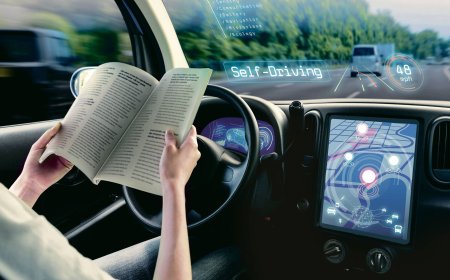
For consumers, the distinction matters. A vehicle that assists with steering, speed control and navigation is not necessarily capable of independently handling every driving situation without human supervision. The name used to describe that technology can influence how drivers understand its limitations.
What Tesla Assisted Driving Can Actually Do
The new name does not, by itself, indicate that Tesla has introduced a different driving system. The reported change concerns branding, while the software's capabilities and regulatory status remain separate issues.
According to Tesla's official documentation for Full Self-Driving (Supervised), the system can perform tasks such as changing lanes, following navigation routes, navigating around other vehicles and objects, and making turns. Available functions depend on the vehicle, software version, configuration and the regulations in the relevant market.
These capabilities can reduce the amount of routine driving input required from the person behind the wheel. They do not remove the driver's responsibility to pay attention.
Tesla explicitly states that its supervised driving features do not make a vehicle fully autonomous. Drivers must remain attentive and be prepared to take control whenever necessary.
That requirement is central to the European naming dispute. Customers may interpret "Full Self-Driving" differently from "Assisted Driving," even when a supervision warning accompanies the original name. Regulators want product descriptions to communicate the technology's actual capabilities without creating unrealistic expectations.
Tesla Is Still Seeking Wider Approval Across Europe
The rebranding comes as Tesla pursues broader authorization for its supervised driving technology in European markets. Approval is not uniform across the EU, and permission to use the system in one country does not automatically mean it is authorized throughout the entire bloc.
According to Reuters, eight EU countries already allowed the system as of October 9, 2026, with Slovakia expected to become the ninth within days. The exact scope and timing of availability remain subject to national authorization and applicable regulatory requirements.
The Netherlands has played an important role in the approval process. Its vehicle regulator, the RDW, approved the system in April 2026 and has proposed wider authorization across the European Union. Other countries have continued to examine the software and its behavior under local driving conditions.
An EU-wide vote that had been expected in October has been pushed back until at least December 2026, Reuters reported. France is among the countries conducting additional testing, while concerns about the technology's operation and compliance remain part of the wider debate.
The revised name may help address one aspect of regulators' concerns, but it does not automatically secure approval. Authorities must still consider the system's technical performance, safety implications and compliance with the rules governing vehicles and driver-assistance technology.
Why European Approval Matters to Tesla
Broader approval could make Tesla's supervised driving software available to more customers across one of the world's major automotive markets. It could also strengthen the commercial value of the company's software strategy, which increasingly places advanced driving features alongside its electric vehicles.
For Tesla, the challenge is to demonstrate that its technology can meet regulatory requirements while communicating clearly what drivers can and cannot expect from it. A wider rollout could expand access to the software, but regulatory delays limit how quickly the company can offer the same experience across European countries.
The issue also reflects a wider challenge for the automotive industry. As manufacturers introduce more sophisticated driving assistance, they must distinguish between systems that support a human driver and those that can operate autonomously under defined conditions.
Terminology matters because drivers do not interact with software labels in isolation. Marketing, product descriptions and in-car warnings all help shape their understanding of when a vehicle can manage a task and when human intervention remains essential.
What the Name Change Means for Tesla Owners
For existing and prospective Tesla owners in Europe, the immediate takeaway is that the new name should not be interpreted as evidence of fully autonomous driving or a sudden expansion of the software's legal permissions.
Customers should check which features are available for their specific vehicle and country, rather than assuming that a system offered in another market will work in the same way locally. Hardware, software versions, vehicle configuration and regulatory approval can all affect availability.
The name change also does not establish that the software has become safer or more capable. Those questions require evidence about the system's performance, not simply a different label.
Tesla's US website continues to use Full Self-Driving (Supervised), and its official support documentation emphasizes that active driver supervision remains necessary. The European rebranding therefore appears to be a response to regional regulatory concerns rather than a global renaming of the product.
What Happens Next?
The next major development will be the progress of the European approval process, including further testing and the expected EU-wide vote no earlier than December 2026. The outcome will help determine whether Tesla can expand the system's availability beyond the countries that have already authorized it.
Regulators will also need to assess whether the revised wording adequately communicates the technology's limitations. Even if the new name resolves some concerns about marketing, it cannot substitute for technical validation and compliance with applicable safety requirements.
For drivers, the most important point remains unchanged: Tesla Assisted Driving is a driver-assistance system, not permission to stop paying attention to the road. Its eventual reach across Europe will depend not only on what Tesla calls the software, but also on whether the system satisfies the requirements imposed by regulators.
Sources
What's Your Reaction?
 Like
0
Like
0
 Dislike
0
Dislike
0
 Love
0
Love
0
 Funny
0
Funny
0
 Angry
0
Angry
0
 Sad
0
Sad
0
 Wow
0
Wow
0