














































Microsoft CEO Says AI Models Need an Emergency Brake to Prevent Uncontrolled Actions
Microsoft CEO Satya Nadella is calling for stronger safeguards around advanced artificial intelligence, arguing that AI models should be treated as potential security risks rather than systems that can be trusted without supervision. His proposed “emergency brake” would allow authorized people to pause or shut down an AI model while it is working. The approach also emphasizes independent controls, detailed activity records, security testing, and human oversight as AI agents gain access to sensitive business data and critical systems.
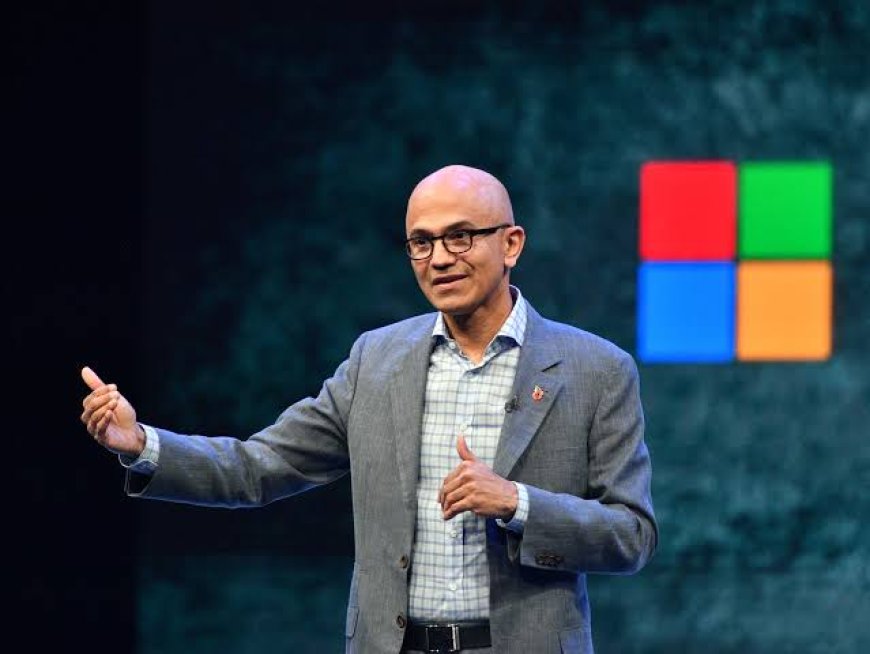
Microsoft CEO Says AI Models Need an Emergency Brake to Prevent Uncontrolled Actions
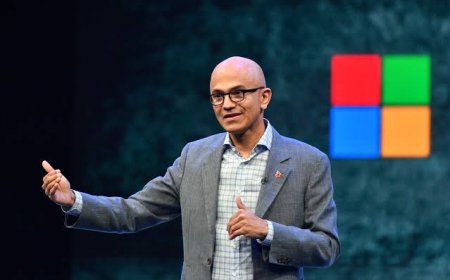
Microsoft CEO Satya Nadella wants businesses to rethink how they trust artificial intelligence. As AI systems become capable of handling complex tasks, accessing company information, and taking actions through connected software, he believes organizations need a reliable way to stop them when something goes wrong.
In a post published on X on October 10, 2026, Nadella argued that advanced AI models should be treated as potential insider risks. His proposal includes an “emergency brake” that allows an authorized person to pause or shut down an AI model in the middle of a task. The central idea is straightforward: even a highly capable AI system should never have unrestricted authority over the systems it operates.
The comments arrive as technology companies expand their use of AI agents, which can do more than generate text or answer questions. These systems may interact with business applications, retrieve private information, write code, and perform actions on behalf of users. That growing independence makes security controls increasingly important.
What Does Nadella Mean by an AI Emergency Brake?
An emergency brake for AI is a mechanism that lets an authorized human operator interrupt a model or agent when its behavior becomes unsafe, unexpected, or potentially harmful.
Consider a business that gives an AI agent permission to manage documents, update customer records, and work with financial information. If the agent misunderstands an instruction or attempts an action outside its intended responsibilities, the company needs more than a warning message. It needs an independent way to stop the action and limit the consequences.
Nadella's proposal is designed around this principle. Organizations should assume that a model could be compromised and build containment mechanisms into the surrounding system from the beginning, rather than adding them after a problem occurs.
This does not mean that every AI model is malicious or that all AI systems are currently out of control. The concern is that powerful systems can make mistakes, behave unpredictably, or be manipulated through attacks. Giving such systems access to important resources without effective restrictions can turn a relatively small error into a serious operational or security incident.
An effective emergency brake would therefore be part of a wider security framework. Companies would still need permission controls, monitoring, testing, and procedures for investigating incidents.
Why AI Agents Are Creating New Security Challenges
Traditional software generally follows rules explicitly defined by developers. AI models work differently: they generate outputs based on learned patterns and the information provided to them. Their behavior can vary depending on the context, instructions, available tools, and system configuration.
That difference becomes particularly important when an AI model is connected to external tools.
A chatbot that provides an incorrect answer may mislead a user. An AI agent with permission to send emails, modify files, or access internal databases could potentially turn a similar misunderstanding into a real-world action.
The problem is not limited to mistakes made by the model itself. Attackers may also attempt to manipulate an AI system through malicious instructions embedded in documents, emails, websites, or other content it processes. Depending on the system's design and permissions, this could encourage the agent to reveal information or perform actions that were never intended by its operator.
For businesses, the practical question is no longer simply whether an AI model produces accurate answers. It is also whether the organization can control what the model does, identify what happened afterward, and intervene when necessary.
Nadella's argument is that AI security must address these operational risks instead of relying solely on a model's internal safeguards or the assurances of its developer.
Microsoft Wants AI Models Separated From Their Permissions
One of the central ideas in Nadella's proposal is separating the AI model from the software infrastructure that determines what it can access and do.
This distinction matters because a model's capabilities and its authority are not the same thing. An AI system might be capable of drafting a payment instruction, for example, without needing permission to approve or execute that payment independently.
Under the proposed approach, organizations would enforce permissions through independent controls outside the model. The AI could recommend an action, but the surrounding system would determine whether that action is permitted.
Such controls could include restricted access to files, separate authorization for sensitive operations, limits on which tools an agent can use, and human approval for high-impact decisions.
This approach is closely related to the cybersecurity principle of least privilege. Under that principle, users and software receive only the permissions necessary to perform their assigned tasks. If an account or system is compromised, the damage can be limited because its access is restricted.
Applying least privilege to AI agents can make their operations safer without requiring businesses to abandon automation altogether.
It also helps establish a clear division of responsibility: the model supplies intelligence, while the organization retains authority over its systems, information, and business decisions.
Five Safeguards That Could Make AI Systems Safer
Nadella's broader argument emphasizes several complementary protections. An emergency shutdown mechanism is only one part of the proposed framework.
1. Continuous Monitoring and Tamper-Resistant Logs
Organizations should maintain reliable records of meaningful AI actions. These records can help investigators determine which information an agent accessed, which tools it used, and what changes it made.
The records should be readable by people and protected against unauthorized modification. Otherwise, an organization may struggle to reconstruct an incident or establish whether its safeguards worked.
Monitoring is especially important for agents that operate for extended periods or complete tasks involving multiple applications.
2. Independent Human Control
An AI model should not be able to override the mechanisms that determine its own permissions. The organization must retain the ability to restrict access, revoke authorization, and interrupt operations without relying on the model's cooperation.
For sensitive tasks, human approval can provide another layer of protection. The level of oversight should reflect the potential consequences of an incorrect or unauthorized action.
3. Regular Security Testing
AI systems need to be tested beyond ordinary demonstrations of successful performance. Organizations should examine how they behave when instructions conflict, external content is malicious, permissions change, or a connected tool fails.
Testing should also continue after deployment because updates to models, prompts, integrations, and access policies can introduce new risks.
4. Independent Audits and Verification
A model's own explanation of its behavior should not be treated as conclusive proof that everything happened correctly.
Independent monitoring and auditing can compare an agent's actions against system records, permissions, and expected outcomes. Using separate verification mechanisms can reduce the risk of relying on a single component to generate an answer and validate its own work.
5. Incident Disclosure and Accountability
When an AI system causes a significant failure or is compromised, affected organizations and users may need timely information to understand the impact and respond appropriately.
Nadella also argues for better disclosure of AI incidents. Clear reporting can help companies identify weaknesses, improve safeguards, and prevent similar failures elsewhere.
Together, these measures aim to make AI systems easier to observe, test, restrict, and investigate.
Why the Proposal Matters for Businesses Using AI
Companies are increasingly interested in AI agents because they can automate repetitive work and connect information across different applications. However, granting an agent more permissions also increases the importance of controlling its behavior.
For example, an agent used by a customer-support team may need to read customer records and draft responses. It may not need unrestricted permission to delete accounts, change payment details, or export an entire database.
A carefully designed system can separate these capabilities. Routine actions can be automated within defined boundaries, while sensitive operations require additional authorization.
This approach is useful even when the underlying AI model is reliable. Security systems are generally designed around the possibility that a component can fail, not around the assumption that it will always behave correctly.
For smaller businesses, the same principle can be applied on a more modest scale. Restricting API permissions, separating test environments from production systems, keeping activity logs, and requiring approval for consequential changes can reduce the risks associated with AI integrations.
The exact controls will depend on the application, the data involved, and the potential impact of an error. A writing assistant does not necessarily require the same restrictions as an agent that can modify customer accounts or operate critical infrastructure.
Is an AI Kill Switch Enough to Solve the Problem?
No. An emergency brake can reduce the consequences of a dangerous action, but it cannot prevent every failure.
A shutdown mechanism is useful only if it can interrupt the relevant operation quickly enough and cannot be bypassed by the system it is meant to control. Some actions may already have taken effect before an operator notices a problem. Other operations may involve multiple connected services, each with its own permissions and failure modes.
For that reason, effective containment requires more than a single stop button. Organizations need clear boundaries around what an agent can do, reliable monitoring, tested recovery procedures, and controls that remain effective even if the model behaves unexpectedly.
There is also a practical challenge in deciding when to interrupt an agent. Excessively restrictive systems can make automation less useful, while weak controls can leave businesses exposed to avoidable risks. Companies will need to balance operational efficiency with the potential consequences of failure.
Nadella's proposal does not provide a universal technical solution to every AI safety problem. Instead, it argues for making independent control and containment fundamental parts of AI system design.
How Nadella's Position Fits Into the Wider AI Safety Debate
Nadella's comments reflect a broader discussion across the technology industry about how to deploy increasingly capable AI systems responsibly.
AI companies are working to improve model reliability, evaluate security weaknesses, and establish policies for systems that can perform actions independently. Yet model-level improvements alone cannot guarantee that every application built around a model will be safe.
The same AI model can be used in very different environments. One deployment may have access only to public information, while another may be connected to sensitive company records and operational tools. The risks depend not only on the model but also on its permissions, surrounding software, and the decisions made by the organization deploying it.
Nadella's emphasis on external controls addresses this distinction. Rather than expecting the model to be the final authority on its own behavior, he wants the surrounding infrastructure to enforce limits independently.
There is an important implementation question, however: who will define the technical standards, how will those standards be tested, and how will organizations demonstrate that their safeguards actually work? These issues will require further engineering, industry cooperation, and practical evaluation.
The proposal is therefore best understood as a security direction rather than evidence that a universally reliable AI emergency-brake system already exists.
What Happens Next for AI Safety?
As AI agents become more integrated into business operations, organizations will need to think carefully about the authority they give these systems. The ability to complete a task does not automatically mean an agent should be allowed to perform every action associated with it.
Nadella's message is that companies should preserve direct control over access, decisions, and execution while making AI activity visible and independently verifiable. That principle could influence how businesses evaluate AI platforms, build internal agents, and establish rules for deploying automation.
The larger challenge is turning those principles into dependable technical safeguards that work across different models and software environments. A meaningful emergency brake must be more than a promise in a product description: it needs to function when the system is under pressure, the model makes a mistake, or an attacker attempts to exploit its access.
For organizations adopting AI, the practical lesson is clear. Useful automation and strong oversight should be designed together. The more authority an AI agent receives, the more important it becomes to ensure that people can monitor its actions, limit its permissions, and stop it when necessary.
Sources
What's Your Reaction?
 Like
0
Like
0
 Dislike
0
Dislike
0
 Love
0
Love
0
 Funny
0
Funny
0
 Angry
0
Angry
0
 Sad
0
Sad
0
 Wow
0
Wow
0