









































Singles Day 2026: AI Chatbots, Robot Toys and Token Bundles Take Over China's Biggest Shopping Festival
Singles Day 2026 put AI's selling power to the test: AI chatbots drove a growing share of purchases, AI toy sales passed 100 million yuan on Alibaba's platforms, AI companion robots sold nearly five times as many as last year, and Tmall's AI token sales jumped 700 percent. Overall sales rose 2.4 percent in the first three weeks of the festival, with the final figure due Thursday.
Singles Day 2026: AI Chatbots, Robot Toys and Token Bundles Take Over China's Biggest Shopping Festival
China's Singles Day, the world's biggest shopping festival, has always been a test of what consumers want. This year it tested something else: whether artificial intelligence can sell. The answer, judging by the first three weeks of the festival, is that it can — and that shoppers are buying AI in forms nobody expected a year ago.
The festival, which runs from mid-October to 11 November, is the annual stress test for China's e-commerce giants. Alibaba's Tmall and Taobao, JD.com and Douyin all compete for the same spending, and this year they all pushed AI hard: chatbots that recommend products, toys with AI built in, and tokens that let shoppers pay for AI services.
Chatbots are doing the selling
The clearest sign of AI's arrival is in the chatbots. On Douyin, the short-video app, about 5 percent of purchases in October were made through links shared by an AI chatbot, and for supplements the figure was over 20 percent. JD.com's Dongdong assistant had around 80 million users during the festival, helping shoppers compare prices and find deals.
The chatbots are not just answering questions. They are recommending products, negotiating on price, and in some cases completing the purchase themselves. For the platforms, that is the point: a chatbot that sells is worth far more than one that chats.
AI toys and robots are the surprise hits
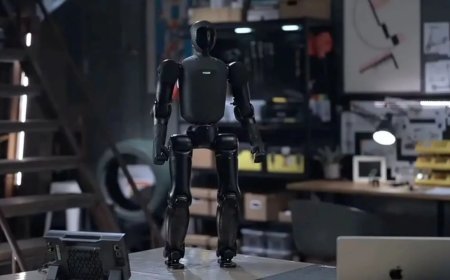
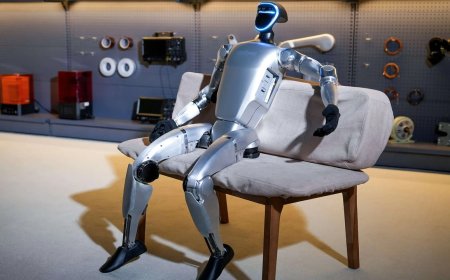
The most unexpected sellers of the festival are AI toys. Sales of AI-powered toys passed 100 million yuan on Alibaba's platforms within a year of the category appearing, and AI companion robots sold nearly five times as many units in late October as they did a year earlier. The robots — small, expressive machines that talk, listen and react — have become a genuine product category, not a novelty.
AI tokens are selling too. On Tmall, sales of tokens that give access to AI services jumped 700 percent between 15 October and 5 November. Shoppers are buying the raw material of AI — compute credits, API access, subscription tokens — alongside the usual phones, clothes and cosmetics.
The overall picture is softer
For all the AI excitement, the festival as a whole grew more slowly. Sales across the major platforms rose 2.4 percent from 7 to 31 October, according to data provider Syntun, which tracks the festival. The final figure for the whole event is due on Thursday, and it will show whether the AI surge was enough to lift the festival above last year's growth.
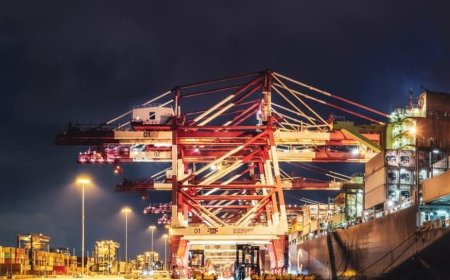
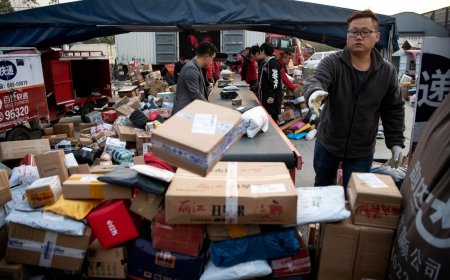
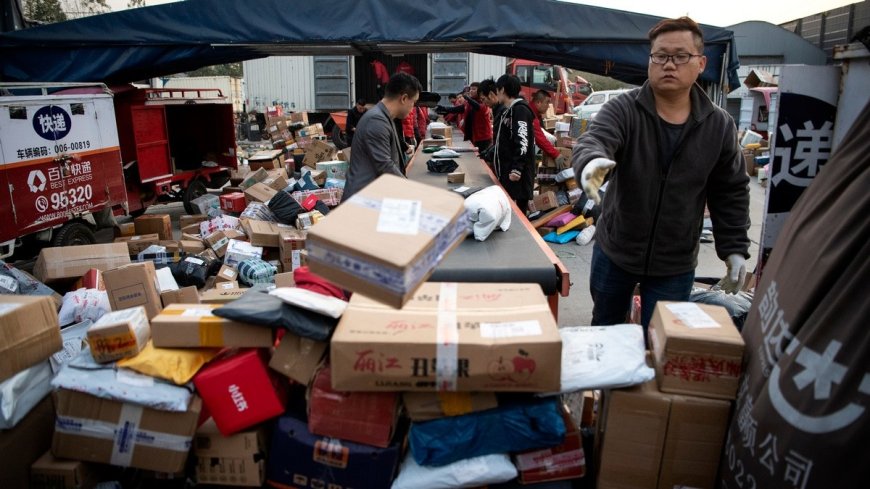
The photo at the top of this article is from an earlier Singles Day (2019), used to illustrate the parcel surge the festival generates. Note: the photo above is from an earlier Singles Day (2019), used to illustrate the parcel surge the festival generates.
Why it matters
Singles Day is where China's consumer trends are made visible, and this year the trend is AI moving from the lab to the checkout. Chatbots that sell, toys that talk and tokens that power AI services are all becoming normal purchases, and the platforms that sell them best will set the pattern for the rest of the world. The 2.4 percent overall growth is a reminder that the Chinese consumer is still cautious — but the AI categories are growing many times faster than the festival as a whole, and that gap is where the future of e-commerce is being decided.
Sources
What's Your Reaction?
 Like
0
 Dislike
0
 Love
0
 Funny
0
 Angry
0
 Sad
0
 Wow
0