






















































Google Pixel 11 Pro Review: The Best Pixel Ever Made — With One Big Weakness
Google's Pixel 11 Pro is the best Android phone the company has ever made, according to GSMArena's full review — a bigger camera upgrade than expected, a display that measured 3,283 nits, and battery life among the best of any flagship in 2026. But the same review is blunt about the weakness that has not gone away: 30W charging that takes 1 hour 24 minutes for a full charge, and a Tensor G5 chip that still is not a gaming flagship.
Google Pixel 11 Pro Review: The Best Pixel Ever Made — With One Big Weakness
Google's Pixel phones have always been about the camera and the software first, and the raw hardware second. The Pixel 11 Pro, reviewed in full by GSMArena in September 2026, does not change that formula — but it pushes both halves further than any Pixel before it. The camera upgrade is, in the review's words, "much bigger than expected". The battery is among the best of any flagship tested in 2026. And the verdict is unambiguous: this is the best Android phone Google has ever made.
There is a catch, and it is the same one Pixel owners have lived with for years. The phone charges at 30W, takes 1 hour 24 minutes to fill up, and the Tensor G5 chip — much improved as it is — still is not a gaming flagship. Whether that matters depends entirely on what you want from a phone.
Design: familiar, refined, and a much bigger camera island
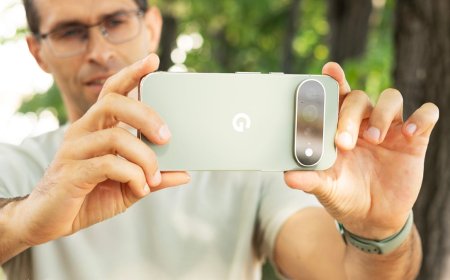
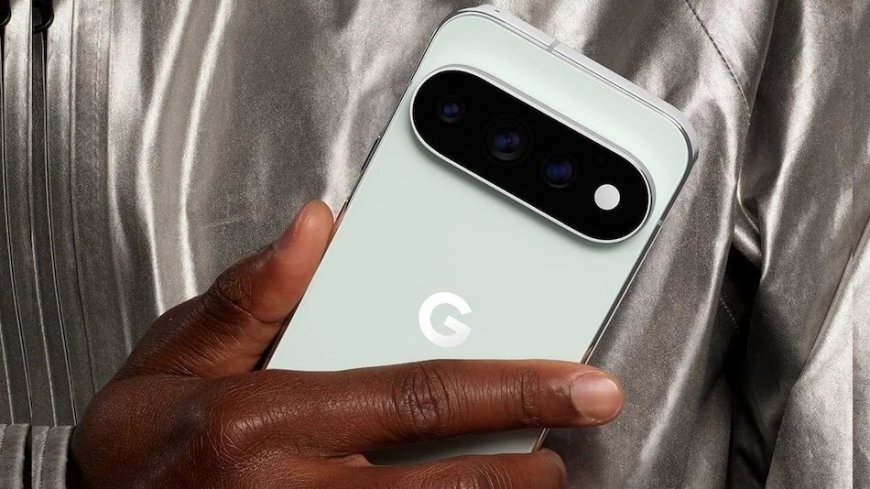
The Pixel 11 Pro looks, at a glance, like the Pixel 10 Pro. The design is essentially the same, with one obvious change: a much larger camera island, grown to fit the larger 48MP ultrawide and telephoto sensors. The horizontal pill-style camera island has been the pillar of Pixel's design since the Pixel 6 line, refined since the Pixel 9 into something more elegant — though GSMArena notes the plain silver pill "brings down the visuals" a little.
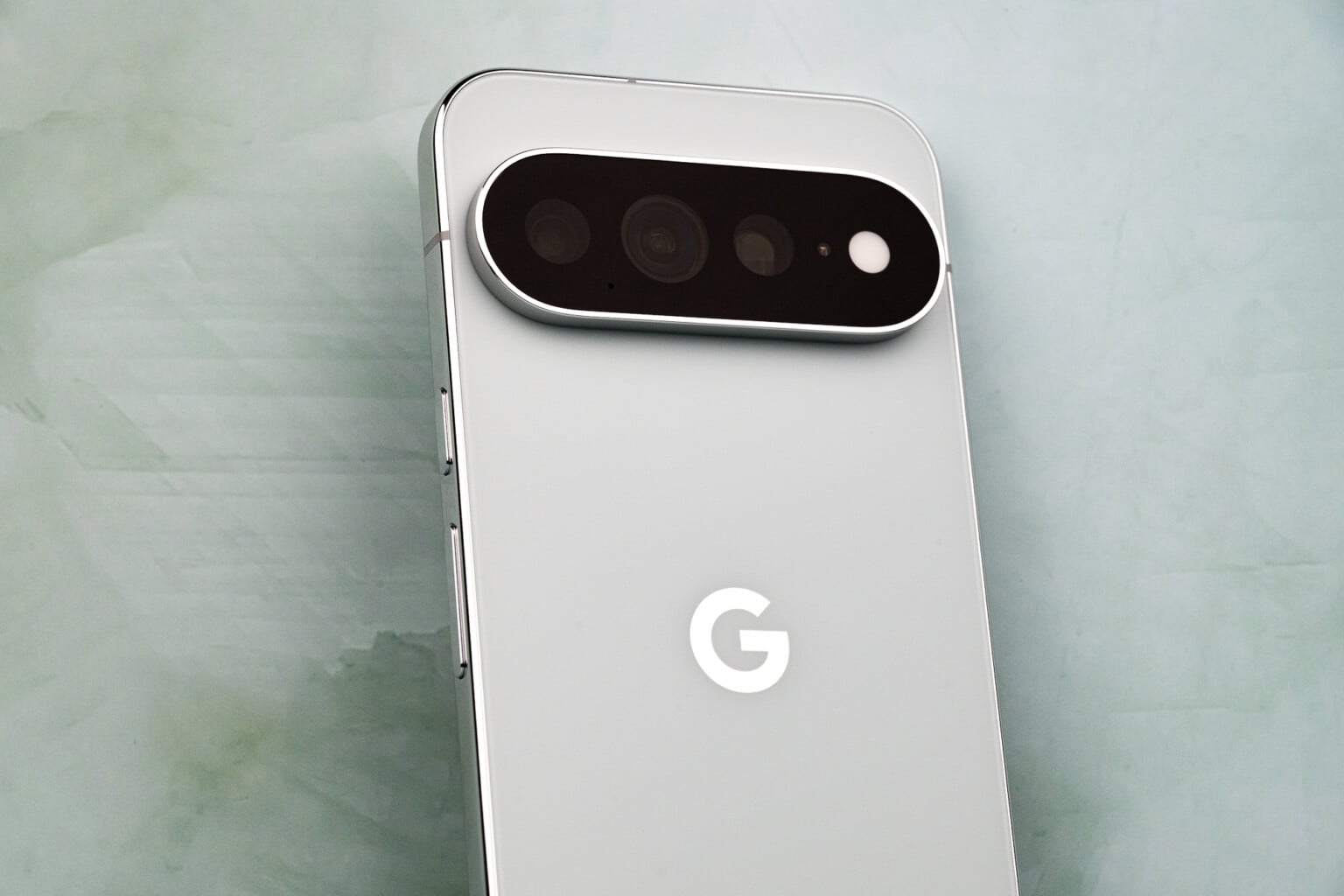
Pictured: the Pixel 11 Pro XL, which shares the Pro's design and camera hardware.
The phone is mostly flat, with rounded corners and a metal frame, and a glass back that is almost perfectly flat, fingerprint-resistant and smooth to the touch. At 152.4 x 72.1 x 8.3mm and 192g, GSMArena calls it a balanced, normal-sized flagship rather than a compact one — tall, "standard" rather than too tall, with a premium feel. The 6.3-inch display is easy to hold, the lenses sit flush with the camera bar, and the back is now smooth instead of textured.
Two details stand out. First, there is no titanium frame — while the iPhone and Samsung's modern phones have moved to titanium, Google is still using aluminum, which the review reads as a cost saving. Second, Google claims the phone is 30% more drop-durable than its predecessor, with the frame acting as a barrier against scratches and the glass panel up to 30% lighter. It is IP68 dust and water resistant, with Gorilla Glass Victus 2 front and back. Colours are Porcelain, Moonstone, Sage and Coral, plus a Google Store-exclusive Midnight.
Display: one of the brightest screens ever measured
The 6.3-inch LTPO OLED display is the brightest part of this phone in every sense. It is a 1280 x 2856 panel (1080p class) with 120Hz adaptive refresh, HDR10+ support and a claimed 3,300-nit peak brightness. GSMArena's lab tests measured 2,425 nits at manual maximum and 3,283 nits in automatic mode, with a minimum brightness of just 1.7 nits.

Pictured: the Pixel 11 Pro XL, which shares the Pro's display design.
The review calls the display exceptionally bright and says the measured peak is much brighter than most rivals — though only about 20% brighter than the Pixel 10 Pro in auto brightness, largely because that phone was already bright. The 1–120Hz refresh rate drops to 30Hz in some cases, and at the 120Hz maximum the refresh rate stays "reasonably high" and does not fall much when idle. The display is, in the review's phrase, a "halo of brightness", helped by the larger battery keeping the 120Hz refresh smooth.
Performance: Tensor G5 is a big step — just not a gaming chip
The Tensor G5 is built on a 3nm process, with an octa-core CPU (one Cortex-X4 at 3.78GHz, five Cortex-A725 at 3.05GHz, four Cortex-A520 at 2.25GHz) and a PowerVR DXT-48-1536 GPU, paired with 16GB of RAM and 256GB, 512GB or 1TB of UFS 4.0 storage. There is no microSD slot and no 3.5mm headphone jack.
In GSMArena's benchmarks, the Pixel 11 Pro scored 2,084 single-core and 6,916 multi-core in Geekbench 6, 4,934 in 3DMark Solar Bay, 6,146 in 3DMark Wild Life, 2,451 in 3DMark Steel Nomad Light, 7,956 in PCMark Work 3.0 and around 1,461,000 in AnTuTu 10. Performance has improved over the Pixel 10 Pro and is a noticeable jump from previous Tensor chips — substantially better for speed, heat and stability.
But the review is clear about the ceiling: the Tensor G5 is still not a top-tier gaming flagship. It is, in the review's words, "not a true gaming phone". The GPU is fairly weak for gaming, and raw performance still trails the best Snapdragon and Apple silicon. If gaming is your priority, this is not the phone. If it is not, the chip is fast, cool and stable enough for everything else.
Software: Android 16 and the full Gemini toolkit
The Pixel 11 Pro runs Android 16 with Google's new Material You 3 Expressive design, and Google promises 7 years of OS and security updates. The software is where the Pixel's identity lives: Gemini Nano and Gemini Live on-device, Magic Cue (AI that surfaces answers based on context, recent searches and calls inside Gmail), Pixel Screenshots, Call Assist with Call Notes, Circle to Search, Magic Eraser and Magic Editor, Recorder, Translate with live camera support and Screen Share.
Magic Cue is singled out as one of the best features, and Gemini Live — which can capture what is on screen and share the camera — runs on-device on the Pixel 11 Pro. The phone also has satellite emergency SOS, a Titan M2 security chip, an ultrasonic under-display fingerprint sensor and face unlock. Connectivity covers 5G (Sub-6 and mmWave), Wi-Fi 7, Bluetooth 6.0, NFC, UWB, dual-band GPS and USB-C 3.2, with eSIM plus a nano-SIM slot.
Battery: exceptional life, slow charging
The 5,060mAh silicon-carbon battery is the other headline of this review. GSMArena's Active Use Score came in at 17 hours 20 minutes — voice calls 31:08, web browsing 13:48, video playback 20:05, gaming 11:36 — which the review calls "exceptional" and "one of the best battery scores we've seen on any flagship", significantly better than the Pixel 10 Pro and among the top scoring phones of 2026. It is, in the review's words, "a half-day better than Pixel 10 Pro".
The charging is the opposite story. The phone charges at 30W wired (PD 3.0/PPS): 37% in 15 minutes, 69% in 30 minutes, and a full charge in about 1 hour 24 minutes. GSMArena calls charging slow compared with Chinese rivals and says the 30W ceiling is a limitation. Wireless charging is 25W on Qi2.2 magnetic charging with PixelSnap, which also enables magnetic accessories, cases and a wallet, plus reverse wireless charging. A 30W power adapter and a USB-C cable were included with the review unit — a change from the previous generation.
Camera: the upgrade that defines this phone
The camera system is a triple rear setup: a 50MP main camera (f/1.68, 24mm, 1/1.3-inch sensor, OIS), a 48MP ultrawide (f/1.7, 15mm, 120-degree field of view, macro mode with a 2.2cm minimum focus distance) and a 48MP telephoto (f/2.8, 112mm, 5x optical zoom, OIS, 10x optical-quality zoom and 100x Super Res Zoom). The front camera is 50MP with autofocus. Video goes up to 8K at 30fps on the main camera with Video Boost, plus 4K60 and 10-bit HDR video.

A daylight camera sample from DXOMark's Pixel 11 Pro XL camera test — the Pro shares the same camera hardware.
GSMArena's verdict on image quality is that it is "excellent, with improvements everywhere" versus the Pixel 10 Pro. In daylight, the main camera delivers excellent detail, sharpness and exposure, balanced colours, good dynamic range and fine detail — "much better than the Pixel 10 Pro". The 2x sensor-crop zoom is excellent, with bright and vivid colours, excellent detail and low noise. The ultrawide is a welcome upgrade from the previous 40MP, with very good detail and natural colours, though macro mode requires getting very close and the small aperture means some softness. The 5x telephoto is excellent in daylight, the 10x optical-quality zoom is excellent too, and the 100x Super Res Zoom is "quite impressive".
Selfies are "much better than the previous 42MP" front camera — more detail and sharper images, and the review calls the front camera "the most impressive upgrade of all". Low-light performance is very good, with excellent dynamic range and detail, and Night Sight works well, though there is no astrophotography mode for the ultrawide or telephoto. Portraits are excellent with natural bokeh and good skin tones, and portrait video with Cinematic Blur works in 4K30 HDR with good background blur, though there is no 4K60 portrait video.
Video is where the phone is most impressive — and most limited. 8K30 with Video Boost is, in the review's words, "the best quality video we've seen on a Pixel", with a very noticeable improvement in sharpness. But Video Boost is processed in the cloud, takes extra time, and works only on the main camera. Stabilisation is "much improved", though the review notes there is "a lot of room to improve" on wind noise. The stereo speakers, meanwhile, are "surprisingly powerful" with a warm-toned sound and a Very Good -24.4 LUFS loudness result.
Price and verdict
The Pixel 11 Pro costs $999 / €1,099 / ₹1,09,999 for the 256GB model. GSMArena rates it 4.3 out of 5. Against the competition, the review notes the Pixel 11 Pro XL — a larger 6.8-inch screen, 5,200mAh battery, 45W wired charging and 25W wireless for $1,199 — but says that unlike most recent Pixels, there is "no excuse to go for the XL Pro" this time. The Nothing Phone 3 ($800) is a better place for gaming with a more powerful chipset; the Samsung Galaxy S25 Ultra ($1,200) is a well-rounded flagship with a more complete camera system; the Apple iPhone 17 Pro ($1,099) is better for day-to-day use with a smoother, faster OS and stronger gaming.
The review's final word is that the Pixel 11 Pro is "the best Android phone Google has ever made" and, for anyone living in Google's ecosystem, "the best Android smartphone for you" — "the phone to buy this year" for Google users, and "maybe the best Pixel we've ever had". The camera upgrade is the main draw, the battery is among the best of any flagship, and the AI features are the most complete on any Android phone. The downsides are the ones that have always been there: slow charging, a chip that is not built for gaming, and no microSD expansion. If you can live with those, this is the Pixel to buy.
Pros and cons
Pros: excellent 50MP + 48MP + 48MP cameras with improvements everywhere; ultrabright, vibrant display; great battery life with the 5,060mAh battery; 25W magnetic wireless charging with PixelSnap accessories; Gemini AI features including Magic Cue and Gemini Live; premium IP68 build with Gorilla Glass Victus 2; 7 years of updates.
Cons: slow 30W wired charging; no microSD card expansion; no 3.5mm headphone jack; a fairly weak GPU for gaming; $999 price.
Sources
What's Your Reaction?
 Like
0
 Dislike
0
 Love
0
 Funny
0
 Angry
0
 Sad
0
 Wow
0