

















































Samsung Galaxy Z Flip8 Review: Better Than the Flip7 in Every Way — But Not Worth the Upgrade
Samsung's Galaxy Z Flip8 is a slightly better phone than the Flip7 in every respect — brighter screens, a smoother hinge, a faster chip and longer battery life — and GSMArena rates it 4.3 out of 5. But the cameras are unchanged, the launch price was "steep", and the review says most buyers "would probably be happier with the Flip7".
Samsung Galaxy Z Flip8 Review: Better Than the Flip7 in Every Way — But Not Worth the Upgrade
Samsung's Galaxy Z Flip8 is a slightly better phone than the Flip7 in every respect — a bit brighter, a bit lighter, a bit faster, with a noticeably smoother hinge, a better camera experience and longer battery life. GSMArena rates it 4.3 out of 5 and calls it "one of the best clamshells on the market". But the cameras are unchanged, the launch price was "steep" — it had already dropped to as low as €870 in Germany by the time of the review — and the verdict is that most prospective buyers "would probably be happier with the Flip7".
The review lists the 256GB / 12GB model at $839.95 and £659.00, and the 512GB model at $1,399.99. The box contains only the phone, a USB-C cable and a SIM ejector — no case and no charger.
Design: virtually identical to the Flip7, with a smoother hinge
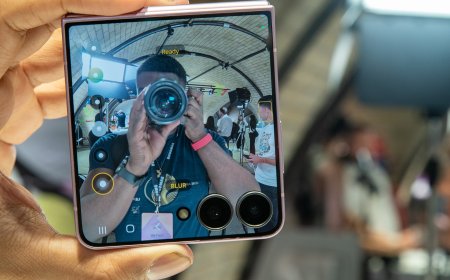
The Flip8 is virtually identical to the Flip7, with the same cover screen and camera ring design. At 166.9 x 75.4 x 6.1mm unfolded and 85.1 x 71.5 x 13.7mm folded, and 180g, it is 8g lighter and 0.4mm thinner than the Flip7. The frame is Armor Aluminum with Gorilla Glass Victus 2, and the phone is IP48 rated — protected against dust over 1mm and immersible to 1.5m for 30 minutes. Colours are graphite, cream, pink and mint. The matte lower panel of the cover screen is slippery, and the hinge-screen seam can catch a finger when the phone is folded. The refined Flex Hinge is noticeably smoother with no crunching sound, and the phone "does not feel very bendy" when unfolded. The crease is "practically invisible" in normal use, though it is felt when touching the upper-left region of the main display, and the pre-applied screen film — which feels slightly soft to the touch — already had small bubbles. The side-mounted fingerprint reader is fast and reliable. There is a single SIM plus eSIM and no microSD slot.
Display: two bright HDR screens, and the cover screen is the star
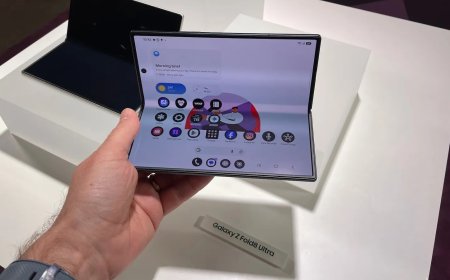
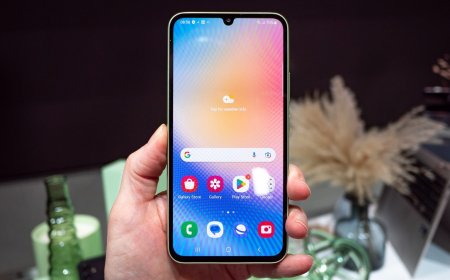
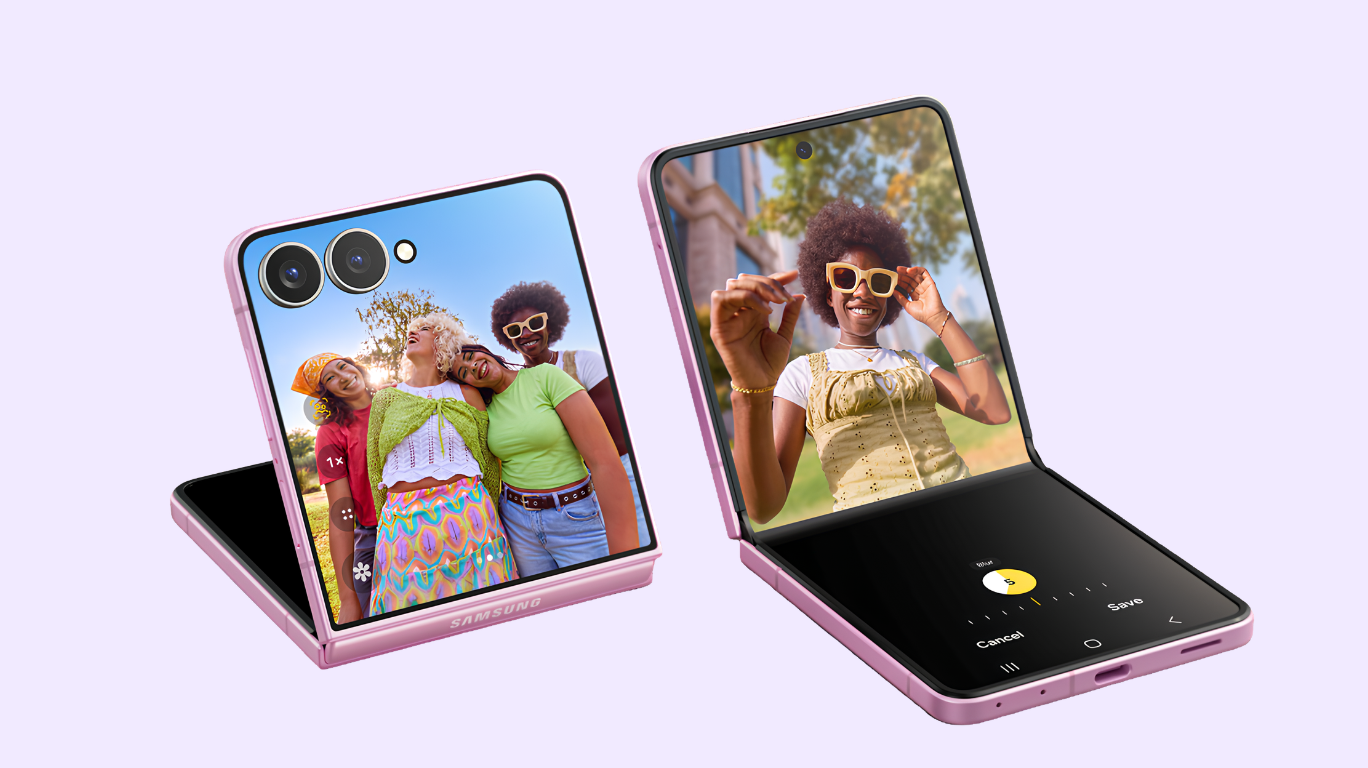
The main display is a 6.9-inch Foldable Dynamic LTPO AMOLED 2X panel, 1080 x 2520 (400ppi), with adaptive 120Hz, HDR10+ and a claimed 3,000-nit peak. The cover display is a 4.1-inch Super AMOLED, 948 x 1048 (342ppi), also 120Hz with a claimed 3,000-nit peak and Gorilla Glass Victus 2. In GSMArena's lab tests the main screen reached 1,470 nits in manual mode and a peak of 2,679 nits on a 10% HDR window, while the cover screen reached 762 nits manual, up to 1,444 nits in auto mode and a peak of 2,482 nits; minimum brightness is 1 nit on the main display and 1.1 nits on the cover. Both screens are very legible outdoors, the foldable screen is brighter than the Flip7's, and the review says the cover screen is where the Flip8 shines brightest. Standard mode locks the refresh rate at 60Hz; Adaptive drops to 60Hz when idle and rises to 120Hz on interaction, with 24/30/48/60Hz at rest for video. Natural mode follows sRGB and Vivid mode follows DCI-P3, with screen temperature adjustable in settings. The cover screen is widget-based and supports a few apps, which are not all optimised for its smaller aspect ratio.

Performance: a fast chip that throttles hard
The chipset depends on the region: the Snapdragon 8 Elite Gen 5 for Galaxy (3nm) in the US, Canada and China, and the Exynos 2600 (2nm, 10-core) elsewhere. The review unit was the Exynos 2600, so the benchmarks below are for that chip. It scored Geekbench 6 single-core 3,151, Geekbench 7 single-core 2,705, AnTuTu v11 at 2,025,010 and 3DMark Wild Life Extreme at 6,916. Against the Flip7, the Flip8 is roughly 15% faster multi-core in Geekbench 6 and about 12% in Geekbench 7, up to 35% faster in the single-core Geekbench 6 test, and up about 28% in both AnTuTu and 3DMark Wild Life Extreme. The CPU is about 17–20% faster single-core than the Snapdragon 8 Elite (for Galaxy) and around 20% faster multi-core, with the GPU about 13% ahead. But stability is poor: the CPU loses over half its peak performance in under 5 minutes of stress testing, and the GPU loses around 60–65% after 3–5 minutes in Wild Life Extreme. The phone has 12GB of RAM and 256GB or 512GB of UFS 4.0 storage.
Software: One UI 9 on Android 17, with 7 years of updates
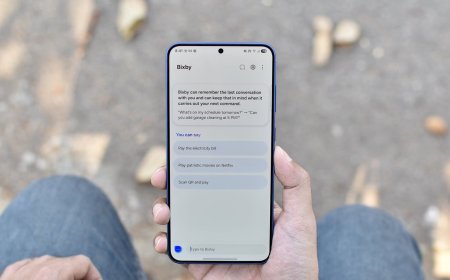
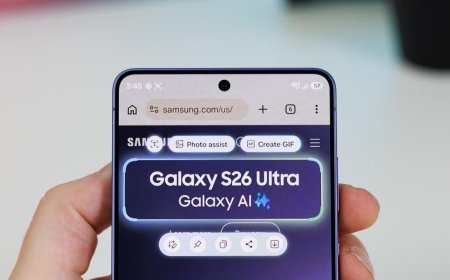
The Flip8 runs One UI 9.0 on Android 17, with up to 7 major OS updates and security patches promised. Galaxy AI highlights include Call Assist (call screening, live translate, call brief and real-time call recording), an expanded Now Brief with customisable cards (up to 3 at a time), Bixby with Perplexity (widget-based reasoning), the Driving report, My FanCam (AI auto-framing and zooming of videos), Now Nudge and Advanced Automation. Samsung DeX is supported; Bluetooth LE audio is not.
Battery: better than the Flip7, but still a small cell
The 4,300mAh battery gives an Active Use Score of 14 hours 14 minutes — an improvement over the Flip7 in all four sub-tests, bested on paper only by the Motorola Razr flagships. Charging is 25W wired: 30% in 15 minutes, 56% in 30 minutes and a full charge in 79 minutes with a Samsung 25W adapter, slightly faster than the Flip7. Wireless charging is 15W, with 4.5W reverse wireless. The hybrid stereo speakers (earpiece plus bottom-firing) are rated "Very Good" for loudness, with clean bass, clear vocals and well-defined highs.
Camera: the same setup as the Flip7 — and the reviewer wanted an upgrade
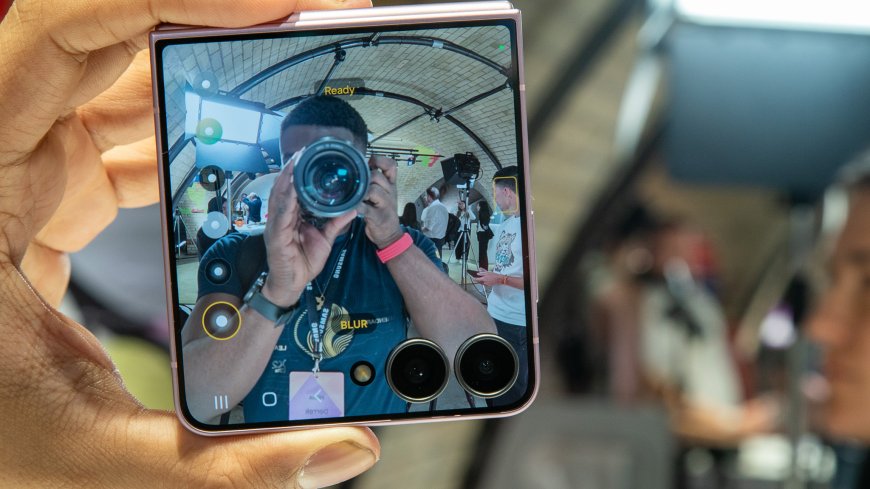
There are no hardware upgrades over the Flip7: the same 50MP main camera (Samsung ISOCELL GN3, f/1.8, OIS) with a 12MP ultrawide (fixed focus) and a 10MP internal selfie camera. Video goes up to 4K at 30/60fps on both the rear and front cameras, with HDR10+; there is no 8K. The main camera produces shallow-depth-of-field 12.5MP binned images and pleasant, never over-saturated portraits. Daylight shots have a nice amount of detail, crisp rendering of green foliage, slightly oversaturated colours, fine white balance and convincing depth of field. Low-light photos have nice punch and detail, but the Night mode is over-eager, exaggerating dark shadows. Ultrawide shots are consistent with the main camera but slightly noisier. The 2x digital zoom, cropped from the main sensor, is "sharper than it has any right to be" but still slightly artificial and oversharpened, and low-light zoom is similar but noisier. Internal selfies are "alright" — decent detail, a little soft, with artificial-looking depth of field in Portrait mode and slightly exaggerated colours. Using the rear cameras via the cover screen produces crisper, more detailed selfies with a wider field of view and a somewhat blown-out background. Video at 4K60 has good detail and decent dynamic range, with a usable ability to adjust and lock exposure mid-recording and stable HDR10+ that is slightly washed-out, though the autofocus can struggle when a subject moves rapidly. What is missing versus rivals: no telephoto, no larger sensor, no autofocus on the ultrawide, no 8K, no LOG video, and slow-motion that goes up to 1080p240fps. The reviewer would rather Samsung had upgraded the camera than the chip.
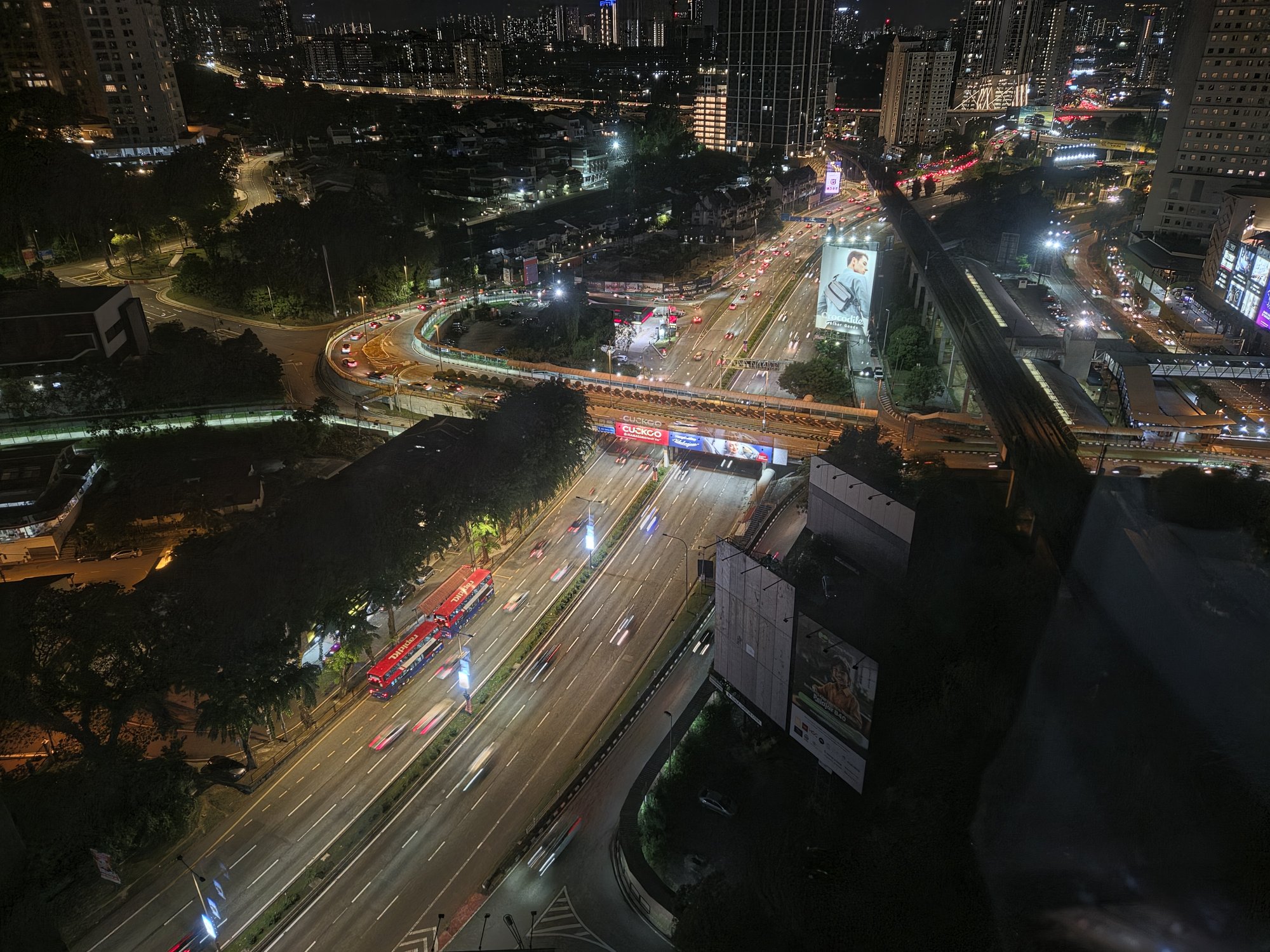
A night-mode camera sample taken with the Galaxy Z Flip8.
Price and verdict
The Galaxy Z Flip8's launch price was "steep", but it had already dropped to as low as €870 in Germany by the time of the review; the 256GB model is listed at $839.95 / £659.00. GSMArena rates it 4.3 out of 5. The Flip8 is a slightly better phone than the Flip7 in every respect — a bit brighter, a bit lighter, a bit faster, with a noticeably smoother hinge, a better camera experience and longer battery life — but the upgrade is not worth paying extra for over the Flip7. Its chronic Achilles' heel remains the weak camera, and the cover screen's potential is left unexplored. If you can afford it, it is "one of the best clamshells on the market" — but most prospective buyers "would probably be happier with the Flip7". The competition it names is the Galaxy Z Flip7 itself (now about 10% less than the Flip8 in Germany, the better value) and the Motorola Razr 60 Ultra (same chipset, higher-resolution cameras, similar battery life and "class-leading charging").
Pros and cons
Pros: durable design; IP48 dust and water resistance; two HDR LTPO displays; 7 years of OS support; capable chipset; improved battery life.
Cons: same camera setup as the Flip7; limited selfies; a cover display whose potential is not fully explored.
Sources
What's Your Reaction?
 Like
0
 Dislike
0
 Love
0
 Funny
0
 Angry
0
 Sad
0
 Wow
0