



















































Samsung Galaxy Z Fold8 Ultra Review: Thinner, Brighter and Faster — With a Telephoto That Belongs in a Mid-Range Phone
Samsung's Galaxy Z Fold8 Ultra is thinner, brighter and faster than the Fold7, with a 200MP main camera, a new 50MP ultrawide and a bigger 5,000mAh battery — and GSMArena rates it 4.6 out of 5. But the 3x telephoto is weak and the battery still trails rivals with 6,000mAh cells.
Samsung Galaxy Z Fold8 Ultra Review: Thinner, Brighter and Faster — With a Telephoto That Belongs in a Mid-Range Phone
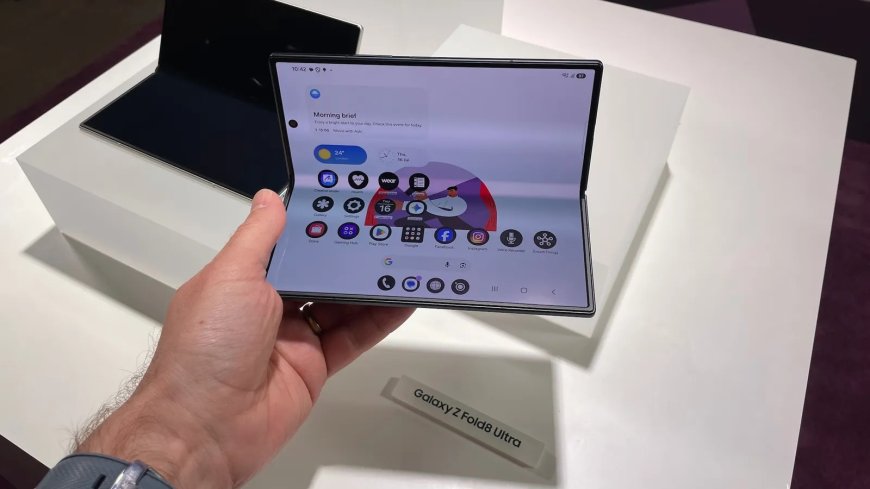
Samsung's Galaxy Z Fold8 Ultra is thinner, brighter and faster than the Fold7, with a 200MP main camera, a new 50MP ultrawide and a bigger 5,000mAh battery — and GSMArena rates it 4.6 out of 5. The new Flex Titanium display and Armor FlexHinge make the phone easier to open, the crease is "much less obvious" than on the Fold7, and charging is now 45W. But the 3x telephoto is weak, the battery still trails rivals with 6,000mAh cells, and the speakers are merely average.
The review lists the 256GB/12GB model at $2,099.99 / £1,299.00, the 512GB/12GB model at $1,919.95 / €1,999.00 and the 512GB/16GB model at £2,328.20. The box contains only quick-start guides and a USB-C to USB-C cable — no charger; a 45W Samsung charger with a PPS profile is needed to reach full charging speed.
Design: the same look, an easier hinge, a fainter crease
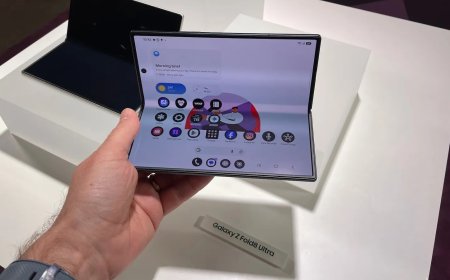
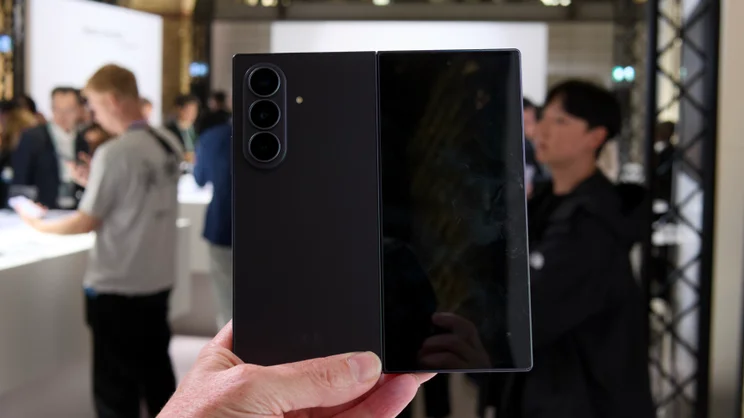
The Fold8 Ultra is visually identical to the Fold7 at first glance, only 0.1mm thinner when unfolded (4.1mm versus 4.2mm) and the same 215g weight, even though the battery grew to 5,000mAh. Folded it is 8.9mm thick. The new Flex Titanium display and Armor FlexHinge (inspired by the Z TriFold) make unfolding easier — "it requires significantly less pressure to open and the hinge is magnet-assisted" — and the Advanced Armor aluminum frame is tougher. The hinge area is unchanged from the Fold7. The foldable screen's crease is "much less obvious" than on the Fold7, with less light dispersion and a better feel — still visible, but only just. The cover screen's buttons lie flush with the frame. Side controls are a volume rocker and power/fingerprint sensor on the right side, with the SIM tray on the lower side. The phone is IP48 rated (protected against dust over 1mm and immersible to 1.5m for 30 minutes), with Gorilla Glass Victus Ceramic 3 on the cover, a plastic front on the unfolded main display, Gorilla Glass Victus 2 on the back and an Advanced Armor aluminum frame. Colours are only three: Graphite, Cream and Violet Shadow. No S Pen support is mentioned in the review.
Display: two bright screens, a higher-resolution main panel
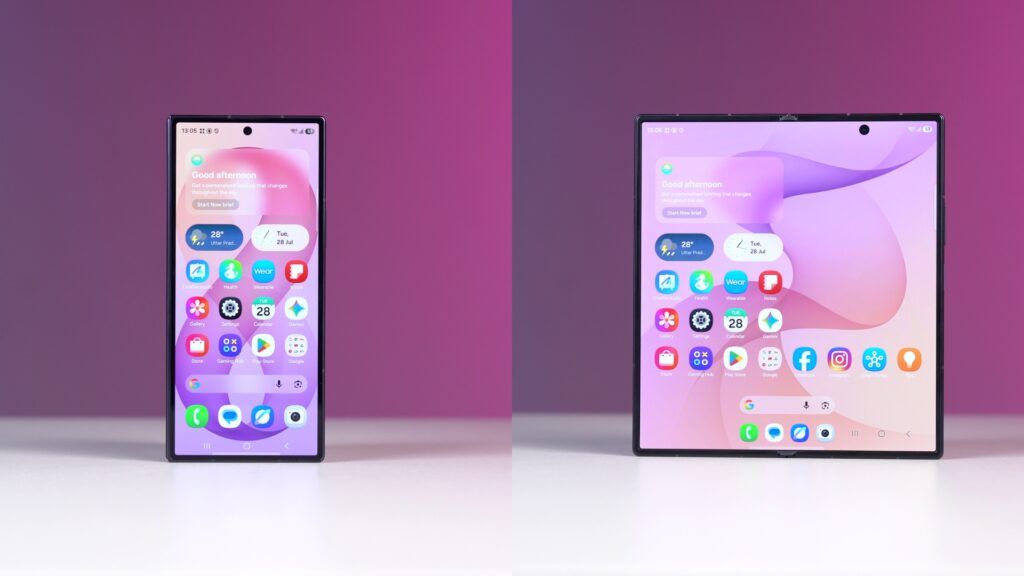
The main display is an 8.0-inch Foldable Dynamic LTPO AMOLED 2X panel, 2256 x 2504 (422ppi), with a 120Hz refresh rate, HDR10+ and a claimed 3,000-nit peak, built on the new Flex Titanium panel with an anti-glare coating. The cover display is a 6.5-inch Dynamic LTPO AMOLED 2X, 1080 x 2520 (422ppi), also 120Hz, with Gorilla Glass Ceramic 3. In GSMArena's lab tests the main screen measured about 1,400 nits in Auto mode (1,432 nits on a 75% fill) and the cover screen 1,439 nits; on a 10% white patch the screens "comfortably reach 3,000 nits". Minimum brightness is 1 nit on the main display and 1.1 nits on the cover. The main screen is slightly less bright on a 75% fill than the vanilla Fold8's 1,525 nits. Standard mode locks the refresh rate at 60Hz; Adaptive mode drops to 1Hz on the main display and 24Hz on the cover when idle, and rises to 120Hz during interaction. Both screens support HDR10+, still no Dolby Vision. Colour accuracy is strong: Natural mode follows sRGB with an average deltaE of 1, while Vivid/Wide mode oversaturates with an average deltaE of 4.5 on the main screen and 4.3 on the cover. The review says the displays make a noticeable difference in usability versus the Fold7 — the less-noticeable crease and the flatter, more comfortable cover display.
Performance: the fastest foldable chip, with heavy throttling
The Snapdragon 8 Elite Gen 5 for Galaxy is a 3nm chip with 2x Oryon V3 Phoenix L cores at 4.74GHz. Benchmarks: Geekbench 6 single-core 3,695 (3,644 folded), AnTuTu at 2,160,310 (2,178,986 folded) and 3DMark Wild Life Extreme at 6,772 (6,584 folded). Sustained performance is "far from great" — throttling is similar to the Fold8 and S26 Ultra, though the device doesn't feel hot except around the camera module. The phone comes with 256GB/12GB, 512GB/12GB, 512GB/16GB or 1TB/16GB of UFS 4.x storage, and runs One UI 9.0 on Android 17 with up to 7 major OS upgrades promised.
Software: One UI 9 and Galaxy AI
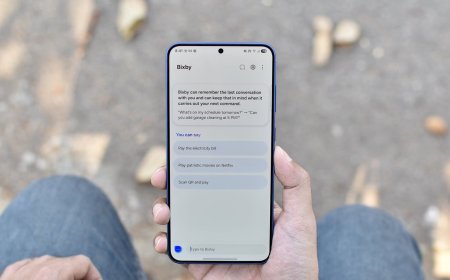
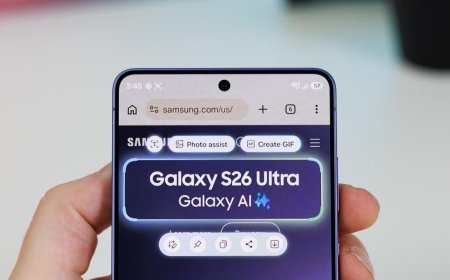
The Fold8 Ultra runs One UI 9.0 on Android 17. Galaxy AI features include Call Assist with Call brief, Now Brief with customisable cards (up to 3 at a time), Bixby with Perplexity widgets, the Driving report, My FanCam, Now Nudge, Advanced Automation and Gemini Notebook. Samsung DeX is supported, as is UWB, Wi-Fi 7, Bluetooth 6.0 with aptX HD, NFC and 5G with eSIM.
Battery: bigger, faster to charge — still behind the 6,000mAh rivals
The 5,000mAh battery gives an Active Use Score of 13 hours 6 minutes unfolded (calls 37:16, web 11:53, video 24:36, gaming 9:31) and 15 hours 40 minutes with the cover screen (folded). The review notes a notable jump over the Fold7 (12:55h folded) in overall Active Use and in screen-on tests like web browsing and video, but the Fold8 Ultra still lags competitors with 6,000mAh-plus batteries — the Honor Magic V6 at 18:20h, the Oppo Find N6 at 18:36h and the Motorola Razr Fold at 20:17h — while the vanilla Fold8 posts 17:21h folded with a smaller battery and a smaller screen. Charging is 45W wired PD+PPS, up from 25W on the Fold7: 71% in 30 minutes in the lab (folded) versus the Fold7's 53%, and the full 1→100% charge is "cut by about half an hour" versus the Fold7. Wireless charging is 20W Qi 2.2, but the phone has no built-in magnets, so a magnetic case is required to reach 20W — the bundled magnetic case is included. Battery protection offers an 80/85/90% charge limit or turning off fast charging. The speakers measured -29.3 LUFS, rated "Average" — a tad below the Fold7 and quieter than most competitors, with the tuning "modified" from the Fold7.
Camera: a top-tier main camera, a great new ultrawide — and a mid-tier telephoto
The camera hardware is inherited from the Fold7 except for the ultrawide, upgraded to a 50MP Sony IMX 858 — the same sensor as the Galaxy S26 Ultra's ultrawide. The rear setup is a 200MP main camera (Samsung HP2, f/1.7, 1/1.3", OIS) with the 50MP ultrawide (f/1.9, 120°) and a 10MP 3x telephoto (f/2.4, 69mm, OIS), plus 10MP internal and 10MP cover selfie cameras. Video goes up to 8K30 on the rear, 4K30/60/120 and 1080p up to 240fps, with 10-bit HDR and HDR10+, and 4K60 on the front cameras.
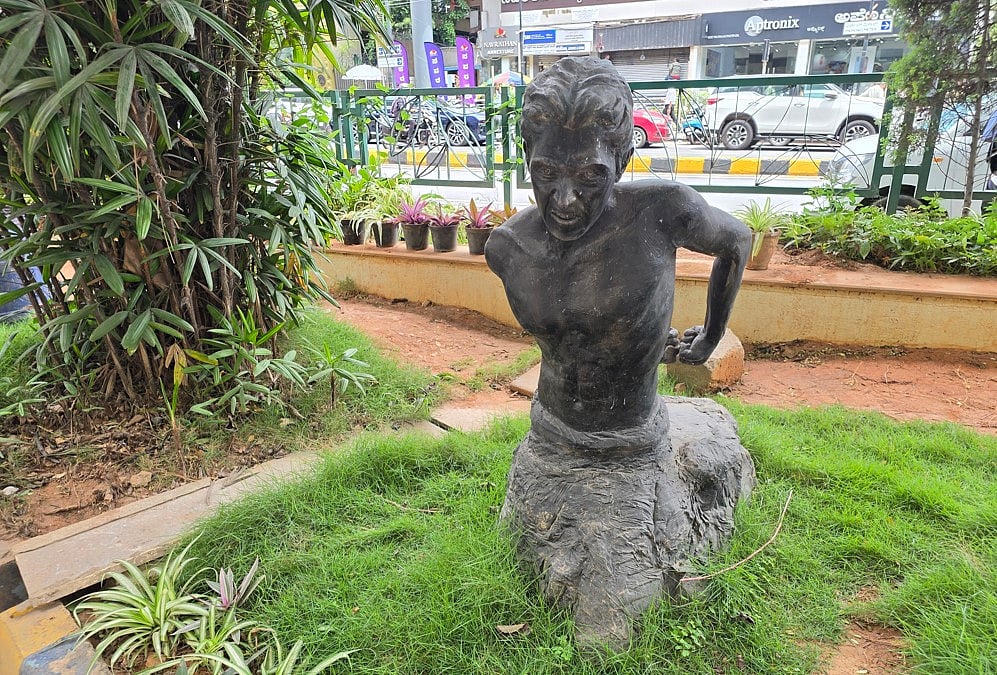
A daylight camera sample taken with the Galaxy Z Fold8 Ultra.
In daylight, the 200MP main camera is "excellent" — "in the top tier of smartphones" — with great detail, good dynamic range and confident low-light handling. The 200MP mode has slightly more detail but isn't worth the megabytes; the 50MP mode is "almost identical" and the default. The 2x crop zoom is underwhelming ("barely passable"). The 10MP 3x telephoto is "strongly sharpened with visible halos" and "belongs in a mid-tier A-series Galaxy". The ultrawide is sharp and detailed indoors and out, and the best for close-ups (with Focus Enhancer in 1x macro) — "a breath of fresh air" after the Fold7's 12MP ultrawide. Selfies are very good from the cover camera, wider from the internal camera and best from the rear cameras; low-light selfies are soft on all cameras. In low light, full-auto images are soft and noisy; Night mode (via Camera Assistant) improves clarity but can turn the sky purple; the telephoto is dim and gloomy in auto but livens up with Night mode; the ultrawide is competent in the dark and "pretty solid". The review's photo verdict: the new ultrawide is a breath of fresh air and does well day and night, and is best for close-ups (up to a point); the 3x telephoto belongs in a mid-tier A-series Galaxy; the main camera is solid at its native focal length, a compromise at 2x, and not impressive in low light; selfies are very good. Video carries the full Samsung feature set — Pro mode, 4K60 on all five cameras, 8K30 on the main and ultrawide, Pro 4K at 24/25/48/50/100/120fps, 8K24, h.265 by default (h.264 optional), the APV codec (about 1.5GB/min at 1080p30), 10-bit HDR10+, Log with LUTs, zebras/false colour, mic directionality, stabilisation on all modes and cameras, and Horizon lock. Video quality: the main and ultrawide are very good in daylight 4K, the telephoto behind; at night the telephoto is soft and noisy while the main and ultrawide are quite good, with the ultrawide "hard to beat" on a foldable; stabilisation is very good, though panning is slightly abrupt.
Price and verdict
The Galaxy Z Fold8 Ultra starts at $2,099.99 / £1,299.00 for 256GB/12GB. GSMArena rates it 4.6 out of 5 — the highest rating in this review batch. On the evidence in the review, it is a strong flagship foldable: a top-tier main camera, a much-improved ultrawide, brighter and more usable displays, a smoother hinge and much faster charging than the Fold7. Its weaknesses are equally clear: the 3x telephoto is the weakest camera in the set, the 2x crop zoom is poor, battery life still trails the 6,000mAh foldable rivals, the speakers are merely average, and there is no S Pen support and no built-in magnets for wireless charging. The review's final verdict page (page 6) could not be loaded, so its closing verdict is not quoted here — the assessment above is drawn from the review's first five pages.
Strengths and weaknesses
Strengths: top-tier 200MP main camera; new 50MP ultrawide, best for close-ups; brighter displays with a much less obvious crease; smoother, magnet-assisted hinge; 45W charging; bigger 5,000mAh battery; 7 years of OS upgrades.
Weaknesses: 3x telephoto belongs in a mid-tier phone; 2x crop zoom barely passable; battery life behind 6,000mAh rivals; average speakers; no S Pen support; no built-in magnets for 20W wireless charging.
Sources
What's Your Reaction?
 Like
0
 Dislike
0
 Love
0
 Funny
0
 Angry
0
 Sad
0
 Wow
0