
















































Google Pixel 11 Pro XL Review: The Best Pixel So Far — and Still Just Another Iteration
Google's Pixel 11 Pro XL is the best Pixel so far — a brighter 6.8-inch display, the Tensor G6's big CPU jump, the best battery life of any Pixel ever and 7 years of updates. GSMArena rates it 4.4 out of 5. But graphics performance is unchanged, and the review calls it "yet another iteration" with no truly new ideas.
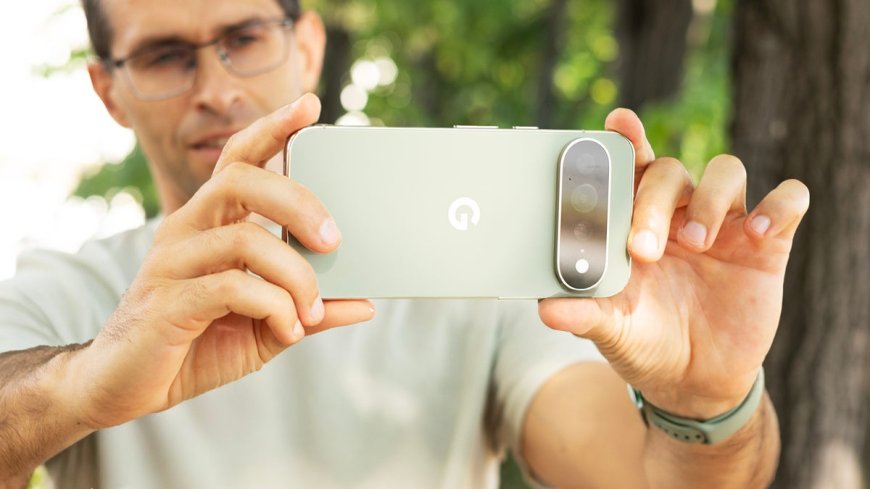
Google Pixel 11 Pro XL Review: The Best Pixel So Far — and Still Just Another Iteration
Google's Pixel 11 Pro XL is a solid all-round flagship and the best Pixel so far — the design is premium, the display is class-leading in brightness, battery life is finally on par with Samsung and Apple, charging is faster, the speakers are great, Android 17 with Pixel-exclusive smarts comes with 7 years of updates, and camera quality is very good across the board. GSMArena rates it 4.4 out of 5. But it is "yet another iteration" with no truly new ideas: graphics performance is unchanged, the telephoto can't focus close, and the new HiLight feature is very limited. The review calls the phone "expensive, but not unreasonable".
The phone starts at €1,399 for 12GB/256GB, €1,529 for 16GB/512GB and €1,789 for 16GB/1TB — €50 cheaper than the Pixel 10 Pro XL at launch. Listings shown in the review: 256GB at $1,234.99 / £1,059.00, 512GB at $1,375.00 / £1,189.00 and 1TB at $1,649.00 / £1,429.00.
Design: virtually unchanged — and premium for it
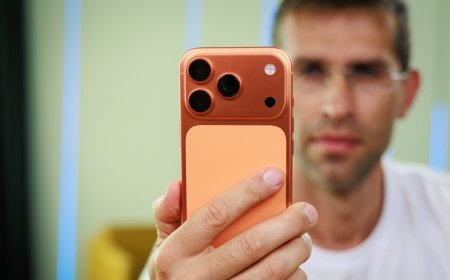
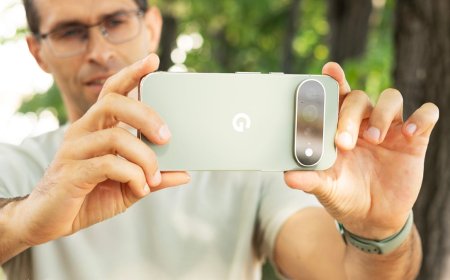
The design is virtually unchanged from the Pixel 10 Pro XL — the same dimensions (162.7 x 76.5 x 8.5mm) and weight (226g), the same camera-bar look, now with the camera bar covered by a single piece of glass running edge to edge, and a new scratch-resistant glass coating. The matte back stays free of fingerprints and grease, while the polished metal frame (matte on the Obsidian colour) is prone to fingerprints. Colours are Fog (the review unit), Olive, Canyon and Obsidian. The phone is IP68 rated, with Gorilla Glass Victus 2 on the front and back and an aluminium frame. The 42MP front camera sits in a display hole cutout, and the speaker setup uses a bottom loudspeaker with the earpiece amplified for stereo. The ultrasonic in-display fingerprint sensor is as fast as the Pixel 10 Pro XL's and about twice as fast as the Pixel 10 Pro's.

Display: the brightest screen on a Pixel yet
The 6.8-inch LTPO OLED display is a 1344 x 2992 panel with a 120Hz adaptive refresh rate (1–120Hz) and HDR10+ support, with a claimed maximum automatic brightness of 2,400 nits and a 3,600-nit peak. In GSMArena's lab tests it measured 2,333 nits maximum automatic brightness, a 3,118-nit peak on a 10% white window and a 1.7-nit minimum (with an Extra Dim mode that goes lower). The review calls it the brightest display on a Pixel yet, though not the brightest on paper in the lab chart. Colour modes are Natural (sRGB-accurate, average deltaE 1.3), Adaptive (wide gamut, average deltaE 4.7, "not excellent, but not bad") and Enhanced/Vivid. The review notes the display "can't actually show HDR10+ or Dolby Vision when playing movies" — it supports HDR10+ in principle, but the peak brightness figures were measured in the lab.
Performance: a big CPU jump, a flat GPU
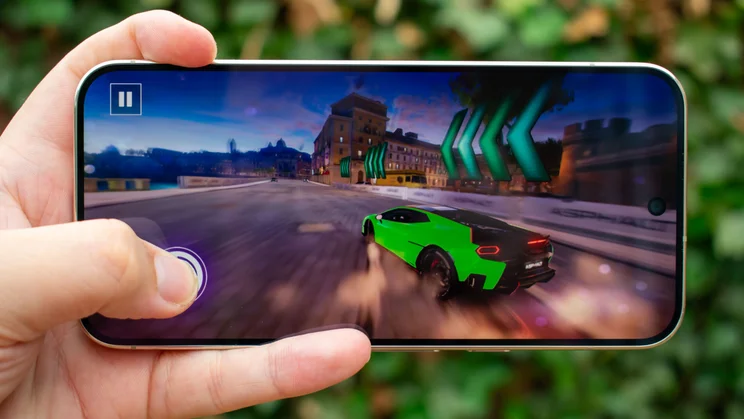
The Tensor G6 is a 3nm TSMC chip with a 7-core CPU (1x 4.1GHz C1-Ultra + 4x 3.4GHz C1-Pro + 2x 2.65GHz C1-Pro) and an Imagination IMG CXTP-48-1536 GPU (Series C, no hardware ray tracing). The CPU is one of the biggest jumps in Pixel history: Geekbench 6 single-core 2,724 (+23% versus the Pixel 10 Pro XL) and multi-core 7,847 (+18%), Geekbench 7 single-core 2,365, and AnTuTu v11 at 1,610,941. But 3DMark Wild Life Extreme came in at 3,532 — essentially unchanged from the Pixel 10 Pro XL's 3,529 — so graphics performance is flat, with 3DMark stress-test stability of about 71%. In a post-review update (5 September), the reviewers retested after a software update and found "no sign of the poor CPU performance" — CPU throttling improved and gaming improved across the board: Genshin Impact runs fine on max settings, Diablo Immortal fine, Asphalt Legends with no stutter, PUBG Mobile HD fine, Roblox and Brawl Stars fine. Fortnite "hardly works" on the highest settings and Alien: Isolation is incompatible. The review's conclusion is that the Tensor G6's CPU is a big step up, the GPU is not, and the phone is still not gaming-oriented. The phone has 12GB of RAM with 256GB of storage, or 16GB with 512GB/1TB, all UFS 4.0.
Software: Android 17 with Pixel-exclusive smarts
The phone runs Android 17, with 7 major OS upgrades and 7 years of security patches promised. Pixel-exclusive features include Magic Cue (proactive contextual suggestions), Pixel Journal (an on-device journaling app), HiLight (an RGB LED light around the flash that lights up for Gemini hands-free interactions or calls from favourite contacts — but it cannot be used for notifications, and it sits on the back of the phone so you can't see it while using the device), Quick Share now compatible with Apple's AirDrop, separate Wi-Fi and Mobile Data toggles, resizable toggles, floating-window bubbles, Screen Reaction, Magic Capture and Gemini cross-app actions. The review calls the overall experience "mature and stable" — close to the best Android experience on the market.
Battery: the best battery life of any Pixel ever
The 5,115mAh battery — slightly smaller than the Pixel 10 Pro XL's 5,200mAh — gives an Active Use Score of 16 hours 45 minutes (calls 24:45, web 15:31, video 25:34, gaming 9:44), the best battery life of any Pixel ever, about 20% better than the Pixel 10 Pro XL, though still behind the Galaxy S26 Ultra and iPhone 17 Pro Max. The review credits Tensor G6 efficiency gains and the 5,115mAh battery. Charging is 45W wired and 25W wireless with built-in Qi2.2 magnets: 41% in 15 minutes, 72% in 30 minutes and a full charge in exactly 63 minutes, tested with Google's 67W dual-port charger. A new "Extreme" charging mode (below 50% charge, after a few charging cycles, with a per-session toggle and a lockscreen button) reaches 78% in 30 minutes with a similar total time; both modes draw a maximum of about 39.7W, but regular charging tapers off earlier. The review warns charger selection matters — many 45W chargers top out at 11V or 16V, while Google's 45W charger delivers 21V/2.25A. For battery longevity there is a hard 80% charge limit or Adaptive charging, plus bypass charging that powers the phone directly from the adapter at the 80% limit. The speakers measured -25.0 LUFS, rated "Very Good" — hybrid stereo with plenty of bass, clear vocals and well-presented highs.
Camera: only the telephoto is new — and it is great at 5x
Only the telephoto got new hardware — a larger 1/1.95" sensor, up from the Pixel 10 Pro XL's 1/2.51". The 50MP main camera (f/1.68, 1/1.3", dual-pixel PDAF, Laser AF, OIS), the 48MP ultrawide (f/1.7, 1/2.51", multi-directional PDAF) and the 42MP front camera are unchanged from the Pixel 10 Pro XL. The telephoto is 48MP at 5x (f/2.8, 105mm, 39cm minimum focus), and video goes up to 4K60 on all cameras, with 10-bit HDR and cloud-processed 8K Video Boost.

A daylight portrait taken with the Pixel 11 Pro XL camera.
The main camera delivers excellent detail in daylight, a wide dynamic range, "gritty, film grain-like" noise rendering the reviewers liked, and good shadow detail; at night the images look very good, though reds are oversaturated and colours shift a little. The phone defaults to 12.5MP binned output; 50MP mode has slightly more detail and sharper edges but also slightly more noise. The 2x crop zoom is "merely alright" — not as detailed per-pixel as 1x, and the review says you'd be better off shooting 50MP at 1x and cropping yourself. The telephoto's 5x shots are better than last year thanks to the larger sensor and are "very good" in daylight; 10x is "so-so"; the telephoto can't focus close (39cm minimum) and its video stabilisation "could be better". The ultrawide's daytime shots are decent and consistent with the main camera's colours, but it has no autofocus, is a little noisy and "jerky" at night. Close-ups are poor — "there are way better options on the market for taking close-ups than the Pixel 11 Pro XL". Selfies are very good during the day — the ultrawide field of view fits more of the surroundings, colours are "properly great", dynamic range excellent, detail good to very good — but "nighttime selfies are simply not good". In low light the main camera delivers at 1x and less so at 2x, the telephoto is reliable at 5x and 10x, the ultrawide is "just about alright", with some white-balance hiccups from all cameras. Video is "pretty great from all cameras in daytime, with likeable colors and contrast that are all the same at all zoom levels and good detail overall"; at night the ultrawide trails, the telephoto is solid and the main camera is quite good, though stabilisation "has some kinks left to be ironed out with walking shake and at the long end of the zoom range, but it's not half bad as is". New camera software includes Camera Looks (film-like looks such as "Gritty" and "Classic") and improved Super Res Zoom. The photo verdict is that stills competence is beyond doubt, but true excellence eludes it — the main camera is superb in daylight at its native focal length, the telephoto great at 5x, the ultrawide quite good in the day, night shots decent with white-balance hiccups, and selfies very good by day and hard to like at night.
Price and verdict
The Pixel 11 Pro XL starts at €1,399 for 12GB/256GB. GSMArena rates it 4.4 out of 5. It is a solid all-round flagship and the best Pixel so far — premium design, class-leading display brightness, battery life finally on par with Samsung and Apple, faster charging, great speakers, Android 17 with Pixel-exclusive smarts and 7 years of updates, and very good camera quality across the board. But it is "yet another iteration" with no truly new ideas: graphics performance is unchanged, the telephoto can't focus close, and HiLight is very limited. The review says the phone is "expensive, but not unreasonable", and that the Pixel 11 Pro is the obvious pick for anyone who wants a slightly smaller Pixel — the same power and the same camera hardware with a smaller 6.3-inch display. The competition it names is the Pixel 10 Pro XL (roughly €1,000 — the same screen, the same camera hardware, Tensor G5, and "a great deal" at that price), the Xiaomi 17 Ultra (200MP 4.3x periscope telephoto, 1/1.28" main sensor, 6,700mAh battery, 90W wired and 50W wireless charging, Leica Summilux optics) and the Samsung Galaxy S26 Ultra (top-tier camera, better chip, stylus).
Pros and cons
Pros: premium design and feel, cool colours; class-leading max display brightness; battery life finally on par with Samsung and Apple; relatively fast to charge, faster wireless charging; loud speakers, great output; Android 17 with Pixel-exclusive smarts, 7 years of updates; very good camera quality across the board.
Cons: no improvement in graphics performance, still not gaming-oriented; telephoto can't focus close and its video stabilisation could be better; HiLight has very limited functionality.
Sources
What's Your Reaction?
 Like
0
 Dislike
0
 Love
0
 Funny
0
 Angry
0
 Sad
0
 Wow
0