






























































Redmi Note 17 Pro Max Review: A 10,000mAh Battery in a Mid-Range Body — With a Perplexing Chip
Xiaomi's most premium Note yet pairs a 9,210mAh battery (10,000mAh globally) with 100W charging and a 6.83-inch 120Hz display — and GSMArena's tests gave it 22 hours 31 minutes of active use, the 10th-best battery score the site had ever recorded. But the Snapdragon 6 Gen 5 is a downgrade from the chip in last year's Note 15 Pro+, the frame and back are plastic, and the review rates the phone 3.9 out of 5, calling it "a bit of a mixed bag".

Redmi Note 17 Pro Max Review: A 10,000mAh Battery in a Mid-Range Body — With a Perplexing Chip
Xiaomi's Redmi Note 17 Pro Max is the most premium Note model the company has made — a 6.83-inch display, a 9,210mAh battery in the EU model (10,000mAh globally) and 100W charging. GSMArena's full review of the phone, published in August 2026, gave it 22 hours 31 minutes of active use in its battery test, the 10th-best score the site had ever recorded. But the review rates the phone 3.9 out of 5 and calls it "a bit of a mixed bag": the bigger battery and faster charging are welcome, but the Snapdragon 6 Gen 5 is a downgrade from the Snapdragon 7s Gen 4 in the Note 15 Pro+, and the plastic back and frame are less premium than the glass back on the Redmi Note 15 Pro Max.
The phone costs £399 for 256GB with 8GB of RAM, £449 for 512GB, and €369 for the 128GB model. It ships in a big box with a 100W charger, a 6A USB cable and a black silicone case — though EU models ship without a charger.
Design: a huge phone with a colour-changing back
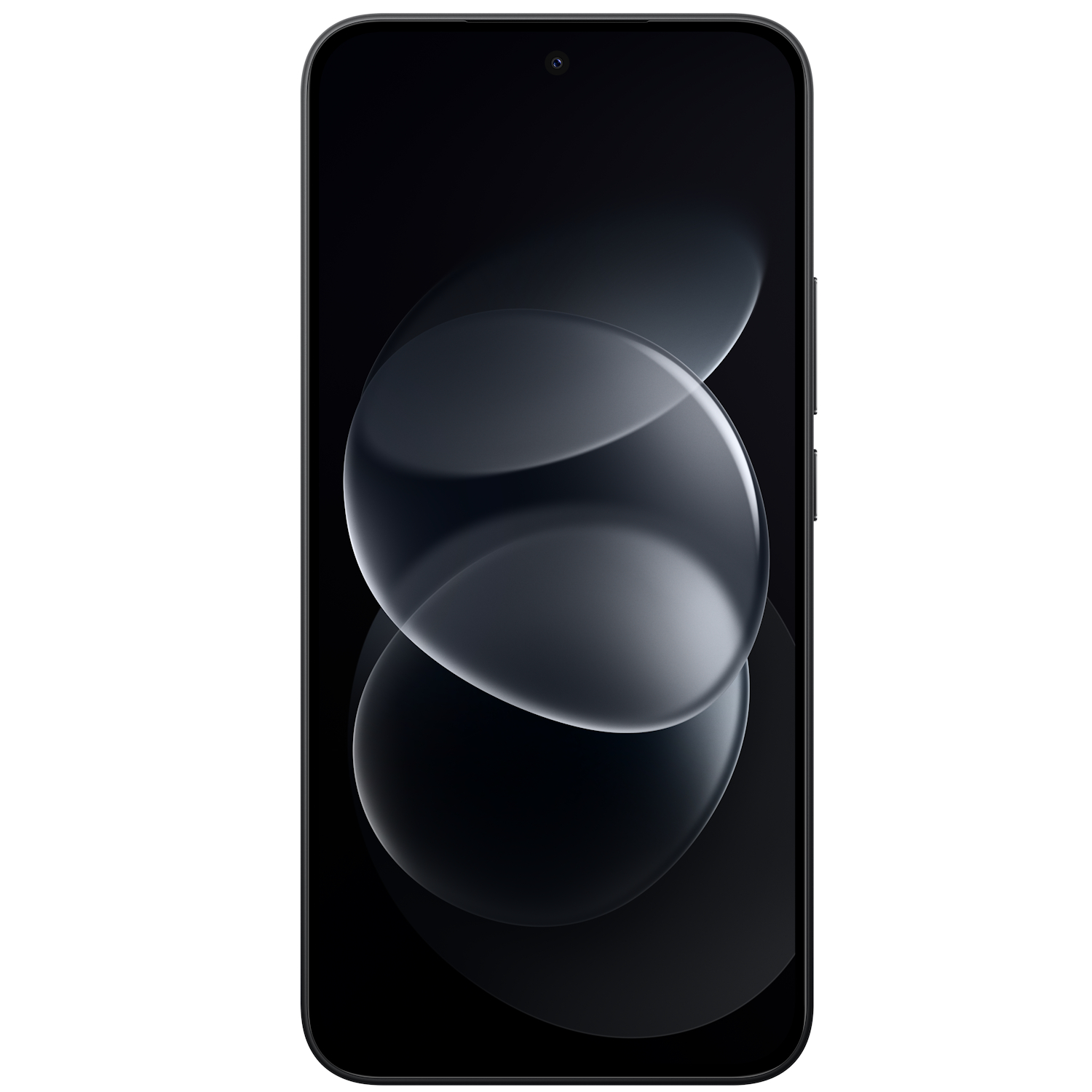
The Note 17 Pro Max is a flat sandwich with a big, square camera island with rounded corners. The frame is plastic and the back is plastic, with a "nice to hold" shape — GSMArena calls it "a huge, good-looking phone" at 163.5 x 78.3 x 8.6mm and 230g (the design page lists 225g), with a 90.4% screen-to-body ratio. The standout is the photochromic back: the review unit was Cloud Blush, which turns pink in sunlight and is described as "really nice". The other colours are Cloud Ink, Cloud Green, Cloud White, Cloud Rose, Cloud Purple and Cloud Black, several of them photochromic too. The plastic back can be slippery and the weight is noticeable, and the camera island is a bit too large for its lenses. The phone is IP68/IP69K dust and water resistant, with "Titan Quality" durability including a 3-metre drop test (2.3m in the specs table), and the speakers carry "Enhanced Harman Kardon" tuning. The optical under-display fingerprint reader is accurate and fast, Face Unlock is available, and the IR blaster is retained. There is no microSD slot, no 3.5mm headphone jack and no FM radio.

Display: bright, smooth, and honest about the 3,500-nit claim
The 6.83-inch AMOLED display is a 1280 x 2772 panel (447ppi) with a 120Hz adaptive refresh rate — LTPO technology that drops to 1Hz when idle and rises to 120Hz when interaction is required — plus HDR10+, Dolby Vision, 12-bit colour, 3840Hz PWM dimming and Gorilla Glass Victus 2. GSMArena's lab tests measured 1,109 nits of automatic brightness at 75% fill and a peak of 3,415 nits on a 10% white window, with a minimum brightness of 2.5 nits. That puts it behind the Poco F9 Ultra at 1,283 nits and the iPhone 17 at 1,181 nits in the same chart, though the review says the panel is bright enough for outdoor use — and notes the advertised 3,500-nit figure is a 1% HDR peak, not sustained brightness. Colour accuracy is good: Vivid mode (the default) is the most accurate for sRGB with an average deltaE of 1.0, Original mode gives 1.5, and Pro mode gives 2.5 for DCI-P3. The review calls the 120Hz panel "a huge improvement" over the 60Hz panel on the Redmi Note 16 Pro Max.
Performance: the "perplexing" chip
The Snapdragon 6 Gen 5 is a 4nm octa-core chip — four Cortex-A78 cores at 2.6GHz and four Cortex-A55 cores at 2.0GHz, with an Adreno 810 GPU — and the review calls it a "perplexing" choice: a lower-grade chip than the Snapdragon 7s Gen 4 in the Redmi Note 15 Pro+, and "a bit slower" than that phone in some benchmarks. Geekbench 6 came in at 1,032 single-core and 3,070 multi-core, similar in performance to the Dimensity 7300. AnTuTu, 3DMark and PCMark scores were presented in the review as interactive charts rather than prose numbers, so no specific figures for those are quoted here. One oddity the review flags is the storage: the specs table lists UFS 2.1 for the 128GB variant and UFS 4.0 for the higher tiers, which the review questions because Qualcomm says the Snapdragon 6 Gen 5 does not support UFS 4.0. Storage goes up to 512GB with 12GB of RAM; the review unit was 512GB with 8GB of RAM.
Software: HyperOS 3, the best on a Redmi Note yet
The phone runs HyperOS 3 based on Android 16, with 4 major Android OS updates promised. The review praises the clean, bloatware-light experience — "the best software on any Redmi Note phone" — and highlights Hyper Island, the iOS-style notification hub, HyperConnect for seamless connectivity with Apple devices, Macs and Windows PCs, and the HyperAI suite: text translation, call transcription, Gemini AI, Vision Care and AI subtitles. Connectivity includes 5G, eSIM, Wi-Fi 6, Bluetooth 5.4, NFC, an IR blaster and USB-C 2.0.
Battery: one of the best scores ever recorded
The 9,210mAh silicon-carbon battery in the EU model — 10,000mAh globally — is the reason to buy this phone. GSMArena's Active Use Score came in at 22 hours 31 minutes: voice calls over 64 hours, web browsing over 24 hours, video playback 38 hours and gaming 9:32 hours. That was the 10th-best battery score the site had ever recorded at the time of the review, behind the Poco X8 Pro Max at 29:05h, the iPhone 17 at 26:35h and the Xiaomi 17 Pro at 25:16h, and ahead of the Galaxy S26 at 21:39h. For another big-battery phone we have reviewed, see our Motorola Edge 70 Max review.
Charging is 100W wired (PD 3.0) — 33% in 15 minutes, 57% in 30 minutes and a full charge in 61 minutes in GSMArena's test — plus 22.5W reverse wired charging. There is no wireless charging. The stereo speakers, with Dolby Atmos, measured a Very Good -24.3 LUFS, and GSMArena calls the sound "excellent quality" at normal volume, with clean mids and highs — though at the 400% volume mode the quality worsens, losing low-end and pushing the highs.
Camera: a very good system for the price
The rear camera system is a 50MP main camera (f/1.8, OIS) with an 8MP ultrawide (120 degrees) and a 2MP macro lens. The front camera is 32MP. Video goes up to 4K at 30fps with EIS, plus 1080p at 30/60/120fps — there is no 4K60 and no 8K. The review calls the camera "a very good" all-round system for the price, with a 50MP main camera that is "excellent" in daylight and "much better" in low light than the Note 16 Pro Max.

A portrait camera sample taken with the Redmi Note 17 Pro Max.
In daylight, the main camera delivers excellent detail and sharpness with good dynamic range and natural colours. The 2x zoom — a 12.5MP crop from the main camera — is excellent with good detail and sharpness. The 8MP ultrawide is good in daylight but lacks autofocus, so there is no macro mode on the ultrawide, and the review calls it "relatively basic". The 2MP macro is good with a minimum focus distance of about 2cm, but "not the best" for detail. Portraits are good with natural bokeh and good skin tones, and the 32MP front camera is good for portraits. In low light, the 50MP main camera is "very good", with Night Mode giving "a significant improvement" in detail and dynamic range, though the 8MP ultrawide is "not as good" in low light. The review says the camera's "greatest weakness" is that it is not as good as the Redmi Note 15 Pro Max's main camera in low light due to the smaller sensor, and that the ultrawide lacking autofocus is a "minor annoyance". Video at 4K30 with EIS is "excellent" with good stabilisation and detail.
Price and verdict
The Redmi Note 17 Pro Max costs £399 for 256GB, £449 for 512GB and €369 for 128GB. GSMArena rates it 3.9 out of 5. It is, in the review's words, "a bit of a mixed bag": a huge battery and fast charging, a bright 120Hz display and a very good camera for the price — held back by a downgraded chip, a plastic build and the absence of 4K60 video. For buyers who want the biggest battery in a Note phone and do not mind the slower chip, it is hard to beat at the price. For buyers who want the fastest performance in this range, the Note 15 Pro+ remains the better pick.
Pros and cons
Pros: huge 9,210mAh (EU) / 10,000mAh (global) battery with a 22:31h Active Use Score; fast 100W charging; bright 120Hz LTPO AMOLED display with good colour accuracy; very good main camera for the price; IP68/IP69K protection with a colour-changing photochromic back.
Cons: Snapdragon 6 Gen 5 is a downgrade from the Note 15 Pro+; plastic frame and back; no 4K60 or 8K video; ultrawide camera lacks autofocus; heavy at 225–230g.
Sources
What's Your Reaction?
 Like
0
 Dislike
0
 Love
0
 Funny
0
 Angry
0
 Sad
0
 Wow
0