

























































Motorola Edge 70 Max Review: A 7,100mAh Battery Monster With One Weak Camera
Motorola's Edge 70 Max pairs a huge 7,100mAh battery with a 6.82-inch 144Hz display and the Snapdragon 8 Gen 5 — and GSMArena's full review gives it one of the best battery scores it has ever recorded on a flagship, 19 hours 28 minutes of active use. But the camera is the compromise: no telephoto, an 8MP ultrawide, and 10x digital zoom the review calls "not usable". This is a phone for battery-first buyers, not camera-first ones.
Motorola Edge 70 Max Review: A 7,100mAh Battery Monster With One Weak Camera
At first glance, the Motorola Edge 70 Max looks like a maxed-out Edge 70 — a bigger screen, a better camera and a bigger battery. GSMArena's full review of the phone, published in August 2026, ends with mixed feelings: it would happily recommend the phone to people who prioritise battery life and a big bright display, but not to people who prioritise cameras. The 7,100mAh battery is the headline. The camera is the compromise.
The review rates the phone 4.1 out of 5 and calls it "a solid mid-ranged phone, with a bigger screen, a better camera, and a bigger battery, and it's a good value for money" — with that one caveat about the camera. It costs about €600 for its single 8GB/256GB configuration, with listings shown at €779 and ₹52,990.
Design: a huge, good-looking phone that is very slippery
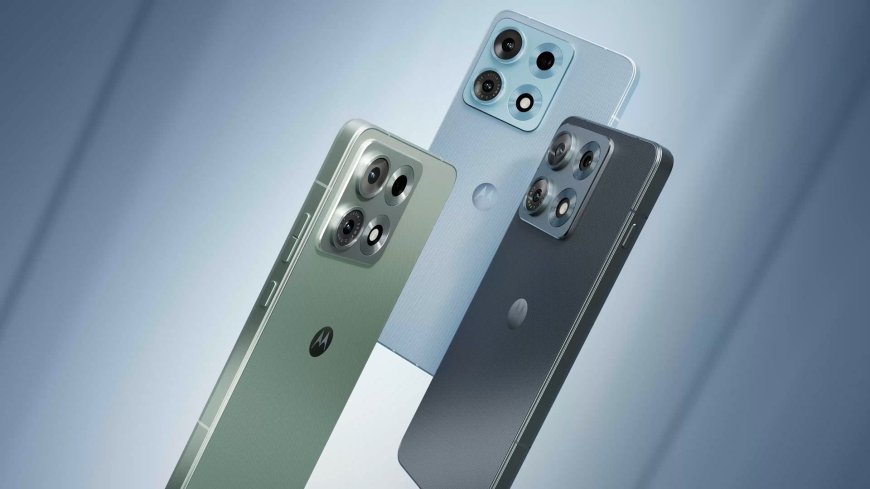
The Edge 70 Max is a flat sandwich: flat glass sides and back, a square camera island with rounded corners, and a very simple, almost Oura-style design that is heavier and larger than the Pro. GSMArena calls it "a huge, good-looking phone", with a comfortable anodized matte aluminum frame, and says the flat design is clean and simple.

There are two catches. The glass back is very slippery — it slid off its box during testing — and the 221g weight is noticeable. At 164.0 x 77.0 x 8.3mm, the 6.82-inch screen is still easy to hold for a big phone, though the camera island is a bit too large for its lenses. The Moto AI key, SIM tray and optical fingerprint sensor — fast and reliable, the review says — are highlighted, along with the "Quiet design". It is IP68/IP69 dust and water resistant and MIL-STD-810H rated, with Gorilla Glass 7i front and back. Colours are Aqua Grey, Dark Shadow and Ice Melt, with regional variants in Glacier Blue, Onyx Black and Sage Green.
Display: bright, smooth, and honest about the 7,000-nit claim
The 6.82-inch LTPO AMOLED display is a 1440 x 3168 panel (510ppi) with 1 billion colours, 144Hz refresh, HDR10+ and a claimed 7,000-nit peak brightness, protected by Gorilla Glass 7i. GSMArena's lab tests measured about 1,600 nits at 75% fill and over 4,000 nits at 10% fill for HDR content, with the manual brightness chart peaking at 1,571 nits and a minimum brightness of about 2 nits.

The review says the panel is bright enough for outdoor use, but notes the advertised 7,000-nit figure is a 1% HDR peak, not a sustained brightness. Refresh-rate handling has three modes — Smart & balanced, Hyper smooth and Efficiency first. The LTPO panel can drop to 1Hz; 144Hz is available only in certain games, and Chrome runs at 90Hz. Hyper smooth mode prioritises 120Hz over 144Hz, and the display is smooth in most use.
Performance: flagship-level for everyday use
The Snapdragon 8 Gen 5 is a 3nm chip with two Cortex-X4 cores up to 3.77GHz and six Cortex-A725 cores up to 3.25GHz, with an Adreno 829 GPU. GSMArena describes it as the second-best Qualcomm chip available, below the Snapdragon 8 Elite Gen 5 — a premium chip with a big step up from the Snapdragon 8 Gen 3, but with a downgraded GPU and lower clock speeds. It is paired with 8GB or 12GB of RAM and 256GB of UFS 4.1 storage, and there is a microSD slot — a rarity at this level.
Performance is flagship-level for everyday use, with a "very good" thermal stability result of 88% in the stress test, though the phone heats up under sustained load and throttles. Exact benchmark scores were presented in the review as interactive charts rather than prose numbers, so no specific Geekbench or AnTuTu figure is quoted here.
Software: clean Android with Moto AI
The phone runs Android 16 with Motorola's Hello UI — close to stock Android, with Motorola's Material You-inspired design. The review praises the clean, bloatware-light experience, with only a few pre-installed apps. Moto AI brings Look Up, Next Move, Playlist Studio, Catch Me Up, Image Studio, AI Live, AI Chat and AI Transcription, plus Gemini, Circle to Search, Smart Connect and ThinkShield, all reachable through the dedicated Moto AI key.
One inconsistency in the review is worth noting: the specs table says the phone will get up to 3 major Android OS updates, while the software page says 7 years of updates. The display is Pantone-validated, with HDR10+ and Dolby Vision support.
Battery: one of the best scores ever recorded
The 7,100mAh silicon-carbon battery is the reason to buy this phone. GSMArena's Active Use Score came in at 19 hours 28 minutes — calls 37:51, web browsing 19:32, video playback 27:22, gaming 10:08 — which the review calls one of the best battery scores it has seen on any flagship, and "a huge improvement" over the Edge 70 Pro.
Charging is fast too. The 90W wired TurboCharge (PD/PPS) reaches 50% in 21 minutes and 100% in 51 minutes according to the specs page; GSMArena's test found a full charge a few minutes short of an hour, with 62% in the first 30 minutes. Wireless charging is 25W magnetic on Qi2.2 (50% in 39 minutes, full in 85 minutes per the specs), plus 5W reverse wired charging. There is no charger in the EU box — only a USB-C cable. The stereo speakers, with Dolby Atmos, measured a Very Good -25.3 LUFS, though the review calls the sound average, with flat, bass-lacking audio — "not the best, but good enough".
Camera: decent results from unimpressive hardware
The camera is the phone's weak point, and the review does not soften it: "Decent results from unimpressive hardware". The rear setup is a 50MP main camera (Sony Lytia 710, f/1.8, OIS) with an 8MP ultrawide (119 degrees) and an auxiliary depth lens. There is no dedicated telephoto camera — zoom is a 2x in-sensor crop, 4x hybrid and 10x digital. The front camera is 32MP with fixed focus. Video goes up to 4K at 30/60fps with HDR10+, plus 1080p at up to 240fps, with gyro-EIS. There is no 8K video.
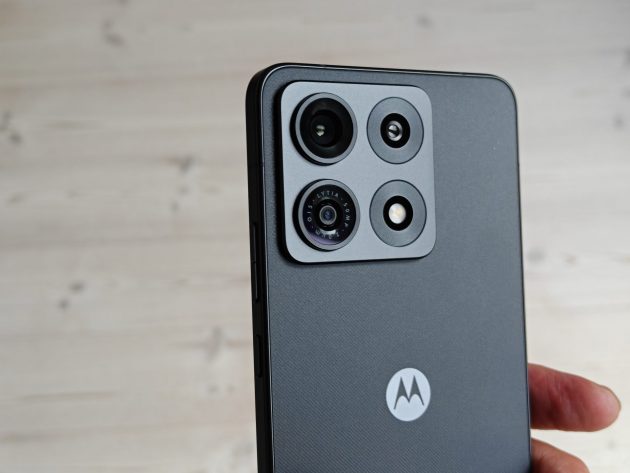
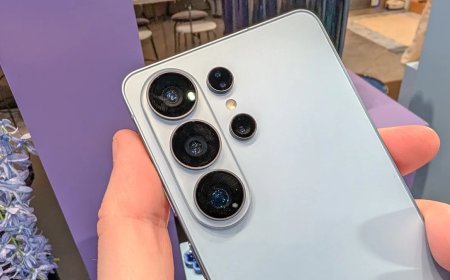
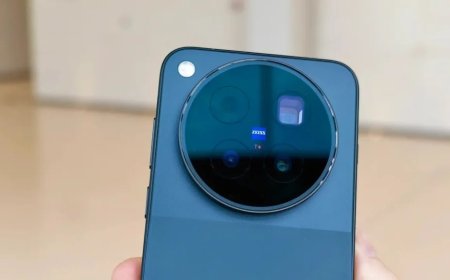
The phone's camera hardware, close up — no sample photos taken with the Edge 70 Max camera were available.
In daylight, the main camera delivers excellent detail and sharpness, with good dynamic range and natural colours — the 50MP sensor is shared with the Edge 70 Pro and is, in the review's words, "a very good sensor". The 2x zoom is sharp and detailed in good light; the 4x hybrid zoom is noticeably softer; and the 10x digital zoom is "not usable", very soft. The 8MP ultrawide is surprisingly good for an 8MP sensor, with good detail and colours in daylight, but soft at the edges, and its macro mode is good with a minimum focus distance of about 2.2cm.
Portraits are good, with natural bokeh and good skin tones, but the lack of a telephoto limits portrait quality. Low-light performance is very good, with excellent detail and low noise, and Night Sight is very good. Selfies are excellent straight out of the camera — the review's pros list says "Selfies are pretty nice" — with good detail and natural skin tones, though the fixed-focus front camera can miss focus. Video at 4K60 with EIS is good, with good stabilisation and detail, but stabilisation is jittery in some modes, and 240fps slow-motion is available.
Price and verdict
The Edge 70 Max costs about €600 for the 8GB/256GB model, with listings at €779 and ₹52,990. Against the competition, GSMArena notes the Xiaomi 17T Pro and Honor 600 Pro — just a few dozen euros more, with better cameras and faster charging, but smaller batteries — and the Poco X8 Pro Max, cheaper with a better camera but a smaller battery and no wireless charging. The Edge 70 Pro is cheaper with a similar camera, but a smaller battery and slower charging; the Max is the better choice if you want the bigger battery and display.
The verdict is the mixed one the review started with. At first glance this looks like a maxed-out Edge 70, and for battery life and a big bright display it is hard to beat at the price. But the suboptimal camera experience is hard to ignore when rivals offer better cameras for similar money. If the camera is not your priority, this is a solid, good-value phone. If it is, look elsewhere.
Pros and cons
Pros: sturdy metal and glass design with IP68/IP69 protection; bright 144Hz LTPO OLED display; solid battery life with Qi2.2 magnetic wireless charging; selfies are pretty nice; clean Android experience from Hello UI with advanced connectivity features.
Cons: somewhat heavy; no dedicated telephoto camera; ultrawide camera is relatively basic; just a single storage tier available — 256GB.
Sources
What's Your Reaction?
 Like
0
 Dislike
0
 Love
0
 Funny
0
 Angry
0
 Sad
0
 Wow
0