



































































China Slashes Margin Requirement to 80% in Bid to Halt Stock Market Slide
China's three main stock exchanges will cut the minimum margin ratio to 80% from 100% on November 30, alongside fee cuts and a proposed market-making system for the ChiNext board, in a package aimed at steadying a slide that has pushed the Shanghai Composite to a 16-month low.

China Slashes Margin Requirement to 80% in Bid to Halt Stock Market Slide
China's three main stock exchanges have moved to prop up the country's battered share prices, announcing a package of measures headlined by a cut in the minimum margin requirement for stock purchases — a step that will let investors borrow more against the same collateral from the end of the month.
The Shanghai, Shenzhen and Beijing exchanges said on Sunday, November 22, that the minimum margin ratio will fall to 80% from 100% starting November 30. The change, approved by the China Securities Regulatory Commission, reverses a tightening step taken in January, when the ratio was raised by 20 percentage points.
Under the new rules, an investor holding 1 million yuan in collateral will be able to borrow up to 1.25 million yuan to buy shares, up from 1 million yuan today. Market participants estimate the easing — which applies to both new and existing margin positions — could free up around 400 billion yuan in additional funds for the market.
Exchanges say margin activity has weakened sharply
The exchanges were blunt about the reason for the move. "Margin financing activity has weakened significantly recently, while overall leverage is low," the three bourses said in their notices, adding that the cut "would improve market liquidity and support the market's long-term stability and healthy development".
The figures behind that assessment are stark. Outstanding margin loans in China have fallen by more than 20% to roughly 2.2 trillion yuan (about $329.5 billion) from a peak of 3 trillion yuan in late June, as investors have pulled back from leveraged bets during the sell-off.
The Shanghai and Shenzhen exchanges also announced a fresh round of fee reductions aimed at lowering trading costs and encouraging participation. The cuts, covering items such as trading unit usage fees and some data centre service fees, total about 1.368 billion yuan in Shanghai and 1.39 billion yuan in Shenzhen, according to Chinese financial outlet Yicai. Existing waivers, including listing fees and bond handling fees, will be extended for two years.
ChiNext to get a market-making mechanism
The Shenzhen exchange went further, publishing draft rules to introduce a market-making mechanism on its ChiNext startup board. The system is intended to "curb share price swings, improve pricing efficiency and strengthen market resilience", the bourse said.
Market makers — firms that continuously quote buy and sell prices — are a standard feature of many mature markets, but ChiNext has traded without one. The proposal is still in draft form, and the exchange has not yet said when it would take effect.
A market at a 16-month low
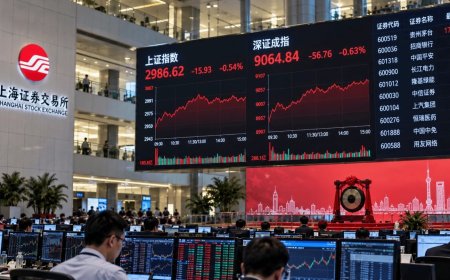
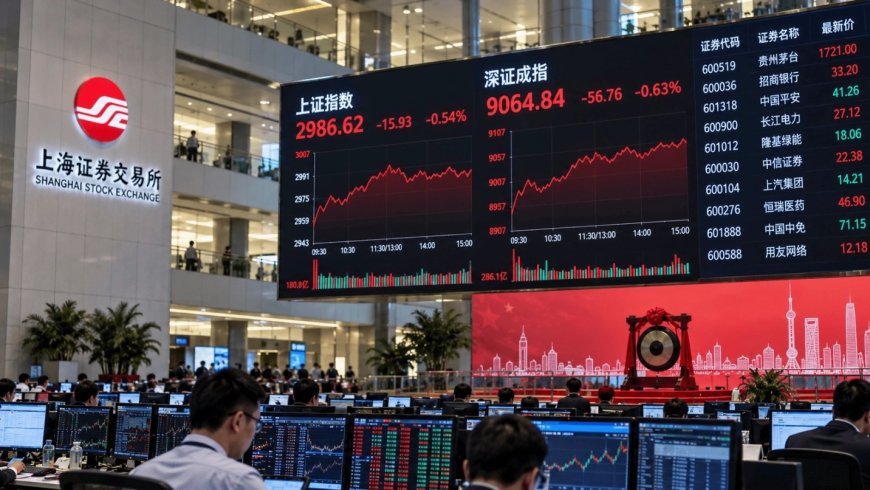
The measures arrive after a bruising stretch for Chinese equities. The benchmark Shanghai Composite dropped nearly 3% in the week starting November 9 to hit a 16-month low, and on Friday, November 20, it closed at 3,533.79 points, down 1.23% on the day, after briefly touching a new 52-week low near 3,500.
The damage has been worse in the growth boards. Shanghai's tech-heavy STAR Market and Shenzhen's ChiNext have each tumbled more than 40% from their June peaks, dragged down by the global rout in artificial intelligence and semiconductor shares that has swept through markets from Wall Street to Taipei.
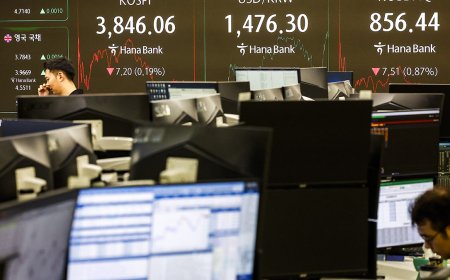
Beijing had already moved earlier in November with measures to encourage share purchases, and the weekend package is the most direct intervention yet. Other Asian markets are responding in parallel: South Korea and Taiwan have both rolled out regulatory changes to steady volatility, after Taiwan's benchmark suffered its worst weekly fall in 35 years.
Markets steady on Monday
The first session after the announcement brought a modest recovery. On Monday, November 23, the Shanghai Composite recovered from an early dip below 3,500 to close up 0.15% at 3,538.95, while the Shenzhen Component rose 1.93% and ChiNext gained 3.08%.
The real test, though, comes on November 30, when the lower margin ratio takes effect. Traders will be watching whether the extra borrowing capacity brings margin traders back — and whether the rally in the growth boards can hold once the initial relief fades.
The episode is also a reminder of how quickly sentiment has turned. Barely five months ago, margin balances stood at 3 trillion yuan and Chinese tech shares were riding the global AI boom. Now the exchanges are cutting the cost of leverage to keep the market from sliding further, and the question is whether cheaper borrowing can do what earlier support measures could not.
Sources
- Reuters, "Chinese exchanges ease margin trading requirements to aid stock markets", November 22, 2026 (via The Business Times)
- South China Morning Post, "Mainland China stock exchanges make moves to raise liquidity and activity to stem decline", November 23, 2026
- Xinhua, "Chinese shares close lower Friday", November 20, 2026
- Seoul Economic Daily, "China Cuts Trading Fees, Eases Margin Rules to Halt Stock Rout", November 23, 2026
- SBS News, "Taiwan Stocks Rebound over 2%; Shanghai Composite Also Edges Up", November 23, 2026
What's Your Reaction?
 Like
0
 Dislike
0
 Love
0
 Funny
0
 Angry
0
 Sad
0
 Wow
0