























































Oracle Says Its $300 Billion OpenAI Deal Is Fully Funded — but Shares Still Hit a 52-Week Low
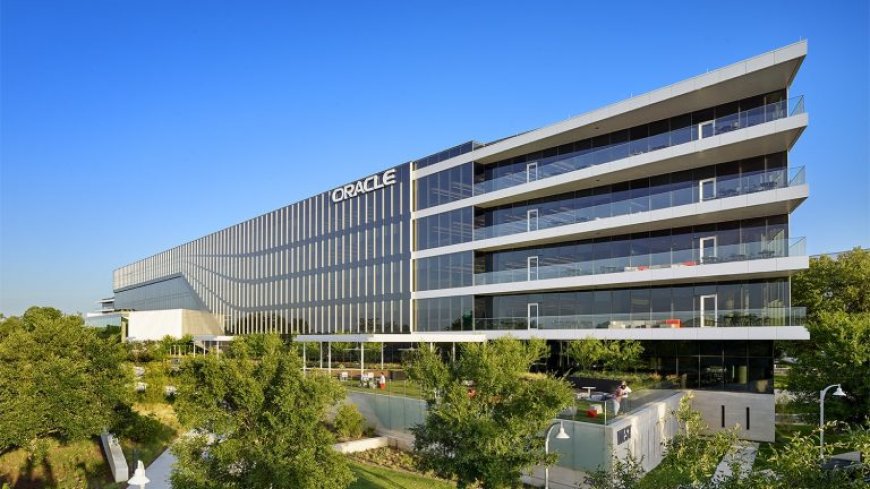
Oracle says its five-year, roughly $300 billion OpenAI infrastructure contract is fully funded after a final $20 billion capital raise earlier in November, calling itself the first hyperscaler fully funded for the current AI investment cycle — even as its shares fell 8.48 percent to a 52-week low close of $101.19 on the same day.

Oracle Says Its $300 Billion OpenAI Deal Is Fully Funded — but Shares Still Hit a 52-Week Low
Oracle has told investors it has every dollar it needs to deliver on its roughly $300 billion computing contract with OpenAI, declaring itself the first hyperscaler fully funded for the current artificial intelligence investment cycle. The message landed on Friday, November 20, in a post on X — the same day Oracle shares fell 8.48 percent to a 52-week low close of $101.19.
The statement was aimed squarely at weeks of market doubt. Oracle's five-year agreement to supply OpenAI with computing power is one of the largest infrastructure deals in the technology industry, and it makes up a large share of the company's $664 billion in remaining performance obligations. Investors had been asking, with increasing urgency, how Oracle would pay for the data centers needed to fulfil it.
What Oracle actually said
"The financing we outlined at Oracle Investor Day, including vendor financing, is in place. Any further private discussions with vendors are just additional options," Oracle said in the post, according to Reuters. The company added that a final capital raise completed earlier in November had closed out the financing framework it presented at its investor day on October 28.
Oracle also pushed back pre-emptively against future coverage questioning its funding position, saying any continuing private talks with suppliers are optional and have no bearing on its ability to meet its contractual obligations.
The $20 billion raise behind the claim
The capital raise Oracle is pointing to was worth about $20 billion, split roughly evenly between about $10 billion of stock and about $10 billion of debt. The equity portion came from the sale of 86,206,897 shares at $116 each, which closed on November 4, while the debt portion was $10 billion of notes with maturities running from 2029 to 2046 and coupons of between 7 percent and 8.65 percent.
That $20 billion sits within a cap Oracle set at its investor day: incremental capital-markets fundraising for the fiscal 2027 through fiscal 2030 investment cycle is limited to $20 billion, split evenly between equity and gross debt, excluding refinancing. The cap builds on a separate $20 billion at-the-market equity programme Oracle completed in the first quarter of fiscal 2027, alongside vendor financing, customer-provided hardware and customer prepayments designed to reduce upfront cash outflows.
Oracle also repeated its existing financial guidance. The company still expects to return to positive free cash flow in the second half of fiscal 2028 and is targeting more than $30 billion of free cash flow in fiscal 2029, from which point it expects to begin self-funding future growth.
The buildout: Abilene, Shackelford County and Vera Rubin
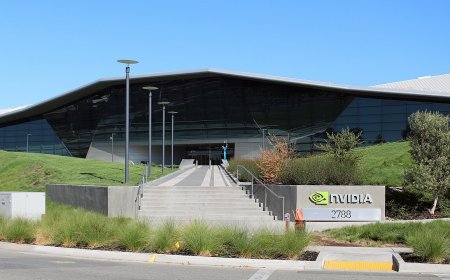
Alongside the financing update, Oracle gave progress markers on the physical infrastructure behind the deal. Construction at its Abilene campus in Texas, where OpenAI's GPT-6 Astra model was trained, is nearly complete. Its next gigawatt-scale campus, in Shackelford County, Texas, is now fully permitted. And the handover of Nvidia's next-generation Vera Rubin server racks within those data halls remains on track for the coming weeks, the company said.
Oracle and OpenAI plan to develop 4.5 gigawatts of additional data-center capacity in the United States, on top of the initial Stargate site in Abilene. The scale of that buildout is the reason the funding question has mattered so much: the deal commits Oracle to years of heavy construction spending before the cash flow from the contract fully arrives.
The market's answer: a 52-week low, then a small bounce
Investors did not greet the statement with relief during regular trading. Oracle shares closed Friday at $101.19, down $9.38, or 8.48 percent, after touching an intraday low of $100.25 — also a 52-week low. It was the third straight session in which the stock set a new 52-week closing low, and it capped a 19.27 percent slide for the week.
The shares did recover some ground once Oracle's statement circulated. They rose as much as 3.3 percent in after-hours trading on Friday, according to Reuters, closing the extended session around $103.29.
Why investors were sceptical in the first place
The scepticism has been building for weeks. Oracle's market value has fallen sharply from its highs as investors questioned whether the company, and the wider AI infrastructure boom, is taking on too much debt too fast. The week's slide came as reports said Microsoft is winding down a deal to rent AI cloud capacity from Oracle, adding to concerns about demand for the very capacity Oracle is racing to build. Innopark IT reported on Microsoft's move to wind down its Oracle cloud deal earlier in November.
Analysts have also raised questions about customer concentration: a single customer, OpenAI, accounts for a large part of Oracle's future contracted revenue. OpenAI, for its part, has continued to raise money and expand — it secured $11 billion in new funding at a $1.25 trillion valuation earlier in November and has pressed ahead with its US data center expansion.
Oracle's answer is that the money is now secured and no further capital-market raises are needed for this cycle. Whether the market believes that will be tested in the coming quarters, as the Abilene campus comes online and the company reports on its cash flow.
What to watch next
Three milestones will show whether Oracle's claim holds up. The first is the handover of Nvidia's Vera Rubin racks in the coming weeks, which will let OpenAI start training on the newest hardware inside Oracle's data halls. The second is the pace of construction at the Shackelford County campus, now that it is fully permitted. And the third is Oracle's own cash flow: the company says it turns free-cash-flow positive in the second half of fiscal 2028, a promise investors will now hold it to.
Sources
- Reuters — "Oracle says OpenAI infrastructure deal is fully funded after final capital raise", November 20, 2026: https://www.reuters.com/business/oracle-says-openai-infrastructure-deal-is-fully-funded-after-final-capital-raise-2026-11-20/
- The Hindu BusinessLine — "Oracle says OpenAI contract fully funded, targets over $30 billion free cash flow in FY29", November 21, 2026: https://www.thehindubusinessline.com/info-tech/oracle-says-openai-contract-fully-funded-targets-over-30-billion-free-cash-flow-in-fy29/article71727202.ece
- Times of India — "Oracle has a message for those who think it can't pay for its $300 billion OpenAI deal", November 22, 2026: https://timesofindia.indiatimes.com/technology/tech-news/oracle-has-a-message-for-those-who-thinks-it-cant-pay-for-its-300-billion-openai-deal-with-our-final-capital-raise-earlier-this-month-we-became-the-first-/articleshow/136076395.cms
- Finnhub / market data — Oracle (ORCL) closing price, November 20, 2026: https://finnhub.io/?q=%22ORCL%22
What's Your Reaction?
 Like
0
 Dislike
0
 Love
0
 Funny
0
 Angry
0
 Sad
0
 Wow
0