









































Honor Magic8 Pro Review: Superb Battery and a Dazzling Display, but the Camera Stops Short of the Best
GSMArena's full review of the Honor Magic8 Pro finds a flagship that aces the fundamentals — a 19-hour battery, a display that tops 5,000 nits and class-leading speakers — with a 200MP telephoto that shines in stills, especially at night. But video quality trails the class leaders, selfies have taken a step back, and the phone falls just short of the very best cameraphones.

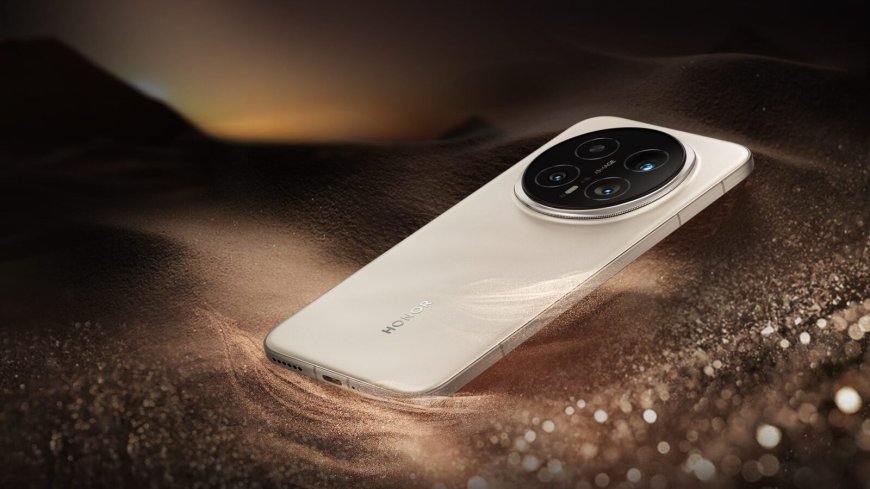
Honor Magic8 Pro Review: Superb Battery and a Dazzling Display, but the Camera Stops Short of the Best
Honor's Magic8 Pro arrives with a familiar formula: a top-tier chipset, a triple camera headlined by a 200MP zoom lens, and a battery that keeps growing. GSMArena's full review of the global model — the phone announced on 15 October 2025 and released later that month — puts it through the lab's complete battery, display, performance and camera tests, and the verdict is a measured one: this is an excellent flagship that does almost everything well, yet falls just short of greatness where it matters most to Honor, the camera. GSMArena scores the Magic8 Pro 8.8 out of 10.
The headline numbers set the tone. A Snapdragon 8 Elite Gen 5 runs the show, the 6.71-inch LTPO OLED display is one of the brightest the lab has ever measured, and the European version's 6,270mAh battery lasted 19 hours and 7 minutes in GSMArena's Active Use test — even though Europe gets a smaller cell than the 7,100mAh global version or the 7,200mAh Chinese model. At £1,099 or €1,299 for the sole 12GB/512GB configuration, with early-bird offers cutting that to £899 or €1,099, it undercuts several rivals too.
Design and build: familiar, tough, and a new AI button
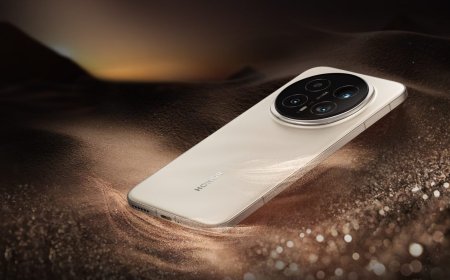
Put the Magic8 Pro next to its predecessor and you would have to look hard to tell them apart, at least in the plain black or white finishes. The camera island is slightly smaller, the flash has moved, and there is a new button on the right edge — but the silhouette is essentially unchanged. That is no bad thing: at 161.2 x 75.0 x 8.3mm and 219g, it is a substantial phone that feels well made, with NanoCrystal Shield glass up front and a fibre-reinforced plastic back that should survive drops better than glass, even if it may scratch more easily.
Durability is a genuine strength. The phone carries IP68 and IP69K ratings, so it is dust-tight, submersible and resistant to high-pressure water jets. Colours are black, Sunrise Gold and Sky Cyan globally, with a white finish exclusive to China. The global model takes two eSIMs, two physical nano-SIMs, or one of each.
The new addition is the AI button, sitting below the volume rocker and power key. It responds to clicks, pressure and swipes: a squeeze can half-press to focus, a full press fires the shutter, and swiping across it works as a zoom wheel. A long press can be set to fire a burst or start a video. It is a neat idea, though the half-press focus only works on the centre of the frame. Elsewhere, the ultrasonic fingerprint sensor is fast and well placed, and the Magic8 Pro remains one of the rare Android phones with proper 3D face scanning — which, unlike Apple's version, can skip the swipe and go straight to the home screen.
Display: one of the brightest screens GSMArena has tested
The 6.71-inch LTPO OLED panel runs at 1,256 x 2,808 pixels with a 1–120Hz adaptive refresh rate, 4,320Hz PWM dimming and support for Dolby Vision, HDR10+ and HDR Vivid. On paper the peak brightness is 6,000 nits; in GSMArena's measurements the phone delivered 856 nits in manual mode and more than 5,000 nits on a 10% white patch with auto brightness enabled, plus 1,837 nits across 75% of the screen. Minimum brightness sits at around 1 nit, which is about as good as it gets for night-time reading.
It is, in short, a top-class display — bright to excess, as GSMArena puts it — with some of the most extensive eye-care features the lab has seen. The panel curves gently towards all four edges, a compromise between the premium feel of a curved screen and the ergonomics of a flat one, and a pre-installed plastic screen protector is included.
Performance: flagship speed, with a throttling caveat
Qualcomm's Snapdragon 8 Elite Gen 5, built on a 3nm process and paired here with 12GB of LPDDR5X RAM and 512GB of UFS 4.1 storage, is the only configuration sold globally. In GSMArena's benchmarks the phone scored 3,647,824 in AnTuTu v11 and 10,794 in Geekbench 6, putting it on par with the best Elite Gen 5 devices in CPU performance, while its 3DMark Wild Life Extreme score of 7,121 sits a touch below the top scorers — something the reviewers put down to Honor's slightly different GPU tuning.
Sustained performance is a mixed picture. The GPU held up well under repeated stress testing, earning a 65% stability rating and maintaining higher performance than most Elite Gen 5 phones. The CPU is another story: in Performance mode it can post very high numbers for about five minutes before dropping sharply into a pattern of peaks and dips, with the peaks never reaching 60% of the initial result. Balanced mode is far more stable, if only average in output, and for most people it is the sensible default. The phone runs Android 16 with MagicOS 10, and Honor promises seven major Android upgrades.
Cameras: superb stills, AI-enhanced nights — and an ethical question
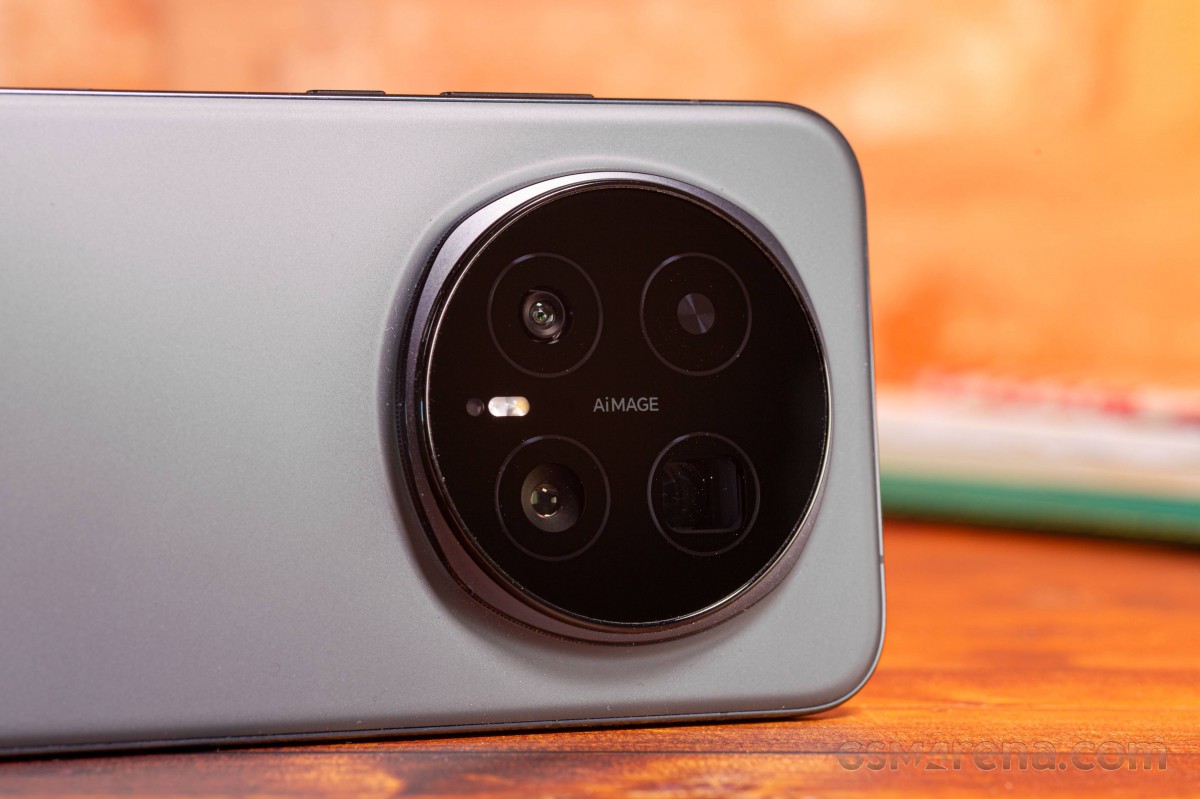
The camera hardware is an evolution of the Magic7 Pro's setup rather than a revolution. The main camera is a 50MP sensor (1/1.3-inch) with a fixed f/1.6 lens at 23mm and optical stabilisation rated at 5.5 stops — the variable aperture of the previous model is gone, a change few will notice. The headline act is the new 200MP telephoto, a Samsung ISOCELL HP9 sensor (1/1.4-inch) behind an 85mm f/2.6 lens with 3.7x optical zoom and stabilisation, also rated at 5.5 stops. The ultrawide is a 50MP unit with a very wide 12mm, 122-degree lens. The 50MP front camera keeps its predecessor's sensor but, oddly, has lost autofocus — it is now fixed-focus.
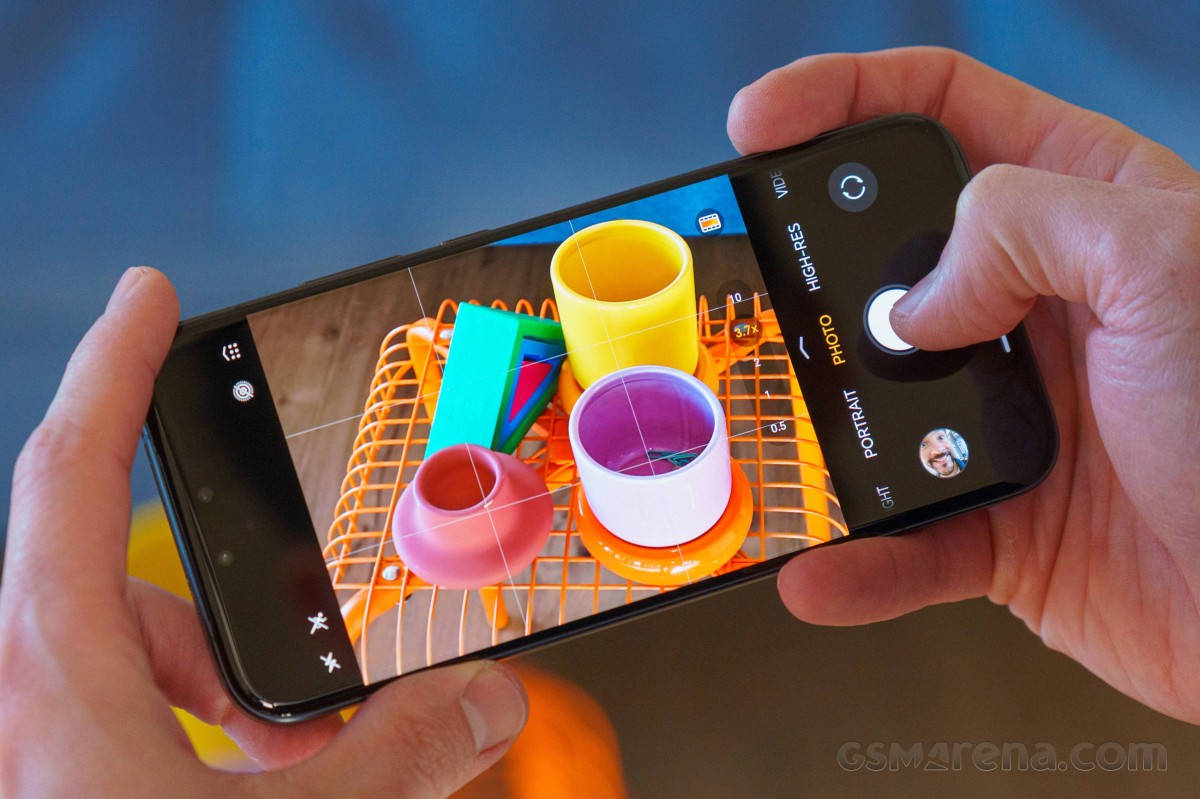
In daylight, the main camera produces excellent photos: fine detail, no visible noise, a wide dynamic range and vivid, dependable colours. The 2x crop from the main sensor is sharp and well defined, and the telephoto delivers nicely detailed 3.7x shots with good texture rendition, though portraits at the native zoom can look a touch soft, with the phone seemingly back-focusing on faces. The ultrawide is among the best around for detail given its extreme coverage. Full-resolution 50MP and 200MP modes are less convincing — the main sensor's 50MP shots look soft and blotchy, while the telephoto's 200MP mode resolves a little more detail but overexposes.
Night photography is where the Magic8 Pro makes its boldest claim. Alongside the regular Night mode there is an AI-enhanced mode that uploads the shot to the cloud for processing — you need an internet connection at the moment of shooting. The difference grows with zoom: at 1x the main camera is already excellent without enhancement, but at 2x, 3.7x, 7.4x and especially 10x, the AI-enhanced images are notably cleaner, sharper and more detailed. The catch, as GSMArena notes, is that some of that detail is invented — random textures can turn into patterns, and text can come back as AI-produced gibberish. The results can look better than the real photos, which the reviewers call "a bit of an ethical conundrum". The ultrawide gets no AI enhancement and its night shots are decent rather than outstanding.
Video is the camera system's weakest link. The main and telephoto cameras record up to 4K at 120fps and the ultrawide and selfie cameras up to 4K at 60fps, with HDR Vivid and a Log mode on the main camera, but overall quality lands in the "good, not great" category: dynamic range is excellent and colours are pleasingly saturated, yet sharpness disappoints. Selfies are a step back too — random patches of softness, a digital look to facial hair, and no autofocus, where the previous generation had it.
Battery and charging: 19 hours, and a 40-minute fill-up
Battery life is the Magic8 Pro's clearest triumph. The European 6,270mAh silicon-carbon battery — the smallest of the three regional variants — earned an Active Use Score of 19 hours and 7 minutes in GSMArena's testing, with excellent marks across the individual tests. Only the Oppo Find X9 Pro, with its 7,500mAh cell, did better among the phones tested, and the Honor is miles ahead of most other flagships and a significant step up from the Magic7 Pro.
Charging is quick as well. The global model supports 100W wired charging (120W in China) and 80W wireless, and GSMArena's tests with Honor's 100W adapter reached 81% in 30 minutes and a full charge in 40 minutes. A 67W USB-C PD charger managed 76% in the same half hour. One irritation: no charger comes in the box, only a 6A USB-A-to-C cable.
Software, speakers and the extras
MagicOS 10 over Android 16 is heavily customised and leans hard into AI features, with a little extra polish over the previous version, including iOS-like liquid-glass outlines. The stereo speakers deserve a special mention: two large drivers in an open-cavity design earned an "Excellent" loudness score in GSMArena's tests, a rare feat even among flagships, and the reviewers call them good enough to be a selling point on their own. Wi-Fi 7, Bluetooth 6.0, NFC and an infrared port round out the connectivity.
Price and availability
The Magic8 Pro is already on sale in the UK, with the wider European launch following, priced at £1,099 or €1,299 for the 12GB/512GB model. Early-bird offers bring that down to £899 or €1,099, which GSMArena notes makes it considerably cheaper than its closest cameraphone rivals at their launch prices. Retail offers have since dipped lower still, with the phone listed from around $862 in some markets.
Verdict: nearly great, but the camera crown stays elsewhere
GSMArena's conclusion is honest about the phone's split personality. "In the end, we're almost a little bit disappointed by the Magic8 Pro," the reviewers write. "It fell short where we were hoping for greatness — it's a capable cameraphone alright, but it's bested by others of that breed." The stills are excellent, the AI-enhanced low-light results are genuinely impressive, and the fundamentals — battery, display, speakers, performance — are all strong. But video quality trails the curve, selfies have regressed, and against the vivo X300 Pro and Oppo Find X9 Pro, with their very similar camera systems, the Honor may sit a little behind — while the Xiaomi 15 Ultra's dual telephoto setup offers more versatility still.
That said, if video is second on your list of priorities, the Magic8 Pro's stills performance, 19-hour battery, dazzling display and early-bird pricing make a persuasive case. It is a flagship that does the everyday things brilliantly and the camera things very well — just not quite well enough to sit at the very top of the cameraphone class. Honor has since moved on to the Magic9 Pro Max, which we have also reviewed on Innopark IT — see our Honor Magic9 Pro Max review.
Pros
- IP68/IP69-rated build
- One of the brightest displays around, with Dolby Vision and extensive eye-care features
- Great battery life even with the smaller EU battery, plus fast charging
- Class-leading speakers
- Performance to spare, with better GPU stability than most
- Feature-rich software package with AI features throughout
- Excellent stills from the rear cameras
- Particularly impressive AI-enhanced low-light results
Cons
- Reduced battery capacity in EU markets
- Heavy CPU throttling in Performance mode
- Unimpressive video quality under most conditions
- Selfie camera lacks autofocus and images have odd artefacts
Sources
- GSMArena — Honor Magic8 Pro review: Introduction and specs
- GSMArena — Honor Magic8 Pro review: Design, build quality, handling
- GSMArena — Honor Magic8 Pro review: Display, battery life, charging speed, speakers
- GSMArena — Honor Magic8 Pro review: Software, performance
- GSMArena — Honor Magic8 Pro review: Camera, photo and video quality
- GSMArena — Honor Magic8 Pro review: Competition, verdict, pros and cons
What's Your Reaction?
 Like
0
 Dislike
0
 Love
0
 Funny
0
 Angry
0
 Sad
0
 Wow
0