


































































Cisco and OpenAI Launch Shirudo, a Self-Defending Linux Runtime That Blocks Exploits Without a Reboot
Cisco and OpenAI have launched Shirudo, an open-source project that lets AI agents write small eBPF shields to block attacks on running Linux systems while teams prepare a permanent patch — no reboot, no downtime, and no shield goes live without a human operator's approval.

Cisco and OpenAI Launch Shirudo, a Self-Defending Linux Runtime That Blocks Exploits Without a Reboot
Cisco and OpenAI have launched Shirudo, an open-source project that lets artificial intelligence agents defend running Linux systems while security teams build and roll out a permanent patch. The announcement, made on Monday, November 23, 2026, is pitched as a first step toward what the two companies call self-defending infrastructure: systems that can shield themselves from a new attack at machine speed, without being taken offline.
Shirudo — Japanese for "shield" — is aimed squarely at the gap that worries defenders most. Finding a vulnerability today does not mean every affected system can be patched tomorrow, and attackers only need one unpatched machine. Shirudo is designed to close that window with a temporary, targeted defence that holds until the real fix lands.
How Shirudo works
At the heart of Shirudo is eBPF, short for extended Berkeley Packet Filter, a technology that runs small, sandboxed programs inside the Linux kernel without changing its source code or restarting the system. With it, an AI agent can trace a vulnerability to the affected assets and attack paths, write a small, targeted shield, and test whether that shield blocks the exploit while letting legitimate requests through.
The workflow runs in stages, and a person stays in charge of the last one. The agent scans open-source code and vendor disclosures, builds the shield, and checks that it covers the exploit and that the service still runs normally. Only when the evidence says the shield is safe does it graduate to active blocking — and it retires once the real patch is deployed. Every shield is cryptographically signed, so the host can verify it before it runs, even if an attacker has already gained administrator access. Hardware-backed verification uses TPM 2.0.
The idea is to avoid a blunt choice that defenders face today: either leave a system exposed or shut down a service entirely, because the exploit and a legitimate request may rely on the same underlying Linux operation. Shirudo is built to tell the two apart and block only the vulnerable behaviour.
Built on Tetragon, rewritten for agents
Shirudo has its roots in Tetragon, the eBPF-based security platform that Cisco-owned Isovalent developed and open-sourced in May 2022. The difference is that Shirudo is a rewrite designed for the agentic era. Instead of limiting an agent to a policy language written for humans, it lets the agent work in its natural language: code.
"There is nothing more important than giving security teams the tools they need to match the speed of the AI-driven threats they are facing," said Jeetu Patel, Cisco's President and Chief Product Officer. "We need self-defending infrastructure that acts at the speed of code, learns in real time, and shields itself until patches are safely rolled out."
OpenAI President and Co-founder Greg Brockman framed the problem the same way. "We're giving defenders better models and tools to find and fix vulnerabilities faster, but finding a bug today doesn't mean you can patch every system tomorrow," he said. "We are partnering closely with Cisco on Shirudo to help teams protect the systems they need to keep running while they build and roll out a fix."
Tested against Java4Shell in a controlled demo
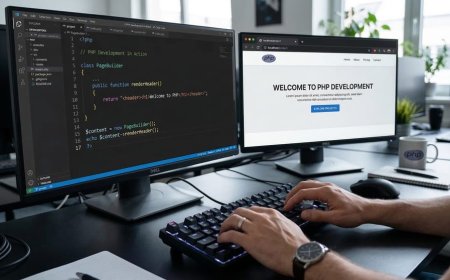
In testing against the recent critical Java4Shell vulnerability and a PHP flaw, Shirudo was able to write code that detected and blocked attempts to exploit both threats. In the Java4Shell example, OpenAI's Codex generated a shield — adding an input check to Java's Base64 decoder — that was attached to a running Elasticsearch instance and rejected malicious input, without a restart.
That framing matters. The Java4Shell block was a controlled test, not a production deployment, and it shows what the project can do today rather than what it already does in the wild.
Still pre-release — and what comes next
Shirudo is currently in pre-release development and is not ready for production use. It requires specific Linux kernel capabilities, additional kernel patches, and TPM 2.0 hardware, according to SecurityWeek's report on the launch. The project is released under the BSD 2-Clause licence, with its BPF programs dual-licensed under BSD and the GNU General Public License.
Cisco and OpenAI are inviting developers, researchers, and enterprises to help shape what comes next — by contributing tests that reproduce a vulnerability, running a shield against a kernel build they use, or showing where a shield breaks legitimate traffic. The code is published on GitHub, and the companies are holding a deep-dive webinar on December 15.
The launch lands as AI is accelerating both sides of the security race. AI systems are finding critical bugs in foundational software faster than ever — the Fireworks AI breach earlier this month, which exposed Notion AI chat transcripts and Uber driver licence data, showed how quickly one flaw can spread across services. Shirudo's answer is to let agents do the legwork across the full stack, from models and data down to the kernel and hardware, while people keep the keys and set the boundaries. Whether it works outside controlled tests is the question the open-source community will now help answer.
Related reading: Notion AI chat transcripts exposed in the Fireworks AI breach and Cisco's record quarter on AI networking demand.
Sources
- Cisco Newsroom — Cisco and OpenAI Launch Shirudo, A New Project to Safeguard Agentic AI
- Isovalent — Cisco and OpenAI introduce Shirudo
- SecurityWeek — OpenAI, Cisco Unveil Open Source Tool to Shield Unpatched Linux Systems
- The Hacker News — OpenAI and Cisco Unveil AI-Assisted Linux Security Tool to Block Exploits Before Patching
What's Your Reaction?
 Like
0
 Dislike
0
 Love
0
 Funny
0
 Angry
0
 Sad
0
 Wow
0