












































Samsung Galaxy A56 Review: A Polished Mid-Ranger That Plays It Too Safe
GSMArena's full review of the Samsung Galaxy A56 gives it 4.0 out of 5: a premium-feeling mid-ranger with a brighter 6.7-inch display, a faster Exynos 1580 chip, 45W charging and six years of software updates — but underwhelming cameras and a launch price that left it outgunned by cheaper rivals.

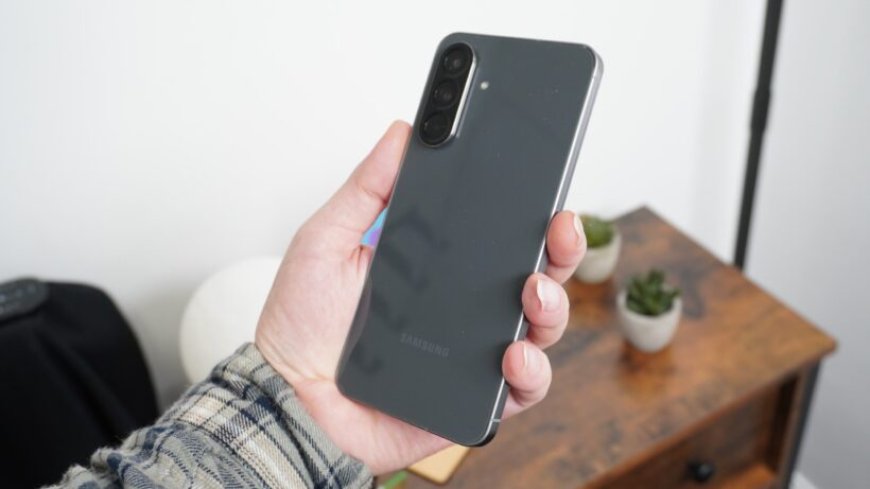
Samsung Galaxy A56 Review: A Polished Mid-Ranger That Plays It Too Safe
Samsung's Galaxy A series has long been the default recommendation for anyone who wants a dependable mid-range phone without paying flagship money. The Galaxy A56, launched in March 2025, follows that formula closely: a bigger, brighter screen, a new chip, faster charging and the longest software support in its class. GSMArena's full review, published on 21 March 2025, scores the phone 4.0 out of 5 — a solid mark that still comes with a clear warning. On paper the A56 looks like a good all-rounder, but in a crowded market it struggles to stand out, and at its launch price it was hard to recommend outright.
That picture has softened a little since launch. The phone arrived at €479, and GSMArena's price listing now shows it around $299 in the US — a drop that changes the value equation considerably. Here is what the review found, and whether the A56 makes sense now.
Design and build: premium materials, familiar shape
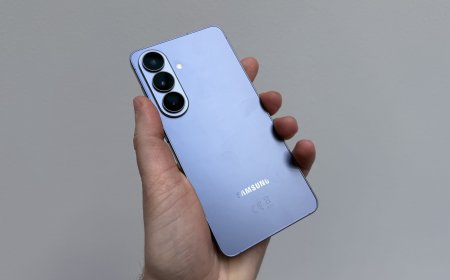
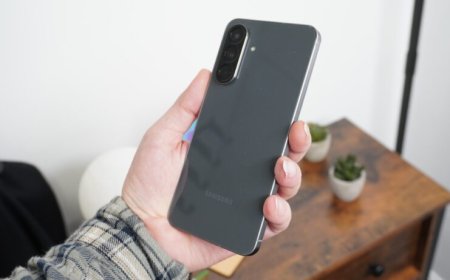
The A56 keeps the same footprint as the Galaxy A55 but fits a larger 6.7-inch display into it, thanks to slimmer bezels. It is actually a touch thinner at 7.4mm and lighter at 198g, which is impressive given the materials: an aluminium frame with Gorilla Glass Victus+ on both the front and the back — the A55 only had Victus+ on the front. The phone is rated IP67 for dust and water resistance.
There are a few design changes worth noting. The camera island is now a single raised piece, echoing the Galaxy S25 series, and the brushed-metal frame gives the phone a more upmarket feel. The flat sides and flat glass panels create sharp edges that some may find less comfortable, though they do give a stable grip. Colours are Pink, Olive, Graphite and Lightgray. One criticism: the under-display fingerprint reader sits a little too close to the bottom edge and is slower than some rivals, and at this price some competitors now offer IP68 or IP69 protection while the A56 stays at IP67.
Display: bigger and noticeably brighter
The 6.7-inch Super AMOLED panel keeps the 1080 x 2340 resolution, 120Hz refresh rate and HDR10+ support of its predecessor, but brightness is a genuine upgrade. GSMArena measured up to 1,213 nits in auto mode, up from the A55, which should keep the screen readable in bright sunlight. Manual brightness remains in the mid-400 nits range.
Refresh rate control is straightforward: an Adaptive mode that holds 120Hz in most scenarios and drops to 60Hz for static images and video, and a Standard mode capped at 60Hz. Games that support 120fps ran at the display's maximum refresh rate in testing.
Performance: a real generational jump, with limits
The A56 runs on Samsung's Exynos 1580, a 4nm chip with an octa-core CPU (one 2.9GHz Cortex-A720, three 2.6GHz Cortex-A720 and four 1.9GHz Cortex-A520 cores) and the Xclipse 540 GPU based on AMD's RDNA 3 architecture, with twice the GPU hardware of the previous generation. Memory runs from 8GB of RAM with 128GB of storage up to 12GB with 256GB, all on UFS 3.1 storage. There is no microSD slot.
In benchmarks the Exynos 1580 is roughly 17% faster than the Exynos 1480 in the A55 in CPU tests, about 11% faster in mixed workloads such as AnTuTu 10, and around 30% faster in GPU-heavy tests like 3DMark Wild Life Extreme. Sustained performance is excellent: the chip held between 80% and 100% of its peak in CPU stress tests, and GPU stability was above 99%. Even so, similarly priced rivals with the Dimensity 8300 and Snapdragon 7+ Gen 3 — the Xiaomi 14T and OnePlus Nord 4, for example — consistently outpaced it in raw performance.
Battery and charging: faster, but not fast enough
The 5,000mAh battery is unchanged from the A55, and with the more powerful chip and larger screen, endurance dipped slightly. GSMArena recorded an Active Use Score of 12 hours and 8 minutes — about average for the price class. The Xiaomi 14T and Motorola Edge 50 Pro scored lower, while the OnePlus Nord 4 and Nothing Phone (3a) Pro edged ahead.
Charging improves to 45W over USB Power Delivery with Samsung's PPS, up from 25W. Using a 45W Samsung charger, the phone reached 65% in 30 minutes and a full charge in 1 hour and 13 minutes — faster than the A55 at the 15- and 30-minute marks, but slower overall, and well behind rivals pushing close to 100W. There is no charger in the box, no wireless charging, and reaching 45W needs a 5A-rated cable that is also sold separately. On the plus side, One UI lets you cap charging above 80% or disable fast charging to protect battery health.
Cameras: the weakest link, except for selfies and video
The camera hardware is largely carried over: a 50MP main camera (Sony IMX906, f/1.8, with optical image stabilisation), a 12MP ultrawide and a 5MP macro camera. The one upgrade is the front camera, where the A55's 32MP unit is replaced by a far better 12MP sensor. All cameras record 4K video at 30fps.
Daylight photos from the main camera are detailed with punchy colours, but GSMArena found them soft, with occasionally clipped highlights, and quality drops noticeably indoors. The 50MP full-resolution mode is not recommended, portraits come out a little soft, and the 2x crop zoom — there is no dedicated telephoto — is acceptable in daylight but deteriorates badly at night. The ultrawide produces soft images with limited dynamic range, and low-light shots are fuzzy with visible noise. Night mode itself proved disappointing: forced Night mode photos showed a purple-pink tinge, cold white balance and washed-out colours, and the standard Photo mode often looked better.
The selfie camera is the bright spot. The new 12MP sensor takes clean, sharp selfies with wide dynamic range and great colours, and gains better video quality with Super HDR. Video recording in general is excellent: the main camera produces sharp, detailed, colourful 4K footage with wide dynamic range, and even low-light video stays sharp and clean for this price class. The ultrawide also records good video, and electronic stabilisation in 4K is steady with no jitter.
Software: six years of updates lead the class
The A56 ships with One UI 7 on Android 15, and Samsung promises six generations of OS upgrades and up to six years of security patches — among the longest support windows of any mid-range phone. Galaxy AI features are present but not the full S-series set: AI Select analyses on-screen content and suggests actions, Circle to Search is available, and the Gallery app includes Object Eraser, though it is less capable than the S25 version. Stereo speakers scored -26.2 LUFS in GSMArena's test, a "Good" result, with deeper, warmer sound and less distortion at high volume than most rivals.
Verdict: good phone, tough market
GSMArena's verdict is measured: the A56 is hard to recommend at its launch price, even though the reviewers liked the selfies, the video recording, the premium design and the bright display. It looks like a good all-rounder on paper but fails to stand out from the crowd. Want better cameras? You can get them for less. Need a more powerful chipset? The sub-€400 bracket has you covered. The same goes for battery life and charging.
The alternatives named in the review make the point: the much cheaper Xiaomi 14T has a dedicated telephoto and generally better photos, the similarly priced Nothing Phone (3a) Pro offers a periscope telephoto, the Motorola Edge 50 Pro adds a 3x telephoto and a selfie camera with autofocus, and the OnePlus Nord 4 beats the A56 on performance, charging and battery life. Even within Samsung, the Galaxy S24 FE is a more powerful alternative with better cameras, wireless charging and a nicer display, while the Honor 200 Pro was judged one of the best phones around €500.
That said, the value case has improved since March. With street prices now well below the €479 launch price, the A56's combination of a premium build, a bright 120Hz display, dependable sustained performance and six years of updates is easier to justify — especially for buyers who want One UI and Samsung's update promise above all else. Just go in knowing the cameras are the compromise.
Pros
- Sturdy, premium build with Gorilla Glass Victus+, aluminium frame and IP67 rating
- Brighter and bigger display with HDR10+ support
- Decent performance with great thermal behaviour
- Excellent videos and great selfies
- Nice speakers
- Polished One UI 7, with at least six generations of OS upgrades
Cons
- No charger in the box, and not very fast to charge; no wireless charging
- Underwhelming camera performance (except videos and selfies), no telephoto
- Virtual proximity sensor is not as good as a physical one
- No microSD card support
- Expensive at launch
Sources
- GSMArena — Samsung Galaxy A56 review (21 March 2025), introduction and specifications: https://m.gsmarena.com/samsung_galaxy_a56-review-2812.php
- GSMArena — Samsung Galaxy A56 review, design and handling: https://m.gsmarena.com/samsung_galaxy_a56-review-2812p2.php
- GSMArena — Samsung Galaxy A56 review, lab tests (display, battery, charging, speakers): https://m.gsmarena.com/samsung_galaxy_a56-review-2812p3.php
- GSMArena — Samsung Galaxy A56 review, software and performance: https://m.gsmarena.com/samsung_galaxy_a56-review-2812p4.php
- GSMArena — Samsung Galaxy A56 review, camera: https://m.gsmarena.com/samsung_galaxy_a56-review-2812p5.php
- GSMArena — Samsung Galaxy A56 review, alternatives, pros and cons, verdict: https://m.gsmarena.com/samsung_galaxy_a56-review-2812p6.php
- Trusted Reviews — Samsung Galaxy A56 5G review (featured image): https://www.trustedreviews.com/reviews/samsung-galaxy-a56-5g
What's Your Reaction?
 Like
0
 Dislike
0
 Love
0
 Funny
0
 Angry
0
 Sad
0
 Wow
0